 How-to
Preventing Hard Water Stains on Residential Solar Panels
Last Updated: November 19, 2026
Quick Summary
Preventing hard water stains on residential solar panels means rinsing the glass with deionized or purified water and drying it before minerals can settle. Tap water carries calcium and magnesium that stay behind as a chalky film when water evaporates, so the final rinse and dry step is what stops spotting.
- Clean in a cool morning or evening, never on hot glass in full sun.
- A deionizing resin filter on the final rinse does the most good per dollar.
- A water softener alone does not remove all dissolved solids and can still leave spots.
- Pull water off with a squeegee or microfiber cloth before it evaporates.
- Never let a final tap-water rinse air-dry in the sun.
Table of Contents
- Why Hard Water Leaves Spots on Residential Solar Panels
- What Kind of Water to Use to Clean Solar Panels
- Cleaning Solar Panels With Hard Water: A Step-by-Step Workflow
- Safe Tools and the Right Solar Panel Cleaner
- Drying Conditions and Weather That Prevent Residue
- Checking Manufacturer Warranty and Cleaning Instructions
- A Maintenance Schedule for Albuquerque and Rio Rancho Homeowners
- When to Call a Professional Solar Panel Cleaning Service
- Frequently Asked Questions
Why Hard Water Leaves Spots on Residential Solar Panels
Hard water stains on residential solar panels come from minerals, mainly calcium and magnesium, that stay behind when water dries (Hardness of Water). Preventing hard water stains on residential solar panels starts with one fact: the water, not the glass, causes the problem. Tap water carries dissolved minerals. When it evaporates, those minerals stay put as a chalky film.
Your panels heat up fast in the sun. That speeds evaporation and bakes the residue onto the glass. Over time, thin spots turn into crusty white patches that dull the panel surface.
Sun and dry air in Albuquerque and Rio Rancho make water vanish quickly. The fix is simple in principle: rinse with clean water and dry before minerals can settle.
What Kind of Water to Use to Clean Solar Panels
The best water to clean solar panels with is deionized or purified water, because it leaves almost no mineral residue behind. Plain tap water is the usual cause of spotting. If you must use tap water, rinse it off fast with purified water before it dries.
The reason comes down to what is dissolved in the water. Tap water carries calcium, magnesium, and other minerals measured as total dissolved solids, or TDS. When a drop evaporates, those solids stay on the glass as a chalky ring. The higher the TDS, the heavier the ring. Purified water has most of those solids stripped out, so when it dries there is little or nothing left to see.
Checking Your Tap Water for Hardness and TDS
You can test your tap water in a few easy ways:
- Soap test: Shake a few drops of dish soap in a jar of tap water. Weak suds mean hard water.
- Strip test: Dip a water hardness strip in a glass of tap water and match the color to the chart. Hardness strips read calcium and magnesium, usually in grains per gallon or milligrams per liter.
- TDS meter: A handheld pen meter reads total dissolved solids in parts per million. It is the most useful number for spotting, because it counts everything left behind, not just hardness minerals.
- White film test: Let a glass of tap water dry on a dark plate. A white ring means dissolved minerals.
Tap water in many desert areas can read several hundred parts per million on a TDS meter, and higher TDS readings generally leave more visible spots when water dries on glass.
If your dishes and shower glass spot up, your rinse water may spot your panels too.
Filtration Options for Rinse Water
A few water-treatment choices work well for home use, and they are not equal:
- Deionizing resin filter: A cartridge packed with resin beads swaps mineral ions for hydrogen and hydroxide ions as water passes through. It is the closest thing to spot-free rinsing and is best saved for the final pass, since resin is consumed faster by high-TDS feed water.
- Reverse osmosis: Forces water through a membrane that rejects most dissolved solids. It produces very low-TDS water but wastes some feed water as reject and needs a storage tank, so it suits homeowners who want a steady supply rather than a one-off rinse.
- Water softener: Exchanges calcium and magnesium for sodium through an ion-exchange bed. It stops hardness scale in pipes and appliances, but it does not remove all dissolved solids, so softened water can still leave spots on glass. Do not assume a softener gives a spot-free rinse.
- Sediment and carbon hose filter: Catches grit and some chlorine but does not remove dissolved minerals. Useful for the wash step, not the final rinse.
- Spot-free rinse system: A small tank and resin setup made for final rinses. Higher setup cost, best results.
- Collected rain or distilled water: Free or cheap, and low in minerals. Fine for small jobs.
Match the option to your budget and how often you clean. For most homes, a deionizing resin filter on the final rinse does the most good per dollar, because it targets the step where spots actually form. A softener alone is the most common mismatch: it fixes the plumbing but not the spotting.
Watch out: resin and membrane filters have a capacity limit. If your feed water is very high in TDS, the cartridge will exhaust quickly and start passing minerals through, so test the output with a TDS meter rather than trusting the label.
Cleaning Solar Panels With Hard Water: A Step-by-Step Workflow
Here is a prevention-first workflow for cleaning a solar array.
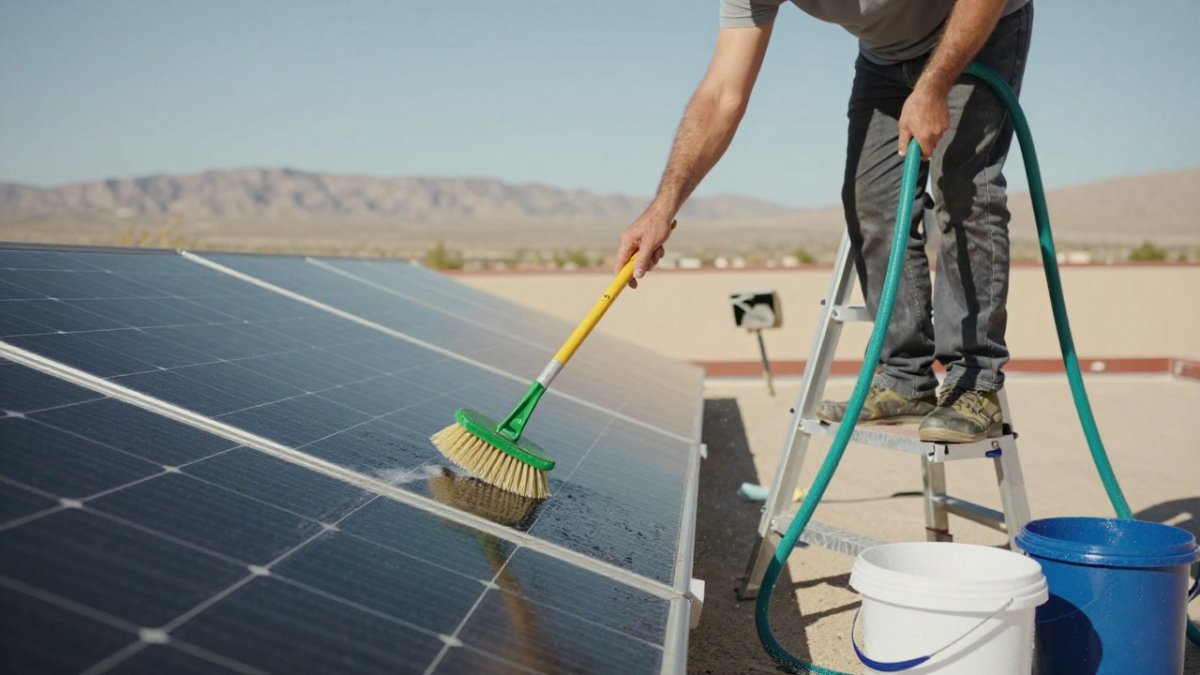
- Check the weather. Pick a cool morning or evening. Never clean hot glass in full sun.
- Shut down if the maker says so. Follow the panel manual for any safety steps.
- Rinse loose dust first. Use a garden hose on low pressure to float away grit.
- Wash with a soft brush. Work top to bottom with gentle agitation and a mild solar panel cleaner.
- Rinse with purified water. This is the step that prevents hard water stains.
- Squeegee or dry. Pull water off before it can evaporate and leave residue.
- Check your work. Look for streaks and re-rinse any spots while the glass is wet.
Safe Tools and the Right Solar Panel Cleaner
Use a soft-bristle brush, a plain garden hose, a squeegee, and purified rinse water. Skip the pressure washer and any abrasive pad. High pressure can crack glass and force water past the frame seals.
For cleaners, mild is better:
- Approved choice: a gentle soap or a cleaner sold for solar panels.
- For stubborn spots: a little vinegar or a baking soda paste, applied lightly and rinsed well.
- Avoid: acid or alkali detergents, scouring powders, and anything labeled abrasive.
A common mistake is scrubbing dry glass. Always wet the panel surface first. If you want to know how washing and cleaning differ, see solar panel cleaning vs washing. For a full tool list, read the best tools for solar panel maintenance. And if you spot scratches or clouding, check signs of solar panel damage from improper cleaning.
Drying Conditions and Weather That Prevent Residue
Timing your cleaning matters as much as your water. The goal is to keep water on the glass long enough to be removed, not to let it flash-dry in place.
Hot glass is the biggest culprit. A panel in full afternoon sun can run well above the air temperature, so water hitting it may evaporate quickly.
Humidity and wind change how fast water dries. Dry desert air and a breeze pull moisture off fast, which is good for drying but bad if the water still carries minerals.
A practical drying sequence:
- Work top to bottom so dirty water does not run over clean glass.
- Rinse with purified water as the last wet step.
- Pull the water off with a clean squeegee or a soft microfiber cloth before it can evaporate.
- Dry edges and frames where water collects and drips back onto the glass.
Watch out: never let a final tap-water rinse air-dry in the sun. That is the single most common way homeowners create the spots they are trying to prevent.
Watch the sky. Skip cleaning before a dust storm or high winds, which can deposit grit on wet glass. And skip it during a hard freeze, when water can ice up on the roof and create a slip hazard.
Rain helps in most cases. A steady rain rinses light dust off panels and is part of why many arrays stay reasonably clean between washings.
Checking Manufacturer Warranty and Cleaning Instructions
Read your panel manual before you touch the glass. Most makers list approved cleaners and warn against abrasives and high pressure. Following those steps protects your warranty.
Check these points:
- Approved cleaning methods and banned products
- Any shutdown steps before washing
- Rules on pressure and water temperature
- What voids the warranty
Keep a simple log of each cleaning date and method. If a claim ever comes up, you have a record.
A Maintenance Schedule for Albuquerque and Rio Rancho Homeowners
In dry, dusty climates, a light cleaning a few times a year may suit many homes. Add a rinse after big dust events or monsoon mud. Build your plan around the seasons.
| Season | Task | Frequency |
|---|---|---|
| Spring | Full wash and purified rinse | Once |
| Summer | Spot rinse after dust storms | As needed |
| Fall | Full wash before winter | Once |
| Winter | Visual check and debris sweep | Monthly |
For a deeper look at timing, read solar panel cleaning frequency: a guide. Keep leaves and debris off the array, and trim overhanging branches. FRESH TEC LLC offers roof rejuvenation, flat roof coatings, gutter cleaning, and solar panel maintenance, so one visit can cover more of your exterior.
When to Call a Professional Solar Panel Cleaning Service
Call a pro when the array sits high, the roof is steep, or the panels show heavy mineral buildup. Rooftop work is a fall risk, and panel wiring carries live current. If you are not steady on a ladder, stay off the roof.
Signs it is time to hire:
- Stains that will not rinse away
- Panels on a second story or steep pitch
- Cracks, clouding, or loose mounting
- A large array that takes hours to clean
Before you hire, read choosing a solar panel cleaning company: a buyer's guide to vet quotes and methods. A professional cleaning service can bring purified water and the right tools.
Hard water stains are a water problem, not a glass problem, so the right rinse water and timing do most of the work. If you would rather not climb a ladder in the desert sun, FRESH TEC LLC is a local, veteran-owned team serving Albuquerque and Rio Rancho. We offer solar panel maintenance, gutter cleaning, and roof care backed by our 6-year warranty. Get started with FRESH TEC LLC and keep your panels clear and your exterior show-ready.
Frequently Asked Questions
Can tap water leave mineral deposits on solar panels?
Yes. Tap water in many areas carries dissolved calcium and magnesium, and when it dries on panel glass those minerals stay behind as hard water stains. The residue builds up fastest on hot afternoons when water evaporates before it runs off. Rinsing with deionized or purified water, or drying the glass with a squeegee right after washing, removes the minerals before they can bake onto the surface.
How do you remove hard water spots from solar panels that are already there?
Start with a soft-bristle brush and a diluted citric acid or vinegar solution, working in small sections and rinsing thoroughly. Avoid abrasive pads and pressure washers, which can scratch the glass or force water behind the frame. For stubborn calcium deposits, a dedicated solar panel cleaner labeled for glass is the safer choice. If spots keep returning, the problem is usually the rinse water, so address filtration before cleaning again.
Is it safe to use a water softener when cleaning solar panels?
A standard water softener swaps calcium and magnesium for sodium, which reduces spotting but still leaves dissolved solids behind. For spot-free rinsing, deionized water or a resin filter that removes total dissolved solids works better. If you use softened water, follow with a final rinse of purified water and squeegee the glass dry to prevent residue from drying in place.
How often should solar panels be cleaned to prevent hard water stains?
In dusty areas, a cleaning every several months may help, with a spot check after major dust storms. Rain helps but does not remove baked-on mineral residue. Pair each cleaning with a rinse-water check so you are not trading dirt for hard water stains, and schedule the work on a cool morning so the glass is not hot when water hits it.