 How-to
Signs of Solar Panel Damage From Improper Cleaning?
Last Updated: November 11, 2026
Quick Summary
Signs of solar panel damage from improper cleaning include fine scratches running in the direction of a brush, swirl marks from rotary scrubbing, radial cracks, and bent frames or loose hardware. Dull, rough etching that cannot be wiped away and browning under the glass also signal lasting harm. If you see these, stop cleaning and have the panels inspected.
- Fine scratches in one direction usually come from a stiff brush or scraper.
- Swirl or spiral marks usually come from rotary scrubbing with an abrasive pad.
- Cracks spreading from one point suggest impact, or thermal stress after a cold rinse.
- Rinse residue with plain water and a soft cloth before judging a mark as permanent.
- Never touch broken glass or exposed wiring; call a professional instead.
Table of Contents
- How Improper Cleaning Damages Solar Panels
- Visible Signs of Glass and Frame Damage
- Signs of Solar Panel Deterioration in Cells and Seals
- Cleaning Residue vs. Permanent Damage
- Using Output Monitoring to Spot Problems
- Common Solar Panel Cleaning Mistakes That Cause Damage
- Next Steps: Getting Damaged Panels Assessed and Repaired
- Frequently Asked Questions
How Improper Cleaning Damages Solar Panels
Improper cleaning can cause solar panel damage as serious as dirt buildup. Dust and debris cut output, but scrubbing too hard, using harsh chemicals, or spraying cold water on hot glass can cause damage that lasts for years. Solar panels typically last 25-30 years, according to the EPA guidance on end-of-life solar panels, so protecting them during cleaning matters.
FRESH TEC LLC, a local, veteran-owned business in Albuquerque, NM, works with property owners on exterior care. Knowing what solar panel damage looks like helps you decide when to stop and call a pro. Learn how professional solar panel cleaning in Albuquerque and Rio Rancho avoids these mistakes.
Two common causes stand out:
- Abrasive tools: Stiff brushes and scrapers scratch the glass and can wear the anti-reflective coating.
- Thermal shock: Cold water on a hot panel can crack the glass or stress the cells.
Damage from high-pressure or abrasive cleaning may fall outside manufacturer warranty coverage, so check your warranty terms before cleaning.
Visible Signs of Glass and Frame Damage
A visual check of the glass and frame can reveal a lot about how the panels have been treated. The goal is to match each defect to a likely cause, so you can tell whether a cleaning method is the problem and whether the panel is still safe to touch.
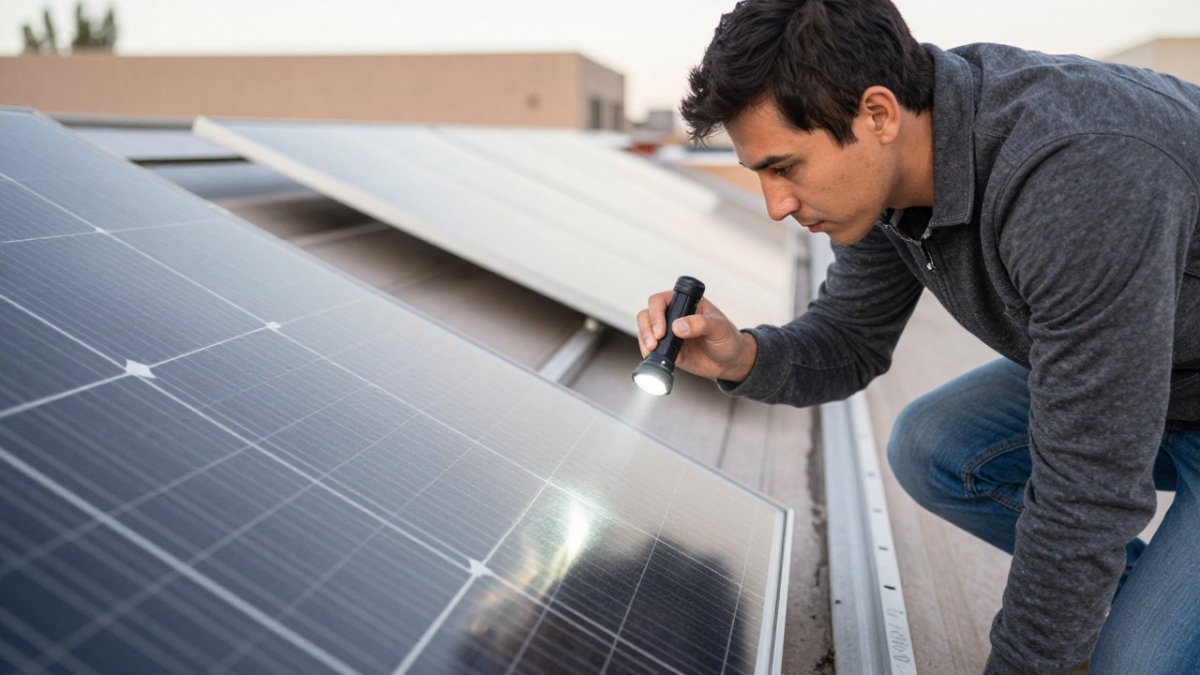
Inspect from the ground first, using binoculars if needed. Look at the glass for chips at the edges, radial cracks spreading from an impact point, and surface scratches. Scratches from a stiff brush or scraper usually run in straight or arc-shaped lines that follow the direction of the tool, and they are most visible when the sun is low. Circular swirl marks often come from rotary scrubbing with an abrasive pad. Each pattern points to a specific tool, which helps explain what went wrong.
Check the frame and mounting next. A bent or loose aluminum frame edge can result from a ladder or a person leaning on the panel, not just from cleaning. Look for shifted clamps, missing bolts, or rails that no longer sit flat. Displaced hardware matters because it can stress the glass and the module seal, which makes later cracking more likely.
Some defects should not be investigated by hand at all. A cracked or broken glass pane can have sharp edges and loose fragments, and any wiring visible at a damaged module is energized when the system is producing. Do not touch broken glass or exposed conductors, and do not remove a panel to look behind it.
A rough sorting of what you see:
- Fine lines in a consistent direction: likely abrasive brush or scraper contact.
- Swirl or spiral marks: likely rotary scrubbing with an abrasive pad.
- Cracks radiating from one spot: likely impact damage, or thermal stress if the damage followed a cold rinse on hot glass.
- Frame bent or hardware loose: likely physical handling, a ladder, or wind loading.
Watch out: walking on the panels or leaning a ladder against the frame can bend the aluminum and crack the glass in a single visit, so keep all cleaning and inspection work on the ground or on a stable, dedicated walkway.
Signs of Solar Panel Deterioration in Cells and Seals
Some damage shows up inside the panel. Discolored cells, dark or burnt spots, and browning around the edges can all signal a problem. Seal failure may let moisture in, which can corrode the electrical connections over time.
Research on PV soiling and performance stresses the need for non-damaging cleaning methods to protect system integrity (ScienceDirect review on dust impact on solar PV performance).
Because these signs are hard to see, watch for performance changes too. A sudden drop in output with no obvious cause deserves a closer look.
Cleaning Residue vs. Permanent Damage
After a cleaning, the most common question is whether a mark is harmless residue or lasting damage. The answer depends on what left the mark and whether it still sits on the glass after a proper rinse. Working through the marks in order usually settles it.
Start with the residue that is easiest to remove. Hard-water spots are mineral deposits left when water dries on the glass, and they appear as chalky rings or cloudy patches. Soap film looks like a hazy, streaky layer, often most visible at an angle in low sun. Dust, pollen, and bird droppings sit on top of the glass. See how to safely remove bird droppings from solar panels without scratching the surface. All three should lift with plain water and a soft cloth, and they should not leave any mark behind.
Marks that survive that rinse need a closer look. Etching is the one that most often gets mistaken for residue. It shows up as a dull, slightly rough patch that catches light differently from the surrounding glass, and it cannot be wiped away because the surface itself has changed. Abrasive pads and strong alkaline cleaners are the usual causes. A practical check is to run a fingertip gently across the mark: residue feels smooth and uniform, while etched or scratched areas can feel faintly rough or show a fine line that follows the direction of the brush.
Discoloration inside the panel is a separate category. A browning or dark patch that sits under the glass, not on it, cannot be cleaned away at all. If it spreads from a cell or an edge, treat it as a sign of internal damage or moisture entry rather than a cleaning problem.
A simple sequence for the homeowner:
- Rinse the area with plain water and a soft, non-abrasive cloth, and let it dry.
- Look at the mark from a few angles. If it disappears, it was residue.
- If it stays, run a fingertip over it. Smooth and unchanged points to a film or deposit that a stronger but still gentle cleaner may remove; rough or lined points to etching or scratching.
- If the mark is under the glass or spreading across cells, stop cleaning and have it inspected.
Watch out: scrubbing a stubborn mark harder or switching to a stronger chemical is how a removable deposit becomes permanent etching, so stop at the first sign that the mark is not coming off with gentle methods.
The table below sorts the common marks left after cleaning, so you can tell harmless residue from lasting damage.
| Mark | What it looks like | Action |
|---|---|---|
| Hard-water spots | Chalky rings or cloudy patches | Rinse with plain water and a soft cloth |
| Soap film | Hazy, streaky layer, visible at an angle | Rinse with plain water and a soft cloth |
| Dust, pollen, droppings | Surface debris | Lift with plain water and a soft cloth |
| Etching | Dull, slightly rough patch that cannot be wiped away | Stop cleaning and have it inspected |
| Internal discoloration | Browning or dark patch under the glass | Stop cleaning and have it inspected |
Using Output Monitoring to Spot Problems
Your inverter or monitoring app can reveal damage before you see it. Compare your output to the same period in past seasons, and watch for sudden drops after a cleaning.
A sharp, sudden drop in output after cleaning is worth investigating. Find out whether dirty solar panels can cause system failure.
Check the monitoring app or inverter for warning lights and error messages. If the output stays low after a clean, call a professional.
Common Solar Panel Cleaning Mistakes That Cause Damage
Avoid these mistakes:
- Using a pressure washer at high pressure
- Scrubbing with abrasive pads or brushes
- Spraying cold water on hot panels in the afternoon sun
- Using household cleaners with harsh chemicals
- Walking on panels or leaning ladders against the frame
Clean early in the morning or on a cool, cloudy day. Compare solar panel cleaning versus washing and what your panels need. Use a soft brush, a mild soap, and deionized water if you can.
Next Steps: Getting Damaged Panels Assessed and Repaired
If you see cracks, burn marks, or sudden output drops, stop cleaning and document the damage with clear photos and dates. Review the steps to file roof insurance claims in Rio Rancho. Keep your installation paperwork and any warranty details handy.
FRESH TEC LLC offers solar panel maintenance in Albuquerque and Rio Rancho. Our team can inspect your panels for damage from improper cleaning and help you decide what to do next. Call us and book a free inspection to find out whether your panels need cleaning, repair, or a closer look.
Frequently Asked Questions
How do I know if my solar panel is damaged?
Look for cracked or chipped glass, scratches that catch light, discolored or burned cells, bubbling or peeling backsheet, and loose frames or mounting hardware. Compare the panel's output with nearby systems or your own past readings. A sudden or steady drop that cleaning does not fix is a strong sign of damage. If you see any of these signs, avoid cleaning the panel further and have a qualified installer inspect it before the problem spreads.
Can improper cleaning scratch or crack a solar panel?
Yes. Abrasive brushes, scrapers, and gritty pads can scratch the glass and reduce light transmission. High-pressure washers can force water past seals and strain the frame. Applying cold water to a hot panel can cause thermal shock and cracking. Use soft brushes, lukewarm water, and low pressure, and stop if you feel resistance or see the surface change.
Is it safe to clean solar panels with a pressure washer?
Generally, no. Pressure washers can damage glass, seals, and frames, and they can push water into junction boxes or wiring connections. Many manufacturers exclude high-pressure or abrasive cleaning from warranty coverage. A gentle rinse with a soft brush and water is usually enough for dust and light debris. For stubborn residue, consult your installer rather than escalating the force.
What should I do if I notice a crack or water inside a solar panel?
Stop working on the array and keep people away from the panel. Water inside a panel or a visible crack can create electrical hazards. Photograph the damage, note the date, and contact your installer or a licensed solar technician. Do not attempt to open or repair the panel yourself. Your installer can assess whether the panel should be replaced under the warranty.