 How-to
How to Safely Remove Bird Droppings From Solar Panels
Last Updated: November 7, 2026
Quick Summary
To remove bird droppings from solar panels safely, clean them in cool conditions, such as early morning or late afternoon, and soften dried droppings with clean water before gently brushing them off. Avoid abrasive tools, harsh chemicals, and high-pressure sprayers, since they can scratch the glass or damage seals.
- Pre-soak dried droppings with clean water for several minutes before brushing.
- Use a soft, non-abrasive brush and work in light strokes from top to bottom.
- Avoid steel wool, scrapers, harsh chemicals, and pressure washers.
- Clean when the glass is cool, not on a hot, sunny afternoon.
- Check for cracks or wiring damage before cleaning, and stop if you find any.
Table of Contents
- Why Bird Droppings Matter on Solar Panels
- Why Dried Droppings Are Hard to Remove
- Safe Solar Panel Cleaning Tools to Use
- What Not to Use to Clean Solar Panels
- Step-by-Step Method for Removing Droppings
- Safety Precautions for Roof and Ground Cleaning
- How Often Should Solar Panels Be Cleaned?
- Booking Your Free Inspection With FRESH TEC LLC
- Frequently Asked Questions
Solar panels work best when they are clean. Bird droppings can cut a panel's output sharply, and a single dropping in the wrong place can affect more than the spot it lands on. Professional solar panel cleaning in Albuquerque and Rio Rancho can remove buildup safely. Knowing how to remove them safely protects your investment and keeps your system producing. FRESH TEC LLC, a local, veteran-owned team serving Albuquerque and Rio Rancho, put together this practical guide so you can clean your panels with care.
Why Bird Droppings Matter on Solar Panels
Bird droppings do more than look unsightly. A 2025 study published in Scientific Reports, which examined photovoltaic-module performance under bird-dropping conditions found that droppings reduced solar-module output power by 23.8%. That is a large loss for something that can be cleaned off in minutes.
If you want more detail on the damage droppings can cause, our article Can Bird Droppings Damage Solar Panels? What to Know covers it in depth.
Why Dried Droppings Are Hard to Remove
Fresh droppings wipe off easily. Once they dry, they bond to the glass. You can learn whether leftover grime can actually cause system failure. Their acidic content can etch the surface, and dried grime holds onto dust and pollen that make the buildup worse.
Here is what makes dried droppings tricky:
- They harden into a crust that resists a quick rinse
- They can leave a faint stain even after removal
- Scrubbing dry material can scratch the glass
- Leftover residue attracts more dirt and debris
Because of this, the goal is to soften the dropping before you try to lift it off.
Safe Solar Panel Cleaning Tools to Use
Using the right tools protects the glass and the coating. Keep your kit simple:
- A soft, non-abrasive brush made for solar glass
- A bucket of clean water for rinsing and wiping
- A squeegee or soft microfiber cloth for drying
- A garden hose with a gentle spray setting for rinsing from the ground
A soft brush lifts residue without scratching. Microfiber cloths dry the surface without leaving lint. Clean water is usually enough, and it avoids leaving behind the residue that some cleaners leave.
What Not to Use to Clean Solar Panels
Some common cleaning habits can cause more harm than good:
- Abrasive pads or steel wool, which scratch the glass
- Scrapers or sharp tools, which can crack the surface
- Harsh chemicals or strong degreasers, which can damage the coating
- A pressure washer or high-pressure nozzle, which can force water into seals and stress the frame
When in doubt, stick with water and a soft brush. Gentle and thorough beats fast and forceful.
Step-by-Step Method for Removing Droppings
Work through the procedure below in order, and do not skip the preparation step.
1. Pick the right time and conditions. Clean early in the morning or late in the day when the glass is cool to the touch. Avoid cleaning in direct sun on a hot afternoon, in high wind, or when rain is imminent.
2. Inspect before you touch anything. From the ground, look for cracked glass, chipped corners, loose mounting hardware, frayed wiring, or junction-box damage. If you see any of these, stop and call a qualified solar technician. Cleaning a damaged panel can turn a cosmetic problem into an electrical one.
3. Shut down if you will be near the array. If your cleaning will bring you close to the panels or wiring, follow the manufacturer's shutdown procedure first. Many residential systems have a DC disconnect at the inverter or a rapid-shutdown switch; use it as the manual directs.
4. Pre-soak the dropping. Wet the dried material with a gentle spray of clean water and let it sit for several minutes. Softening the crust is what allows it to lift without scrubbing. Re-wet stubborn spots rather than applying more force.
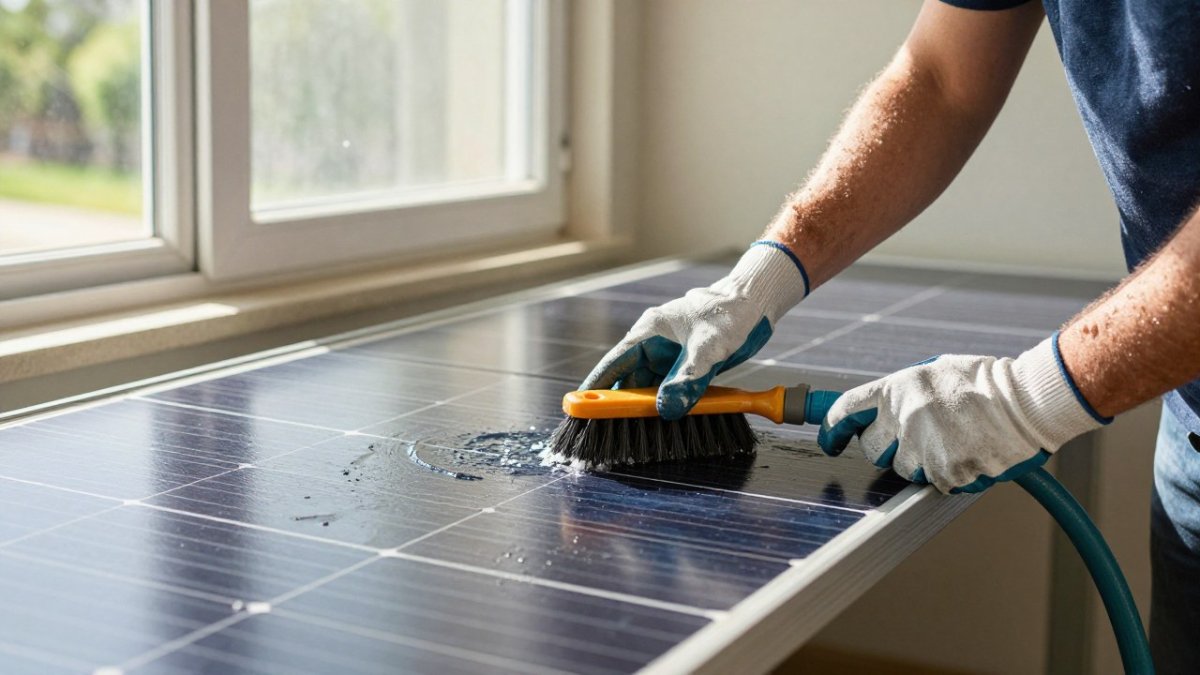
5. Brush gently, top to bottom. Use a soft, non-abrasive brush made for solar glass. Work in light, overlapping strokes and let the bristles do the work. Start at the top edge of the panel and move downward so loosened material does not run back over clean glass.
6. Rinse with a controlled stream. Use a garden hose on a gentle setting or a low-pressure sprayer. Keep the stream moving and avoid directing water at the frame edges, seals, or any electrical component. Work from the top of the array down.
7. Dry and inspect in good light. Wipe the glass with a clean microfiber cloth or use a soft squeegee. Then look at the panel from an angle in good light. A properly cleaned panel looks even across its surface, with no hazy film, streaks, or remaining marks.
8. Log what you did. Note the date, the conditions, and any spots that needed extra attention. A simple log helps you spot patterns, the same corner fouled every month, for example, and gives you a record if a warranty question ever comes up.
Watch out: spraying cold water onto hot glass on a sunny day can cause thermal shock and crack a panel, so match your water temperature to the panel's temperature and clean when the array is cool.
Pre-Soaking Dried Droppings
Pre-soaking is the step most people skip, and it makes the biggest difference. Spray clean water over the dried dropping and wait several minutes so it softens. Then brush it off. Avoid scrubbing dry material, since that is when scratches happen. If a spot still will not lift, soak it again rather than pushing harder.
Rinsing and Final Check
After brushing, rinse the whole panel so no loose residue is left behind. Work from the top of the panel down so dirty water does not run over clean areas. Then dry the glass and check it in good light. A clean panel should look even across its surface, with no lingering marks.
The steps below summarise the cleaning process the article describes, with the timing or frequency each step calls for.
| Step | What to do | Time or frequency |
|---|---|---|
| Pick conditions | Clean when glass is cool, not in hot sun or high wind | Early morning or late day |
| Inspect | Check for cracks, loose hardware or frayed wiring | Before every cleaning |
| Shut down | Use manual disconnect or rapid-shutdown switch if near panels | Before handling panels or wiring |
| Pre-soak | Spray clean water and let dropping soften | Several minutes |
| Brush | Use soft brush in light strokes, top to bottom | During cleaning |
| Rinse | Use gentle hose or low-pressure spray, top down | After brushing |
| Dry and check | Wipe with microfiber or squeegee, inspect in good light | After rinsing |
| Log | Record date, conditions and problem spots | Every cleaning |
Safety Precautions for Roof and Ground Cleaning
Safety comes first. Panels are often mounted on roofs, and a fall or electrical problem can cause serious injury.
- Clean from the ground when you can. A long-handled soft brush and a hose often reach far enough.
- Never work on a wet roof or in strong wind.
- Turn off the system before cleaning if you need to handle the panels or wiring.
- Avoid using water near exposed electrical connections or damaged wiring.
- Use a ladder properly with a helper nearby, and follow manufacturer guidance for your panels.
- Do not rush cold water onto hot glass on a sunny day, which can cause thermal shock.
If the panels are high, steep, or hard to reach, leave the job to trained professionals.
How Often Should Solar Panels Be Cleaned?
There is no universal schedule, and any guide that gives you one is guessing. Frequency depends on your local rainfall, the bird population near your roof, seasonal pollen, and how quickly dust and soot accumulate. The practical approach is to combine a visual check with an output check, then let the evidence set your interval.
Start with a baseline visual check. Look at the array from the ground every few weeks. You are checking for visible droppings, a dull film, pollen dust, or leaves trapped along the frame. Visible soiling on the glass is the first signal that cleaning is worth the effort.
Then watch your production numbers. Most monitoring apps and inverter portals show daily and monthly energy production. A gradual decline that tracks with a visible buildup is a strong reason to clean. A decline with no visible soiling usually points to something else, shading, a failing optimizer, or a hardware issue, and cleaning will not fix it. Compare month over month against the same period in prior years rather than day to day, since weather swings the numbers widely.
Use local conditions to set your interval. In areas with heavy pollen seasons, plan a cleaning after the peak. In areas with high bird activity, near trees, fields, or water, check more often and clean droppings promptly rather than waiting for a scheduled date. After a long dry stretch with no rain, expect more buildup; after a soaking rain, the glass is often cleaner than it looks from the ground.
Treat droppings as an exception, not a schedule item. A single fresh dropping is worth removing within a few days because dried droppings bond to the glass and can etch the surface. Do not wait for your next scheduled cleaning to deal with a fresh one.
Reassess after each cleaning. If you find yourself cleaning every month, your local conditions may justify it. If the panels stay clean for six months, stretch the interval. The right frequency is the one your own observations support.
Watch out: do not assume a dirty-looking panel is underperforming or that a clean-looking one is fine, check the production data alongside the glass, because appearance and output do not always move together.
If you want a fuller guide to timing, see Solar Panel Maintenance Frequency Guide.
Booking Your Free Inspection With FRESH TEC LLC
If you are unsure whether your panels need cleaning, or you would rather not climb onto the roof, the team at FRESH TEC LLC can help. We serve homeowners and property managers across Albuquerque and Rio Rancho. You can book your Free Inspection and get a clear picture of your panels' condition.
Frequently Asked Questions
How do you get bird poop off solar panels?
Start by rinsing the panel with plain water from a garden hose at low pressure to loosen loose debris. For dried droppings, let water sit on the spot for several minutes to soften the residue, then wipe gently with a soft, non-abrasive brush or microfiber cloth. Avoid scrubbing hard, which can scratch the glass and leave a film. Rinse thoroughly afterward so no residue dries on the surface. If the panel is on a roof or is hard to reach, a professional cleaner can do this safely.
Can you clean solar panels with tap water?
Tap water is usually the safest starting point for solar panel glass. Hard water can leave mineral spots as it dries, so a final rinse with softer water or a quick wipe with a clean cloth can help prevent streaking. Avoid cold water on very hot panels, since sudden temperature changes can stress the glass. Check your panel manufacturer's care guidance before adding any cleaning solution, because some products can affect coatings or void warranty terms.
What should you avoid using to clean solar panels?
Avoid pressure washers, abrasive scrubbing pads, scrapers, and harsh chemical cleaners, all of which can scratch or damage the glass or its anti-reflective coating. Strong degreasers and some household dish soaps may leave residue that reduces light transmission. Steel wool and rough sponges also cause micro-scratches over time. Stick to water and a soft brush or microfiber cloth unless the manufacturer recommends a specific solution.
How often should solar panels be cleaned?
Cleaning frequency depends on your location, season, and nearby sources of dirt or bird activity. Many homeowners check panels a few times a year and clean when visible soiling builds up or after a bird problem appears. Dry, dusty, or pollen-heavy seasons may call for more frequent checks. Monitoring your system's output can show when cleaning is worthwhile. For specific timing and pricing, contact FRESH TEC LLC for a free inspection and quote.