 ultimate-guide
Solar Panel Maintenance Frequency Guide
Table of Contents
- How Often Should Solar Panels Be Cleaned
- Solar Panel Maintenance Schedule: A Complete Calendar
- How to Clean Solar Panels Safely
- Solar Panel Inspection Checklist for Homeowners
- Solar Panel Maintenance Cost and ROI
- Warranty, Manufacturer Requirements, and Safety Compliance
- Troubleshooting Underperformance Before Scheduling Cleaning
- Frequently Asked Questions
Last Updated: October 5, 2026
How Often Should Solar Panels Be Cleaned
Solar panels require regular cleaning to maintain peak energy production. Most homeowners benefit from cleaning twice annually in spring and fall, though dust, pollen, bird droppings, and debris accumulate faster in certain regions, directly reducing efficiency.
FRESH TEC LLC. develops a solar panel maintenance frequency strategy matched to real-world conditions to maximize your return on the solar investment you've made.
Baseline Cleaning Frequency by Climate
In arid climates, plan for cleaning every 2-3 months during peak seasons. Coastal areas require cleaning every 4-6 weeks due to salt spray and moisture corrosion.
Temperate climates with regular rainfall typically need twice-yearly cleaning. Heavily forested areas require quarterly cleaning to prevent shading and performance loss.
Factors That Affect Cleaning Intervals
Soiling (dust, dirt, and organic matter buildup) accelerates in dry climates and near agricultural operations. Panel orientation and tilt angle affect debris accumulation: steeper angles shed more debris, while flatter installations trap particles.
Proximity to highways, trees, and industrial activity affects cleaning frequency. Trees drop leaves and pollen; dark roofing materials create updrafts that deposit debris on panels.
Solar Panel Maintenance Schedule: A Complete Calendar
A structured maintenance calendar prevents overlooked tasks and identifies problems before they become expensive repairs.
Monthly Tasks (Every 30 Days)
- Visual scan of panels from ground level for debris, bird nests, or damage
- Check monitoring system dashboard and compare to same month last year
- Verify inverter shows no error codes or warning lights
- Look for water pooling near electrical connections
Quarterly Tasks (Every 3 Months: January, April, July, October)
- Inspect mounting hardware for loose bolts, rust, or corrosion
- Examine electrical connections for loose terminals, discoloration, or damage
- If your system includes battery storage, verify vents are clear and enclosure is secure
- Compare output to expected production; if dropped more than 10% without weather explanation, investigate shading, electrical issues, or soiling before scheduling cleaning
Spring Cleaning and Inspection (March-April)
- Clean to remove winter debris and inspect for cracked glass, loose mounts, or corroded connections
- Check weatherproofing around inverter and disconnect switches
- Trim tree branches and confirm gutters and roof drainage are clear
Summer Maintenance (June-July)
- Inspect for heavy dust or pollen accumulation and new shading from tree growth
- Verify inverter cooling vents are clear
- Monitor energy production and compare to same month in prior year
- In coastal areas, inspect for salt corrosion
Fall Cleaning and Inspection (September-October)
- Clean to remove summer dust and bird droppings; inspect for heat-related damage and pest intrusion
- Trim tree branches and verify weatherproofing, roof drainage, and monitoring system before winter
- Schedule any professional system inspection required by your warranty
Annual Professional Inspection (Recommended: October-November)
- Hire a licensed professional for electrical testing, thermal imaging, and component evaluation to verify compliance with local codes
- Technician checks for hot spots, loose wiring, and corroded connections
- Obtain a written report; if annual inspection is mandated by warranty, complete on schedule to maintain coverage
Winter Maintenance (December-February)
- Monthly visual checks for ice, snow, or debris (do not remove snow yourself)
- Monitor energy production and compare to same month in prior year
- Verify inverter is functioning normally and check for error codes
- Check for ice dams or water backup near electrical connections
Task-by-Task Maintenance Intervals Reference
| Task | Frequency | Responsibility | Notes |
|---|---|---|---|
| Visual panel scan | Monthly | Homeowner | Ground-level check; takes 10 minutes |
| Monitoring system check | Monthly | Homeowner | Compare to expected production |
| Inverter error check | Monthly | Homeowner | Look for warning lights or codes |
| Mounting hardware inspection | Quarterly | Homeowner or Pro | Check bolts, rust, corrosion |
| Electrical connections check | Quarterly | Homeowner or Pro | Look for loose terminals, discoloration |
| Panel cleaning | 2-4 times/year | Homeowner or Pro | Frequency depends on climate and soiling |
| Professional system inspection | Annually | Licensed Professional | Required by most warranties; verify compliance |
| Thermal imaging | Annually or as-needed | Licensed Professional | Detects hot spots and internal faults |
| Battery system check (if applicable) | Quarterly | Homeowner; annually by Pro | Verify charging, discharging, health |
| Roof and weatherproofing check | Twice yearly (spring, fall) | Homeowner | Prevent water intrusion |
| Tree trimming | Annually or as-needed | Homeowner | Prevent shading and debris accumulation |
Documenting Maintenance Keep a simple log of all cleaning dates, professional service visits, inspection findings, and any repairs. Record the date, type of work, who performed it, and any observations (e.g., "Cleaned panels; output increased 8% the following week"). This documentation is essential if a warranty claim becomes necessary and helps you track whether your maintenance schedule is effective.
How to Clean Solar Panels Safely
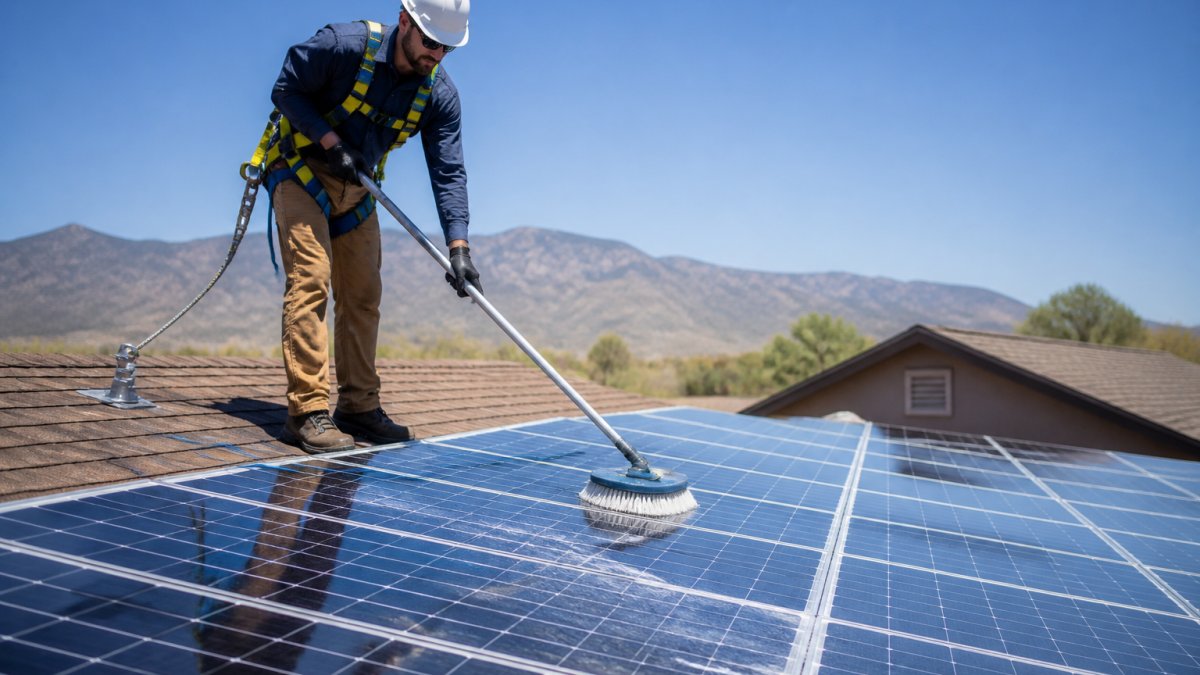
Cleaning your own panels is possible but carries real risks. Roof work demands fall protection, proper footwear, and knowledge of electrical hazards near live systems. Many homeowners choose professional cleaning specifically to avoid these dangers.
Safe Cleaning Methods and Materials
If you decide to clean panels yourself, use only non-abrasive materials. A soft brush with natural bristles, distilled water, and a mild soap solution work effectively without damaging the panel surface.
Timing matters: clean early morning or late afternoon when panels are cool. Hot glass combined with cold water can cause thermal stress and micro-cracking.
When to Hire a Professional Cleaner
Professional cleaning is advisable if your panels are on a steep roof, if you have mobility concerns, or if your system includes complex electrical components. Professionals carry liability insurance, use specialized equipment, and know how to work safely around live electrical systems. They also catch problems, loose wiring, corroded connections, or mounting issues, that homeowners often miss.
The cost of professional cleaning is modest compared to potential damage from improper technique or accidents. For many homeowners, this is a worthwhile investment in safety and system longevity.
Solar Panel Inspection Checklist for Homeowners
Regular inspections extend your system's lifespan and catch problems before they impact energy production. A structured approach ensures you're checking the right things at the right intervals.
Visual Inspection Steps
Start from ground level and scan your entire array for obvious issues: broken glass, loose panels, or visible damage to the frame. Move closer and check for debris accumulation, bird droppings, or leaves blocking sunlight.
Inspect the area around your inverter and disconnect switches for water intrusion, pest damage, or loose wiring. Check that all labels and warning signs are visible and legible. If your system includes battery storage, verify that vents are clear and the enclosure is secure.
When to Schedule Professional System Inspections
Beyond visual checks, a licensed professional should inspect your system annually or whenever performance drops unexpectedly. Professional inspections include electrical testing, thermal imaging to detect hot spots, and evaluation of all connections and components. They verify that your system meets local electrical codes and safety standards.
If your warranty requires professional inspection at specific intervals, follow that schedule precisely. Skipping required inspections can void coverage.
Solar Panel Maintenance Cost and ROI
Understanding the economics of solar panel maintenance helps you make informed decisions about when to clean, when to hire professionals, and whether cleaning actually improves your return on investment.
Does Cleaning Improve Energy Output Enough to Justify Cost
The answer depends on your climate and soiling rate. In dry climates with significant dust accumulation, cleaning can restore 5-15% of lost output. In areas with regular rainfall, the improvement may be only 2-5%.
A practical approach: monitor your system's energy production for a month, then schedule professional cleaning. Compare output in the month after cleaning to your baseline.
The breakeven point varies by location and electricity rates. In high-cost markets, even modest efficiency gains translate to real savings. In low-cost areas, cleaning may take years to pay for itself through energy savings alone.
Warranty, Manufacturer Requirements, and Safety Compliance
Your solar panel warranty likely includes specific maintenance requirements. Most manufacturers require regular cleaning and inspection to maintain coverage.
Review your warranty documentation carefully. Some specify cleaning frequency; others require professional inspection at set intervals. Manufacturers typically recommend avoiding harsh chemicals and pressure washing, consistent with safe cleaning practices.
Local electrical codes may also impose requirements. Some jurisdictions mandate annual professional inspection of solar systems. Check with your local building department or electrical inspector to understand obligations specific to your area.
Troubleshooting Underperformance Before Scheduling Cleaning
Before assuming your panels need cleaning, investigate whether reduced output stems from other causes. Misdiagnosis wastes money on unnecessary cleaning and delays addressing real problems.
Check your monitoring system first. Compare current output to expected production for the season and time of day.
Evaluate shading. Trees grow, buildings go up, and seasonal sun angles change. If new shade falls on your array, cleaning won't restore output.
Check electrical connections and wiring for loose terminals, corrosion, or damage. Inspect the inverter for warning lights or error messages.
Keeping your solar system operating at peak efficiency requires attention, but the effort pays dividends in energy savings and system longevity. FRESH TEC LLC. provides professional solar panel maintenance and cleaning services backed by our industry-leading 6-year warranty.
Frequently Asked Questions
How often should I have solar panel maintenance?
Most homeowners benefit from cleaning solar panels twice per year, typically in spring and fall. However, frequency depends on your location, weather patterns, and surrounding environment. Dusty, coastal, or heavily wooded areas may require cleaning three to four times annually. Monitoring your system's energy output helps determine if cleaning is needed sooner. Professional inspections should occur annually to check electrical connections, mounting systems, and overall panel condition.
What is the 20% rule for solar panels?
The 20% rule refers to a general performance threshold: if your solar array is producing 20% or more below its expected output, it's time to investigate the cause. Soiling, shading, or equipment issues could be responsible. Before scheduling cleaning, check your monitoring system data, review weather patterns, and inspect for visible debris or damage. This rule helps you avoid unnecessary maintenance while ensuring your system operates efficiently.
Do I really need to wash my solar panels?
Whether cleaning improves output enough to justify its cost depends on your location and conditions. In arid regions with frequent dust storms or coastal areas with salt spray, cleaning typically yields 5-15% energy gains. In moderate climates with regular rainfall, natural cleaning may be sufficient, and gains from professional cleaning are often minimal. Monitor your system's performance and compare cleaning costs against the energy production increase to decide if professional service makes financial sense for your situation.
What signs show that solar panels need cleaning or maintenance?
Visual indicators include visible dust, pollen, leaves, bird droppings, or debris on panel surfaces. A sudden drop in energy output, especially without recent weather changes, signals potential soiling or electrical issues. Cracks, discoloration, or loose mounting components also warrant attention. Check your monitoring system for performance anomalies. If rainfall hasn't occurred recently in your area, panels are more likely to accumulate soiling. Professional inspections can identify issues you might miss, such as corrosion, loose wiring, or inverter problems.
Can I clean solar panels myself, or should I hire a professional?
DIY cleaning is possible using soft brushes, deionized water, and mild soap on ground-mounted systems. However, rooftop panels pose safety risks from falls and electrical hazards. Manufacturer warranties may require professional maintenance for electrical work or warranty coverage. Professional cleaners have safety equipment, proper techniques, and insurance. If your roof is steep, your system is large, or you're uncomfortable working at heights, professional service is the safer choice. Always verify that cleaning won't void your warranty before proceeding.
How does soiling affect solar panel efficiency?
Soiling, dust, pollen, bird droppings, and debris, reduces light penetration to photovoltaic cells, decreasing energy production. The impact varies by location: coastal areas with salt spray, desert regions with dust storms, and areas beneath trees experience greater soiling. Rainfall naturally cleans panels, so dry climates suffer more. Studies show soiling can reduce output by 2-5% in moderate climates and up to 25% in severe conditions. Regular visual inspections and performance monitoring help you determine whether cleaning will meaningfully improve your system's output.
What maintenance tasks should I include in a solar panel maintenance schedule?
A complete solar panel maintenance schedule includes monthly visual inspections for debris, quarterly checks of mounting hardware and electrical connections, and seasonal deep cleaning in spring and fall. Annually, have a licensed professional inspect the entire system, including the inverter, wiring, and racking. Check that no new shading has developed from tree growth. Monitor your system's energy output regularly using its monitoring app. Keep records of all maintenance and inspections to maintain warranty coverage and track system performance over time.