 how-to
Solar Panel Cleaning: How Often? (2026 Guide)
Table of Contents
- How Often Should Solar Panels Be Cleaned?
- Signs Solar Panels Need Cleaning
- DIY Solar Panel Cleaning Safety Tips
- Solar Panel Cleaning Cost: DIY vs. Professional
- Water Quality and Mineral Buildup Risks
- How to Monitor Energy Output for Cleaning Needs
- When to Schedule a Professional Inspection
- Frequently Asked Questions
Last Updated: September 9, 2026
How Often Should Solar Panels Be Cleaned?
Solar panel cleaning is not a one-size-fits-all schedule, despite what generic guides suggest. The honest answer to how often should solar panels be cleaned depends on your local climate, the tilt of your array, and nearby sources of dust or pollen. Most homeowners benefit from a cleaning two to four times per year, but that baseline changes quickly when you factor in seasonal dust storms or prolonged dry spells (energy.gov).
The real cost of skipping maintenance is silent. A layer of soiling, whether from particulate matter or bird droppings, blocks sunlight from reaching the cells and directly reduces energy output. The good news is that you can recover most of that lost performance with a straightforward routine. Below, we will show you exactly how to read the signs your panels give you, clean them safely, and decide whether a professional service is worth the investment.
The 6-Month Baseline vs. Reality
The conventional advice of "clean every six months" is a reasonable starting point, but it is not a rule. A panel array installed at a steep tilt angle in a rainy climate may stay nearly clean on natural rainfall alone. The same array lying flat in a dusty valley will need attention far more often.
Your actual schedule should be driven by two factors: what surrounds your home and what the weather does. Properties near agricultural fields, busy roads, or construction sites accumulate debris faster. If you live where pollen accumulation is heavy each spring, expect to add a cleaning pass in late spring every year.
A practical approach is to check your panels at the start of each season. This creates four natural checkpoints without locking you into an unnecessary schedule. If a panel looks visibly hazy or you can trace a line in the dust with your finger, it is time to clean, regardless of what the calendar says.
Regional Climate and Seasonal Factors
Albuquerque's high desert climate presents a specific challenge: minimal rainfall means less natural cleaning, while seasonal winds deposit a fine layer of dust. The monsoon season from July through September offers some relief, but the rain often arrives as brief, heavy bursts that create mud spots rather than a thorough rinse.
For this region, a maintenance calendar should look like this:
| Season | Action | Why |
|---|---|---|
| Late Winter | Inspect and clean | Removes winter grime before peak sun |
| Late Spring | Clean | Clears pollen accumulation and pre-monsoon dust |
| Mid-Summer | Inspect | Monsoon mud spots may need spot cleaning |
| Late Fall | Clean | Prepares panels for lower-angle winter sun |
This schedule reflects the reality that natural rainfall is not a reliable cleaning mechanism in a desert climate. Homeowners who rely on rain alone often see noticeable performance degradation by late summer. Monitoring your system's output after a cleaning event is the best way to confirm your local schedule is working.
Signs Solar Panels Need Cleaning
The most reliable signs solar panels need cleaning are visual and measurable. Look for a visible layer of dust, bird droppings, or a hazy film across the glass. You should also watch for debris like leaves or twigs accumulating at the lower edge of the panels, which can trap moisture and create hot spots.
Performance data tells the story more precisely. If your inverter data shows a steady decline in energy production that does not correlate with seasonal sun angles, soiling is a likely culprit. Many monitoring platforms allow you to compare daily output against historical averages, making dips easier to spot. A drop that recovers after a rainstorm points directly to dirt as the cause.
DIY Solar Panel Cleaning Safety Tips
Cleaning solar panels is physically straightforward, but it carries real risks that most guides downplay. Working on a sloped roof is the primary danger, and the second is damaging the panels themselves with improper tools or technique. Before you climb a ladder, honestly assess your comfort level with roof work and your physical balance.
The most common mistake is treating panels like windows. Standard window cleaning solutions and abrasive scrubbers can leave residues that attract more dust or, worse, create micro-cracks in the glass. Pressure washers are even more dangerous; the thermal shock of cold water on a hot panel can crack the photovoltaic cells.
Essential Safety Gear and Roof Access
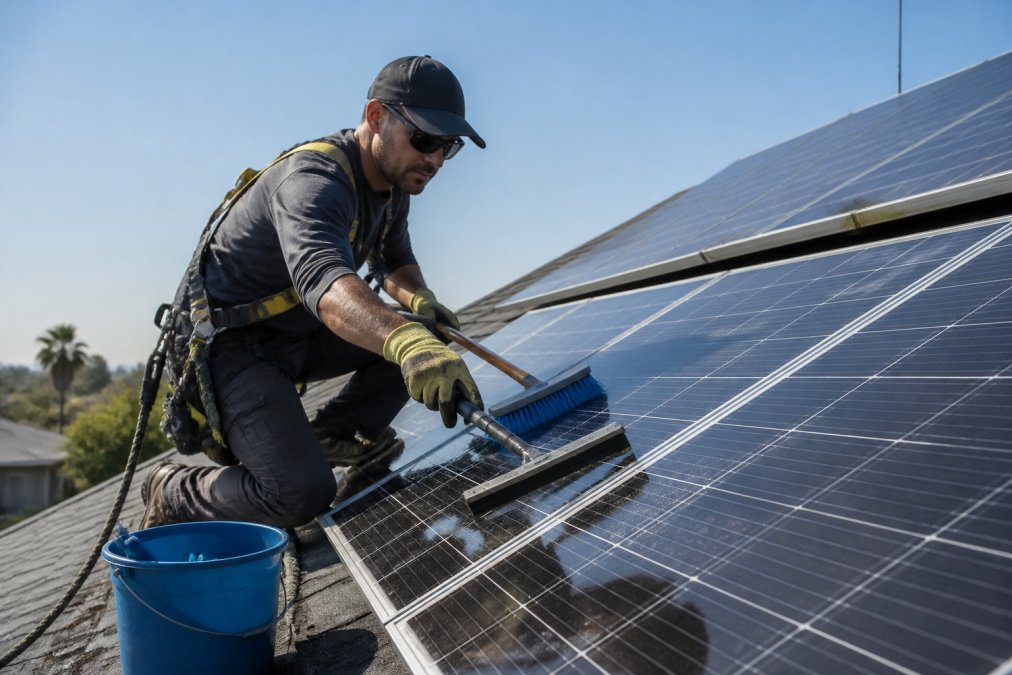
Your safety gear is non-negotiable. A properly anchored safety harness with a roof anchor point is the minimum for any sloped roof work. Wear rubber-soled shoes with good grip, and use a stable ladder rated for your weight with someone holding the base. Never work alone, and never clean panels in wet or windy conditions.
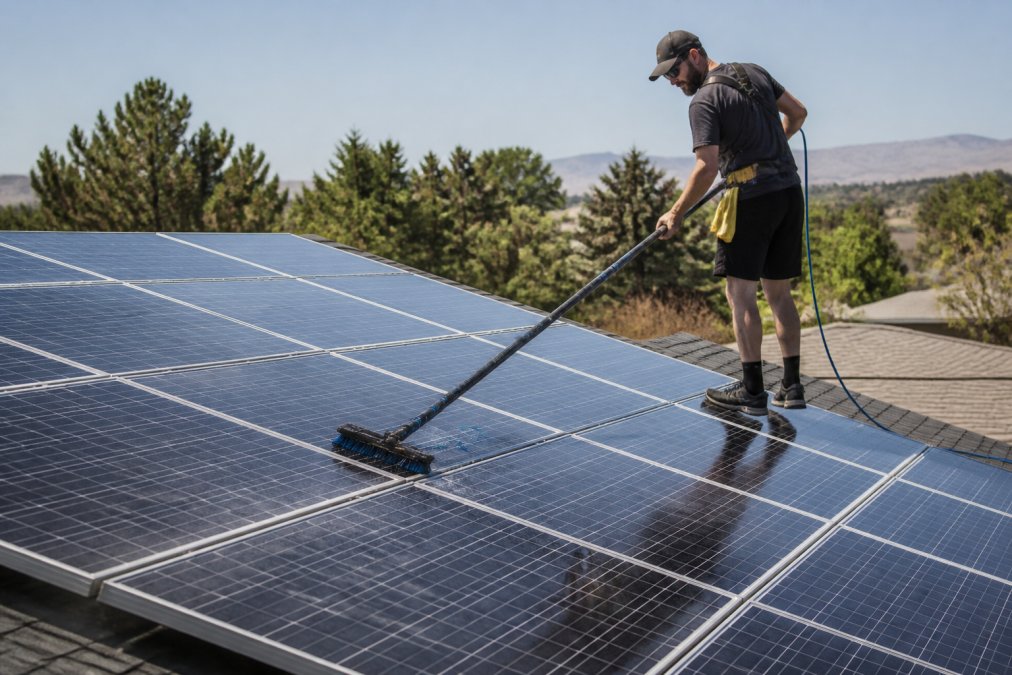
For the cleaning itself, you need a soft brush with an extended handle, a squeegee, and a hose with a spray nozzle. A bucket of clean water with a few drops of mild, non-abrasive dish soap is sufficient for most dirt. Avoid any tool with metal components that could scratch the glass.
Step-by-Step Cleaning Process
A safe and effective cleaning follows a simple sequence that protects both you and the panels:
- Shut down the system. Turn off the solar array at the inverter to eliminate electrical risk while working on the roof.
- Dry-brush loose debris. Use a soft brush to sweep away leaves, dust, and bird droppings before introducing water.
- Rinse with plain water. Use a hose to wet the panels thoroughly, removing the bulk of the grime.
- Scrub with a soft brush. Dip the brush in your soapy water solution and gently work in horizontal strokes across the glass.
- Rinse again. Remove all soap residue with a clean water rinse. Residual soap attracts more dust.
- Squeegee dry. Pull a squeegee across the panels to prevent hard water spots, especially in areas with mineral-heavy water.
This entire process typically takes 30 to 45 minutes for a standard residential array. If you feel unsteady at any point, stop and call a professional. The cost of a service call is far lower than the cost of a hospital visit or a damaged panel.
Solar Panel Cleaning Cost: DIY vs. Professional
DIY cleaning costs almost nothing beyond your time and basic supplies, but it carries hidden costs in safety risk and the potential for panel damage. Professional solar panel cleaning cost varies based on system size, roof pitch, and accessibility. For a standard residential array, hiring a professional is often a reasonable investment when you factor in the safety equipment and liability they bring.
The real value of a professional service is not just the cleaning; it is the inspection. A trained technician can spot loose mounting hardware, damaged seals, or early signs of corrosion that you would likely miss. These small issues, caught early, prevent much larger repair bills down the road.
FRESH TEC offers solar panel maintenance as part of our exterior care suite, using the same plant-based, non-toxic approach we apply to roof rejuvenation. This means no harsh chemicals on your property, which matters if you have kids, pets, or a vegetable garden below the array. Our technicians are equipped for safe roof access and can bundle panel cleaning with gutter cleaning for a convenient same-day service.
Water Quality and Mineral Buildup Risks
Tap water in the Southwest is notoriously hard, and using it to clean your panels can create a new problem. As hard water evaporates, it leaves behind calcium and magnesium deposits that bond to the glass. Over time, these mineral deposits become more difficult to remove than the dust you started with, creating a cloudy film that blocks sunlight.
This is why professional cleaning services often use deionized water. Deionized water has had the mineral ions removed, so it evaporates without leaving any residue (usgs.gov). If you clean your panels yourself with tap water, always follow with a squeegee to remove the water before it dries and deposits minerals.
For stubborn mineral buildup that has already formed, a 50/50 solution of white vinegar and water can help dissolve the deposits. Apply it gently with a soft cloth, rinse thoroughly, and squeegee dry. Do not use commercial descaling products, as their acidic formulas can damage the panel's anti-reflective coating.
How to Monitor Energy Output for Cleaning Needs
Your solar monitoring system is the most objective tool for determining when cleaning is necessary. Most modern inverters provide daily and monthly production data through an app or web portal. By tracking this data over time, you can establish a baseline for your system's expected output under clear skies.
A common method is to compare your production against the same period in previous years (energy.gov). If your output in a given month is significantly lower than the same month last year, despite similar weather, soiling is a likely factor. You can also look for a step-change decline after a dry, dusty period, which strongly suggests a dirty array.
To make this practical, check your production data after each rainstorm. If output returns to baseline after a good rain, your panels were dirty and are now clean. If output stays low after rain, the issue may be more than surface dust, warranting a professional inspection. This simple habit turns your monitoring data into a cleaning schedule that is tailored to your exact system.
When to Schedule a Professional Inspection
Plan a professional inspection at least once per year, even if your panels appear clean. A technician can evaluate the full health of your photovoltaic system, including electrical connections, mounting hardware, and the condition of the panels themselves. This annual check is the best defense against performance degradation caused by issues invisible from the ground.
You should also schedule an inspection after any significant weather event. Hailstorms, high winds, and heavy snow can cause damage that is not immediately obvious. A professional can identify micro-cracks, loose wiring, or displaced panels that would otherwise go unnoticed until they cause a system failure.
For homeowners in Albuquerque and Rio Rancho, the late winter inspection is the most valuable slot on the calendar. It ensures your system is operating at peak efficiency heading into the high-sun months when production matters most. Book your free inspection and let our team confirm your system is performing as it should.
Keeping solar panels clean is less about following a rigid schedule and more about understanding the environmental factors at play in your specific location. In a desert climate, that means planning for dust, respecting the limits of natural rainfall, and staying ahead of mineral buildup. Whether you choose the DIY route with proper safety gear or call in a professional, the goal is the same: maximizing your energy output and protecting the investment you made in your photovoltaic system. At FRESH TEC, we help homeowners maintain that performance with plant-based, non-toxic cleaning that is safe for your family and your property. Get started with FRESH TEC by booking a free inspection, and we will assess your panels, your roof, and your gutters to create a maintenance plan that fits your home.
Frequently Asked Questions
What are the signs solar panels need cleaning?
Visible bird droppings, a thick layer of dust, or accumulated leaves are obvious signs. A more reliable indicator is a drop in energy output: compare your inverter data week over week. If production falls by 10-15% without a change in weather, soiling is likely the culprit. Monitoring your system's performance is the best way to catch efficiency loss early.
Does rain clean solar panels effectively?
Rain helps rinse away loose dust and pollen, but it does not remove stubborn buildup like bird droppings, dried sap, or mineral deposits from hard water. In dry climates with infrequent rain, dust can accumulate into a crust that rainfall cannot penetrate. You still need a manual cleaning schedule to handle the grime that rain leaves behind.
Can I clean my solar panels myself?
Yes, but safety is the primary concern. If your panels are on a single-story roof with a safe pitch, you can do it yourself using a soft brush, squeegee, and plain water. Never use abrasive cleaners or a pressure washer, as they can cause micro-cracks. If you have a steep roof or a multi-story home, hire a professional with proper safety gear.
What is the average solar panel cleaning cost for a professional service?
Professional solar panel cleaning cost varies based on system size, roof accessibility, and your location. Most companies charge per panel or per system, but rates differ significantly. For an accurate quote, contact a local provider. They can assess your setup and offer pricing based on your specific needs.