 ultimate-guide
Safe Non-Toxic Roof Treatments: 2026 Guide
Table of Contents
- What Are Non-Toxic Roof Treatments?
- Extending Asphalt Shingle Lifespan With Eco-Safe Treatments
- Eco-Friendly Roof Rejuvenation Cost: What Affects the Price
- Sustainable Flat Roof Coating Options
- Roof Material Compatibility and Safety Certifications
- Pet and Garden Safety During Roof Treatment
- Conclusion: Choosing the Right Non-Toxic Roof Treatment
- Frequently Asked Questions
Last Updated: September 23, 2026
What Are Non-Toxic Roof Treatments?
Non-toxic roof treatments are cleaning and protective products formulated without harsh solvents, caustic acids, or volatile organic compounds that harm people, pets, or landscaping. They rely on plant-based surfactants and oxygen-based chemistry to lift moss, algae, and grime from shingles without corroding the roof surface.
FRESH TEC LLC. utilizes patented, plant-based GreenSoy™ Technology to restore asphalt shingles and driveways.
Most non-toxic roof treatments fall into two categories: cleaners that remove organic growth, and restorative coatings that protect what's left. The best results usually come from pairing both.
How Plant-Based Formulas Work
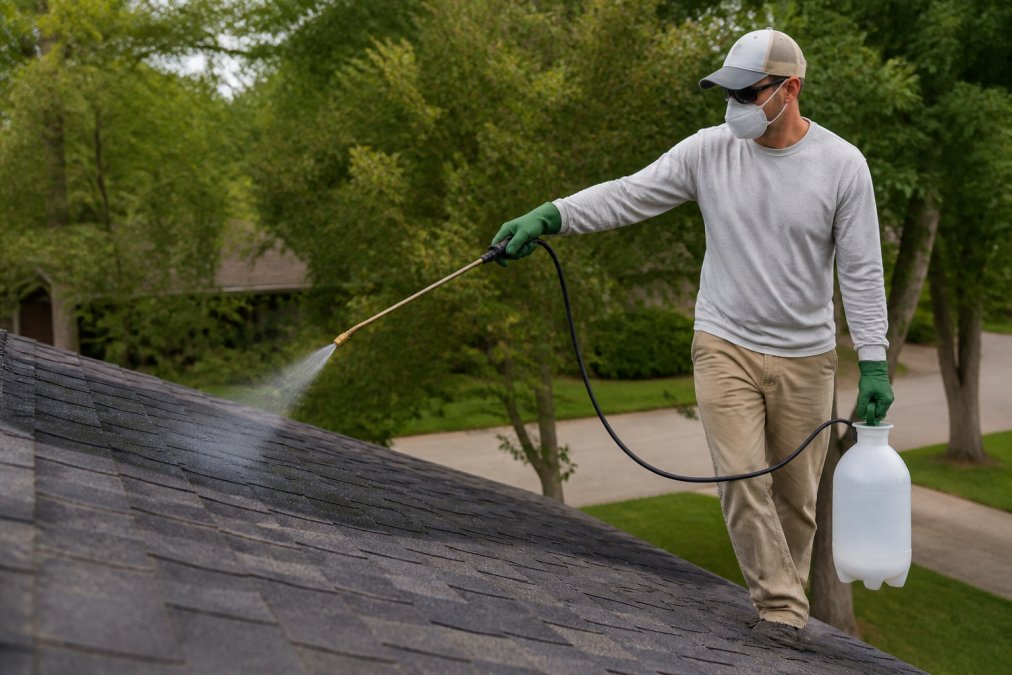
Plant-based formulas work by breaking the bond between organic growth and the shingle surface, rather than dissolving the shingle itself. Sodium percarbonate, an oxygen-based bleach, releases oxygen when activated by water, which oxidizes moss and algae at the root.
The process is pH neutral and non-corrosive. That matters for asphalt shingles, where caustic cleaners can accelerate granule loss and shorten roof lifespan.
A common mistake is expecting overnight results.
Soft Washing vs. Pressure Washing
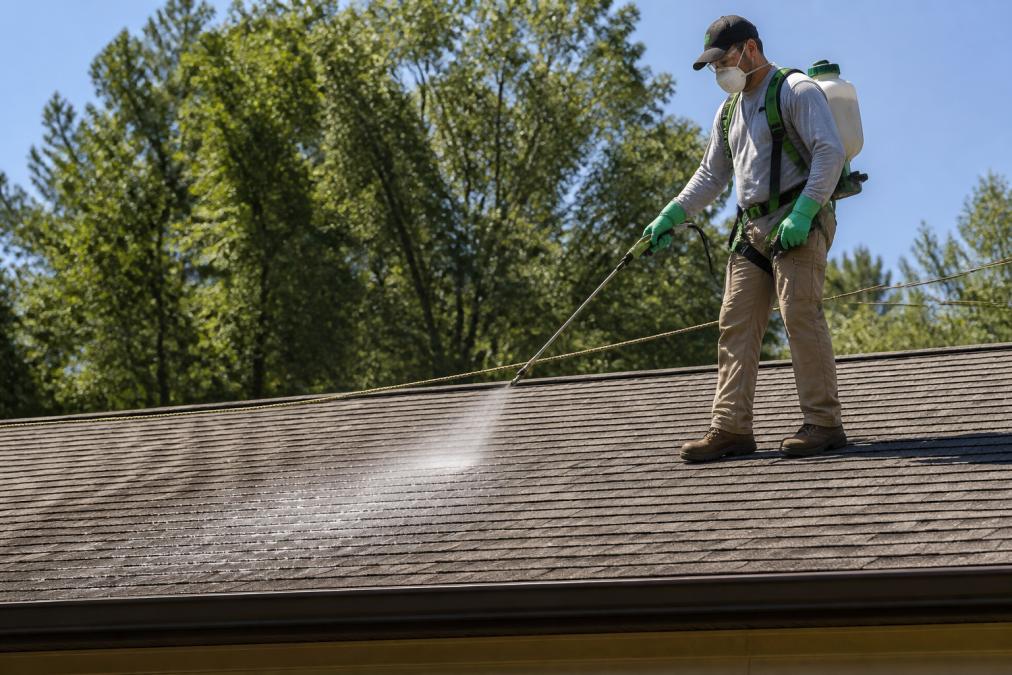
Soft washing uses low-pressure cleaning, typically under 500 psi, combined with a non-toxic cleaning solution to remove organic growth. Pressure washing blasts surfaces at 2,000 psi or higher, which can force water under shingles and strip protective granules.
Extending Asphalt Shingle Lifespan With Eco-Safe Treatments
Extending asphalt shingle lifespan comes down to two things: removing what's feeding on the roof, and sealing what's left. Moss and algae hold moisture against the shingle, which speeds up granule loss and weatherproofing breakdown.
Moss and Algae Removal Without Damage
Moss removal without damage starts with patience, not pressure. A non-toxic treatment applied at low pressure kills the growth at its base, letting it dry and release naturally over a few weeks.
Eco-Friendly Roof Rejuvenation Cost: What Affects the Price
Eco-friendly roof rejuvenation cost depends on roof size, pitch, current condition, and whether you're treating a single surface or adding a waterproofing layer. Pricing is quoted per roof rather than per square foot because two homes of identical square footage can require very different labor and product volumes.
The factors that move the number most:
- Roof square footage and number of stories. A single-story ranch is faster and safer to access than a two-story with dormers, and labor is the largest line item in any quote.
- Pitch and walkability. Steep pitches require fall-protection setup and slower application, which raises the labor component.
- Severity of moss, algae, or mildew. Heavy growth may need a second application window weeks apart, since oxygen-based cleaners work through the growth cycle rather than in one pass.
- Whether a restorative coating is added. Cleaning alone removes growth; a sealer or rejuvenation coating adds a protective layer and a second material cost.
- Accessibility and obstructions. Solar arrays, skylights, chimney chases, and tight property lines all add time.
How Rejuvenation Compares to Replacement
The economic case for rejuvenation rests on the gap between treating a roof and tearing it off. Rejuvenation does not make a worn-out roof new, and it is not appropriate for shingles that are already curling, cracking, or losing granules in sheets. It is appropriate for a roof that is structurally sound but biologically fouled or drying out.
What a Free Inspection Should Cover
A legitimate inspection documents roof age, shingle type, granule condition, and the extent of organic growth before quoting. For a specific number, FRESH TEC LLC. provides free inspections rather than published rates, because the honest answer depends on the roof in front of the inspector, not a national average.
Long-Term Cost: What Repeated Treatments Do to Shingles
This is where most cost discussions stop short. The real question isn't the price of one treatment, it's whether repeated treatments preserve or degrade the shingle over a decade. Oxygen-based cleaners are pH neutral and non-corrosive, which is why they're preferred over chlorine washes on asphalt. But application pressure, dwell time, and rinse volume all affect granule retention over repeated cycles.
Sustainable Flat Roof Coating Options
Sustainable flat roof coating options center on elastomeric sealers and reflective barrier products that extend the life of low-slope roofs. These coatings form a waterproofing membrane across the surface, sealing small cracks before they become leaks. The right choice depends on the existing membrane, a coating that bonds well to EPDM may not bond to modified bitumen, and vice versa.
Elastomeric Sealers and Radiant Heat Barriers
Elastomeric sealers expand and contract with the roof, which makes them well suited to temperature swings that crack rigid coatings. Applied correctly, they create a seamless, all-weather protection layer. Radiant heat barriers reflect sunlight rather than absorbing it, which lowers surface temperature and reduces cooling load in the building below.
What 'Non-Toxic' Actually Means in a Regulatory Sense
Most guides use "non-toxic" as a marketing word. In practice, it maps to specific labeling programs and disclosure requirements. The EPA's Safer Choice program, for example, reviews ingredient lists against human health and environmental criteria and allows qualifying products to carry the Safer Choice label (the EPA). A product that carries that label has been evaluated on a defined standard, not on the manufacturer's own definition of "green."
- Low or no volatile organic compounds (VOCs). VOC content is regulated at the federal level and in many state air-quality rules, and it's disclosed on the safety data sheet.
- Water-based rather than solvent-based chemistry. Water-based elastomerics clean up with water and off-gas far less during cure.
- A published safety data sheet (SDS). Any legitimate product has one. If a contractor can't produce it, that's the answer.
- Clear disposal and runoff guidance. Even low-toxicity coatings have application and cleanup requirements.
Matching the Coating to the Membrane
| Existing Roof | Compatible Coating | Avoid | Why It Matters |
|---|---|---|---|
| EPDM | Water-based acrylic or silicone | Solvent-based products | Solvents can degrade the membrane |
| TPO | Acrylic reflective coating | Asphalt-based coatings | Poor adhesion, blistering |
| Modified bitumen | Asphalt-compatible elastomeric | Water-based acrylics alone | Adhesion failure at seams |
| Metal (low-slope) | Elastomeric with rust-inhibiting primer | Acidic cleaners | Corrosion at fasteners |
EPA Safer Choice product standards
A coating is only as good as its bond to what's underneath. Confirm the existing membrane type before specifying a product, and confirm the product's SDS and VOC content before application begins.
Roof Material Compatibility and Safety Certifications
Roof material compatibility determines which treatment is safe to use, and this is where most generic guides fall short. A formula that's gentle on asphalt shingles may be wrong for metal, tile, or modified bitumen.
| Roof Material | Safe Treatment | Avoid | Why It Matters |
|---|---|---|---|
| Asphalt shingles | Soft wash, plant-based cleaner | Pressure washing | Prevents granule loss |
| Metal roofing | pH neutral cleaner | Acidic formulas | Prevents corrosion |
| Tile | Low-pressure organic cleaner | Abrasive scrubbing | Protects glaze |
| Flat/EPDM | Elastomeric sealer | Solvent-based coatings | Preserves membrane |
Pet and Garden Safety During Roof Treatment
Pet and garden safety during roof treatment comes down to runoff control and timing. Even plant-based formulas should be kept off garden beds and pet areas until the surface has dried and the product has broken down.
Practical protocols:
- Cover or water garden beds before treatment
- Keep pets indoors during application and for the drying window
- Rinse walkways and driveways after the roof dries
- Confirm the product is pH neutral and non-corrosive before use
Conclusion: Choosing the Right Non-Toxic Roof Treatment
The hardest part of choosing a safe roof treatment isn't finding a product. It's finding someone who will match the treatment to your roof material, apply it at the right pressure, and stand behind the work.
Frequently Asked Questions
What are the benefits of using non-toxic roof treatments?
Non-toxic roof treatments protect your roof without introducing harsh chemicals into your soil or water supply. They break down naturally, are pH neutral, and won't corrode flashing or gutters. For homeowners with pets or gardens, runoff safety matters. These treatments also preserve shingle granules, extending asphalt shingle lifespan by years compared to replacement.
How do plant-based roof rejuvenation products work?
Plant-based formulas use oxygen-based bleach or sodium percarbonate to break down organic growth like moss and algae. They penetrate the surface without damaging shingles, then degrade into harmless compounds. Unlike chemical alternatives, they don't leave toxic residue, making them safe for pets and gardens once dry.
Are eco-friendly roof cleaners as effective as chemical alternatives?
Yes, when applied correctly. Soft washing with biodegradable cleaners removes moss, algae, and mildew as effectively as pressure washing, but without granule loss. The key is dwell time and low pressure.
How often should you apply non-toxic treatments to asphalt shingles?
Most asphalt shingle roofs benefit from regular non-toxic treatment, depending on tree cover and humidity. Regular roof maintenance with eco-safe products prevents moss from taking hold and keeps shingles looking new, delaying costly replacement.
What should I look for in a safe roof cleaning product?
Look for biodegradable, pH-neutral, non-corrosive formulas. Avoid products with bleach or harsh acids. Check for third-party safety certifications and clear runoff safety guidance. A professional roof rejuvenation service can recommend the right product for your roof material and local conditions.
Is it too late to use non-toxic roof treatments if my shingles are curling?
Curling shingles may still be candidates for rejuvenation if the damage is surface-level. A professional inspection can determine if the shingle mat is intact. If granule loss is severe, replacement might be necessary.