 ultimate-guide
Roof Restoration Cost Per Square: 2026 Pricing Guide
Table of Contents
- What Is Roof Restoration and Why Cost Per Square Matters
- Average Roof Restoration Cost Per Square Foot Breakdown
- Roof Rejuvenation Cost vs. Full Replacement: Which Makes Sense?
- Asphalt Shingle Restoration vs. Replacement: Cost and Durability Comparison
- Roof Lifespan Extension Methods and Their Cost-Benefit Analysis
- Factors That Influence Your Roof Restoration Costs
- ROI and Property Value Impact of Roof Restoration
- Frequently Asked Questions
Last Updated: October 4, 2026
What Is Roof Restoration and Why Cost Per Square Matters
Roof restoration rejuvenates asphalt shingles and other roofing materials to extend lifespan without full replacement. Understanding roof restoration cost per square is essential for budgeting and comparing restoration versus replacement value.
A roof square equals 100 square feet. This standardized measurement allows contractors to quote clear line-item costs, making it easy to compare pricing across different roof sizes.
Restoration costs vary dramatically based on material type, roof condition, and accessibility. A curling asphalt roof in good structural condition costs far less to restore than one with underlying damage or complex geometry.
Average Roof Restoration Cost Per Square Foot Breakdown
Roof restoration cost per square breaks into materials and labor. Understanding this breakdown helps you evaluate quotes and avoid overpaying.
Material Costs
Material costs typically range from $0.75 to $2.50 per square foot, reflecting differences in formulation quality and durability.
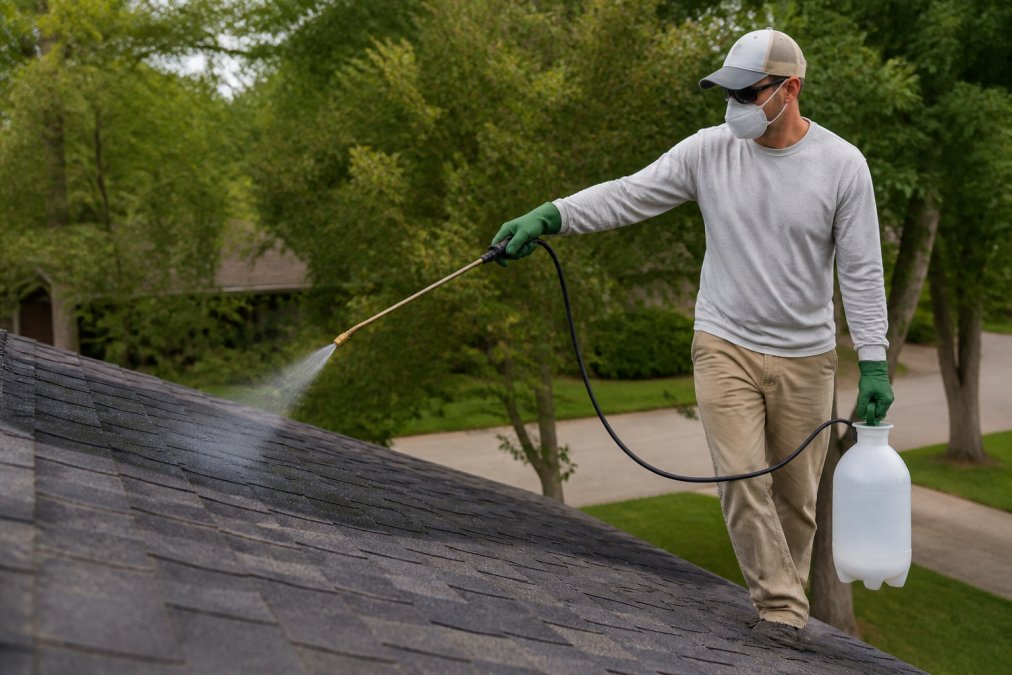
Rejuvenation coatings (plant-based or synthetic formulations) cost $0.75-$1.50 per square foot. These penetrate and revitalize binding oils in aged shingles, extending lifespan by 6-8 years.
Protective coatings (UV-resistant sealants) cost $1.25-$2.50 per square foot and extend weathering resistance for 8-10 years. They're recommended for newer roofs showing early aging or roofs in high-UV climates.
Primer and prep materials add $0.25-$0.50 per square foot and are critical for coating adhesion and longevity.
Ask contractors for the specific product and manufacturer's data sheet. Products with longer warranties (5-7 years) indicate higher quality; cheaper materials degrade faster, negating cost savings.
Labor Costs and Professional Fees
Labor represents 50-70% of total restoration cost. Contractors charge for inspection, surface preparation, application, and quality assurance.
Inspection and assessment costs $150-$400 and identifies structural damage and roof condition to determine viability. This fee is sometimes waived if you hire the contractor for the full project.
Surface preparation (cleaning, power washing, debris removal) costs $0.50-$1.25 per square foot and accounts for 20-30% of labor time. Heavily weathered roofs require pressure washing and sometimes chemical treatment.
Application labor costs $1.00-$2.00 per square foot depending on roof complexity.
Roof pitch and accessibility directly affect labor rates. Steep roofs (8:12 pitch or steeper) command a 10-25% premium due to safety equipment and slower application.
Mobilization and overhead typically add $300-$800 to any project. This is why smaller roofs cost more per square, fixed costs spread across fewer squares.
Total Cost Per Square: Real-World Range
Expect to pay $1.75-$4.50 per square foot for professional restoration. A 2,000 sq ft roof costs $3,500-$9,000; a 5,000 sq ft roof costs $8,750-$22,500.
The range reflects roof condition, complexity, material choice, and geographic labor rates. Coastal regions and major metros charge 15-30% more than rural areas.
Red flag: Quotes below $1.50 per square foot may signal corner-cutting on preparation or low-durability materials. Ask about materials, prep scope, and warranty.
Roof Rejuvenation Cost vs. Full Replacement: Which Makes Sense?
Roof rejuvenation extends your existing roof's life at a fraction of replacement cost. When asphalt shingles show age but no structural damage, rejuvenation restores flexibility and protective qualities.
The decision hinges on roof condition. Structural damage, widespread leaks, or failed underlayment require replacement. If your roof is functionally sound with surface-level aging, rejuvenation delivers years of additional protection.
Asphalt Shingle Restoration vs. Replacement: Cost and Durability Comparison
Restoration addresses oxidation and loss of binding oils that keep shingles flexible. A quality rejuvenation treatment restores these properties, returning flexibility and weather resistance. This works best when shingles haven't split or curled beyond recovery.
Replacement becomes necessary when shingles have structural damage, the roof deck has deteriorated, or the roof has exceeded its serviceable lifespan. A new asphalt roof lasts 15-20 years; a restored roof extends another 6-8 years.
Durability depends on restoration product quality and application. Plant-based rejuvenation coatings that bond to shingle surfaces and resist UV breakdown outperform surface-only treatments.
Roof Lifespan Extension Methods and Their Cost-Benefit Analysis
Rejuvenation coatings restore asphalt shingles by revitalizing binding properties. This is the most cost-effective extension for roofs with surface aging but sound structure, extending lifespan 6-8 years.
Protective coatings add a UV-resistant layer, slowing oxidation and extending weathering resistance. Cost is higher than rejuvenation but lower than replacement.
Roof maintenance programs (regular cleaning, gutter maintenance, minor repairs) prevent accelerated deterioration. This costs less upfront but requires consistent attention.
Full replacement is the longest-term solution but highest cost. It's necessary when restoration is no longer viable and is the only option for style updates or premium materials.
The cost-benefit analysis depends on your timeline and budget. Short-term owners may choose rejuvenation to defer costs; long-term owners often invest in replacement to avoid future disruption.
Factors That Influence Your Roof Restoration Costs
Your final roof restoration cost per square depends on multiple variables including roof type, size, condition, pitch, accessibility, and location.
Roof Material Type
Asphalt shingles, metal roofing, and tile roofs each respond differently to restoration and require material-specific approaches.
Asphalt shingles are the most common and affordable to restore. Expect $1.75-$3.50 per square foot.
Metal roofing requires specialized coatings for metal adhesion and expansion cycles. Metal-specific primers cost 20-40% more than asphalt formulations. Cost range: $2.50-$4.50 per square foot. Metal roofs are slippery when wet, increasing labor costs.
Tile roofs present complex restoration scenarios. Restoration focuses on resealing grout lines, replacing failed underlayment, and addressing water intrusion. Cost: $3.00-$5.50 per square foot. Some contractors decline tile restoration due to specialized knowledge required.
Flat or low-slope roofs use different materials (EPDM, TPO, modified bitumen) and may not be candidates for traditional rejuvenation. Confirm your contractor has experience with your specific roof type.
Roof Size and Square Footage
Small roofs (under 1,500 sq ft): Fixed costs represent a larger percentage of total cost. You'll pay $2.50-$4.50 per square foot.
Medium roofs (1,500-3,500 sq ft): Sweet spot for pricing efficiency. Cost: $1.75-$3.50 per square foot.
Large roofs (3,500+ sq ft): Contractors deploy larger crews for maximum efficiency. Cost: $1.50-$2.75 per square foot.
When comparing quotes, calculate total project cost, not just per-square pricing.
Roof Condition and Structural Integrity
Good condition (minor fading, light granule loss, no curling): Minimal prep required. Cost: $1.75-$2.75 per square foot. These roofs are ideal candidates for rejuvenation.
Fair condition (moderate fading, some curling, minor granule loss, isolated soft spots): Moderate prep including localized repairs, replacement of damaged shingles, and extended cleaning. Cost: $2.25-$3.75 per square foot.
Poor condition (extensive curling, widespread granule loss, multiple soft spots, visible water stains, sagging): Extensive prep and possible underlying damage. Cost: $3.00-$5.00+ per square foot. Contractors may recommend replacement instead because restoration won't address structural issues.
Structural damage (leaks, water intrusion, mold, decking deterioration): Not a restoration candidate. Replacement required, costing $8.00-$15.00+ per square foot depending on material and complexity.
Always request a professional inspection before committing to restoration. A $200-$400 inspection fee can save you thousands by identifying whether your roof is truly restorable or whether replacement is the only viable option.
Roof Pitch and Accessibility
Roof pitch (steepness) and accessibility directly impact labor time, safety requirements, and contractor pricing.
Low pitch (3:12 or less): Easiest to work on. Minimal safety equipment required. Standard labor rates apply. Cost multiplier: 1.0x.
Moderate pitch (4:12 to 7:12): Standard residential pitch. Requires basic fall protection. Most contractors price this as baseline. Cost multiplier: 1.0-1.1x.
Steep pitch (8:12 to 11:12): Requires advanced fall protection, harnesses, and safety lines. Application is slower because workers must move carefully and take frequent breaks. Cost multiplier: 1.2-1.4x (20-40% premium).
Very steep pitch (12:12 or steeper): Requires specialized equipment, experienced crews, and extended project timelines. Many contractors decline these jobs or charge 1.5-2.0x multiplier (50-100% premium).
Accessibility challenges add additional costs:
- Limited ground access (narrow lot, dense landscaping, proximity to structures): Increases equipment delivery and setup time. Add 10-20% to labor cost.
- Multiple roof planes, valleys, and penetrations (skylights, chimneys, HVAC vents, dormers): Each transition requires careful sealing and adds labor time. Complex roofs cost 15-30% more per square foot than simple rectangular roofs.
- Surrounding obstacles (power lines, trees, neighboring structures): Limits equipment placement and crew movement. Add 10-25% to labor cost.
- Roof access (no attic access, difficult ladder placement, no safe staging area): Contractors may need to rent lifts or scaffolding, adding $500-$2,000 to project cost.
Before getting quotes, walk your roof perimeter and note pitch, complexity, and access challenges. Share photos with contractors, this helps them provide accurate estimates and prevents surprise cost increases during the project.
Geographic Location and Local Labor Rates
Labor costs vary significantly by region due to cost of living, contractor density, and local demand.
High-cost urban areas (major metropolitan regions): Labor rates 25-50% higher than national average. Contractor competition is high but so is cost of doing business. Expect $2.50-$5.00+ per square foot.
Mid-size cities and suburbs: Moderate labor rates, 10-20% above national average. Good contractor availability and competitive pricing. Expect $1.75-$3.75 per square foot.
Rural areas: Lower labor rates, 10-25% below national average. Fewer contractors available; you may have limited options. Expect $1.50-$3.00 per square foot.
Seasonal variation: Spring and summer (peak roofing season) command higher prices and longer wait times. Fall and winter offer 10-20% discounts and faster scheduling because demand is lower.
Permit and Inspection Requirements
Some jurisdictions require permits for roof work, adding cost and timeline.
Permit cost: $50-$500 depending on jurisdiction and project scope. Some municipalities charge based on square footage or estimated project value.
Inspection requirement: Some areas require a final inspection after restoration. This adds 1-2 weeks to project timeline and may require a second contractor visit ($100-$300).
Before hiring a contractor, ask whether permits are required in your area and who bears the cost. Reputable contractors include permit costs in their estimate; if a contractor doesn't mention permits, ask directly.
ROI and Property Value Impact of Roof Restoration
Roof restoration delivers two types of return: extended roof lifespan and improved property appeal.
Lifespan extension is quantifiable. A restored roof that gains 6-8 additional years of life defers a replacement project costing significantly more. For property managers, this buys time to plan capital expenditures.
Property value impact is real but harder to measure. A well-maintained roof signals to buyers that the property has been cared for. Curling, faded, or damaged shingles create the opposite impression.
The combination of deferred replacement costs and improved marketability makes restoration a sound investment for property owners planning to hold their properties medium-term.
Roof restoration cost per square depends on material type, roof condition, size, and accessibility. The decision between restoration and replacement hinges on your roof's structural soundness and your timeline.
FRESH TEC LLC. specializes in eco-friendly roof rejuvenation using GreenSoy™ Technology, which restores asphalt shingles to extend lifespan 6-8 years at a fraction of replacement cost.
Frequently Asked Questions
How much should a 1,200 square foot roof cost to restore?
The cost to restore a 1,200 square foot roof depends on material type, current condition, and labor rates in your area. Asphalt shingle restoration typically costs less per square foot than metal or tile. For an accurate estimate, a professional roofing contractor should inspect your roof to assess structural damage, flashing repair needs, and underlayment condition. Request quotes from multiple contractors to compare pricing.
Is roof restoration worth the money compared to replacement?
Roof restoration can extend your roof's lifespan by 6-8 years at a fraction of replacement costs, making it financially attractive for roofs in fair to good condition. However, if your roof has severe structural damage, extensive leaks, or is near the end of its lifespan, replacement may be the better long-term investment. Evaluate your roof's current condition and consult a roofing professional to determine which option delivers better ROI for your property.
What factors influence the cost of roof restoration per square foot?
Key factors include roof material type (asphalt shingles, metal roofing, or tile), roof pitch and accessibility, total square footage, current structural damage, and the extent of repairs needed (flashing, underlayment, ventilation). Labor costs vary by region and contractor expertise. A roofing estimate should break down material costs, labor costs, and any permits required to give you a clear picture of the total project scope.
How long does a roof restoration typically last?
A quality roof restoration can extend your roof's lifespan by 6-8 years or more, depending on the restoration method, climate conditions, and ongoing maintenance. Protective coatings and rejuvenation treatments work best on roofs that are structurally sound but showing age. Regular roof maintenance and inspections help maximize the longevity of your restoration investment and identify issues like leaks or storm damage early.