 how-to
Solar Panel Cleaning Frequency: A Guide
Table of Contents
- How Often Should Solar Panels Be Cleaned?
- Impact of Dust and Debris on Solar Efficiency
- Signs Your Solar Panels Need Cleaning
- Local Environmental Factors Affecting Cleaning Frequency
- DIY vs. Professional Solar Panel Cleaning
- Solar Panel Cleaning Cost and Maintenance Budget
- Creating Your Seasonal Maintenance Calendar
- Warranty Compliance and Professional Inspection
- Frequently Asked Questions
Last Updated: September 3, 2026
How Often Should Solar Panels Be Cleaned?
The ideal cleaning frequency depends on your local environment, weather patterns, and energy output goals. Most homeowners benefit from cleaning panels 2-4 times per year, though some situations require more frequent maintenance (energy.gov).
The most practical approach involves monitoring your system's performance and adjusting your cleaning schedule based on observed results. Many property owners use the "20% and 33% rules" as benchmarks for when cleaning becomes necessary.
The 20% and 33% Rules Explained
The 20% rule suggests cleaning when dust or debris causes a measurable 20% drop in energy output compared to your baseline performance. This threshold indicates that accumulated buildup is significantly reducing your system's ability to absorb sunlight.
The 33% rule is more aggressive: clean before reaching a 33% efficiency loss. This approach prioritizes maximum energy production, making it ideal for properties with high energy demands or those relying heavily on solar to offset utility costs.
To apply these rules, monitor your system's performance regularly using your modern solar installation's performance monitoring tools. Compare current output to your historical baseline (typically measured during the first month after installation). When you notice a consistent 20-33% dip, that's your signal to schedule cleaning.
The right rule depends on your priorities. If you're focused on maximizing return on investment and can tolerate slightly lower output, the 20% rule works well. If you want peak performance, the 33% rule ensures your system operates at near-optimal capacity year-round.
Impact of Dust and Debris on Solar Efficiency
Dust, pollen, bird droppings, and debris directly reduce sunlight reaching your solar cells. Even a thin dust layer can block 5-10% of incoming solar radiation, while thicker accumulation or bird droppings can reduce output by 20% or more (peer-reviewed research).
Dust creates a diffusing layer that scatters light rather than allowing it to pass through to the photovoltaic cells. This degradation compounds over time as particles accumulate. Debris buildup also affects different panel areas unevenly, one section covered in bird droppings might lose 40% efficiency while adjacent panels operate normally, creating additional losses beyond simple sunlight reduction.
Environmental factors accelerate accumulation. Pollen, dust from unpaved roads, construction activity, and industrial operations all contribute to soiling loss. In regions with frequent wind events, airborne particles settle constantly. Understanding your local environmental factors helps predict cleaning needs.
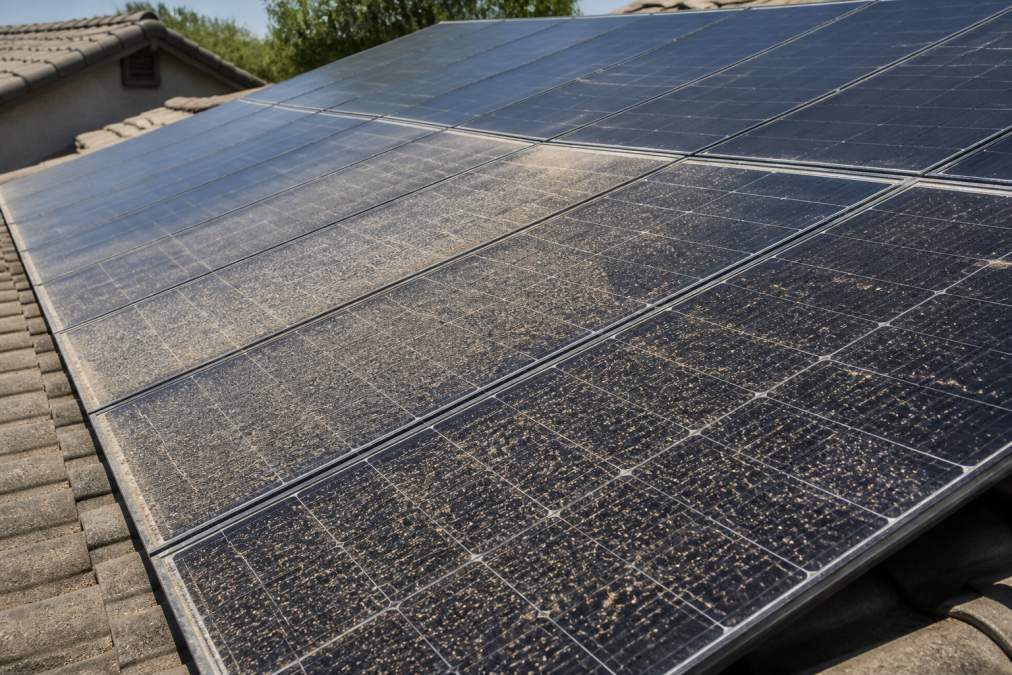
Regular monitoring makes efficiency impact visible. When you clean panels and see output jump 15-30% within days, you're seeing the direct result of removing that soiling layer.
Signs Your Solar Panels Need Cleaning
Visual inspection provides the most straightforward signal. If you can see dust, pollen, or debris coating your panels from ground level, they likely need attention. Bird droppings indicate immediate cleaning needs.
Performance monitoring tells the real story. A sudden drop in daily energy output on clear, sunny days signals soiling problems. Compare your system's output to weather conditions, if output is lower than expected despite clear skies, debris is the likely culprit.
Some systems show uneven performance across different sections. If one area consistently underperforms, localized soiling may be concentrated there. Seasonal changes also signal cleaning needs. After storms, following bird activity, or when pollen counts peak, panels accumulate debris faster.
The most reliable indicator combines visual inspection with performance data. See dirt on the panels AND notice output dropping? That's your confirmation that cleaning will restore efficiency.
Local Environmental Factors Affecting Cleaning Frequency
Your geographic location dramatically influences cleaning frequency. Desert environments, agricultural areas, industrial zones, and regions with specific weather patterns create different soiling pressures on solar arrays.
Monsoon Season and Debris Buildup
The monsoon season brings intense dust storms that deposit significant debris on panels. During monsoon months, dust accumulation accelerates dramatically. A single dust storm can coat panels with enough particles to reduce output noticeably within hours.
Monsoon dust differs from typical household dust. Fine, abrasive particles from desert soils are carried by high-wind events and settle heavily on exposed surfaces. Properties in monsoon-prone areas should expect to clean panels more frequently during these months, potentially 2-3 times during peak season rather than quarterly schedules.
After monsoon storms, panels often show visible dust layers within 24-48 hours. This rapid resoiling means cleaning intervals during monsoon season may need to shorten from your standard schedule. Some homeowners shift to monthly cleaning during peak months, then return to quarterly schedules during calmer seasons.
Water Quality and Mineral Deposits
If you use tap water to rinse panels, hard water leaves mineral deposits that reduce light transmission. Minerals like calcium and magnesium create a film on panel surfaces that's harder to remove than dust and blocks more sunlight.
Deionized water is the preferred rinsing medium because it lacks these minerals and won't leave residue. Professional cleaning services typically use deionized water for this reason. Hard water deposits accumulate gradually and can be invisible until they've built up significantly. Switching to deionized water eliminates this cycle.
DIY vs. Professional Solar Panel Cleaning
Cleaning panels yourself costs less upfront but involves safety risks and potential panel damage. Professional cleaning services handle technical aspects but represent ongoing expense.
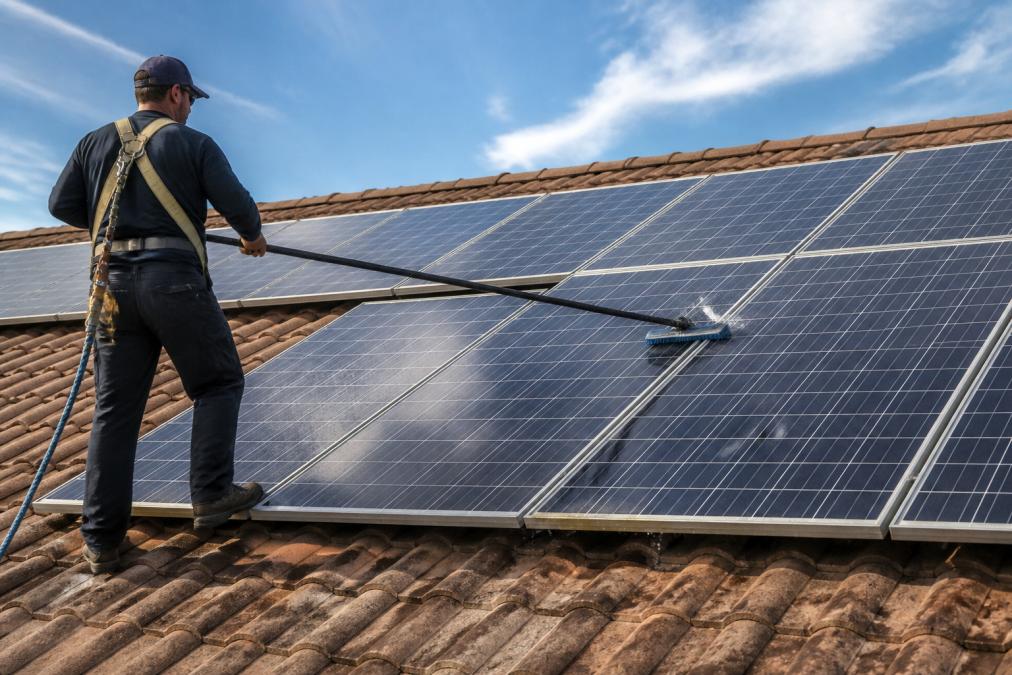
DIY cleaning requires safe roof access, which presents fall hazards and requires proper safety equipment. You'll also need appropriate tools, soft-bristled brushes, non-abrasive cloths, and ideally deionized water. Using wrong materials can scratch or damage panel surfaces.
The advantage of DIY cleaning is frequency and cost control. You can clean panels whenever you notice performance dips without waiting for service appointments. For homeowners comfortable with roof work, DIY can be practical for 2-3 annual cleanings.
Professional cleaning eliminates safety concerns and uses specialized equipment designed to clean panels without damage. Technicians understand proper techniques for different panel types and can identify damage during cleaning.
For most homeowners, a hybrid approach works well: monitor your system's performance, do basic DIY cleaning when convenient, and schedule professional cleaning 1-2 times yearly for thorough maintenance.
Risks of Cleaning Solar Panels Yourself
Roof access is the primary hazard. Falls from residential roofs cause serious injuries annually (the CDC). Proper fall protection equipment, harnesses, anchors, and safety lines are essential but add cost and complexity.
Using incorrect cleaning materials damages panels. Abrasive scrubbers, harsh chemicals, or high-pressure water systems can scratch protective coatings, crack cells, or force water into sealed compartments. The cost of replacing even one damaged panel often exceeds DIY savings.
Incomplete cleaning defeats the purpose. Professional equipment ensures complete coverage that actually improves output measurably.
Warranty implications matter significantly. Many solar panel warranties explicitly prohibit owner-performed maintenance or require professional cleaning. Attempting DIY cleaning could void warranty coverage. Before attempting any cleaning, review your system's warranty terms carefully.
Solar Panel Cleaning Cost and Maintenance Budget
Professional cleaning costs vary based on system size, roof complexity, and regional service availability. Budgeting for 2-4 professional cleanings annually helps you plan maintenance expenses.
The investment in regular professional cleaning typically returns value through maintained energy output. Panels that remain clean produce more electricity, offsetting cleaning costs through increased energy savings. Over a 25-year panel lifespan, regular maintenance protects your return on investment far more effectively than neglecting cleaning.
Some property managers combine professional cleaning with other roof services, gutter cleaning, roof inspection, or general maintenance, to reduce per-service costs. FRESH TEC, for example, offers solar panel maintenance as part of comprehensive property care packages, bundling services to provide better value than standalone appointments.
When budgeting for solar maintenance, consider your system's size, local soiling rate, and performance targets. Systems in dusty environments or those where peak efficiency matters most justify more frequent professional cleaning.
Creating Your Seasonal Maintenance Calendar
A structured maintenance calendar ensures you clean panels at optimal intervals rather than waiting until performance suffers noticeably.
Spring: After winter weather and early pollen season, a spring cleaning removes accumulated dust and prepares panels for peak summer output. Schedule cleaning in late March or early April.
Early Summer: A second cleaning in June catches debris from spring storms and removes pollen accumulation, optimizing output during peak summer months.
Late Summer/Early Monsoon: Before monsoon season intensifies, a late-summer cleaning removes pre-monsoon dust. During active monsoon months, monitor output closely and schedule additional cleaning if storms deposit heavy debris.
Fall: An autumn cleaning removes monsoon dust and prepares panels for winter, typically in October.
Winter: Winter cleaning is often unnecessary unless specific debris events occur. However, monitoring winter output helps identify unexpected performance issues.
This four-times-yearly schedule works for most residential systems in this region. Adjust frequency based on your specific performance monitoring and local conditions. Document your cleaning dates and corresponding system output in a simple spreadsheet. Over time, this data shows your system's cleaning patterns and helps predict future needs accurately.
Warranty Compliance and Professional Inspection
Most solar panel warranties require professional maintenance and inspections to remain valid. Performing only DIY cleaning may inadvertently void coverage.
Professional inspections identify issues beyond simple soiling. Technicians check for micro-cracks, loose connections, degraded sealants, and other problems that reduce efficiency or create safety hazards. Catching these issues early prevents costly failures.
Many warranties specify that cleaning must use non-abrasive methods and approved materials. Professional services ensure compliance with these requirements. FRESH TEC's solar panel maintenance uses techniques and materials that maintain warranty protection while ensuring thorough cleaning and system inspection.
Keep records of all professional maintenance performed on your system. Document cleaning dates, inspection findings, and any repairs completed. These records demonstrate warranty compliance and provide valuable data if you need to file a warranty claim.
Some manufacturers recommend annual professional inspections even if cleaning isn't needed. These inspections verify system health and identify degradation early. Review your specific warranty terms to understand maintenance requirements and ensure your coverage remains active throughout your system's lifespan.
Keeping your solar panels clean directly impacts your energy production and protects your investment in renewable energy. The right cleaning frequency balances cost against efficiency gains, accounting for your local environment and system performance.
FRESH TEC provides professional solar panel maintenance tailored to residential systems in this region, combining expert cleaning with system inspection to ensure your panels perform optimally year-round. Our team understands local environmental factors, monsoon dust, hard water deposits, and seasonal debris patterns, and schedules maintenance that keeps your system clean without disrupting your home. Book a Free Inspection to assess your panel cleaning needs and develop a maintenance plan that protects your solar investment.
Frequently Asked Questions
How often do residential solar panels need to be cleaned?
Most residential solar panels should be cleaned 2-4 times per year, depending on local environmental conditions. In areas with frequent dust accumulation, monsoon activity, or bird droppings, quarterly cleaning maintains optimal energy output. Rain provides some natural cleaning, but it often leaves mineral deposits and doesn't remove all debris. Professional inspection can help determine your specific needs based on soiling loss and energy performance monitoring.
What is the impact of dust and debris on solar efficiency?
Dust, pollen, and debris reduce sunlight absorption by blocking photovoltaic cells. Studies show soiling loss can reduce energy output by 15-25% depending on debris type and accumulation. Hard water mineral deposits and bird droppings are particularly problematic. Regular cleaning prevents system degradation and maintains the kilowatt-hour production your system was designed to deliver, protecting your long-term energy savings and system longevity.
Is professional solar panel cleaning worth the cost?
Professional cleaning prevents performance loss that costs far more in lost energy savings than the cleaning service itself. Professionals use non-abrasive methods, deionized water, and proper roof safety equipment to avoid damage and micro-cracks. They also inspect for warranty compliance issues and system problems. For most homeowners, professional cleaning 2-3 times annually pays for itself through maintained energy efficiency and prevents the risk of DIY roof injuries.
What are the risks of cleaning solar panels yourself?
DIY cleaning carries serious roof safety hazards including falls, injuries, and property damage. Improper cleaning methods can scratch panels, damage coatings, or cause micro-cracks that reduce panel lifespan. Using hard water or abrasive tools voids warranties and creates mineral deposits. Professional technicians have proper safety equipment, non-abrasive cleaning solutions, and knowledge of your system's warranty requirements, making professional service the safer, more effective choice.