
 how-to
How Often to Clean Residential Gutters: 2026 Guide
Table of Contents
- The Baseline: How Often to Clean Residential Gutters
- Factors That Change Your Cleaning Schedule
- Signs Your Gutters Need Cleaning Right Now
- Risks of Skipping Gutter Cleaning
- DIY vs Professional Gutter Cleaning: Which Makes Sense
- Gutter Cleaning Tools for Homeowners Who Do It Themselves
- How to Clean Residential Gutters: Step-by-Step
- Frequently Asked Questions
Last Updated: August 31, 2026
The Baseline: How Often to Clean Residential Gutters
Most homeowners know they should clean their gutters but fail to do it on schedule, a gap where water damage, foundation erosion, and expensive repairs occur.
The baseline recommendation is twice per year: once in late spring and once in late fall. This guidance from the National Association of Home Builders on home maintenance schedules works well for homes in temperate climates with moderate tree coverage. At FRESH TEC, we see the consequences of skipped maintenance regularly, and the twice-yearly rule is a reasonable floor, not a ceiling.
That baseline assumes average conditions. Homes surrounded by mature trees, homes in climates with heavy rainfall or freeze-thaw cycles, and homes with flat or low-slope roofs need more frequent attention.
| Situation | Recommended Frequency |
|---|---|
| Low tree coverage, mild climate | Twice per year (spring + fall) |
| Moderate tree coverage | 3 times per year |
| Heavy tree coverage or pine trees | 4 times per year |
| Gutters with guards installed | Once per year minimum |
| High rainfall or freeze-thaw climate | 3-4 times per year |
Factors That Change Your Cleaning Schedule
The twice-yearly baseline breaks down once you factor in your home's actual environment. Tree density and regional climate are the primary variables.
Tree Density and Leaf Buildup
Tree density is the single biggest driver of debris accumulation. Deciduous trees drop leaves in fall, but cottonwood trees release cotton in late spring, pine trees shed needles and seed cones year-round, and elm and maple trees produce seed pods that compact into dense downspout plugs.
Homes with mature trees within 30 feet of the roofline typically need cleaning three to four times per year. A single large oak can fill gutters in weeks during peak shedding. Pine needles are particularly problematic because they pack tightly and trap shingle granules, causing water to pool rather than drain.
Regional Climate and Seasonal Debris
Climate shapes your maintenance calendar as much as any tree. Dust storms in the Southwest deposit fine sediment that clogs downspouts. Monsoon seasons send large volumes of runoff through the system in short windows, flushing accumulated debris into downspouts all at once.
In cold climates, fall cleaning timing is critical. Gutters full of wet leaves heading into winter are prime candidates for ice dam formation. According to the Insurance Information Institute's guidance on ice dams and home damage, ice dams are a leading cause of winter roof and interior water damage. Cleaning gutters before the first hard freeze eliminates a major contributing factor.
Gutter Guards: They Still Need Maintenance
Gutter guards reduce cleaning frequency but do not eliminate it. Fine debris, shingle granules, pine needles, and roof grit work their way through or under most guard designs over time. Mildew and mold can develop inside the gutter channel even with guards present.
Plan on inspecting gutters with guards at least once per year and cleaning when you find buildup. Homes with pine trees nearby may still need semi-annual cleaning even with guards installed.
Signs Your Gutters Need Cleaning Right Now
Some homes need cleaning before the scheduled date. Watch for these signals.
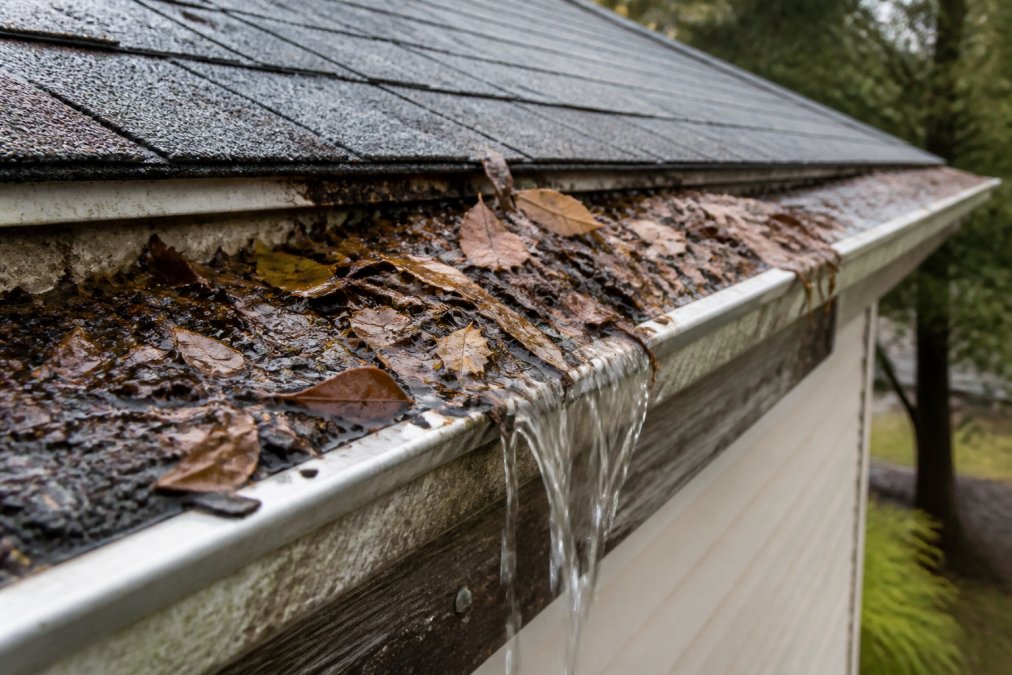
Water overflow during rain. If water spills over the front edge instead of flowing to the downspout, there's a blockage causing immediate fascia board damage risk.
Sagging gutters. Wet debris is heavy. A section pulling away from the fascia or visibly drooping is carrying more weight than designed, risking fastener failure.
Plants growing in the gutter channel. Soil and organic matter accumulate over time. Vegetation sprouting from gutters signals substantial debris buildup.
Visible shingle granules in downspout discharge. Heavy granule accumulation at downspout bases signals both roof aging and significant sediment in your gutter system.
Staining on fascia or exterior siding. Dark streaks running down from the gutter line indicate water overflow or leaking joints, both requiring cleaning or maintenance.
Risks of Skipping Gutter Cleaning
Clogged gutters cause structural, progressive, and expensive damage.
Foundation erosion is the most serious long-term consequence. Overflowing water saturates soil against the foundation, eroding it over repeated cycles and creating hydrostatic pressure that leads to cracking and water intrusion in basements and crawl spaces.
Fascia and soffit rot follows close behind. The fascia board is the first defense between the gutter and roof structure. Constant moisture from overflowing gutters deteriorates wood quickly, and rot spreads to the soffit and roof deck.
Mold and mildew develop in damp debris inside clogged gutters and spread to adjacent wood. In humid climates, this happens within a single season.
Ice dams in cold climates are directly linked to gutter blockage. The roof deck and interior ceiling below can both be compromised by a single bad winter.
The EPA's guidance on moisture control and mold prevention in homes identifies functional gutter systems as foundational to preventing indoor mold growth.
DIY vs Professional Gutter Cleaning: Which Makes Sense
Both options work. The right choice depends on your comfort with ladder safety, roofline height and pitch, and how much your time is worth.
Cost-Benefit Analysis of Professional Services
Professional gutter cleaning is inexpensive relative to the damage it prevents. Pricing varies by home size, gutter linear footage, and regional labor costs, contact local providers for current quotes.
Professional service adds value beyond cleaning: trained technicians spot early signs of pitch problems, failing fasteners, and damaged downspouts that homeowners miss. Many providers also flush downspouts and inspect for underground drainage issues. For multi-story homes, the safety calculus alone often tips the decision toward professional service.
Realtors and property managers use professional gutter cleaning as consistent seasonal maintenance. A clean, functional gutter system is visible evidence of a well-maintained home and prevents water damage that shows up on home inspection reports.
For single-story homes with moderate tree coverage and homeowners comfortable on ladders, DIY cleaning is reasonable. For two-story homes, steep pitches, or anyone with mobility limitations, professional service is safer and more practical.
Gutter Cleaning Tools for Homeowners Who Do It Themselves
Proper DIY gutter cleaning requires more than a garden hose and good intentions.
Core tools:
- Gutter scoop or plastic trowel for removing packed debris
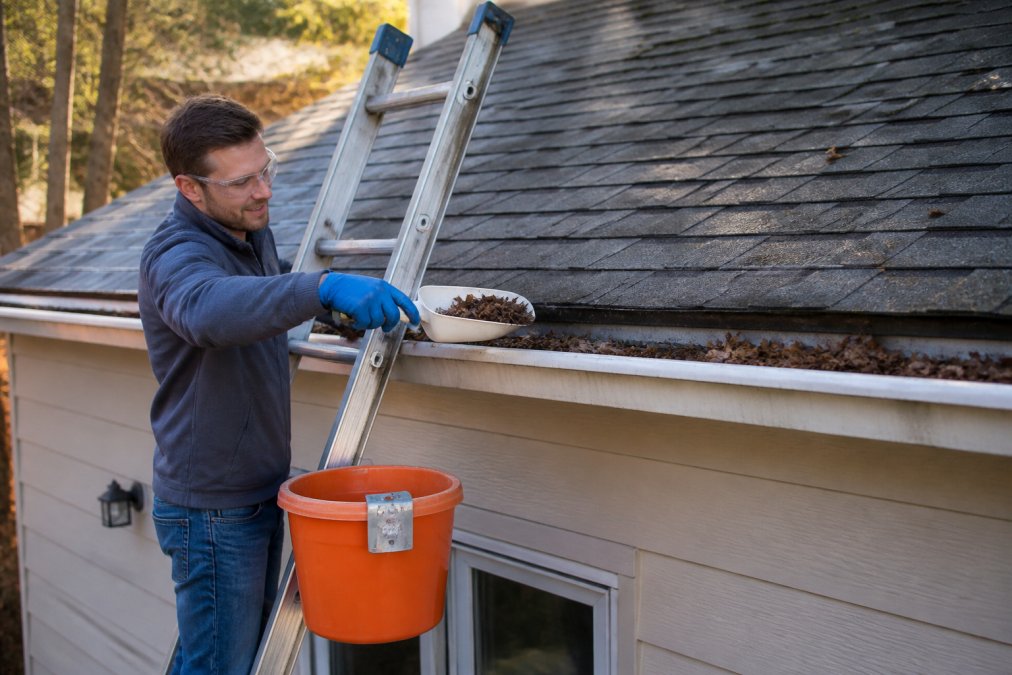
- Bucket with a hook to hang from the ladder
- Garden hose with a pistol-grip nozzle for flushing
- Gutter cleaning wand attachment for reaching without repositioning the ladder
- Work gloves (puncture-resistant)
- Safety glasses
Optional but useful:
- Wet/dry shop vacuum with gutter cleaning kit attachment for dry debris
- Plumber's snake for clearing stubborn downspout clogs
- Telescoping gutter cleaning wand for ground-level debris removal on single-story sections
Safety Equipment and Fall Prevention
Falls from ladders are among the most common causes of serious home improvement injuries, according to the Consumer Product Safety Commission's ladder safety data.
Use a fiberglass or aluminum extension ladder with standoff stabilizers. Standoff arms hold the ladder away from the gutter, preventing damage and providing a stable working position. Never lean a ladder directly against a gutter.
Always maintain three points of contact on the ladder. Move the ladder frequently rather than overreaching. On two-story homes, wear a fall arrest harness anchored to a roof anchor point.
How to Clean Residential Gutters: Step-by-Step
Total Time: 2-4 hours for an average single-story home Difficulty: Moderate (requires ladder comfort and physical fitness)
Step 1: Gather tools and set up safely [Time: 15 minutes] Collect all tools before climbing. Position the ladder on firm, level ground with standoff stabilizers. Put on gloves and safety glasses before ascending.
Step 2: Remove large debris by hand [Time: 30-60 minutes] Starting at the end opposite the downspout, scoop out leaves, packed sediment, and shingle granules using a gutter scoop. Deposit debris into the hanging bucket. Work toward the downspout end.
Step 3: Check downspout openings [Time: 10 minutes] Clear the debris guard at the top of each downspout. If blocked, use a garden hose to flush from the top. For stubborn clogs, work a plumber's snake down from the bottom.
Step 4: Flush the gutter channel [Time: 15-20 minutes] Using a garden hose with a pistol-grip nozzle, flush each gutter section from the far end toward the downspout. Watch for water pooling, which indicates a pitch problem or secondary blockage.
Step 5: Inspect while you work [Time: ongoing] Look for rust spots, holes, separated joints, and sections where the gutter has pulled away from the fascia. Note anything requiring repair before the next rain.
Step 6: Flush the downspouts [Time: 10 minutes] Run water through each downspout at full pressure. Confirm water exits freely at the bottom and discharges away from the foundation. If flow is restricted, repeat the snake process.
Step 7: Clean up and document [Time: 10 minutes] Dispose of debris in yard waste bags. Note the date and any observations about gutter condition. Set a reminder for the next scheduled cleaning.
Expected Result: Water flows freely through all gutters and downspouts with no overflow or pooling during the flush test.
| Step | Action | Time Estimate |
|---|---|---|
| 1 | Set up tools and ladder safely | 15 min |
| 2 | Remove large debris by hand | 30-60 min |
| 3 | Check downspout openings | 10 min |
| 4 | Flush gutter channel with hose | 15-20 min |
| 5 | Inspect for damage | Ongoing |
| 6 | Flush downspouts | 10 min |
| 7 | Clean up and document | 10 min |
Knowing how often to clean residential gutters is only half the equation; the other half is keeping your roof system in good condition so gutters have less work to do. Aging asphalt shingles shed more granules, stress the gutter system with heavier debris loads, and leave your home vulnerable to water intrusion. FRESH TEC's professional gutter cleaning pairs with our roof rejuvenation treatments, which use patented GreenSoy™ Technology to restore shingles and extend roof life by 6-8 years. Book a free inspection and let our team assess your full exterior maintenance picture.
Frequently Asked Questions
What happens if you never clean your gutters?
Clogged gutters force water to overflow rather than drain through downspouts. Over time, that overflow saturates fascia boards, causes foundation erosion, promotes mildew and mold growth inside walls, and can contribute to ice dams in colder climates. Debris-packed gutters also add significant weight, which can pull the gutter system away from the roofline entirely, requiring expensive repairs or full replacement.
Does the number of trees near my home affect gutter cleaning frequency?
Yes, significantly. Homes with pine trees directly overhead often need gutter cleaning three to four times per year because pine needles shed year-round and are small enough to slip past many gutter guards. Deciduous trees typically create two heavy debris periods, spring pollen and seed pods, then fall leaf buildup. The closer and taller the trees, the faster debris accumulation occurs and the shorter your safe interval between cleanings.
Can clogged gutters cause roof damage?
Clogged gutters allow water to back up under shingles, which accelerates shingle deterioration and can cause rot in the roof deck beneath. In freezing conditions, standing water in gutters forms ice dams that force moisture under shingles. Shingle granules washed into clogged downspouts are also a sign that roof runoff is not draining properly, which shortens the life of your roofing system and reduces structural integrity over time.
Is professional gutter cleaning worth it?
For most homeowners, professional cleaning is worth the cost at least once a year. Professionals identify problems beyond surface debris, misaligned gutter pitch, separated joints, failing downspouts, and early fascia damage, that a routine DIY clean can miss. For multi-story homes or properties with steep rooflines, the safety risk of ladder work alone makes professional service the practical choice. Pricing varies by home size and debris load, so request a quote for an accurate figure.
This article was written using GrandRanker