 how-to
Book Professional Solar Panel Cleaning in 5 Steps
Table of Contents
- Why Professional Solar Panel Cleaning Matters for Your Energy Output
- Signs Your Solar Array Needs a Professional Cleaning
- What to Expect When You Book Professional Solar Panel Cleaning
- How Often Should Solar Panels Be Cleaned?
- Solar Panel Cleaning Cost: What Determines Your Quote
- DIY vs Professional Solar Panel Cleaning: Risks and Rewards
- How to Choose a Solar Panel Cleaning Service
- Book Your Cleaning and Protect Your Solar Investment
- Frequently Asked Questions
Last Updated: September 4, 2026
Why Professional Solar Panel Cleaning Matters for Your Energy Output
Solar panels convert sunlight into electricity, and anything that blocks that sunlight reduces your energy production. Professional solar panel cleaning is the most reliable way to remove the accumulated grime, pollen, and bird droppings that silently cut into your system's performance.
The effect is measurable. When dirt accumulates on photovoltaic cells, it creates a soiling loss that directly impacts your energy yield and, by extension, your return on investment. A dirty panel doesn't fail; it just underperforms, often without any obvious warning sign until you review your energy production monitoring data.
What most homeowners miss is that the damage isn't just about lost power today. Left untreated, mineral buildup and organic debris can contribute to solar panel degradation over time. Regular professional cleaning is a preventative maintenance step that protects both your monthly savings and the long-term health of your solar array.
Signs Your Solar Array Needs a Professional Cleaning
How do you know when it's time to book professional solar panel cleaning? Look for visible buildup, a drop in output, or a recent dry spell that left a layer of dust across your roof.
Start with your energy bills. If your production has dipped but your usage patterns haven't changed, grime is a likely culprit. Next, examine the panels from the ground or a window. Can you see a clear layer of dust, bird droppings, or pollen accumulation? Can you trace outlines where rain has washed channels through the dirt? Those are reliable indicators.
Another sign is local conditions. Properties near construction sites, farms, or busy roads accumulate debris faster. A common mistake is waiting for a rainstorm to "wash" the panels, but most rain leaves behind mineral spots that actually worsen the problem.
What to Expect When You Book Professional Solar Panel Cleaning
When you book professional solar panel cleaning with a reputable provider, the process is systematic and safe. A typical service visit includes a system inspection, debris removal, and a thorough wash using specialized equipment.
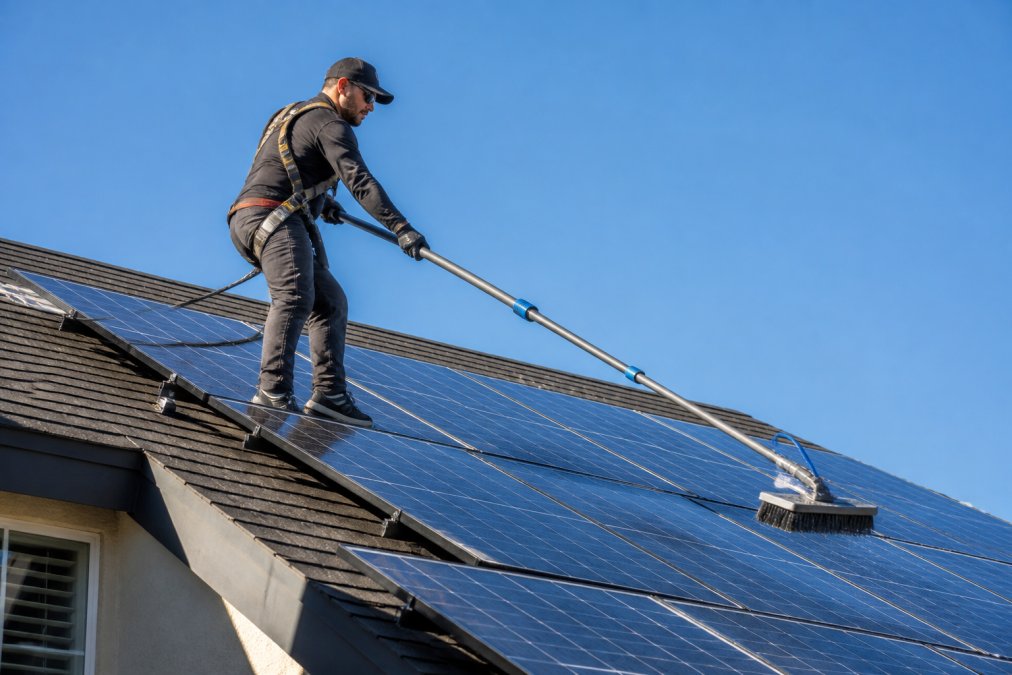
The technician will first assess your array for existing damage, loose wiring, or inverter performance issues. Then they remove loose debris like leaves and twigs. The core of the job uses a water-fed pole with deionized water and a soft-bristle brush. Deionized water is key: it pulls minerals off the glass without leaving the spotty residue that hard tap water creates, giving you a spot-free rinse (energy.gov).
Safety is handled by the crew, not you. Professionals arrive with roof safety gear, including harness and tether systems, so no one is walking on your roof without proper fall protection. The entire visit typically takes one to two hours depending on your array size, and a good crew will walk you through what they found before they leave.
How Often Should Solar Panels Be Cleaned?
Most solar arrays need a professional cleaning one to two times per year to maintain peak efficiency. This is the answer to the question homeowners ask most, and it holds true for residential solar systems in most climates.
Your specific cleaning frequency depends on your environment. If you live in an area with heavy pollen accumulation in spring, schedule a cleaning after that season ends. If you're in a dusty region or near agricultural fields, plan for a second cleaning in late summer. Monsoon seasons that leave mineral deposits also warrant a follow-up.
Rather than guessing, pair your cleaning with a seasonal maintenance schedule. Many owners book a spring cleaning to capture peak summer sun and another in the fall to clear autumn debris before shorter days arrive. This cadence keeps your energy output consistent and gives a technician a chance to catch small issues before they become expensive repairs.
Solar Panel Cleaning Cost: What Determines Your Quote
Solar panel cleaning cost varies based on several factors, and understanding them helps you compare quotes fairly. Pricing is not one-size-fits-all, and the cheapest estimate is not always the best value.
The main cost drivers include the number of panels, the pitch and height of your roof, and how accessible the array is. A single-story home with ground-level panels will cost less than a steep two-story roof requiring extensive safety rigging. The level of buildup matters too; a heavy layer of bird droppings takes more time and water to remove than routine dust.
Another factor many homeowners overlook is the cleaning method itself. Services that use deionized or purified water typically charge a premium over those using tap water. That premium is worth it: tap water contains dissolved minerals that leave visible spots on the glass, which can actually attract more dirt over time and reduce the effectiveness of the cleaning. A professional using a water-fed pole with deionized water ensures a spot-free finish without chemical residue.
When you request a service estimate, ask what is included. Does the quote cover a full system inspection? Is deionized water part of the process, or are they using tap water that could leave spots? Is there a travel fee or a minimum charge? Some companies also charge extra for cleaning panels on roofs with steep pitches or for accessing hard-to-reach arrays. Getting these details in writing prevents surprise charges on the final invoice.
For an accurate figure tailored to your property, request a free inspection from a local provider. FRESH TEC offers free assessments so you know exactly what your cleaning will involve before committing. A reputable company will walk your property, assess the array's condition, and give you a firm quote rather than a vague estimate over the phone.
DIY vs Professional Solar Panel Cleaning: Risks and Rewards
The DIY vs professional solar panel cleaning debate usually comes down to cost, but the risks of climbing on your roof often outweigh the savings.
DIY cleaning requires you to either work from a ladder with a long brush or walk on the roof itself. Both carry serious fall risks. Beyond personal safety, there's the question of technique. Using the wrong equipment, such as abrasive cleaning agents or a standard pressure washer, can scratch the glass or force water into the panel edges, voiding your warranty.
Warranty compliance is the angle most guides miss, and it is the single most expensive risk of DIY cleaning. Most solar panel manufacturers include maintenance clauses in their warranty terms. These clauses often specify that panels must be cleaned using non-abrasive methods and that harsh chemicals or high-pressure washing can void coverage (solarreviews.com). If you damage the panel's anti-reflective coating or force water into the junction box, the manufacturer can deny a warranty claim for a defect that would otherwise be covered. That means a DIY mistake could cost you thousands in replacement panels.
Water quality is another hidden trap. Most homeowners use tap water from a garden hose, which contains dissolved calcium and magnesium. When that water dries on the glass, it leaves a mineral film. Over repeated cleanings, this film builds up and becomes harder to remove, actually reducing light transmission more than the original dirt did. Professional services use deionized or reverse-osmosis water, which pulls minerals off the glass without leaving residue. This is not a marketing gimmick; it is a technical requirement for a truly spot-free clean.
What professionals bring is the right tools and training: soft-bristle brushes, deionized water, and a thorough understanding of how to avoid thermal shock on hot panels. Cleaning panels in direct sunlight with cold water can cause the glass to crack due to rapid temperature change (peer-reviewed research). Professionals know to clean in the early morning or late afternoon, or to use water temperatures that minimize thermal stress.
For a single-story array you can safely reach, a gentle rinse with a soft brush and deionized water might suffice. For anything else, professional solar panel cleaning protects your investment, your warranty, and your safety. If you do choose the DIY route, check your manufacturer's maintenance guidelines first and use only approved methods and water quality.
How to Choose a Solar Panel Cleaning Service
Choosing the right service comes down to verifying three things: experience with solar arrays, proper safety protocols, and a commitment to water quality.
First, ask about their cleaning method. A reputable company will explain why they use deionized water and soft-bristle brushes rather than pressure washing. Second, confirm they carry insurance and use proper roof safety procedures. Third, look for a provider that includes a system inspection as part of the service, not just a wash.
Professional certification and customer reviews matter, but local knowledge is equally valuable. A company familiar with your area's specific pollen, dust, and weather patterns will tailor their recommendations to your situation. For commercial solar maintenance, verify they have experience with larger, more complex arrays.
A strong sign of a quality provider is one that offers a warranty on their own work. It shows they expect their cleaning to meet a standard and are willing to stand behind it.
Book Your Cleaning and Protect Your Solar Investment
Your solar array is a long-term investment, and regular professional cleaning is the simplest way to protect your energy output and your return on investment. Skipping this maintenance means accepting lower production and risking long-term panel degradation that no warranty will cover.
FRESH TEC makes it easy to keep your panels performing at their best. As part of our comprehensive exterior care suite, we offer solar panel maintenance using the same eco-conscious approach we apply to every surface we clean. Our team is local, insured, and focused on protecting your property investment through sustainable, high-impact care.
Don't wait for a noticeable drop in your energy bills to act. Schedule your cleaning today and keep your solar array producing at its full potential.
Frequently Asked Questions
How much does professional solar panel cleaning cost?
Solar panel cleaning cost depends on the size of your array, the pitch of your roof, and how accessible the panels are. Most companies provide a free estimate after a quick site assessment. Instead of asking for a generic price, request a quote that includes a system inspection and spot-free rinse. This helps you compare services fairly and avoid surprise fees.
Is it worth paying to have solar panels cleaned?
Yes, when soiling loss is significant. Bird droppings, pollen accumulation, and dust can block sunlight and reduce energy production. Professional cleaning often recovers enough efficiency to pay for itself, especially in dry or dusty climates. The real value is the system inspection that comes with the service. A pro can spot loose connections, micro-cracking, or inverter performance issues before they become expensive repairs.
Can I clean my own solar panels or should I hire a pro?
You can clean ground-mounted panels yourself, but roof safety is a major concern. Working at height without proper harness and tether equipment is risky. DIY cleaning also voids warranties if you use abrasive cleaning agents or high-pressure water that causes micro-cracking. Professionals use deionized water and soft-bristle brushes to avoid thermal shock and mineral buildup, keeping your warranty compliance intact.
How often should solar panels be cleaned to maintain efficiency?
Most manufacturers and installers recommend cleaning your solar array at least twice a year. If you live in an area with frequent dust storms, heavy pollen, or lots of birds, you may need quarterly cleanings. Monitoring your energy production can help you spot soiling loss early. A sudden drop in energy yield after a dry spell is a clear sign it is time to schedule a professional cleaning.
Get started with FRESH TEC and book your free inspection to see what your panels have been missing.