 How-to
How to Pick a Roof Color That Cuts Energy Costs
Last Updated: November 21, 2026
Quick Summary
Roof color affects home energy efficiency because dark surfaces absorb solar heat while light surfaces reflect it, so a light roof color keeps the attic cooler and lowers cooling demand. Raising roof reflectivity from 10-20% to about 60% can cut cooling-energy use by more than 20%.
- Solar reflectance measures bounced sunlight, emittance measures released heat, and SRI combines both into one score.
- Light roofs suit hot sunny climates, while dark roofs speed snow melt and slightly lower heating load.
- Compare published reflectance, emittance, and SRI values rather than shade names on a sample board.
- Insulation and attic ventilation often move the needle more than color alone, so treat color as one variable.
- For resale, a neutral mid-tone like light gray, tan, or soft brown appeals to the widest buyer pool.
Table of Contents
- How Roof Color Affects Heat Absorption and Reflection
- Light-Colored vs. Dark-Colored Roofs: A Side-by-Side Comparison
- Finding the Best Roof Color for Hot Climate Homes
- How Cool Roof Shingles Change Indoor Temperature and Cooling Costs
- Choosing Shingle Colors for Curb Appeal and Energy Balance
- What Color Roof Is Best for Resale?
- Book a Free Roof Inspection With FRESH TEC LLC
- Frequently Asked Questions
How Roof Color Affects Heat Absorption and Reflection
The impact of roof color on home energy efficiency starts with one simple fact: dark surfaces soak up solar heat, and light surfaces bounce it back. Your shingles sit in the sun all day, and whatever color they are decides how much of that heat travels into your attic. For practical steps to protect your roof from desert heat, see our guide on how to protect asphalt shingles from desert sun damage.
According to Lawrence Berkeley National Laboratory's cool roofing materials research, raising roof reflectivity from 10-20% to about 60% can cut a building's cooling-energy use by more than 20%. That is a big swing for a surface most homeowners never think about.
Condition matters just as much as color.
Reflectance, Emittance, and Solar Reflectance Index Explained
Solar reflectance is how much sunlight a roof bounces back instead of absorbing. Emittance is how well a roof releases the heat it has already stored. Put both together and you get the Solar Reflectance Index (SRI), a single score that lets you compare products.
A 2022 study in Frontiers in Mechanical Engineering found reflectance rose 4%-43% when comparing colored and colorless materials. In short, shade choice moves the needle, but not every light color performs the same.
Light-Colored vs. Dark-Colored Roofs: A Side-by-Side Comparison
Light roofs reflect sunlight and stay cooler. Dark roofs absorb heat and run hotter. That is the trade-off in one line, but the real comparison is not about visible color at all. It is about two measurable properties: solar reflectance (how much sunlight the surface bounces back) and thermal emittance (how quickly it releases stored heat). Two shingles that look identically gray can perform very differently once those numbers diverge.
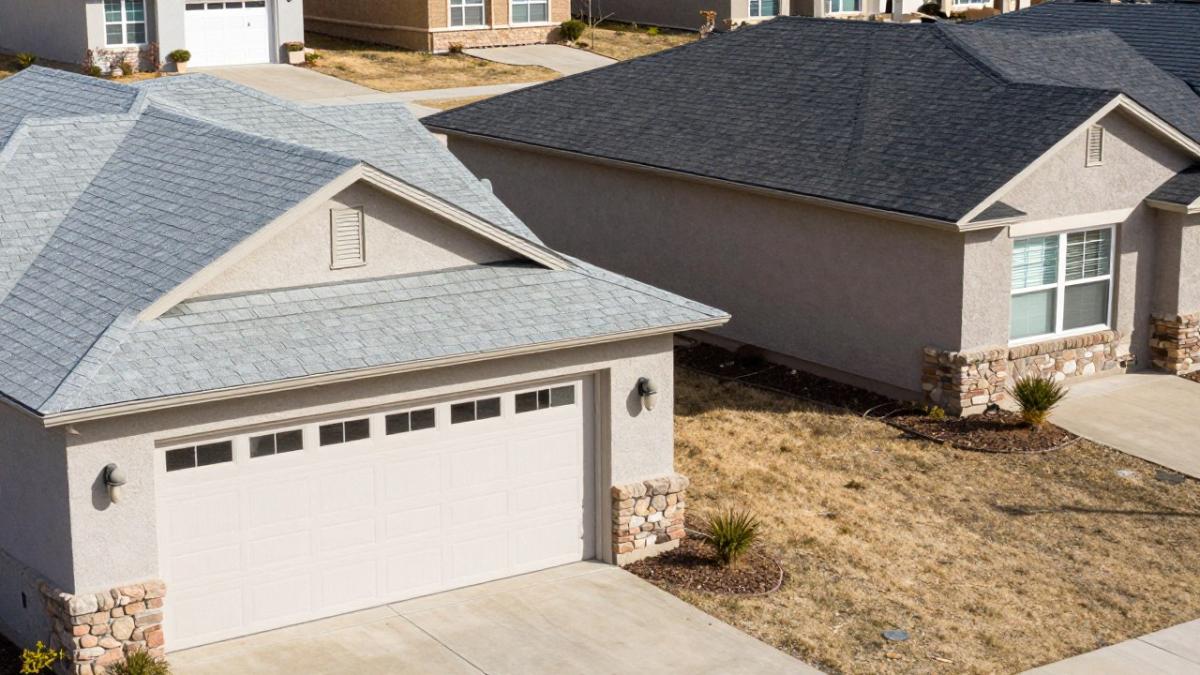
Here is how the two families stack up on the properties that actually drive energy performance:
| Property | Light-Colored Roof | Dark-Colored Roof |
|---|---|---|
| Solar reflectance | Higher, bounces more sunlight | Lower, absorbs more sunlight |
| Thermal emittance | Similar range; depends on coating | Similar range; depends on coating |
| Solar Reflectance Index (SRI) | Typically higher | Typically lower |
| Peak roof-deck temperature | Lower | Higher |
| Cooling load | Lower | Higher |
| Heating load | Slightly higher | Slightly lower |
| Snow melt | Slower | Faster |
| Dirt and streak visibility | Shows dust and streaks | Hides stains |
| Curb appeal | Clean, modern | Bold, traditional |
Light roofs: better for hot, sunny climates and lower cooling bills. They can look chalky over time and show dust. A light roof with low emittance, however, can still trap heat, reflectance and emittance have to be read together, not as a single "light equals cool" rule.
Dark roofs: strong for cold climates and snow melt. They hide dirt well but push attic temperatures up. In a hot climate, a dark roof over a poorly insulated, poorly vented attic is the worst combination for cooling demand.
Watch out: a shingle's color on the sample board is not its rated performance. Manufacturers publish reflectance and SRI values for specific product lines, and those numbers, not the shade name, are what you should compare.
If heat has already curled or cracked your shingles, our guide to 8 signs of asphalt shingle heat damage you shouldn't ignore walks through the warning signs.
Finding the Best Roof Color for Hot Climate Homes
The best roof color for a hot climate is a light one: white, pale gray, tan, or light brown. These shades reflect solar energy and keep attic temperatures down. But "pick a light color" is where most guides stop, and it is not enough to make a real decision. A practical framework weighs four inputs: cooling demand, heating demand, roof assembly, and local weather.
Step 1, Weigh cooling against heating. In a hot, sunny climate, cooling demand dominates, so a high-reflectance roof pays off most of the year. In a climate with real winters, the same roof can slightly raise heating demand. The Cool Roof Rating Council notes this effect depends on your climate, so compare both seasons rather than optimizing for July alone.
Step 2, Check the roof assembly, not just the shingle. Insulation, attic ventilation, and roof pitch change how much heat actually reaches your living space. A light roof over a poorly vented attic still runs hot. Ventilation and insulation often move the needle more than color alone, so treat color as one variable in a system.
Step 3, Verify rated performance. Ask for the product's solar reflectance, thermal emittance, and SRI. Compare those numbers across candidate products rather than comparing shade names. A mid-tone shingle with a high SRI can outperform a pale shingle with a low one.
Step 4, Account for shade and orientation. Roofs with heavy tree shade or mostly north-facing planes gain less solar heat, which reduces the benefit of a high-reflectance color. Sunny, unshaded, south- and west-facing planes benefit most.
Watch out: a reflective roof can lower cooling demand while slightly raising heating demand in winter, so a color chosen for summer performance may not be the best year-round choice in a mixed climate.
If you are choosing a full roofing system, our breakdown of which roofing material handles Albuquerque's high desert best covers how tile, metal, and shingles each handle the sun.
How Cool Roof Shingles Change Indoor Temperature and Cooling Costs
Cool roof shingles are reflective shingles rated for high solar reflectance. They keep the roof deck cooler, which means less heat radiates down into your rooms and your air conditioning runs less.
The catch: savings depend on your home. LBNL's research describes a potential drop in cooling energy, not a guaranteed dollar figure on your bill. Treat any promise of a set percentage off your utility costs with suspicion.
A common mistake is buying reflective shingles and skipping the attic. Ventilation and insulation decide how much of that benefit actually reaches your rooms.
Choosing Shingle Colors for Curb Appeal and Energy Balance
Shingle colors are where energy math meets the street view. You want a roof that performs in the sun and still looks right from the curb.
A few practical rules we give homeowners:
- Match the roof to your home's style, not just the trend
- Pick light or mid-tone shades if cooling costs worry you
- Use dark gray or brown to anchor a traditional look
- Check samples in full sun, not under a showroom light
- Keep gutters and valleys clean so streaks don't dull the color
Maintenance protects that look. Our roof maintenance for curb appeal guide covers the yearly steps that keep shingles clean and bright.
What Color Roof Is Best for Resale?
For resale, the safest roof color is a neutral mid-tone: light gray, tan, or soft brown. These shades appeal to the widest pool of buyers and read as clean and well-kept.
Black and dark charcoal shingles can look sharp, but they show every streak and footprint. Bright or unusual colors narrow your buyer pool fast.
Realtors and property managers trust us to get exteriors show-ready. FRESH TEC LLC restores asphalt shingles with our plant-based GreenSoy™ Technology. Typical results add 6-8 years of roof life, backed by a 6-year warranty.
If shingles are curled, missing, or leaking, a professional inspection is the first step.
Book a Free Roof Inspection With FRESH TEC LLC
Before you pick a color, find out what condition your roof is in. A free inspection tells you whether your shingles can be restored or need replacement, and that answer shapes every color decision after it.
FRESH TEC LLC is a local, veteran-owned business serving Albuquerque and Rio Rancho. Our FRESH ROOF TREATMENT uses patented, plant-based GreenSoy™ Technology to restore asphalt shingles. We also handle flat roof coatings, gutter cleaning, and solar panel maintenance, all backed by a 6-year warranty.
If you are getting a home ready to sell, our roof tune-up service handles small issues before they become deal-breakers.
Your roof color affects comfort and cooling costs, but only a roof in good shape can deliver those benefits. FRESH TEC LLC restores shingles with GreenSoy™ Technology, extends roof life by 6-8 years, and backs the work with a 6-year warranty. Get started with FRESH TEC LLC and book your free inspection today.
Frequently Asked Questions
What color roof is most energy-efficient?
Light-colored roofs generally reflect more sunlight and stay cooler than dark ones. Lawrence Berkeley National Laboratory research indicates that raising roof reflectivity can meaningfully reduce building cooling-energy use. That said, the Cool Roof Rating Council notes a reflective roof may increase heating demand in cold months, so the most efficient choice depends on your climate. In hot, sunny areas, light gray, tan, or white shingles usually perform best.
Do cool roof shingles really lower energy bills?
Cool roof shingles reflect more solar heat, which reduces heat gain through the roof deck and can lower air conditioning demand. The savings vary by home, insulation, attic ventilation, and climate. Published research comparing colored and colorless materials has reported differences in solar reflectance. Treat published percentages as potential, not guaranteed, and ask a contractor to assess your attic and insulation before expecting a specific bill reduction.
Does roof color affect energy use in winter?
Yes, in the opposite direction. A highly reflective roof that keeps a home cool in summer can also reduce passive solar heat gain in winter, which may raise heating costs in cold climates. The Cool Roof Rating Council points out this trade-off depends on climate. In mild or hot regions, summer cooling savings usually outweigh winter losses. In snowy climates, darker shingles that absorb more solar heat can help with snow melt and warmth.
What color roof is best for resale?
Neutral tones tend to appeal to the widest pool of buyers. Dark gray, charcoal, and brown shingle colors are common on resale homes because they suit many exterior styles and hide weathering. Light gray and tan are also safe, especially in hot markets where energy efficiency matters to buyers. Beyond color, condition matters more than shade, so a roof that looks clean and well-maintained can improve curb appeal.