 How-to
8 Signs of Asphalt Shingle Heat Damage You Shouldn't Ignore
Last Updated: November 8, 2026
Quick Summary
The signs of shingle heat damage are curling edges, cupping, blistering, bubbles, cracking, brittleness, granule loss, and fading. Heat curling is gradual, favors south- and west-facing slopes, and leaves shingles feeling dry and brittle rather than bruised.
- Photograph each slope from the ground with a zoomed phone camera and date the photos to track spreading damage.
- Heat curling shows up first on south- and west-facing slopes, while hail damage appears randomly across all slopes.
- Granules protect shingles from UV exposure, so bald spots let the sun attack the asphalt directly.
- A hot attic radiates heat back into shingles from below, so check that soffit vents are not blocked by insulation.
- Ask a roofer to state the cause in writing, since a quote without a named cause will not support a claim.
Table of Contents
- How Summer Heat Affects Asphalt Shingles
- 8 Signs of Asphalt Shingle Heat Damage Pictures Can Help You Confirm
- Asphalt Shingles Curling from Heat vs. Other Causes
- Roof Shingle Blistering Causes: Heat, Moisture, and Ventilation
- Roof Ventilation and Shingle Heat: Why Attic Airflow Matters
- A Safe Step-by-Step Homeowner Inspection Checklist
- What to Do After Finding Suspected Heat Damage
- Book a Free Roof Inspection with FRESH TEC LLC
- Frequently Asked Questions
How Summer Heat Affects Asphalt Shingles
Signs of asphalt shingle heat damage start long before a shingle fails. When summer heat bakes a roof day after day, the asphalt layer in a shingle can dry out and the shingle can lose its ability to flex.
Here at FRESH TEC LLC, we work on roofs across Albuquerque and Rio Rancho, where intense sun and dry air can push roof surface temperatures far above air temperature. The Building America Solution Center's asphalt shingle guidance notes that lighter-colored shingles tend to last longer because they absorb less heat and are less likely to be damaged by prolonged heat.
Dark shingles absorb more heat. Poor attic airflow makes it worse. Over years, the cycle of hot days and cool nights causes thermal stress and material fatigue. That is when the visible signs begin.
Below, we break down the eight signs to look for, how to tell heat damage from other causes, and what to do next.
8 Signs of Asphalt Shingle Heat Damage Pictures Can Help You Confirm
The eight signs of shingle heat damage are curling edges, cupping, blistering, bubbles, cracking, brittleness, granule loss, and fading. Photos help because you can compare your roof to a known example and track changes over time.
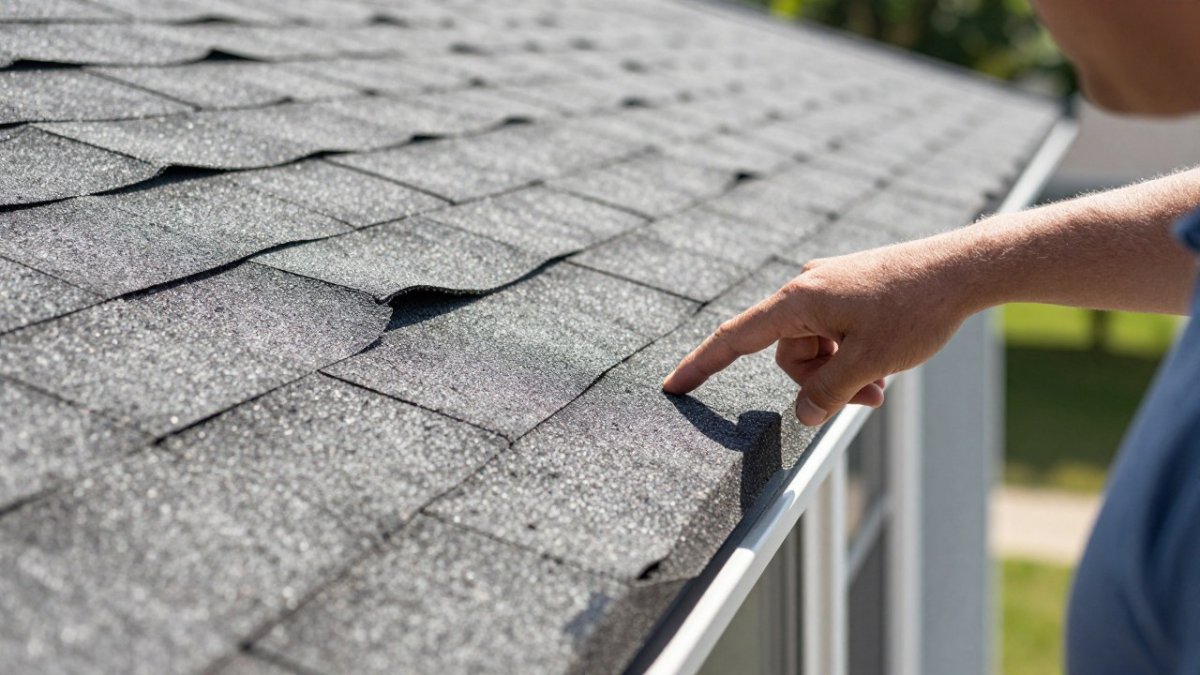
Take photos from the ground with your phone zoomed in. Date them. A photo from June next to one from September tells you whether the problem is spreading.
Curling Edges and Cupping
Curling edges lift up at the corners. Cupping is the opposite: the middle of the shingle sinks while the edges stay raised, like a shallow bowl.
Both point to a shingle that has lost flexibility. Heat is a common cause, but not the only one.
Blistering and Bubbles
Blistering shows up as small raised bumps on the shingle surface. Bubbles look similar but larger. Both happen when moisture or trapped gases push up under the asphalt layer.
Watch out: blistering is not automatic proof of heat damage. Haag Engineering's hail damage study identifies closed and open blisters among shingle conditions that are not caused by hail, which means blistering has several possible causes and needs a closer look before you blame heat alone.
Cracking, Brittleness, and Granule Loss
Cracked shingles split along the surface. Brittle shingles snap instead of bending. Granule loss shows up as bald spots where the mineral granules have washed or worn away, leaving bare asphalt.
Granules protect the shingle from UV exposure. Once they are gone, the sun attacks the asphalt directly and deterioration speeds up. You will often see granules collecting in gutters or at the bottom of downspouts.
Asphalt Shingles Curling from Heat vs. Other Causes
Curling is the most misread sign on a roof. Heat, hail, wind, installation error, and plain age can all lift a shingle edge, and the fix, and the insurance outcome, depends entirely on which one you are looking at. The table below is the comparison most homeowners never get before a contractor gives them an answer.
| Cause | Where it shows up | What the shingle looks like | Telltale detail |
|---|---|---|---|
| Heat | South- and west-facing slopes first, then spreads | Gradual curl at corners and edges; surface feels dry and stiff | No impact marks; granule loss is uniform, not circular |
| Hail | Random across all slopes, often one side of the house | Bruises, soft spots, circular granule loss | You can feel a soft spot with light finger pressure; granules cluster around a center |
| Wind | Edges, ridges, and perimeter | Lifted or missing tabs, creased shingles | Creases run perpendicular to the tab; damage stops where the wind shadow begins |
| Poor installation | Straight lines across the roof | Buckling in rows, nail pops, shingles not laying flat | The pattern follows the framing or the nail line, not the sun |
| Age | All slopes roughly evenly | Widespread wear, thinning, granule loss everywhere | The roof is near or past its expected service life regardless of orientation |
Heat curling has a signature: it is gradual, it favors the slopes that take the most direct sun, and the shingle feels brittle rather than bruised. A common pattern is a roof that looks fine on the north slope and clearly curled on the south and west, that asymmetry is the strongest single clue that heat, not impact, is the driver.
Watch out: judge the pattern across the whole slope before you assign a cause to a single curled shingle.
Documentation matters here because the cause can affect how a claim is handled. Photograph each slope separately, note the compass orientation, and record whether damage is symmetric or one-sided. That record is what an adjuster and a roofer will both work from.
If you have confirmed curling and want to know whether to repair or replace, our guide on curling asphalt shingles walks through that decision.
Roof Shingle Blistering Causes: Heat, Moisture, and Ventilation
Roof shingle blistering causes fall into three groups: trapped heat, trapped moisture, and poor attic ventilation. All three push from underneath or bake from above.
Moisture pockets form when humid air from inside the house reaches a cool roof deck. The sun heats the shingle, the moisture expands, and a blister forms. Heat alone can do it too, softening the asphalt until gases bubble up.
Ventilation ties directly into this. The Building Science Corporation's shingle roofing research notes that problems once masked by heat loss in old, leaky attics can become visible in modern, well-insulated homes. A tight house with a poorly vented attic traps heat right under the shingles.
Roof Ventilation and Shingle Heat: Why Attic Airflow Matters
Roof ventilation and shingle heat are linked more than most homeowners realize. A hot attic radiates heat back up into the shingles from below, so the roof cooks from both sides.
On a 90-degree day, roof surface temperatures can climb well above air temperature, and attic heat adds to that load. Better airflow moves hot air out and pulls cooler air in.
Quick checks you can do yourself:
- Look for ridge vents, soffit vents, and gable vents
- Make sure soffit vents are not blocked by insulation
- Check that attic insulation is not packed against the roof deck
- Feel the attic on a hot afternoon; if it is stifling, airflow is likely poor
A Safe Step-by-Step Homeowner Inspection Checklist
Stay on the ground. Roof work is the dangerous part, and most of what you need to see is visible from below or with a phone camera.
- Walk the perimeter and photograph each slope in daylight
- Use binoculars or phone zoom to check for curling, cupping, and blisters
- Look for granules in gutters and at downspout ends
- Check for bald spots and faded patches, especially on south and west slopes
- Note any cracked or missing shingles
- Look for nail pops and lines of buckling
- Check attic vents for blockage and feel attic heat on a hot day
- Compare photos month to month to see if damage is spreading
If you want to know what a professional actually examines, our guide on what a roof inspection checks covers the full checklist. For a closer look at early granule loss, see identifying shingle granule loss.
What to Do After Finding Suspected Heat Damage
Finding the signs is the easy part. The sequence you follow next determines whether you pay for a small repair or a full replacement, and whether an insurance claim survives review. Work through these steps in order.
1. Stop the damage from getting worse. Do not walk the roof in summer heat, brittle shingles crack under foot and turn a cosmetic problem into a leak. Keep the attic ventilated, clear anything blocking soffit vents, and avoid pressure-washing the roof, which strips the granules that are already compromised.
2. Document before anyone touches it. Take dated photos of each slope from the ground, note compass orientation, and photograph any granules collected in gutters or at downspout ends. Keep a simple written log: date, slope, what you saw.
3. Pull your paperwork. Check the shingle manufacturer's warranty terms and your homeowner policy before you call anyone. Check the shingle warranty terms and your homeowner policy before you call anyone, since coverage for heat and ventilation-related damage can differ.
4. Get a cause confirmation, not just a quote. Ask the roofer to state the cause in writing, heat, hail, wind, installation, or age, and to note which slopes are affected.
**5. Our article on extending roof life without replacement covers the middle ground, and our guide on protecting shingles from desert sun damage explains how to slow the damage going forward.
Watch out: a roofer who recommends replacement before confirming the cause may be solving the wrong problem, and if the real cause is hail or wind, you may be paying out of pocket for damage your policy would have covered.
If shingles are cracked through, missing, or the roof is leaking, replacement is the honest answer. We will tell you that plainly.
Book a Free Roof Inspection with FRESH TEC LLC
Heat damage is easier to address early. FRESH TEC LLC is a local, veteran-owned business serving homeowners, realtors, and property managers in Albuquerque and Rio Rancho. Our FRESH ROOF TREATMENT uses patented, plant-based GreenSoy™ Technology to restore asphalt shingles and extend roof lifespan by 6-8 years at a fraction of replacement cost. Every treatment is backed by our 6-year warranty. Realtors and property managers trust us to get exteriors show-ready.
Your roof took a full summer of sun. Find out what it cost you before the next one arrives. Get started with FRESH TEC LLC and book a free inspection to learn whether rejuvenation can save your shingles.
Frequently Asked Questions
What temperature is too hot for asphalt shingles?
Sustained high roof surface temperatures can accelerate aging. Darker shingles absorb more heat, and poorly ventilated attics trap it. Prolonged direct sun heat can soften the asphalt binder, loosen granules, and reduce flexibility. That is why lighter-colored shingles tend to last longer and why attic ventilation matters so much in hot climates.
Can prolonged summer heat damage asphalt shingles?
Yes. Repeated exposure to summer heat and UV radiation causes thermal stress and material fatigue. The asphalt binder dries out, shingles become brittle, and granule loss speeds up. Over several seasons, this shortens the shingle lifespan and can lead to roof failure. Heat damage often appears first on south- and west-facing slopes that get the most direct sunlight. If you notice curling, blistering, or bald spots, have a roofing professional inspect the roof before the damage spreads.
How can you tell if asphalt shingles are curling from heat?
Heat-related curling usually shows up as edges lifting or cupping across a wide area, especially on sun-facing slopes. Inadequate ventilation or incorrect installation can also cause curling, so the pattern matters. Heat curling tends to be widespread and accompanied by brittleness, granule loss, or fading. Isolated, random curling may point to a ventilation or installation defect instead. A professional inspection can distinguish heat damage from normal weathering and recommend the right fix.
What should you do if you notice heat damage on shingles?
Document the damage with photos and notes, then contact a roofing professional for an inspection. Avoid walking on the roof yourself, since brittle shingles crack easily. Ask the inspector to check attic ventilation and roof temperature as part of the assessment. Depending on severity, options range from targeted repairs to a rejuvenation treatment that extends shingle life. FRESH TEC LLC offers free inspections in Albuquerque and Rio Rancho to help you decide between repair and replacement.