 comparison
Curling Asphalt Shingles: Repair vs Replacement Guide
Table of Contents
- Signs of Roof Aging: When Curling Asphalt Shingles Signal Trouble
- What Causes Curling Asphalt Shingles?
- Repair vs. Replacement: A Decision Framework
- The Cost of Roof Replacement vs Repair: What to Expect
- Asphalt Shingle Rejuvenation: A Third Option for Aging Roofs
- Risks of Installing New Shingles Over Old Ones
- Insurance and Warranty Implications for Curling Shingles
- Frequently Asked Questions
Last Updated: October 1, 2026
Signs of Roof Aging: When Curling Asphalt Shingles Signal Trouble
Curling asphalt shingles are one of the clearest signs your roof is nearing the end of its useful life. The edges lift, warp, or cup upward, breaking the seal that keeps water out. Curling is a common issue homeowners ask about. This guide covers what causes it, when a patch repair makes sense, and when replacement is the only honest answer.
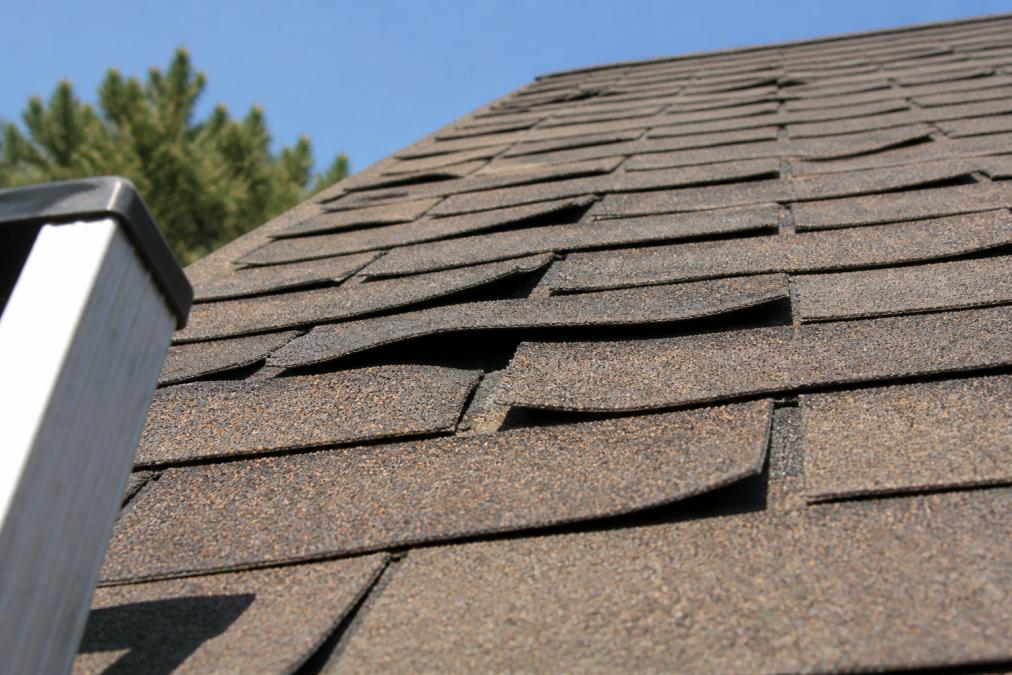
Visual Identification Guide: Cupping, Clawing, and Blistering
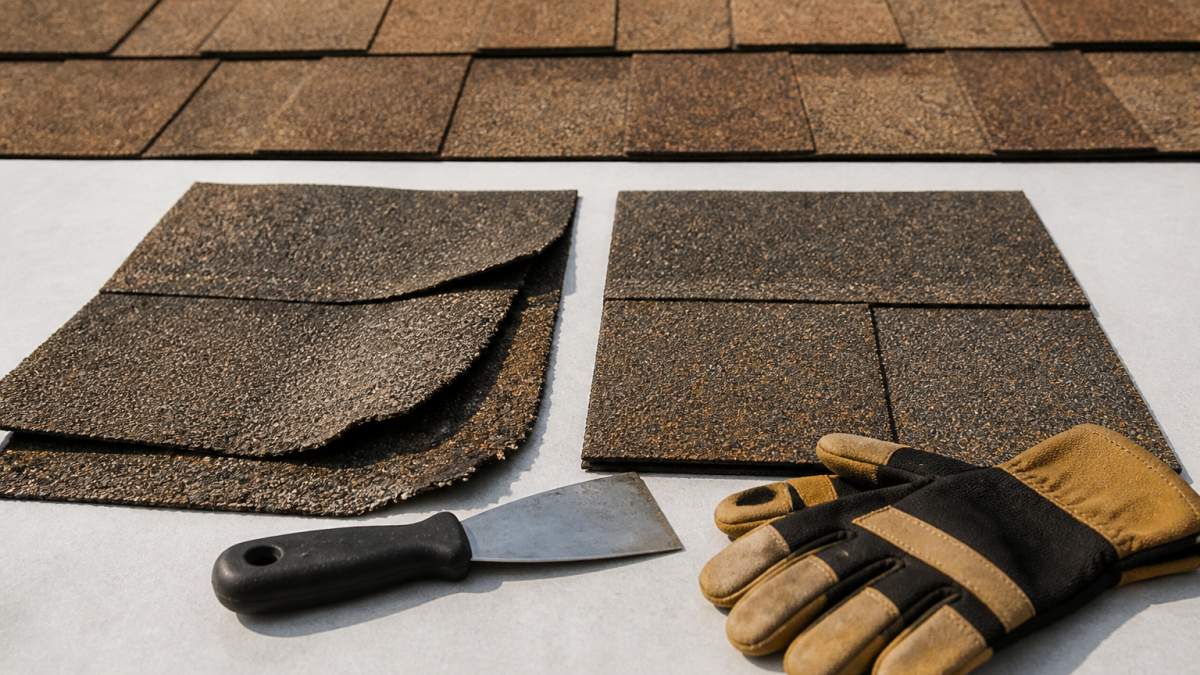
Cupping is when shingle edges turn upward while the center stays flat. Clawing is the opposite: edges curl down and under, often at the corners. Blistering shows as small raised bubbles where trapped moisture pushes the shingle apart from below.
What Causes Curling Asphalt Shingles?
Curling asphalt shingles are caused by three main forces: heat, moisture, and poor roof ventilation. When an attic traps hot air, the roof deck bakes from underneath, and shingles dry out, lose flexibility, and warp. Moisture works the other direction, soaking into the underlayment and deck and pushing shingles up as it escapes.
Heat, Moisture, and Ventilation Problems
Thermal expansion is the quiet culprit. Shingles expand in afternoon heat and contract at night. Over years of this cycle, edges lift permanently. UV degradation breaks down the asphalt itself, while moisture entrapment from clogged gutters or failing flashing accelerates the process.
Repair vs. Replacement: A Decision Framework
Repair makes sense when damage is localized: a handful of curled shingles on one slope, caused by a specific event like wind uplift or failed flashing. Replacement is the right call when curling is widespread across multiple slopes and the shingles are past their expected lifespan.
Use this framework before you spend a dollar:
| Situation | Best Option | Why |
|---|---|---|
| Under 10 curled shingles, one slope | Patch repair | Localized damage, cheap fix |
| Curling on 2+ slopes, shingles 15+ years old | Full replacement | Widespread deterioration |
| Curling plus granule loss in gutters | Replacement or rejuvenation | Shingle lifespan nearly spent |
| Curling after a storm, roof otherwise sound | Patch repair + inspection | Installation error or impact |
| Soft, spongy deck under shingles | Full replacement | Structural integrity at risk |
Localized Damage vs. Widespread Deterioration
Localized damage usually traces back to one cause: a bad flashing job, a tree branch, or a poorly installed shingle. Widespread deterioration shows up as curling on every slope, granules piling in gutters, and shingles that crack when you bend them.
The Cost of Roof Replacement vs Repair: What to Expect
Cost is where most repair-vs-replace decisions get made, so vague answers do not help. A targeted repair is almost always cheaper short term; replacement is almost always cheaper per year of remaining service life. The question is which math applies to your roof.
What Drives the Price of Each Option
Repair pricing scales with access and complexity, not shingle count. The main cost drivers are:
-
Roof pitch and height, steep or tall roofs require fall-protection setups and slower work.
-
Access, a driveway-adjacent ranch is cheaper to work on than a roof hemmed in by landscaping or a detached garage.
-
Number of penetrations, chimneys, skylights, and vent stacks each add flashing detail work.
-
Matching material, if your shingle color or profile is discontinued, a patch may need a close-match product, which changes the scope.
-
Underlayment condition, if the deck or underlayment is wet under the curled shingles, the repair expands.
-
Shingle tier, three-tab, architectural (dimensional), and premium designer shingles sit at very different price points.
-
Tear-off vs. overlay, removing the old roof adds disposal and labor; overlaying is cheaper but usually voids the manufacturer warranty (see the next section).
-
Decking replacement, soft or delaminated sheathing is billed per sheet.
-
Ventilation upgrades, ridge vent, intake vent, or attic fan work is often added during replacement.
-
Permits and disposal, required in most jurisdictions and easy to overlook in a verbal quote.
The Cost-Benefit Math Over Time
The right comparison is not "repair price vs. replacement price" but cost per remaining year of roof life. A repair that buys two years on a roof with one year left is a bad deal; five years on a roof with ten left is a good one. Two rules of thumb:
- If the roof is under roughly 10 years old and the curling is localized, repair almost always wins on cost per year.
- If the roof is past 15 years and curling appears on multiple slopes, replacement usually wins because you are paying for the same tear-off twice if you patch now and replace soon.
Why You Should Not Trust a Number Before an Inspection
Any contractor who quotes a replacement price over the phone, before seeing your attic, decking, and flashing, is guessing. A legitimate quote includes a written scope separating:
- Tear-off and disposal
- Decking repair (priced per sheet, not lumped in)
- Underlayment and ice/water barrier
- Shingle material and quantity in squares
- Flashing, vents, and pipe boots
- Permit fees and final inspection
Where Rejuvenation Fits in the Cost Picture
For roofs with early curling but sound decking, rejuvenation is priced as a treatment rather than a tear-off, putting it between a patch repair and full replacement on the cost curve. It is not a substitute for replacement on a structurally failed roof, but on a roof with 5-8 years left it can shift the math toward waiting.
A Quick Sanity Check Before You Commit
- Get at least two written, itemized quotes.
- Confirm whether the price includes tear-off, decking, and permits.
- Ask what happens if hidden damage is found mid-job, is there a change-order process?
- Confirm the warranty terms in writing, including whether labor is covered.
- Verify the contractor's license and insurance before work begins.
Cost is the loudest part of this decision, but not the only part. The next section covers two things that quietly change the math: your insurance policy and your manufacturer warranty.
Asphalt Shingle Rejuvenation: A Third Option for Aging Roofs
Asphalt shingle rejuvenation restores flexibility to aging shingles, extending their lifespan without full replacement. FRESH TEC LLC. utilizes patented, plant-based GreenSoy™ Technology to restore asphalt shingles and driveways to extend their lifespan by 6-8 years at a fraction of the cost of replacement. The service is backed by an industry-leading 6-year warranty and works best on roofs with early curling, not shingles already cracked through.
Risks of Installing New Shingles Over Old Ones
Layering new shingles over old ones is legal in many jurisdictions but rarely smart. Moisture trapped between the layers speeds up rot in the roof deck, the added weight stresses the structure, and most manufacturers will not honor a warranty on an overlay because the old underlayment was never inspected.
Insurance and Warranty Implications for Curling Shingles
This is the section most roofing articles skip, and it decides whether you pay out of pocket. Two systems are at work: your homeowner's insurance policy, which covers sudden events, and your shingle manufacturer's warranty, which covers defects. Curling sits awkwardly between them, and how you document it determines the outcome.
How Insurance Adjusters Actually Classify Curling
Homeowner's policies generally split damage into two buckets:
- Sudden and accidental, hail, wind, fallen limbs, fire. These are typically covered, subject to your deductible.
- Gradual deterioration, wear and tear, and lack of maintenance, these are typically excluded.
Curling is almost always the second bucket unless you can tie it to a specific dated event, so the claim turns on causation and timing, not how bad the roof looks. An adjuster will ask:
- When did you first notice the curling?
- Was there a storm in that window?
- Is the curling uniform across slopes (suggesting age) or clustered on one elevation (suggesting wind or impact)?
- Do neighboring roofs show the same pattern?
Documentation That Actually Helps a Claim
- Dated photos of the roof before and after the event, including wide shots that show the whole slope.
- Receipts for prior repairs, which establish that the roof was maintained.
- A written inspection report from a licensed roofer describing the damage pattern and probable cause.
- Weather records for the date in question, which your insurer can verify.
File promptly. Most policies require notice within a defined window, and delay is a common reason claims get denied even when the damage is real.
What Manufacturer Warranties Cover, and What Voids Them
Shingle warranties come in two layers:
- Material warranty, covers defects in the shingles themselves, such as premature cracking or granule loss not caused by wear.
- Labor warranty, covers the cost of redoing the installation, and is often shorter and sometimes offered by the contractor rather than the manufacturer.
Most manufacturer warranties explicitly exclude:
- Damage from improper installation
- Damage from inadequate attic ventilation
- Damage from pressure washing or foot traffic
- Repairs performed by unlicensed or non-certified installers
- Overlay installations where new shingles were laid over old ones
That last point matters. If your roof is curling from a ventilation problem and you patch it without fixing the ventilation, you have documented that the underlying condition was known. Some manufacturers treat that as a maintenance failure and deny future claims on the affected area.
The DIY Trap
A homeowner who seals curled edges with roofing cement may fix the symptom and void the warranty on that section. The sealant traps moisture, the shingle keeps failing underneath, and the manufacturer can later point to the non-compliant repair as the cause. If the roof is still under warranty, call a certified installer before touching anything.
A Practical Order of Operations
- Read your policy's exclusions section before calling your insurer. Know what "wear and tear" means in your specific contract.
- Read your shingle warranty and note the installation and ventilation requirements.
- Document the roof with dated photos from the ground and, if safe, from a ladder.
- Get a written inspection from a licensed roofer that states probable cause.
- Decide whether to file based on whether the cause is sudden or gradual.
- If you repair, use a certified installer and keep the paperwork.
The Bottom Line on Coverage
Insurance is for events; warranties are for defects. Curling from age falls outside both, so the repair-vs-replace decision usually comes down to your budget and the roof's remaining service life. The one thing you control is documentation, dated photos, written inspections, and licensed work, because that determines whether either system pays out when the cause is genuinely covered.
Frequently Asked Questions
What is the 25% rule in roofing?
The 25% rule is a common guideline used by roofing contractors and insurance adjusters. It suggests that if 25% or more of a roof's shingles are damaged, curled, or deteriorated, a full replacement is more cost-effective than repeated patch repairs. This threshold helps property owners decide whether spot fixes will actually solve the problem or just delay the inevitable. Keep in mind this is a rule of thumb, not a building code requirement. A professional roof inspection can confirm how much of your roof is affected and whether repair or replacement makes more financial sense for your situation.
Can you repair curling shingles, or is replacement always necessary?
Repair is possible when curling is limited to a small area and the rest of the roof remains structurally sound. A roofing contractor can replace individual shingles or use adhesives to reseal lifted edges. However, if curling is widespread across multiple slopes, it usually means the shingles have reached the end of their lifespan and the underlying roof deck or underlayment may also be compromised. In those cases, full roof replacement is the more durable solution. Asphalt shingle rejuvenation is another option for roofs that are aging but not yet failing, extending shingle lifespan by 6-8 years.
Does insurance cover roof replacement for curling shingles?
Most homeowners insurance policies cover sudden damage from storms, hail, or wind, but they typically exclude damage from normal wear and tear or poor maintenance. Curling shingles caused by age, UV degradation, or inadequate roof ventilation are usually classified as maintenance issues and not covered. If curling resulted from a specific weather event, document the damage with photos and request a professional roof inspection. Your adjuster will determine whether the damage qualifies. Review your policy carefully, because coverage varies by insurer and by state regulations.
How can I fix curled shingles on my roof?
For very minor curling on an accessible section, you can apply roofing cement under the lifted edge and press it flat, then weigh it down until the adhesive sets. This approach works only for isolated shingles. If you see cupping, clawing, or missing granules across a larger area, the problem is systemic and DIY fixes will not last. Hiring a professional is safer for anything beyond a ground-level repair.
How does roof age impact the decision to repair or replace?
Asphalt shingles typically last 15 to 25 years, depending on climate, roof pitch, and attic insulation. If your roof is under 10 years old and curling is isolated, repair is a reasonable first step. If it is past the 15-year mark and you are seeing widespread signs of roof aging such as granule loss, blistering, and curling across multiple slopes, replacement is the more practical investment. A cost-benefit analysis at that stage usually favors replacement because repeated patch repairs add up without solving the underlying deterioration.