 comparison
Solar Panel Maintenance vs Roof Replacement: What to Do First
Table of Contents
- Solar Panel Maintenance vs Roof Replacement: The Core Decision
- Side-by-Side Comparison: Maintenance, Repair, and Replacement
- Roof Age and Lifespan: The Factor That Decides Most Cases
- Your Solar Panel Maintenance Checklist for Every Season
- How Often to Maintain Solar Panels (and What Happens If You Skip It)
- Roof Inspection With Solar Panels: What to Check and Who Should Do It
- Solar Panel Removal and Reinstallation for Roof Replacement
- Coordinating Roof Work and Solar: Timing, Warranties, and Responsibility
- Frequently Asked Questions
Last Updated: October 20, 2026
Solar Panel Maintenance vs Roof Replacement: The Core Decision
The question of solar panel maintenance vs roof replacement comes down to one thing: which problem are you actually solving?
Here is the short answer. If your roof has meaningful service life left, maintain it and keep the panels working.
Below, we break down how to tell which situation you are in and how to sequence the work so you are not paying for the same labor twice.
When Maintenance Is the Right Call
Maintenance wins when the roof is structurally sound and problems are surface-level. Granule loss, minor flashing wear, algae streaking, and dirty panels respond to treatment rather than tear-off.
A rejuvenation treatment on asphalt shingles can restore flexibility and extend service life by several years, buying time to avoid a full replacement while your solar system is still producing.
The test is simple: if a roofing professional confirms the deck and underlayment are intact, maintain.
When Replacement Wins
Replacement wins when the roof is at or near the end of its service life, actively leaking, or the deck has sustained damage. Keeping panels on a failing roof delays an inevitable bill and adds a removal step.
Age is the deciding factor more often than damage. A roof with a few years left does not justify a full tear-off. A roof with one or two years left does.
Side-by-Side Comparison: Maintenance, Repair, and Replacement
Three paths exist, and they are not interchangeable: maintenance preserves what you have, repair fixes a specific failure, and replacement resets the clock.
| Factor | Maintenance | Repair | Full Replacement |
|---|---|---|---|
| Best for | Sound roof, surface wear | Isolated damage | End-of-life or structural failure |
| Disruption to solar system | None | Minimal | Full removal and reinstallation |
| Time to complete | Usually a single visit | Days | Weeks |
| Extends roof life | Yes, by several years | Only at the repair site | Resets to a new service life |
| Warranty impact | Preserves existing coverage | Varies by scope | New roof warranty applies |
The most common mistake is treating repair as a substitute for replacement on a roof past its prime. Patch work on a failing roof is money spent twice.
Roof Age and Lifespan: The Factor That Decides Most Cases
Roof age settles most of these decisions, but the number that matters is remaining service life measured against your solar system's payback period. If remaining life is shorter than that payback period, coordinate the two projects, removing and reinstalling panels is labor you should only pay for once.
Service life by roofing material
Service life and the complexity of working around a solar array vary widely by material. The ranges below are typical industry expectations for residential roofs; actual life depends on ventilation, sun exposure, and maintenance history.
| Roofing material | Typical service life | Panel attachment | Repairability with panels installed | Reroofing complexity |
|---|---|---|---|---|
| Asphalt shingles (3-tab) | 15-20 years | Standard lag mounts through deck | Moderate, shingles under array are hidden | Moderate; full tear-off typical |
| Asphalt shingles (architectural) | 25-30 years | Standard lag mounts through deck | Moderate | Moderate; full tear-off typical |
| Clay or concrete tile | 40-50+ years | Tile hooks or replacement tiles | Low, broken tiles are common during service | High; tiles are fragile and labor-intensive |
| Standing-seam metal | 40-70 years | Clamps that avoid penetrations | High, panels rarely need removal for repairs | Low if clamps are used; high if penetrations exist |
| Wood shake | 20-30 years | Standard mounts, but deck condition varies | Low, shakes are brittle | High; often full replacement |
| Synthetic slate/composite | 30-50 years | Manufacturer-specific | Varies by product | Moderate to high |
The practical takeaway: metal roofs with clamp-mounted arrays are the easiest to maintain in place, while tile and wood roofs are the most likely to require panel removal even for a modest repair.
The three-quarters rule, applied
A common rule of thumb: once a roof passes roughly three-quarters of its expected service life, major work becomes a question of when, not if. An architectural shingle roof at 20 years is at about two-thirds of a 30-year life, still a maintenance candidate. At 24 years it is at four-fifths and should be planned for replacement alongside any solar work.
Remaining-life estimate in writing
A roofing contractor can give you an honest remaining-life estimate. Get it in writing with the specific indicators the inspector used, granule loss, shingle flexibility, flashing condition, and deck soundness. That record is what a warranty claim or buyer's inspection will lean on later.
Lifecycle cost framing
Comparing maintenance, repair, and replacement on sticker price alone misses the point. The right comparison is total cost over the period you plan to own the home, including panel removal and reinstallation if a reroof happens during that window. A roof with five years left that you maintain for three years and then replace still incurs the panel removal cost, you have simply deferred it.
Your Solar Panel Maintenance Checklist for Every Season
A solar panel maintenance checklist keeps small issues from becoming roof problems. Run through these items a few times a year, and let a professional handle anything requiring roof access.
- Inspect panels for cracked glass, debris, and bird droppings
- Check mounting hardware for looseness or corrosion
- Verify flashing around every roof penetration is sealed
Most of this is visual. The value is catching a loose mount or lifted flashing before water gets underneath.
How Often to Maintain Solar Panels (and What Happens If You Skip It)
Solar panels should be maintained at least twice a year, with an extra check after any severe weather.
Skipping maintenance rarely causes sudden failure. It causes slow decline: soiling cuts production, loose hardware stresses mounting points, and neglected flashing lets water into the roof structure.
The U.S. Department of Energy guidance on rooftop solar maintenance recommends routine cleaning and maintenance to keep an existing system performing, which is cheaper than replacing equipment later.
Roof Inspection With Solar Panels: What to Check and Who Should Do It
A roof inspection with solar panels requires checking the roof surface, penetrations, and mounting system together. The panels hide the shingles beneath them, so the inspection has to work around the array.
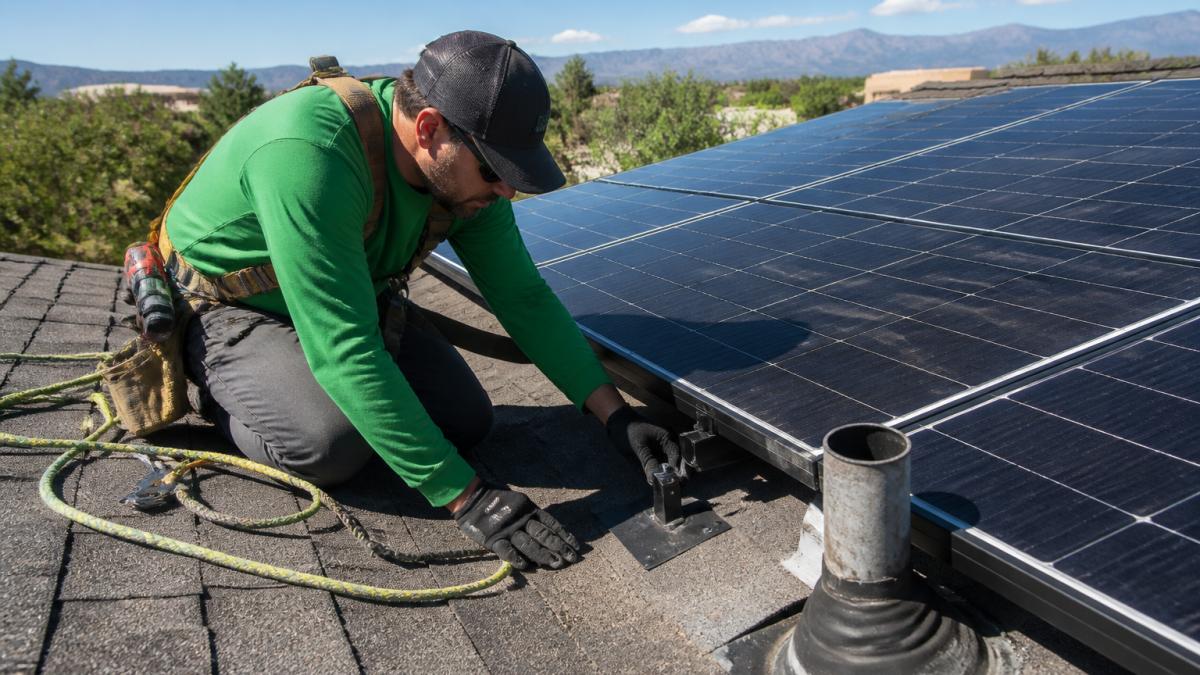
Have a roofing professional handle the roof assessment and a solar technician confirm the electrical side. One inspector rarely covers both competently. Ask each to document what they found with photos.
Solar Panel Removal and Reinstallation for Roof Replacement
Solar panel removal and reinstallation for roof replacement catches homeowners off guard. Panels come off before the roofing crew works and go back on after, two separate trades, sequenced, with the array disconnected and stored safely in between.
What the process actually involves
A typical removal and reinstall follows a fixed sequence, and each step has a handoff where responsibility can slip:
- Shutdown and disconnect. The solar crew de-energizes the array at the inverter and, where required, at the DC disconnect. The system stops producing during this window.
- Labeling and photography. Wires, mounts, and rail sections are labeled and photographed so reinstallation matches the original layout. Skipping this step is the most common cause of reinstall delays.
- Panel removal and storage. Panels are lifted off the mounts and stored flat, out of traffic, ideally indoors or under cover. Glass can crack under foot traffic or hail while stacked.
- Roof work. The roofing crew completes the tear-off and replacement, including new flashing at every penetration point.
- Reinstall and recommission. The solar crew remounts, reconnects, and tests production. The system is back online only after this step.
Downtime and lost production
Expect the array offline for the roof work plus removal and reinstall days on either end, commonly one to three weeks for a residential reroof, longer if weather or inspections intervene.
If your system is tied to net metering or another utility program, confirm whether a brief shutdown affects your account or interconnection status. Most residential programs do not require re-application for a short outage, but ask before the crew disconnects.
Insurance, permits, and who pays for what
Homeowner insurance rarely covers reroofing itself, but it may cover damage from a covered peril (hail, wind, fallen limb) that also damages the array. Photograph the pre-work condition of roof and panels before any crew arrives; that record is what an adjuster will ask for.
The roofing contractor typically pulls permits for the roof work. Panel removal and reinstallation may require a separate electrical permit depending on local rules, confirm with your jurisdiction before work begins.
Warranties after the work
Roof warranties often exclude damage caused by work performed by others, and solar warranties can exclude damage from roof work. Get both warranty holders to confirm in writing who covers what after the reroof. If the original solar installer is gone, have the roofing contractor and new solar crew document their work so the manufacturer's equipment warranty stays intact.
Coordinating Roof Work and Solar: Timing, Warranties, and Responsibility
Timing and warranty terms decide whether combining the work saves money or creates a dispute. Schedule the roof replacement and panel reinstallation as one project with one timeline.
At FRESH TEC LLC, our FRESH ROOF TREATMENT uses plant-based GreenSoy™ Technology to restore asphalt shingles and extend roof life by 6-8 years, which often lets homeowners postpone replacement and keep their solar system undisturbed. For general background on coordinating the two projects, EnergySage's guide to solar and roof replacement is a useful reference.
Frequently Asked Questions
Should you replace your roof before installing solar panels?
If your roof is near the end of its service life, replace it first. Solar panels can last 25 years or more, and paying to remove and reinstall them for a reroof later adds labor and downtime you can avoid. A roof inspection with solar panels in mind, covering shingle condition, flashing, and decking, tells you whether the roof can outlast the array. If it cannot, coordinate the roof replacement and solar installation so both happen in the right order.
How often should you maintain solar panels?
Most homeowners should schedule professional solar panel maintenance once or twice a year, plus a check after major storms. A solar panel maintenance checklist typically covers panel cleaning, mounting hardware, wiring, and the roof surface beneath the array. Skipping maintenance lets dust, debris, and loose hardware cut energy production and hide roof damage. If you notice a drop in output or visible roof wear, book an inspection sooner rather than waiting for the next scheduled visit.
Can roof repairs be done without removing solar panels?
Sometimes. Small repairs away from the array, such as replacing a few shingles at the roof edge, can often be done without touching the panels. Work directly under or around the mounting points usually requires removing at least part of the array so the crew can access the flashing and decking. Ask your roofing contractor to confirm scope before work starts, and factor solar panel removal and reinstallation for roof replacement into the plan if the damaged area sits beneath the panels.
How do you know when a roof needs replacement instead of repair?
Look at age, extent of damage, and repeat leaks. A roof past its expected lifespan with curling shingles, granule loss, or multiple leak points is usually a replacement candidate. Isolated damage on a younger roof is often repairable. A roof inspection with solar panels attached should also check the mounting hardware and flashing, since those are common leak sources. When repair costs climb and problems keep returning, replacement protects both the roof and the solar system.
The hard part is not choosing between maintenance and replacement. It is getting an honest assessment of your roof before you commit. FRESH ROOF TREATMENT offers a free inspection that tells you whether rejuvenation can buy you years or whether replacement is the smarter path, backed by a 6-year warranty and a veteran-owned local team. Book your free inspection and get a clear answer before the next storm season.