 blog
Eco-Friendly Alternatives to Roof Replacement
Table of Contents
- Why Eco-Friendly Roof Replacement Alternatives Matter in 2026
- Roof Repair vs. Replacement: The Decision Framework
- Roof Rejuvenation: Extending Asphalt Shingle Life
- Roof Coatings for Flat Roofs: Silicone and Water-Based Options
- Sustainable Roofing Materials: Recycled and Composite Choices
- Side-by-Side Lifecycle Comparison: Cost, Lifespan, and Waste
- Code, Warranty, and Insurance Considerations for Roof Alternatives
- Frequently Asked Questions
Last Updated: October 6, 2026
Why Eco-Friendly Roof Replacement Alternatives Matter in 2026
A roof replacement is one of the most expensive and wasteful projects a property owner can face. Millions of tons of old asphalt shingles end up in landfills every year, and most of that material still had useful life left in it.
The core idea is simple: if a roof is structurally sound, you may not need to replace it. You may be able to restore it instead.
Below, we break down the full menu of eco-friendly alternatives to roof replacement, from repair and rejuvenation to coatings and recycled materials. You'll also get a decision framework so you know which option actually fits your roof.
Roof Repair vs. Replacement: The Decision Framework
Roof repair fixes a specific problem. Roof replacement removes and rebuilds the entire roof. The right choice depends on the roof's age, condition, and how much life is left.
Most roofing decisions come down to three questions:
- How old is the roof?
- How widespread is the damage?
- Is the roof deck still structurally sound?
If damage is isolated and the roof is young, repair wins. If the roof is near the end of its life and the damage is everywhere, replacement may be the only safe option.
The 25% Rule in Roofing
A common rule of thumb in the trade: if repairs cost more than about a quarter of what a full replacement would cost, replacement often makes more financial sense. It's not a law, just a useful gut check. If you're spending a large fraction of replacement cost to patch a roof that's already near the end of its life, you're throwing money at a losing battle.
When Repair Is No Longer Enough
Repair stops working when the problems are structural or widespread:
- Sagging or soft spots in the deck
- Widespread shingle curling, cracking, or granule loss
- Repeated leaks in multiple areas
If you see these, get a professional inspection before spending another dollar on patches.
Roof Rejuvenation: Extending Asphalt Shingle Life
Roof rejuvenation is a treatment that soaks into aging asphalt shingles and restores flexibility to the material. It extends the roof's life without a tear-off.
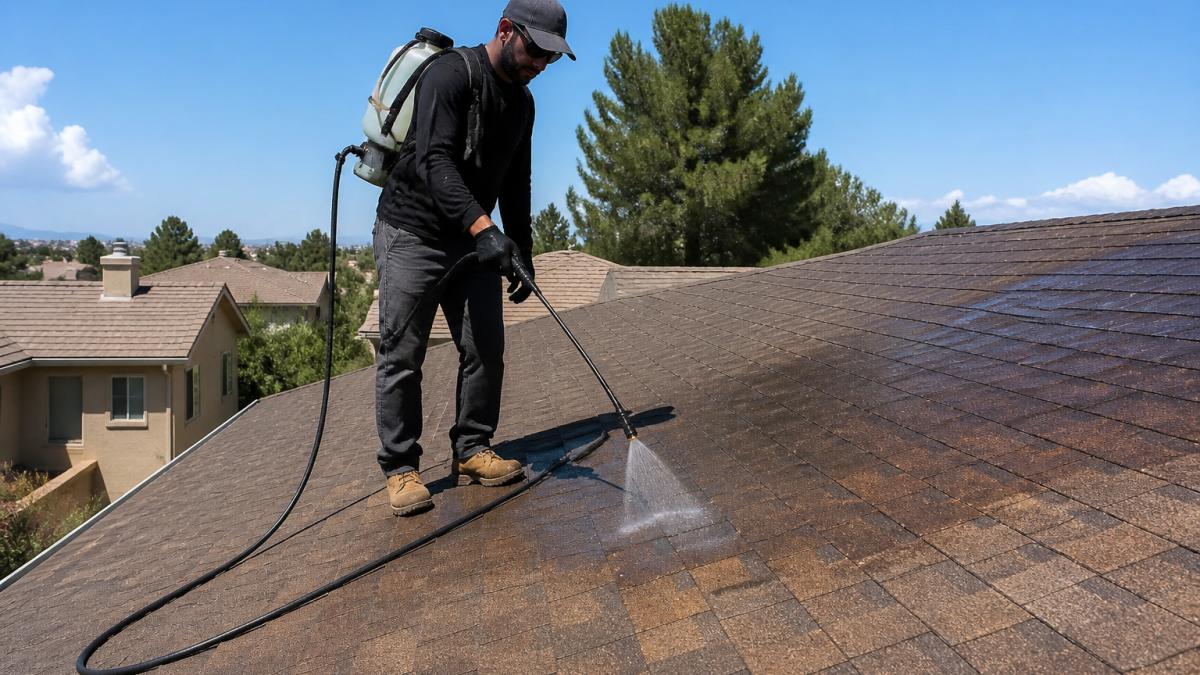
As shingles age, they dry out and lose the oils that keep them flexible. Once they're brittle, they crack and lose granules. Rejuvenation puts those oils back.
This is where FRESH TEC LLC. does most of its work.
How Plant-Based GreenSoy Technology Works
The treatment is plant-based and applied directly to the shingle surface. It penetrates the asphalt and replenishes the flexibility that time and sun have stripped away. Restored shingles shed water better, resist cracking, and hold their granules longer. No tear-off, no landfill load, no days of dumpsters in your driveway.
Roof Coatings for Flat Roofs: Silicone and Water-Based Options
Roof coatings are liquid-applied membranes that seal and protect flat and low-slope roofs. They're one of the most cost-effective ways to extend a flat roof's life.
Two main types dominate the market:
- Silicone coatings cure into a rubbery, waterproof layer that handles ponding water well and reflects heat.
- Water-based coatings are lower in odor and often lower in volatile organic compounds, which matters for indoor air quality and site safety.
Both approaches seal seams, reinforce waterproofing, and improve heat reflection. For flat roofs with sound decks and minor surface wear, a coating can add years of service at a fraction of replacement cost.
Sustainable Roofing Materials: Recycled and Composite Choices
Sustainable roofing materials include recycled-content shingles, composite tiles, recycled rubber, metal roofing, and reclaimed slate. They reduce landfill waste, and many outlast standard asphalt, but the right pick depends on your roof's slope, structure, and climate.
Most guides treat roofing materials as interchangeable. They are not. A material that performs for 50 years on a steep-slope roof in a dry climate can fail in a decade on a low-slope roof in a freeze-thaw region.
| Material | Best roof type | Climate fit | Recycled content | End-of-life |
|---|---|---|---|---|
| Recycled-content asphalt shingles | Steep-slope, standard deck | Most U.S. climates | Varies by manufacturer; some use recycled plastic and rubber in the mat | Downcycled into asphalt pavement in some markets |
| Composite (synthetic slate/wood) | Steep-slope, standard deck | Most climates; check wind rating | Often includes recycled plastics and rubber | Limited recycling; mostly landfill |
| Recycled rubber (shingles, tiles) | Steep-slope and some low-slope | Good in hail and impact zones | High recycled tire and plastic content | Limited take-back programs |
| Metal (steel, aluminum) | Steep-slope and low-slope | Excellent in high-wind, fire-prone, and snow-shedding regions | High recycled content in many steel products | Highly recyclable at end of life |
| Reclaimed slate or clay tile | Steep-slope, requires structural capacity | Dry and moderate climates; heavy in snow | Reclaimed material is fully reused | Reusable or recyclable |
| Concrete tile | Steep-slope, requires structural capacity | Hot, dry, and fire-prone regions | Some fly-ash content | Limited recycling; heavy landfill load |
Roof-Type Suitability: What Actually Works Where
- Asphalt shingle roofs (steep-slope): Recycled-content shingles and composite products are drop-in replacements. Metal is the longest-lived upgrade, but it changes the roof's profile and may require new flashing and trim.
- Flat and low-slope roofs: Metal standing-seam and some rubber membranes are the realistic sustainable replacements. Composite and slate are not appropriate for low-slope applications.
- Metal roofs: If the existing metal is sound, an overlay or retrofit system can avoid a full tear-off. Confirm the panel profile and fastener condition first.
What "Recycled" Actually Means on a Label
Recycled content claims vary widely. Look for the specific material and percentage, not just the word "recycled." Post-consumer content (material that was used and discarded) carries more environmental weight than post-industrial scrap that would have been reprocessed anyway. Some manufacturers publish third-party certifications; ask for them.
The Trade-Off Nobody Mentions
A material can be recyclable in theory and landfilled in practice. Metal is the clearest example: steel and aluminum are highly recyclable, but only if a local scrap processor accepts roofing material and the contractor separates it from the tear-off. In many markets, mixed tear-off goes straight to the landfill regardless of what the new roof is made of. If end-of-life recycling matters to you, ask your contractor where the old roof will actually go before the dumpster arrives.
Side-by-Side Lifecycle Comparison: Cost, Lifespan, and Waste
Restoration and repair almost always cost less and generate less waste than replacement. Replacement wins only when the roof is structurally compromised, but the full picture includes maintenance, embodied carbon, and what happens at end of life.
Most comparisons stop at upfront cost and lifespan. That misses half the story. The table below uses one consistent framework across every option so you can compare like for like.
| Option | Typical lifespan added | Relative upfront cost | Ongoing maintenance | Embodied carbon | End-of-life outcome |
|---|---|---|---|---|---|
| Roof repair | 1-3 years | Low | Re-inspect after each storm | Very low, small material volume | Minimal waste; patch material only |
| Roof rejuvenation | 6-8 years | Low to mid | Reapply on manufacturer's schedule | Low, plant-based treatment, no tear-off | None; existing roof stays in place |
| Flat roof coating | 5-10 years | Low to mid | Recoat every few years; inspect seams | Low, liquid-applied, no tear-off | None; existing membrane stays in place |
| Recycled/composite replacement | 20-50 years | High | Periodic inspection; some products need resealing | High, new material plus tear-off disposal | Old roof removed; recycling depends on local markets |
| Metal roofing | 40-70 years | High | Minimal; touch up fasteners and coatings | High upfront, low over life due to longevity | Highly recyclable where scrap markets exist |
How to Read the Table
- Lifespan added is the additional service life the option typically buys, not the total age of the roof. A rejuvenation on a 15-year-old shingle roof does not make the roof 15 years old again, it adds years on top of the existing condition.
- Relative upfront cost is comparative, not a dollar figure. Actual pricing depends on roof size, pitch, number of layers, local labor rates, and whether tear-off is required.
- Embodied carbon reflects the emissions tied to making, transporting, and installing the material. Restoration options score well because they avoid manufacturing a new roof and avoid hauling the old one away.
The Maintenance Trade-Off
Restoration options are not maintenance-free. Rejuvenation needs reapplication on the manufacturer's schedule to keep the shingle flexible. Coatings need periodic recoating and seam inspection. Replacement materials like metal need far less attention but cost more up front. The honest comparison is total cost of ownership over the years you plan to stay in the property, not just the invoice on installation day.
What Drives the Numbers Up or Down
- Roof size and pitch: Steeper and larger roofs cost more per square regardless of method.
- Number of existing layers: Multiple layers increase tear-off cost and disposal weight.
- Deck condition: Soft or rotted decking must be repaired before any restoration or overlay.
A Note on Energy-Bill Payback
Reflective coatings and cool-roof materials can reduce heat gain and lower cooling demand in hot climates. The savings vary widely by climate, attic insulation, duct condition, and utility rates. Treat any payback estimate as a range, not a promise, and get a professional energy assessment before counting on bill reductions to offset the cost.
Code, Warranty, and Insurance Considerations for Roof Alternatives
Restoration and coating options must meet local building codes and may affect your roof warranty and insurance coverage. Check before you commit.
A few things to verify:
- Local codes: Some jurisdictions restrict layering or coatings on certain roof types. Check with your local building department.
- Manufacturer warranty: Some shingle warranties are voided by certain coatings or overlays. Read the fine print.
- Insurance: Some insurers require disclosure of roof treatments. A restored roof may affect your coverage or premium.
The International Code Council's building code resources can help you find the codes that apply in your area. When in doubt, ask your inspector and your insurer before work begins.
Frequently Asked Questions
What is the most environmentally friendly roofing option?
The most eco-friendly option depends on your existing roof. If your asphalt shingles are still structurally sound, roof rejuvenation is often the lowest-impact choice because it avoids manufacturing new materials and keeps old shingles out of landfills. For full replacements, recycled rubber, recycled plastic composite, and metal roofing made from high-recycled content offer the best environmental profile. Green roofs with living plants provide insulation and stormwater management but require structural support. Each option trades off upfront cost, lifespan, and local recyclability.
Can roof rejuvenation extend the life of asphalt shingles?
Yes. Roof rejuvenation works by restoring flexibility to dried-out asphalt shingles, which is the main reason they crack and fail. Plant-based treatments like GreenSoy penetrate the shingle surface and replace lost oils, extending lifespan by 6 to 8 years according to FRESH TEC. The service works best on shingles that are aging but not yet curling, cracking, or missing granules. A professional inspection determines whether your roof qualifies, and the treatment is backed by a 6-year warranty.
How do I know whether my roof can be repaired or needs replacement?
Start with a professional inspection. Repair or restoration is usually viable when damage is limited to less than 25% of the roof surface, shingles are not curling or missing, and there is no widespread water infiltration. If more than a quarter of the roof is compromised, or if the decking is soft or leaking in multiple spots, replacement is the safer choice. Roof age also matters: shingles under 15 years old with no structural damage are strong candidates for rejuvenation or coating.
Can a roof coating prevent the need for replacement?
A roof coating can delay replacement by 10 to 15 years on flat or low-slope roofs, depending on the product and surface condition. Silicone elastomer coatings are popular for their waterproofing and heat reflection, while water-based options offer lower VOC emissions. Coatings work best on roofs with minor surface wear but no ponding water or structural issues. They are not a fix for active leaks or deteriorated decking. A professional assessment confirms whether coating is appropriate for your roof type.
The hardest part of any roofing decision is knowing whether you're fixing a problem or just delaying one. If your roof is sound but aging, restoration can add years of life at a fraction of replacement cost. FRESH TEC LLC. offers roof rejuvenation using plant-based GreenSoy™ Technology, flat roof coatings, and a 6-year warranty on our work. Book a free inspection and we'll tell you honestly whether restoration is right for your roof.