 how-to
Flat Roof Coating Solutions for Business: A 2026 Guide
Table of Contents
- Why Flat Roof Coatings Matter for Commercial Properties
- Types of Flat Roof Coatings and How They Work
- Surface Preparation: The Critical First Step
- How to Choose the Right Coating for Your Roof
- Commercial Roof Coating Lifespan and Maintenance
- Commercial Roof Maintenance Checklist
- Energy Efficiency and Long-Term ROI
- Conclusion
- Frequently Asked Questions
Last Updated: September 22, 2026
Why Flat Roof Coatings Matter for Commercial Properties
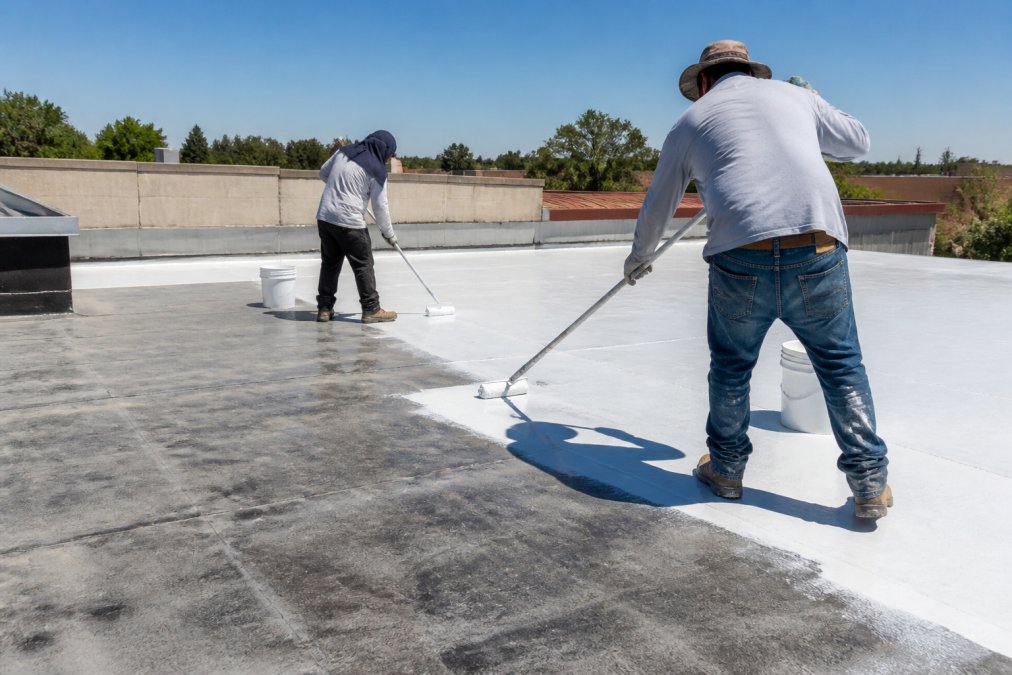
Flat roof coating solutions for business protect one of your most valuable assets. A commercial flat roof faces constant exposure to UV rays, temperature swings, and pooling water. Without proper protection, that roof degrades quickly, leading to leaks, structural damage, and expensive emergency repairs.
A quality coating extends your roof's life by years while avoiding the massive cost of full replacement, most facility managers don't realize this option exists.
Coating is preventative maintenance that's significantly cheaper than replacement and delivers measurable ROI when applied correctly.
Types of Flat Roof Coatings and How They Work
Flat roof coatings fall into four main categories, each with distinct properties and performance characteristics. Understanding these types helps you match the right coating to your specific roof condition and climate.
Silicone Coatings
Silicone coatings cure through moisture exposure, working even in humid conditions and creating a durable membrane that resists ponding water.
Silicone excels in UV resistance and handles thermal expansion well, making it ideal for bright climates with temperature swings.
Trade-offs: silicone is slippery when wet, attracts dirt, and requires moisture control during application.
Polyurethane Coatings
Polyurethane creates a hard, abrasion-resistant surface ideal for high-traffic roofs and provides excellent adhesion to compromised substrates.
Polyurethane dries quickly and resists chemicals, making it suitable for industrial facilities.
Downside: polyurethane is moisture-sensitive during application and curing, limiting application windows and requiring skilled labor.
Acrylic Coatings
Acrylic is water-based and environmentally friendly, dries quickly, and creates a reflective surface that reduces cooling costs.
Acrylic works well for budget-conscious property managers and delivers measurable energy savings in hot climates.
Limitation: acrylic doesn't handle ponding water well and requires recoating every 5-7 years, making it less suitable for wet climates.
Elastomeric Coatings
Elastomeric coatings stretch and flex with thermal expansion, preventing cracking in climates with extreme temperature swings.
Elastomeric coatings work over asphalt, modified bitumen, and other substrates without requiring complete surface removal, making them practical for retrofits.
Consideration: elastomeric coatings require more material and take longer to cure, increasing costs and timelines.
Surface Preparation: The Critical First Step
Surface preparation determines whether your coating lasts 5 years or 15 years; 80% of premature failures trace to inadequate preparation, not product defect.
Cleaning and Substrate Exposure
Remove all debris and pressure wash at 3000-4000 PSI to expose the substrate. Coating won't adhere to dirty surfaces, and trapped organic matter causes premature failure.
For biological growth, apply a mild biocide or 1:10 sodium hypochlorite solution, allowing 15-20 minutes dwell time before pressure washing.
Clean seams, penetrations, and low spots thoroughly; failure to do so is a common cause of edge failure and water intrusion.
Moisture Testing and Drying
Allow the roof to dry completely (24-72 hours). Moisture trapped under coating causes adhesion failures and blistering.
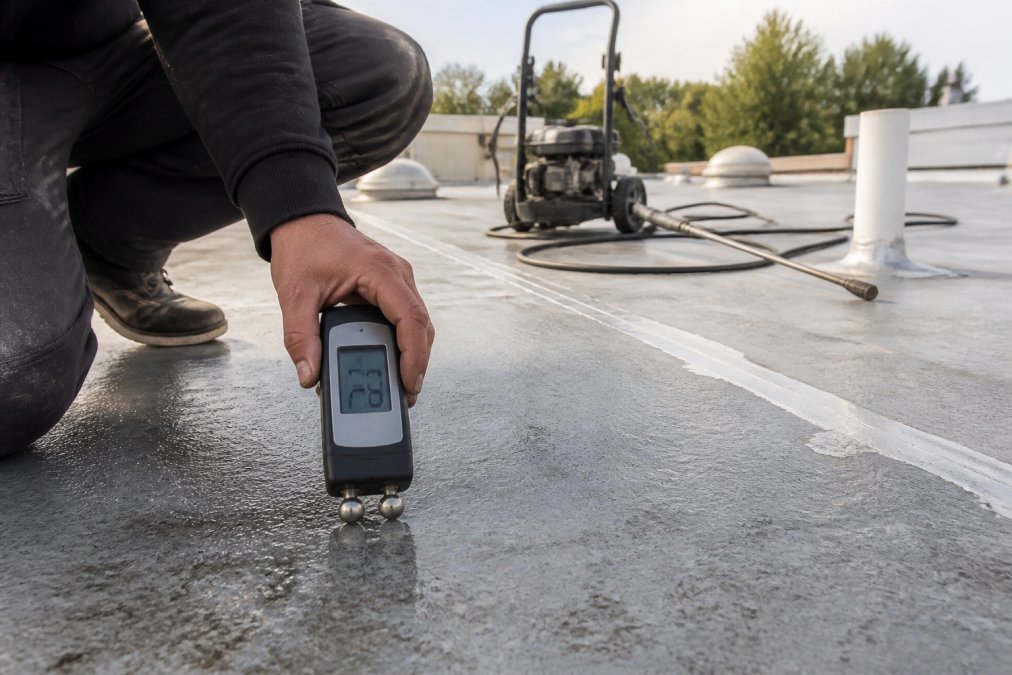
Use a moisture meter to verify substrate readiness. Most manufacturers require moisture content below 3% RH; check the technical data sheet for exact requirements.
If natural drying isn't feasible, use temporary tarping or dehumidification equipment, the cost is negligible compared to coating failure.
Damage Assessment and Repair
Inspect for blisters (slice open and dry), cracks (seal hairline cracks with elastomeric caulk; larger cracks with polyurethane or silicone sealant), membrane separation (must be re-adhered or removed), and ponding water damage (may require substrate replacement).
A coating is a protective layer, not a structural repair. Address damage before coating to prevent failure and extend lifespan.
Existing Coating Condition
For existing coatings in poor condition, perform ASTM D3359 adhesion testing. If adhesion is poor (below 3B), remove the old coating; coating over it leads to failure within 2-3 years.
If adhesion is good (4B or 5B), clean and lightly abrade the surface with 80-120 grit sandpaper or light pressure wash.
For multiple failed coating layers, complete removal is often more cost-effective than salvage, costing $0.50-$1.50/SF.
Sealing and Priming
Seal all seams, penetrations, and fasteners with compatible sealants. Porous surfaces may require primer for uniform absorption and adhesion; check manufacturer recommendations.
How to Choose the Right Coating for Your Roof
Choose based on climate (reflective coatings for hot regions, elastomeric for freeze-thaw), roof condition (strong adhesion for damaged roofs), foot traffic (polyurethane for high-traffic), and total cost of ownership rather than coating cost alone.
FRESH TEC LLC. provides professional, eco-friendly property maintenance solutions utilizing patented, plant-based GreenSoy™ Technology.
| Coating Type | Best For | Durability | Cost | Maintenance |
|---|---|---|---|---|
| Silicone | Ponding water, UV-heavy climates | 10-15 years | Higher | Low, periodic cleaning |
| Polyurethane | High-traffic roofs, durability priority | 10-15 years | Higher | Moderate |
| Acrylic | Budget-conscious, reflective needs | 5-7 years | Lower | Regular recoating |
| Elastomeric | Freeze-thaw cycles, flexibility needed | 10-12 years | Moderate | Low to moderate |
Commercial Roof Coating Lifespan and Maintenance
Quality coatings last 10-15 years with proper application and maintenance. Lifespan depends on climate, roof design, and maintenance frequency. Watch for blistering (moisture), cracking (end of life or substrate movement), and discoloration (weathering).
Commercial Roof Maintenance Checklist
Regular maintenance prevents small problems from becoming expensive ones. Implement this checklist to protect your flat roof coating investment.
- Inspect roof quarterly for debris, damage, and water pooling
- Clear gutters and drains monthly during fall and spring
- Remove leaves, dirt, and standing water within 48 hours of rain
- Pressure wash the entire roof annually or as needed
- Check for blisters, cracks, or membrane separation
- Trim tree branches that overhang the roof
- Document all inspections and maintenance in a maintenance log
- Schedule professional inspection every 2-3 years
- Plan recoating before the existing coating fails
- Test any repairs with a moisture meter before full coating application
Energy Efficiency and Long-Term ROI
Flat roof coatings deliver value through two distinct mechanisms: energy savings from reflectivity and cost avoidance from extended roof life. Understanding both is essential for calculating true ROI.
Energy Savings from Reflective Coatings
Reflective coatings reduce roof surface temperatures by 40-60°F compared to dark roofs, lowering air conditioning loads.
Calculating Your Energy Savings
To estimate annual energy savings, use this framework:
Step 1: Determine your current roof's solar reflectance.
Dark asphalt roofs: SR ≈ 0.05-0.15
Weathered gray roofs: SR ≈ 0.20-0.35
Light-colored roofs: SR ≈ 0.50-0.70
The Dominant ROI Driver: Avoiding Roof Replacement
The primary ROI comes from extending roof life and avoiding replacement, not energy savings.
ROI Calculation Framework
Payback Period (Years) = Coating Cost ÷ (Annual Energy Savings + Annual Avoided Replacement Cost)
To calculate annual avoided replacement cost:
- Estimate your roof's remaining useful life without coating (typically 3-7 years for aging roofs).
- Estimate the coating's lifespan (silicone/polyurethane: 10-15 years; acrylic: 5-7 years; elastomeric: 10-12 years).
- Calculate the additional years the coating provides: Coating Lifespan − Remaining Roof Life.
- Divide replacement cost by the additional years: Annual Avoided Replacement Cost = Replacement Cost ÷ Additional Years.
Worked Example:
- Building: 50,000 SF commercial facility
- Current roof: 12-year-old dark asphalt, 3-5 years remaining life
- Coating choice: Silicone (15-year lifespan)
- Coating cost: $1.50/SF = $75,000 total
- Replacement cost: $6.00/SF = $300,000
- Annual energy savings: $1,500 (modest climate, existing light-colored roof)
Broader Value Beyond Direct ROI
Consider indirect benefits that don't appear in the ROI calculation but have real financial impact:
- Water damage prevention: A failed roof causes interior water damage, equipment loss, inventory damage, and business interruption. The cost of one major leak often exceeds the coating cost.
- Warranty protection: Many commercial property insurance policies offer premium discounts for well-maintained roofs. A documented coating and maintenance program can reduce insurance costs by 5-10%.
- Facility uptime: Emergency roof repairs cause operational disruption. A proactive coating program prevents emergency situations.
- Sustainability and LEED credits: Cool roof coatings contribute to LEED Energy and Atmosphere credits, which may support building valuation or tenant attraction in competitive markets.
Conclusion
Flat roof coating solutions for business extend roof life, prevent costly water damage, and often deliver measurable energy savings. The choice between silicone, polyurethane, acrylic, and elastomeric coatings depends on your climate, roof condition, and maintenance capacity.
Frequently Asked Questions
What is the best coating to put on a flat roof?
The best flat roof coating depends on your roof's current condition and climate. Silicone coatings excel at ponding water resistance and UV protection, making them ideal for areas with standing water. Polyurethane coatings offer superior durability and abrasion resistance. Acrylic coatings provide cost-effective protection for dry climates. Elastomeric coatings deliver flexibility and thermal expansion tolerance. Assess your roof's substrate, existing membrane type, and local weather patterns before selecting a coating type.
How often should commercial flat roofs be recoated?
Commercial flat roof coatings typically last 5-10 years depending on the coating type, climate exposure, and maintenance frequency. Inspect your roof annually and recoat when the coating shows significant wear, chalking, or loss of reflectivity. Proper surface preparation and maintenance cycles extend coating lifespan considerably.
What makes plant-based roof coatings different from standard sealants?
Plant-based coatings like GreenSoy™ Technology use renewable, non-toxic formulations derived from plant sources rather than petroleum-based chemicals. They provide comparable waterproofing and UV protection while reducing environmental impact and chemical exposure on your property. Plant-based options are particularly valuable for facilities prioritizing sustainability and safety around employees or customers. Verify certifications and warranty coverage when comparing plant-based versus traditional coating systems.
Is roof coating cost-effective compared to replacement?
Roof coatings cost significantly less than full replacement while extending roof life. A coating system typically costs a fraction of replacement expenses and can defer major capital expenditures. Calculate ROI by comparing coating cost against replacement cost and the extended service life gained. For roofs in good structural condition with minor surface deterioration, coatings deliver superior value and environmental benefits versus replacement.