 blog
5 Alternatives to Replacing Dirty Solar Panels
Table of Contents
- Why Dirty Solar Panels Cut Power Output
- Alternative 1: How to Clean Solar Panels Safely
- Alternative 2: Professional Solar Panel Cleaning
- Alternative 3: Waterless and Low-Water Cleaning Approaches
- Alternative 4: Solar Panel Performance Monitoring
- Alternative 5: Seasonal and Snow Maintenance
- How Often Should Solar Panels Be Cleaned?
- Choosing the Right Fix Before You Replace
- Frequently Asked Questions
Last Updated: October 19, 2026
Why Dirty Solar Panels Cut Power Output
Dirty solar panels block sunlight before it reaches the cells, and that lost light is lost power. At FRESH TEC LLC, we often see a system that performed well in year one quietly underperform by year three because nobody looked at the glass.
Dust, dirt, pollen, and debris form a film across the panel surface. Even a thin layer scatters light instead of letting it through, causing a slow drop in energy production most homeowners never notice on a monthly bill.
Dust, Dirt, Pollen, and Debris Buildup
The culprits vary by season and setting:
- Dust settles after dry, windy stretches and coats the whole array evenly.
- Pollen arrives in spring as a sticky film that rain alone will not wash off.
- Bird droppings create hot spots, where one shaded cell drags down a whole string.
The fix is rarely a new system, it is almost always a maintenance decision. Below are five practical alternatives to replacing dirty solar panels, from a simple rinse to professional service.
Alternative 1: How to Clean Solar Panels Safely
Learning how to clean solar panels safely starts with three rules: shut the system down if your inverter manual says so, stay off the roof in wet or windy conditions, and never use abrasive tools.
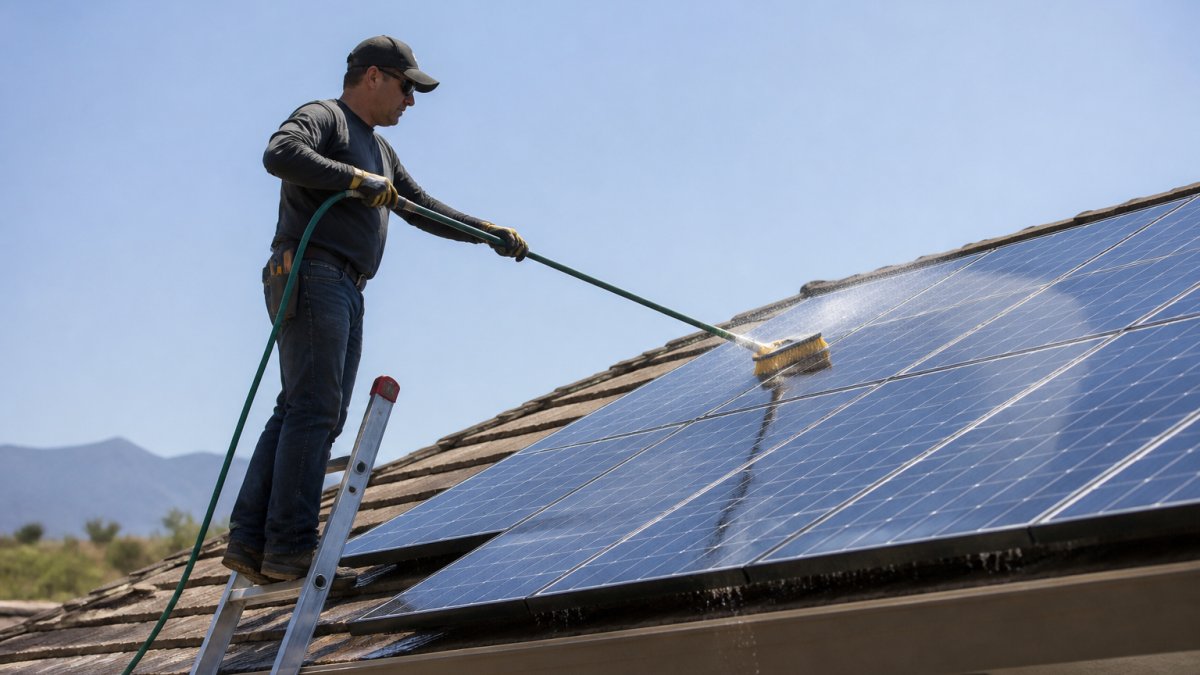
Work early in the morning when panels are cool. A hot panel plus cold water can stress the glass. Rinse from the top down, then loosen dirt with a soft brush.
Non-Abrasive Tools, Water, and Rinsing
The right kit is simple and cheap:
- A soft brush or microfiber pad
- A garden hose with a gentle nozzle
- A squeegee with a soft rubber blade
Skip abrasive cleaners, scouring pads, and anything with grit. They scratch the panel surface and leave permanent marks that cut output for good.
Rinse first to float away loose dust. Wash with the soft brush. Rinse again. Then squeegee or dry with a lint-free cloth to prevent water spots. According to U.S. Department of Energy guidance on solar maintenance, gentle cleaning and regular inspection keep a system performing at its best.
Alternative 2: Professional Solar Panel Cleaning
Professional solar panel cleaning is the low-effort option, and for many homes the right one.
The value is not just a cleaner panel but the inspection that comes with it: a technician spots cracked glass, loose mounts, and debris dams before they become expensive problems.
- Safety: no ladders, no roof risk for you
- Correct technique: deionized water and soft tools that protect the glass
- Timing: service scheduled around pollen season and monsoon dust
For property managers juggling multiple units, a scheduled service removes the guesswork. Realtors and property managers trust us to get exteriors show-ready, and clean panels are part of that picture.
Alternative 3: Waterless and Low-Water Cleaning Approaches
Waterless cleaning uses little or no water, which matters in dry climates and during drought restrictions. But "waterless" is an umbrella term, and its methods work very differently, understanding the mechanism tells you which one fits your array.
How the Main Approaches Actually Work
- Dry brush and microfiber: A soft brush lifts loose dust, and a microfiber cloth traps it through static and capillary action. No liquid is involved, so nothing evaporates and leaves mineral spots. Works best on light, dry dust; struggles with pollen film and bird droppings.
- Low-water spray and squeegee: A fine mist loosens soil, and a soft rubber blade pulls the water and dirt off before it dries. Uses a fraction of the water of a full rinse but still needs a water source.
- Electrostatic and no-contact tools: These rely on charged surfaces or air movement to dislodge particles without touching the glass. They are the least mature category, availability is limited, equipment costs are higher, and real-world performance data is thin. Treat vendor claims with caution and ask for site references.
Side-by-Side Comparison
| Method | Water Use | Best For | Watch Out For |
|---|---|---|---|
| Traditional rinse and wash | High | Heavy soil, post-storm cleanup | Water waste, runoff |
| Waterless brush and cloth | Very low | Light dust, dry climates | Needs frequent passes; poor on sticky soil |
| Low-water spray and squeegee | Low | Routine upkeep | Streaks if the blade is skipped |
| Electrostatic or no-contact tools | Minimal | Large arrays, delicate glass | Higher equipment cost; limited track record |
| Factory or aftermarket coating | None added | Reducing soil cling between washes | Does not replace cleaning; cure and durability vary |
Matching the Method to Your Site
The right choice depends on what lands on your panels and what your site allows:
- Dusty, dry, water-restricted sites: A dry-brush pass every few weeks beats one heavy wash per season. Light, frequent cleaning keeps the surface clear without using much water at all.
- High-pollen sites: Sticky pollen film resists dry brushing. Plan a low-water wash after peak pollen rather than fighting it with a brush.
- Rainy or humid sites: Rain does some of the work, but it also leaves mineral spots and feeds algae along frame edges. Spot cleaning beats full washes here.
What the Evidence Actually Supports
Waterless and low-water methods are growing in popularity because they save water and reduce runoff, and the mechanical logic, lift, trap, remove, is sound for loose dust. The honest limits: little independent, peer-reviewed data compares output recovery across methods, and no-contact and coating technologies are still maturing. Most practitioners find a light, frequent dry pass plus an occasional low-water wash recovers the bulk of lost output on dusty arrays, while caked soil and droppings still call for a proper rinse.
Alternative 4: Solar Panel Performance Monitoring
Solar panel performance monitoring tells you whether cleaning is actually needed, and, just as important, whether cleaning is the wrong fix. Instead of guessing, you watch the numbers and match the pattern to the cause.
Reading the Pattern, Not Just the Number
Most inverter apps show daily and monthly production. The skill is comparing like with like: a clear day this month against the same kind of day last year. Then read the shape of the drop:
- Slow, even decline across the whole array: Consistent with dust or pollen film. Cleaning is the likely fix.
- One panel or one string lagging the rest: Points to shading, a failed optimizer, a wiring issue, or a cracked panel, not dirt. Cleaning will not recover it.
- Sudden drop on a clear day: Check for new shade (a growing tree, a new structure), a tripped breaker, or an inverter fault before you touch the glass.
- Drop only in the afternoon or morning: Classic shading signature from a chimney, vent, or tree. Trimming or repositioning beats cleaning.
A Simple Diagnostic Routine
- Pull daily output from the inverter app and note the weather so you compare like with like.
- Compare this month's clear-day peak to the same month last year.
- If the whole array is down evenly, inspect the glass for a visible film.
- If one section is down, check that section for shade, debris, or a loose connection before cleaning.
- Flag any drop that lasts more than a few days and does not track weather.
- After any cleaning, re-check output on the next clear day to confirm the recovery.
Where Monitoring Fits Among the Alternatives
This is the cheapest alternative of all, costing nothing beyond attention. It stops you from over-cleaning, which wastes water and adds wear, and from replacing panels when the real problem is a tripped breaker or a shaded string. Monitoring tells you which of the other four alternatives you actually need.
Alternative 5: Seasonal and Snow Maintenance
Seasonal maintenance protects output year-round. Each season brings a different threat, and a short checklist keeps the array clear.
- Spring: pollen film, so plan a wash after the peak
- Summer: dust and dry heat, so rinse after windstorms
- Fall: leaves and twigs, so clear the frame edges
- Winter: snow, so remove it safely with a soft roof rake
Snow deserves its own note. Never climb onto a snowy roof, and never chip ice off the glass. Use a soft rake from the ground and let the sun do the rest. Seasonal upkeep also means checking the panel surface for cracks and the mounts for looseness.
How Often Should Solar Panels Be Cleaned?
Most homes need a cleaning every six to twelve months, more often in dusty or high-pollen areas. The honest answer depends on your site, not a calendar.
Ask yourself three questions:
- How dusty or pollen-heavy is your area?
- Do you see a visible film on the glass?
- Has output slipped on clear days?
If output is down and the glass looks dull, clean; if both look fine, wait. Monitoring makes this call easy and prevents both neglect and over-cleaning. For panels that have gone two years without attention, start with a professional assessment rather than a DIY attempt.
Choosing the Right Fix Before You Replace
Replacement is the last resort, not the first move. Match the fix to the cause of poor output, and you will usually solve the problem for far less.
| If the problem is... | Try this first | Effort | Expected Impact |
|---|---|---|---|
| Light dust or pollen film | DIY wash or waterless brush | Low | Noticeable output recovery |
| Heavy or stubborn soil | Professional cleaning | Low for you | Restored performance plus inspection |
| Water scarcity | Waterless or low-water method | Low | Keeps glass clear, saves water |
| Unknown output drop | Performance monitoring | Very low | Confirms the real cause |
| Snow and seasonal debris | Seasonal maintenance plan | Medium | Prevents winter losses |
At FRESH TEC LLC, our solar panel maintenance service pairs cleaning with a look at the roof and gutters around the array.
Dirty panels rarely mean a dead system. They mean a maintenance gap.
Frequently Asked Questions
Does cleaning solar panels make a big difference?
It can. Dirty panels block sunlight, and that buildup lowers power output over time. In dusty areas, a visible layer of dust, pollen, or debris can noticeably reduce energy production. Cleaning restores the panel surface so more sunlight reaches the cells. How big the difference is depends on how dirty the array is, local conditions, and the season. Monitoring your system before and after cleaning shows the actual performance improvement for your home.
How often should solar panels be cleaned?
Most homes do well with cleaning once or twice a year, but dusty regions may need more frequent washing. Check the panel surface every few months for dust, dirt, pollen, or debris. If output drops or you see a visible film, it is time to clean. Seasonal maintenance in spring and after heavy pollen or dust events helps. Professional solar panel cleaning can set a reliable schedule based on your site.
Can rain clean solar panels effectively?
Light rain rinses some dust but rarely removes stuck dirt, pollen, or debris along the frame edges. Heavy rain helps more, yet buildup often remains. Relying on rain alone can leave a film that reduces power output. A soft brush, water, and a rinse do more than weather alone. Pair rain with regular checks and occasional manual cleaning to keep the solar array performing.
What should you check if solar panels produce less electricity?
Start with solar panel performance monitoring to confirm the drop, then inspect the panel surface for dust, dirt, debris, or snow. Look for shade from new growth or nearby structures. If the panels are dirty, clean them safely or book professional solar panel cleaning. If output stays low after cleaning, have a qualified technician check the system. Matching the fix to the cause avoids unnecessary replacement.