 blog
Is a Professional Roof Inspection Worth the Cost?
Table of Contents
- The Real Roof Inspection Cost (and What You Get for It)
- What a Professional Roof Inspection Includes
- Why an Independent Roof Inspection Protects You
- The Roof Inspection Checklist a Pro Should Follow
- How Often to Inspect a Roof (and When to Call Sooner)
- Reading Your Roof Inspection Report
- Cost vs. Benefit: When an Inspection Pays for Itself
- Frequently Asked Questions
Last Updated: October 17, 2026
The Real Roof Inspection Cost (and What You Get for It)
Most homeowners treat the roof inspection cost as an expense to avoid. That framing gets the math backwards. A professional roof inspection is a small payment that buys information about the single most expensive system on your house.
At FRESH TEC LLC, we walk roofs every week and see the same pattern: the homeowners who pay for regular inspections spend far less over ten years than the ones who wait for a stain on the ceiling.
Typical Inspection Fee Ranges
Roof inspection pricing is not a flat national rate. It moves with your roof. Treat any ranges you find as a benchmark, not a quote.
| Inspection type | Common price range | What drives the price |
|---|---|---|
| Basic visual / condition check | $150-$300 | Single-story, walkable pitch, verbal or short written summary |
| Standard written report with photos | $250-$500 | Full roof walk, attic check, photo documentation, prioritized repair list |
| Leak-specific diagnostic | $300-$600 | Time spent tracing the source, moisture testing, interior inspection |
| Drone or specialty access | $300-$700 | Steep pitch, tile or metal, limited ladder access, large square footage |
| Pre-sale / insurance documentation | $350-$650 | Detailed report formatted for buyers, adjusters, or lenders |
These are ranges, not rules. A 1,200-square-foot ranch with a gentle asphalt roof sits at the low end.
Expect the price to move with these factors:
- Roof size and pitch. A steep two-story roof takes longer and carries more risk.
- Roof type and materials. Asphalt shingle, tile, metal, and flat roofs each need different methods.
- Accessibility. Ladder placement, landscaping, and height all add time.
- Reason for the visit. A general condition check costs less than a leak-specific hunt.
- Report depth. A written report with photos takes more work than a verbal summary.
- Region. Labor rates and demand vary widely by market, so the same roof can price differently across states.
We do not publish flat prices because every roof is different. Call us or check our website for a current quote, and ask what the fee covers before you book.
Free vs. Paid: What the Difference Actually Is
A free inspection is a sales visit. A paid inspection is a report.
That distinction matters more than the price. When the person inspecting your roof earns a commission on the repair, every small flaw becomes a reason to replace.
Paid inspections usually include photos, a written summary, and a repair list ranked by urgency. Free ones often end with a quote in your hand and no documentation.
What the Fee Actually Buys
It helps to see the inspection fee as the price of a decision, not the price of a service. For a few hundred dollars you get:
- A dated, photographed record of roof condition you can hand to an insurer, a buyer, or a second contractor.
- A prioritized repair list that separates "fix now" from "watch."
- An estimate of remaining useful life, which tells you whether to plan for replacement in two years or twelve.
- A second opinion you can trust precisely because the inspector is not selling you the repair.
Compare that with the alternative: discovering the same problem through a ceiling stain, after water has reached decking and insulation. The inspection fee is the cheaper of the two paths almost every time, the question is only whether your roof currently has a problem worth finding.
What a Professional Roof Inspection Includes
A professional roof inspection is a documented assessment of your roof's condition, covering materials, flashing, drainage, and signs of damage. It ends with a written report you can act on.
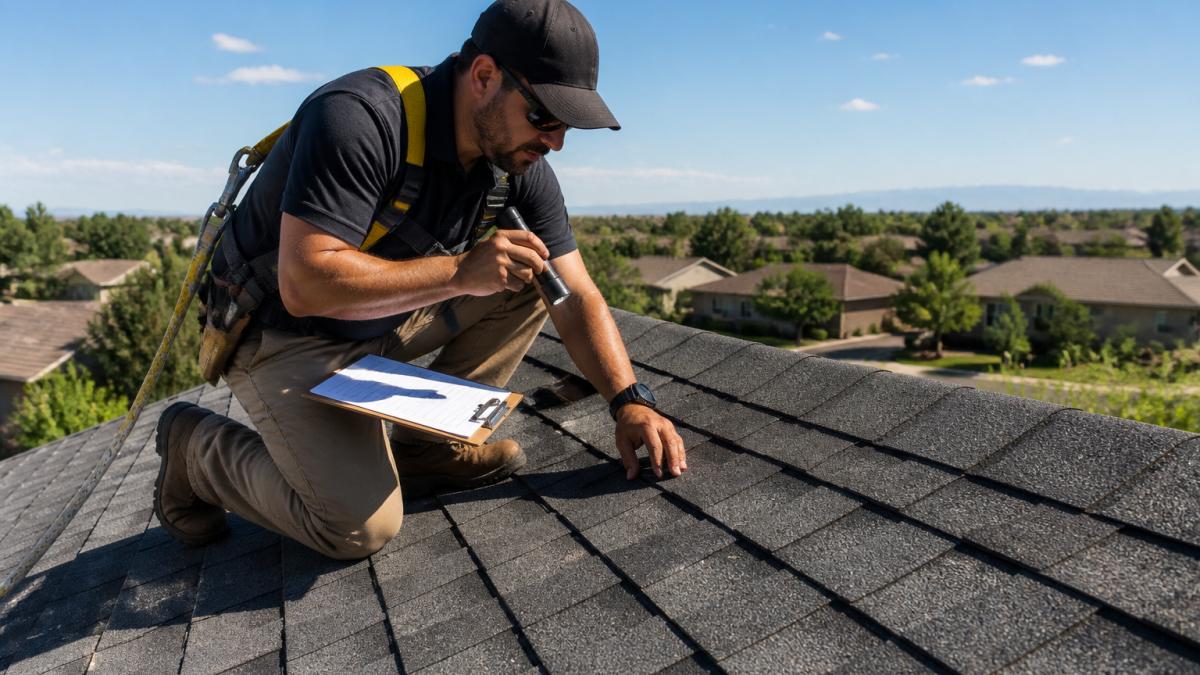
Here is what a thorough visit should cover:
- Shingles and surface materials. Checking for curling, cracking, missing pieces, and granule loss.
- Flashing and seals. Around chimneys, vents, and skylights, where most leaks start.
- Gutters and drainage. Blocked gutters push water under the edge of the roof.
- Attic and interior. Looking for water stains, daylight, and damp insulation.
- Structural signs. Sagging, soft spots, and pulled fasteners.
If an inspector never goes in the attic or never shows you photos, you did not get a real inspection.
Why an Independent Roof Inspection Protects You
The biggest risk in roof work is a conflict of interest. The person telling you the roof is failing should not be the person selling the replacement.
An independent inspection puts the findings in writing before anyone quotes a repair. That protects you in three ways:
- You can get a second opinion without pressure.
- You have documentation for an insurance claim after storm damage.
- You can hand the report to any contractor and compare bids on the same scope.
For realtors and property managers, that report is worth more than the fee. It settles arguments about roof condition before a sale closes or a tenant dispute starts.
The Roof Inspection Checklist a Pro Should Follow
A roof inspection checklist keeps the visit consistent. Ask any inspector whether they work from one, and watch how they answer.
- Walk the roof surface where safe, or inspect from edges and ladder
- Check all shingle fields for curling, cracking, and missing tabs
- Inspect flashing at chimney, vents, skylights, and valleys
- Test gutters and downspouts for flow and attachment
- Look for granule buildup in gutters, a sign of shingle wear
- Enter the attic to check decking, insulation, and stains
A pro who skips the attic or the photos is cutting corners. You are paying for documentation, so insist on it.
How Often to Inspect a Roof (and When to Call Sooner)
Once a year is the standard answer, and it holds for most homes. Add an inspection after any major hail or wind event, and before you list a house for sale.
Roof age changes the schedule. A roof in its first decade needs less attention.
Call sooner if you notice:
- Stains on ceilings or walls
- Missing or curling shingles visible from the ground
- Granules collecting at downspouts
- Daylight in the attic
- Damp insulation or a musty smell
Early detection is the whole point. A small flashing repair caught at inspection stays small. Water damage found three months later rarely does.
Reading Your Roof Inspection Report
A roof inspection report is a written record of roof condition, with photos and a prioritized list of repairs. Read it in this order:
- Overall condition and roof age. Sets the context for everything else.
- Remaining useful life. A rough estimate of how many years the roof has left.
- Urgent items. Anything that can leak now.
- Watch list. Issues that are not urgent but need monitoring.
- Maintenance recommendations. Small tasks that extend life.
If the report has no photos, no age estimate, and no priorities, ask for a revised version. A vague report is not worth the fee.
Cost vs. Benefit: When an Inspection Pays for Itself
The math is simple in principle: an inspection fee is a one-time cost, and a missed leak is not. But "it pays for itself" is a claim, not a calculation. Here is how to actually run the numbers for your own roof.
The Break-Even Framework
You do not need a spreadsheet. You need three estimates:
- The inspection fee. Use the range from the table above, say a standard written report.
- The cost of the most likely problem on your roof. A flashing repair, a few replaced shingles, a resealed vent boot.
- The cost of that same problem if it goes undetected for a season. Water into decking, insulation, and drywall, plus interior repair and possible mold remediation.
The inspection pays for itself when the probability of finding a problem, multiplied by the difference between the early-repair cost and the late-repair cost, exceeds the fee.
A common pattern: a small flashing repair caught at inspection stays a small roofing repair. The same leak found three months later has usually spread into the attic and the ceiling below, and the bill has grown well past the roofing itself.
When the Inspection Clearly Pays
The expected savings justify the fee when any of these are true:
- The roof is past the halfway point of its expected life. Small failures appear faster, so the odds of finding something actionable rise.
- You have visible warning signs. Ceiling stains, granules in the gutters, curling shingles, or daylight in the attic.
- A major weather event has passed through. Hail and wind damage is often invisible from the ground but obvious on the roof, and a dated report supports an insurance claim.
- You are buying or selling a home. Buyers and their inspectors will find problems anyway. A report lets you price the roof honestly or negotiate from documentation instead of surprise.
- You manage a rental or commercial property. A written record settles condition disputes before they become arguments.
When It May Not
Honesty cuts both ways. An inspection is a weaker bet when:
- The roof is new, under warranty, and showing no symptoms, a periodic check may be enough.
- You already have a recent, detailed report and nothing has changed.
- The only inspector available is tied to a company that sells replacements, and you have no way to get an independent read.
In those cases, wait for a trigger, a storm, a stain, a sale, rather than paying for reassurance alone.
The Four Places the Benefit Shows Up
- Small repairs instead of big ones. Early detection keeps problems small.
- Insurance claims. A dated report supports storm damage claims.
- Home sales. Buyers and their inspectors find problems anyway. Better you find them first.
- Roof lifespan. Regular maintenance recommendations add years of service.
When a roof is aging but not failing, restoration is often the smarter spend. Our FRESH ROOF TREATMENT uses plant-based GreenSoy™ Technology to restore asphalt shingles and extend roof life by 6-8 years, backed by a 6-year warranty. That is a fraction of replacement, and an inspection tells you whether your roof qualifies.
Frequently Asked Questions
What is the average price of a roof inspection?
A standard professional roof inspection typically runs a few hundred dollars, though the exact roof inspection cost depends on roof size, pitch, accessibility, and whether the inspector walks the roof or uses drone or binocular methods. Free inspections are common but usually come from contractors who profit from the repair work they recommend. A paid, independent inspection buys you an unbiased assessment, which is often worth the fee when you need a clear answer about roof condition and remaining useful life.
Is a professional roof inspection worth it before buying a home?
Yes. A general home inspection often views the roof from the ground or with binoculars, so it can miss curled shingles, soft decking, or active leaks. Ordering an independent roof inspection before closing gives you documented roof condition, photos, and a repair estimate you can use to negotiate. If the report shows the roof has years of remaining useful life, you avoid asking for a roof replacement credit you do not need, which keeps the deal moving.
How often should a homeowner schedule a roof inspection?
Most homeowners should schedule a professional inspection once a year, ideally in spring or fall, plus after any major hail or wind event. If your roof is over 15 years old or you have had previous repairs, twice a year is reasonable. Following that schedule is the simplest answer to how often to inspect a roof, and it supports early detection of small issues like cracked flashing or granule loss before they turn into interior water damage.
What should I do after receiving a roof inspection report?
Read the roof inspection report carefully and separate urgent safety or leak items from maintenance recommendations. Get written quotes for any recommended roof repair, and ask the inspector to clarify photos or terms you do not understand. If the report calls for full roof replacement, get a second opinion before committing. If it lists preventive maintenance items, schedule those first. Keep the report on file for insurance claims, home sale disclosures, and tracking roof condition over time.