 how-to
How to Extend Asphalt Shingle Life for 6-8 More Years
Table of Contents
- Why Most Shingle Roofs Fail Before Their Time
- Signs of Shingle Aging You Should Not Ignore
- Step-by-Step Guide to Extend Asphalt Shingle Life
- Skip Power Washing: Choose Roof Restoration Instead
- Roof Rejuvenation Cost vs. Full Replacement
- DIY vs. Professional: What Actually Moves the Needle
- Core Asphalt Shingle Maintenance Tips by Climate
- Conclusion: Make Your Next Roof Last Longer
- Frequently Asked Questions
Last Updated: September 5, 2026
Why Most Shingle Roofs Fail Before Their Time
Asphalt shingles are engineered to protect your home for 20 to 30 years, yet many homeowners in Albuquerque and Rio Rancho face premature failure at year 15 (asphaltroofing.org). The culprit is rarely manufacturing quality, it is the relentless combination of UV degradation, thermal cycling, and neglected maintenance. Extending asphalt shingle life starts with recognizing that your roof is a system, not just a surface covering.
At FRESH TEC, we have inspected many roofs across the region, and the pattern is consistent: most failures trace back to preventable issues like attic moisture, clogged gutters, and unchecked algae growth. With a proactive approach, you can often add 6 to 8 years of service life to your existing roof, delaying the massive expense of a full replacement.
The key shift is moving from reactive repairs to preventative maintenance. A roof restoration plan with regular inspections and targeted treatments costs a fraction of a new roof and keeps your home protected while you plan for the long term.
Signs of Shingle Aging You Should Not Ignore
Catching problems early is the single most effective way to extend asphalt shingle life. You do not need to be a roofing contractor to spot early warnings, a quick visual check from the ground with binoculars, or a careful walk on a cool morning, can reveal a lot about your roof deck's health.
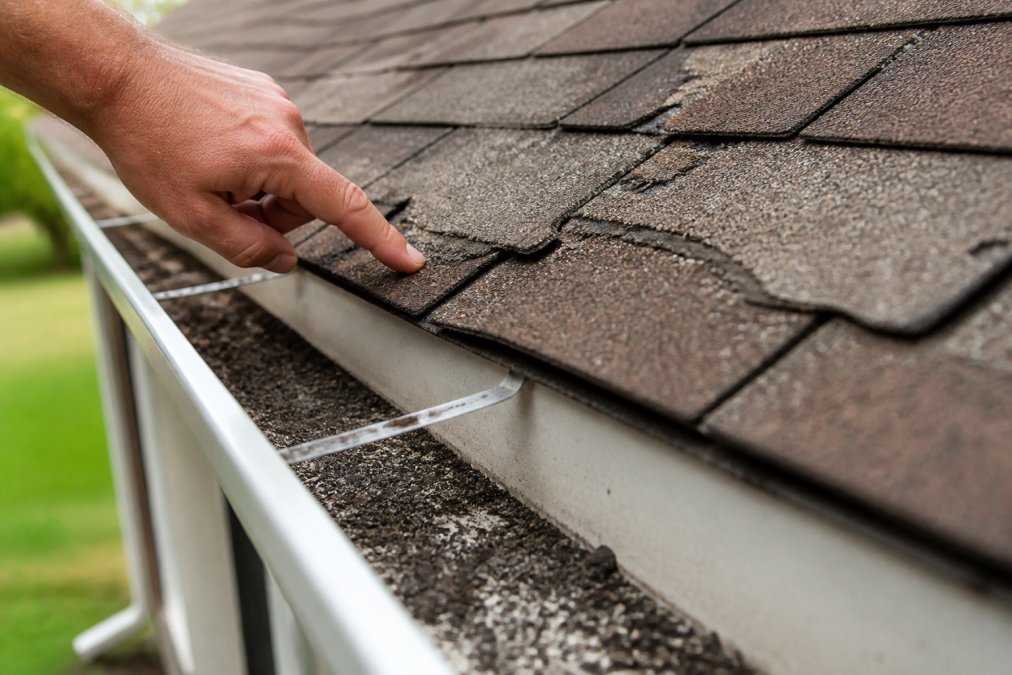
The most common indicators of shingle aging include:
- Curling shingles: When the edges of your shingles turn up, they lose their seal and become vulnerable to wind uplift and water infiltration.
- Granule loss: If you see dark sand-like particles in your gutters or downspouts, your shingles are shedding their protective coating. This exposes the asphalt to UV degradation.
- Blistering and cracking: Small bubbles or visible cracks indicate the shingle bonding is breaking down due to thermal cycling.
- Algae growth or moss: Dark streaks or green patches trap moisture against the shingle surface, accelerating decay.
Widespread granule loss or significant curling does not always mean replacement is the only option. A professional assessment can determine if the shingle's structural integrity remains sound enough for a rejuvenation treatment, which restores flexibility and seals minor imperfections. Ignoring these signs, however, leads to moisture buildup that compromises the roof deck and insulation efficiency.
Step-by-Step Guide to Extend Asphalt Shingle Life
Extending your roof's life requires a systematic approach. You cannot just treat the visible symptom; you must address the underlying conditions that cause wear. The following steps form a comprehensive preventative maintenance routine for most asphalt shingle roofs.
Step 1: Keep Gutters Flowing and the Roof Deck Dry
Water is the primary enemy of any roof. When gutters are clogged, water backs up and seeps under shingle edges, attacking the roof deck and promoting rot. Schedule gutter maintenance at least twice a year, especially after monsoon season, to ensure water flows freely away from your roofline.
Step 2: Address Ventilation and Insulation Gaps
A hot, poorly ventilated attic cooks shingles from below, accelerating UV degradation and thermal cycling damage. Proper roof ventilation, soffit and ridge vents, allows hot air to escape and keeps the roof surface cooler. Adequate attic insulation prevents ice dams in winter and reduces the temperature differential that causes shingles to crack.
Step 3: Trim Branches and Install Copper Strips
Overhanging branches scrape against shingles, wearing away granules, and drop leaves that trap moisture. Trim back any limbs within several feet of your roofline. To combat algae and moss, many homeowners install copper strips near the ridge; rain releases ions that prevent biological growth.
Skip Power Washing: Choose Roof Restoration Instead
Many homeowners reach for a pressure washer when they see algae streaks or dirt on their roof, one of the most damaging mistakes you can make. High-pressure water forces moisture under the shingles, blasts away protective granules, and can loosen shingle bonding, removing years of life in a single afternoon.
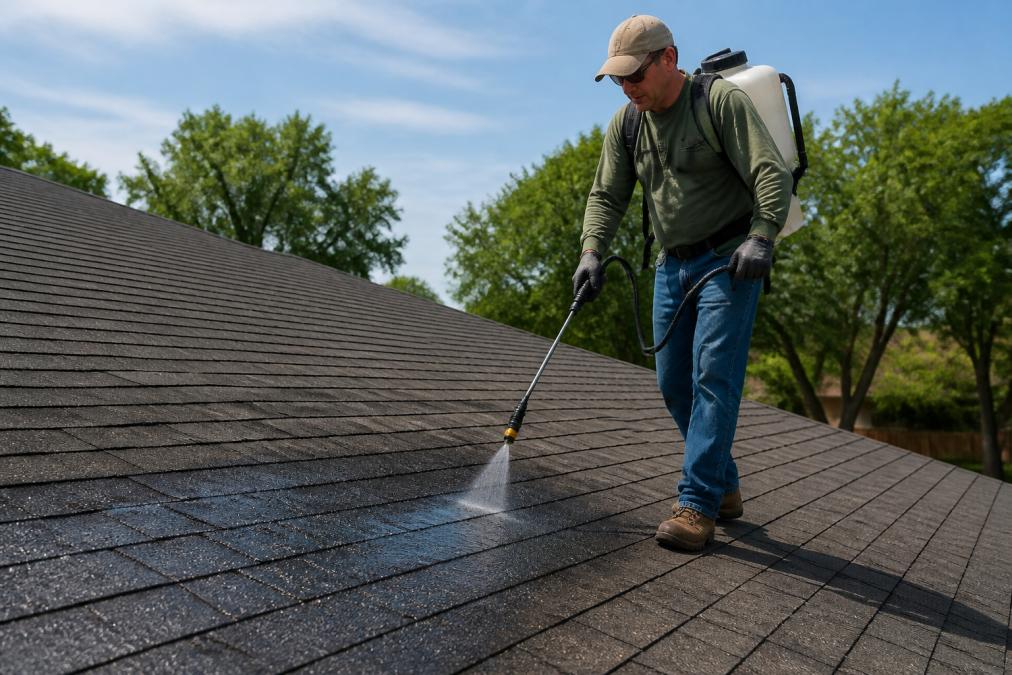
Instead, professional roof restoration is the safer, more effective path. It applies a specialized treatment that cleans the surface without high pressure and then rejuvenates the asphalt, removing algae and moss while restoring shingle flexibility and preventing future cracking and granule loss.
Roof rejuvenation is a chemical treatment process, not a coating. Products like FRESH TEC's patented GreenSoy™ Technology use plant-based formulas to penetrate the shingle and restore oils that have evaporated over time, unlike a standard sealant or coating that sits on top and can trap heat. The treatment revives the shingle from within, making it pliable and resistant to thermal cycling.
Roof Rejuvenation Cost vs. Full Replacement
The financial decision hinges on the remaining structural life of your roof deck and the extent of shingle degradation. A full replacement, tear-off, disposal, new underlayment, and installation, can be a significant investment. In contrast, a professional rejuvenation treatment can be a fraction of the cost for the same roof size.
Cost alone should not drive the decision. If you have widespread rot, sagging, or water damage visible from the attic, rejuvenation is not viable; the deck must be repaired or replaced first. Rejuvenation makes sense when shingles are brittle, curled, or losing granules but the deck is sound and shingles have at least 5 to 7 years of expected life remaining. If shingles are cracked through the fiberglass mat or the deck is compromised, replacement is the only durable path.
To calculate the break-even point, consider the replacement cost by the years a new roof would last and compare it to the rejuvenation cost divided by the added years it provides. Rejuvenation defers the large capital outlay and buys time to plan, but it does not reset the clock, your roof will still need replacement eventually. For homeowners planning to sell within 3 to 5 years, rejuvenation is often the smarter play because it improves curb appeal without the disruption of a full tear-off.
Insurance and warranty implications are often overlooked. A full replacement may trigger a new 25- to 30-year manufacturer warranty, while rejuvenation typically does not extend the original warranty. Some carriers offer premium discounts for newer roofs, which could offset part of the replacement cost; conversely, a well-maintained rejuvenated roof may help you avoid a non-renewal notice for visible granule loss or curling.
Consider the environmental accounting: a typical asphalt shingle roof generates 2 to 3 tons of tear-off waste, most of which ends up in a landfill. Rejuvenation keeps that waste in place and avoids the embodied energy of manufacturing new shingles. The most eco-conscious choice is to extend the life of what is already overhead, provided the deck is sound and the treatment is applied correctly.
DIY vs. Professional: What Actually Moves the Needle
There is a limit to what a homeowner can safely and effectively do. While cleaning gutters and trimming branches are clear DIY tasks, applying a chemical treatment to your roof is a job for professionals.
- Safety: Working on a sloped roof is dangerous. Professional teams have the harnesses, ladders, and training to work at height safely.
- Product Application: The effectiveness of a rejuvenation treatment depends on proper application. Too little product does nothing; too much can cause runoff. Professionals know the correct application rate for your shingle type.
- Assessment: A professional inspection can identify underlying issues, such as damaged flashing or early signs of shingle aging, that you might miss.
Professionals also provide a warranty on their work. FRESH TEC, for example, backs its roof rejuvenation service with an industry-leading 6-year warranty, a tangible benefit that DIY efforts cannot match.
Core Asphalt Shingle Maintenance Tips by Climate
Most maintenance guides treat every roof the same, but the dominant failure mode for asphalt shingles varies dramatically by climate zone. The strategies that protect a roof in the high-UV desert differ from those needed in the humid Southeast or the freeze-thaw cycles of the Upper Midwest. Here is a climate-by-climate breakdown based on patterns observed by roofing contractors and building science researchers.
High-UV Regions (Southwest, Intermountain West, parts of California)
The primary threat is UV degradation. Intense sun bakes the asphalt, evaporating the volatile oils that keep shingles flexible, resulting in granule loss, brittleness, and cracking, often visible by year 10 to 12 on standard shingles. Maintenance priorities:
- Schedule periodic rejuvenation treatments every 3 to 5 years to replenish the oils. This is an effective intervention in this climate.
- Ensure attic ventilation is adequate to reduce heat buildup under the deck. A ridge vent and soffit vents that provide at least 1 square foot of net free area per 300 square feet of attic floor space is the standard benchmark (energystar.gov).
- Inspect for thermal cracking after prolonged heat waves. Small hairline cracks can be sealed with a professional-grade asphalt sealant, but widespread cracking means replacement is near.
High-Moisture and Humid Regions (Southeast, Gulf Coast, Pacific Northwest)
Here, the enemy is biological growth, algae (the dark streaks common on light-colored shingles) and moss, which traps moisture and accelerates decay. Maintenance priorities:
- Install copper or zinc strips near the ridge. When rain washes over the metal, it releases ions that inhibit algae and moss growth. A 6-inch-wide strip running the length of the ridge is the typical installation.
- Trim overhanging branches aggressively. Shade keeps the roof damp longer, creating ideal conditions for moss. Aim for at least 6 feet of clearance.
- Avoid any high-pressure washing. In this climate, the risk of forcing water under the shingles is even higher because the deck is often already damp. Use a low-pressure, soft-wash chemical treatment instead.
- Clean gutters more frequently, four times a year, because the combination of leaves and humidity accelerates organic buildup that can back water up under the shingle edges.
Freeze-Thaw and Snow Regions (Northeast, Upper Midwest, Mountain West)
The critical risk is ice damming. When heat from the attic melts snow on the roof, the water runs down and refreezes at the colder eaves, forming a dam that pushes water up under the shingles. Maintenance priorities:
- Focus on attic insulation and ventilation to keep the roof surface cold and prevent the melt-freeze cycle. The U.S. Department of Energy recommends attic insulation to R-38 or higher in these zones (energy.gov).
- Install ice-and-water shield membrane along the eaves and in valleys if you are re-roofing. This self-adhering membrane provides a secondary barrier against ice dam infiltration.
- Remove snow with a roof rake after heavy storms, but only up to about 2 feet from the edge, do not attempt to clear the entire roof, as scraping can damage shingles.
Mixed or Transitional Climates (Mid-Atlantic, Ohio Valley, parts of Texas)
These regions experience a combination of heat, humidity, and occasional winter freezes. The maintenance schedule is a hybrid:
- Conduct a bi-annual inspection, once in late spring and once in late fall, to catch both heat-related granule loss and moisture-related algae growth.
- Alternate your focus: In the summer, prioritize ventilation and UV protection; in the fall, clear gutters and trim branches before leaf drop.
By matching your maintenance actions to your specific climate stressors, you move beyond a one-size-fits-all approach and address the actual mechanisms that shorten shingle life in your area.
Conclusion: Make Your Next Roof Last Longer
Your asphalt shingle roof is one of the largest investments you will make in your home, and its longevity is not solely a matter of luck. By adopting preventative maintenance, addressing ventilation gaps, and choosing professional roof restoration over destructive power washing, you can add years of life to your current roof and protect your property's value.
For homeowners ready to take action, FRESH TEC offers a comprehensive solution. Our patented, plant-based GreenSoy™ Technology restores shingle flexibility and extends roof life by 6 to 8 years, all without harsh chemicals that are safe for your family and pets. We also provide gutter cleaning and solar panel maintenance as convenient add-ons to keep your entire exterior in top condition.
Get started with FRESH TEC and book a free inspection to see how much life we can add to your roof.
Frequently Asked Questions
Does a 30-year shingle really last 30 years?
No, not without regular care. A 30-year architectural asphalt shingle typically lasts 20-25 years in practice. Thermal cycling, UV degradation, and poor attic ventilation accelerate aging. Proactive measures like keeping gutters clean and ensuring ridge vents are unobstructed help you get closer to the rated lifespan. Professional roof rejuvenation with plant-based formulas can restore flexibility to the shingle base and extend the usable life by another 6-8 years, pushing a 30-year shingle toward its full rated age.
Can you restore old asphalt shingles instead of replacing them?
Yes, if the shingles are still pliable and the granules are intact. If you see widespread curling, blistering, or bare matting, replacement is the safer route. For roofs with moderate granule loss and stiffness, a restorative treatment using a plant-based soy formula penetrates the shingle to restore oils lost to UV exposure. This type of roof restoration addresses algae growth and moisture buildup without the environmental impact of harsh chemicals or the cost of a full tear-off.
What is the 25% rule for roofing?
The rule states that if more than 25% of your roof surface is damaged, you should replace the entire roof rather than patch sections. Patching leaves the new shingles surrounded by aged ones, which creates uneven wear and can void the new shingle warranty. If damage is under 25%, targeted repairs and preventative maintenance, including gutter cleaning and copper strip installation, can still extend asphalt shingle life. A professional inspection will help you measure the exact percentage before you commit to a plan.
What is the actual roof rejuvenation cost difference versus replacement?
Roof rejuvenation runs a fraction of the price of a full replacement. Replacement also involves disposal fees for old shingles and potential roof deck repairs, which add to the total. Rejuvenation costs vary based on the square footage, the condition of the shingles, and whether you bundle it with gutter cleaning or solar panel maintenance. Book a free inspection to get an exact quote for your property.
Frequently Asked Questions
Q: Does a 30-year shingle really last 30 years?
A: No, not without regular care. A 30-year architectural asphalt shingle typically lasts 20-25 years in practice. Thermal cycling, UV degradation, and poor attic ventilation accelerate aging. Proactive measures like keeping gutters clean and ensuring ridge vents are unobstructed help you get closer to the rated lifespan. Professional roof rejuvenation with plant-based formulas can restore flexibility to the shingle base and extend the usable life by another 6-8 years, pushing a 30-year shingle toward its full rated age.
Q: Can you restore old asphalt shingles instead of replacing them?
A: Yes, if the shingles are still pliable and the granules are intact. If you see widespread curling, blistering, or bare matting, replacement is the safer route. For roofs with moderate granule loss and stiffness, a restorative treatment using a plant-based soy formula penetrates the shingle to restore oils lost to UV exposure. This type of roof restoration addresses algae growth and moisture buildup without the environmental impact of harsh chemicals or the cost of a full tear-off.
Q: What is the 25% rule for roofing?
A: The rule states that if more than 25% of your roof surface is damaged, you should replace the entire roof rather than patch sections. Patching leaves the new shingles surrounded by aged ones, which creates uneven wear and can void the new shingle warranty. If damage is under 25%, targeted repairs and preventative maintenance, including gutter cleaning and copper strip installation, can still extend asphalt shingle life. A professional inspection will help you measure the exact percentage before you commit to a plan.
Q: What is the actual roof rejuvenation cost difference versus replacement?
A: Roof rejuvenation runs a fraction of the price of a full replacement. Replacement also involves disposal fees for old shingles and potential roof deck repairs, which add to the total. Rejuvenation costs vary based on the square footage, the condition of the shingles, and whether you bundle it with gutter cleaning or solar panel maintenance. Book a free inspection to get an exact quote for your property.