
 How-to
How to Prevent Roof Leaks During Albuquerque Monsoon Season
Last Updated: November 20, 2026
Quick Summary
Preventing roof leaks during Albuquerque monsoon season means clearing gutters, canales, scuppers, and drains before storms, then checking flashing, sealant, and shingles for gaps. Wind-driven rain and ponding water find weak seams fast, so inspect in spring and reseal cracked joints before the first cell hits.
- The monsoon runs from late June or early July into September, with short intense bursts and 40 mph gusts.
- Inspect your roof from April through early June, while weather is dry and the roof is safe to walk.
- Never pressure wash treated roofs or aging shingles; the spray strips granules and forces water in.
- During a storm, kill power near wiring, contain water, and photograph damage before cleaning up.
- Call a pro when a leak returns after patching or standing water will not drain.
Table of Contents
- Why Albuquerque Monsoons Find Weak Spots in Every Roof Type
- Your Roof Inspection Before Monsoon Season: What to Check and When
- Cleaning Roof Gutters and Drains Before Storms
- Flashing, Sealant, and Roof Coatings: The Small Fixes That Stop Big Leaks
- How to Stop a Roof Leak During Heavy Rain
- Emergency Roof Leak Steps for the First Storm
- When to Call a Professional for Monsoon Roof Maintenance
- Book a Free Pre-Monsoon Roof Inspection
- Frequently Asked Questions
Why Albuquerque Monsoons Find Weak Spots in Every Roof Type
Preventing roof leaks during Albuquerque monsoon season starts with understanding how summer storms actually attack a roof.
A roof that sheds water fine all spring can start dripping within an hour of a strong storm. The roof rarely fails overnight. The weak spot is usually there, waiting.
Three things make monsoon rain different from winter moisture:
- Intensity. A single cell can drop a large share of the season's rain in under an hour, overwhelming gutters, canales, and roof drains sized for average flow.
- Angle. Wind-driven rain pushes water under shingles, behind flashing, and into seams that shed vertical rain without trouble. Water that would normally run off instead gets driven uphill against laps and penetrations.
- Cycling. Sun-baked roofs heat to well over 150°F on a July afternoon, then get hit with 60°F rain. That thermal shock opens sealant joints and hairline cracks that were tight in the morning.
Roof leaks are not random. They follow predictable paths on each roof type, and the same storm will exploit a different weakness on a shingle roof than on a flat membrane roof.
How Pitched Shingle Roofs Fail in Wind-Driven Rain
Shingles shed water by overlapping, like fish scales. Wind-driven rain breaks that system in three places.
First, lifted or missing shingles. Second, aging roofing materials. Third, nail pops and worn pipe boots, which open small holes that grow with every storm.
A common mistake is judging a shingle roof from the ground. From the driveway, the roof looks fine. Up close, the granules are gone, the edges are brittle, and the sealant strips have failed.
Where Flat and Low-Slope Roofs Leak First
Flat and low-slope roofs fail at seams and drains, not in the field of the membrane. Water sits on these roofs longer, so every flaw gets tested.
The usual suspects:
- Open seams where membrane sheets meet
- Cracked roof coating around vents and penetrations
- Ponding water at low spots that never fully drains
Ponding water is the big one. Standing water for more than a day or two works its way into seams and speeds up membrane breakdown. On a flat roof, the parapet wall is the second weak point: it acts as a dam, and when a canale or scupper clogs, water backs up against the wall and finds the flashing.
Why Canales and Parapets Change the Math
Many homes here use canales, open spouts that throw water off a flat roof, instead of gutters. A canale works only if it stays clear. Debris, nest material, and windblown grit plug the channel, and a blocked canale turns the roof edge into a bathtub. Parapets make it worse: they trap water against the wall, and the flashing at the base of the parapet is where the leak usually shows up inside.
Your Roof Inspection Before Monsoon Season: What to Check and When
A roof inspection before monsoon season is a visual check for loose materials, open seams, and drainage problems, done in spring before the first storms arrive.
You do not need to climb up to catch the obvious problems. Start inside:
- Check ceilings and walls near exterior corners for stains or bubbling paint
- Look for daylight in the attic
- Note any musty smell after rain
Then check from the ground with binoculars: lifted shingles, missing tabs, sagging lines, and debris on the roof.
If you want a second opinion on whether a paid inspection is worth it, read our breakdown of whether a professional roof inspection is worth the cost.
Cleaning Roof Gutters and Drains Before Storms
Cleaning roof gutters and drains before storms is the cheapest leak prevention there is.
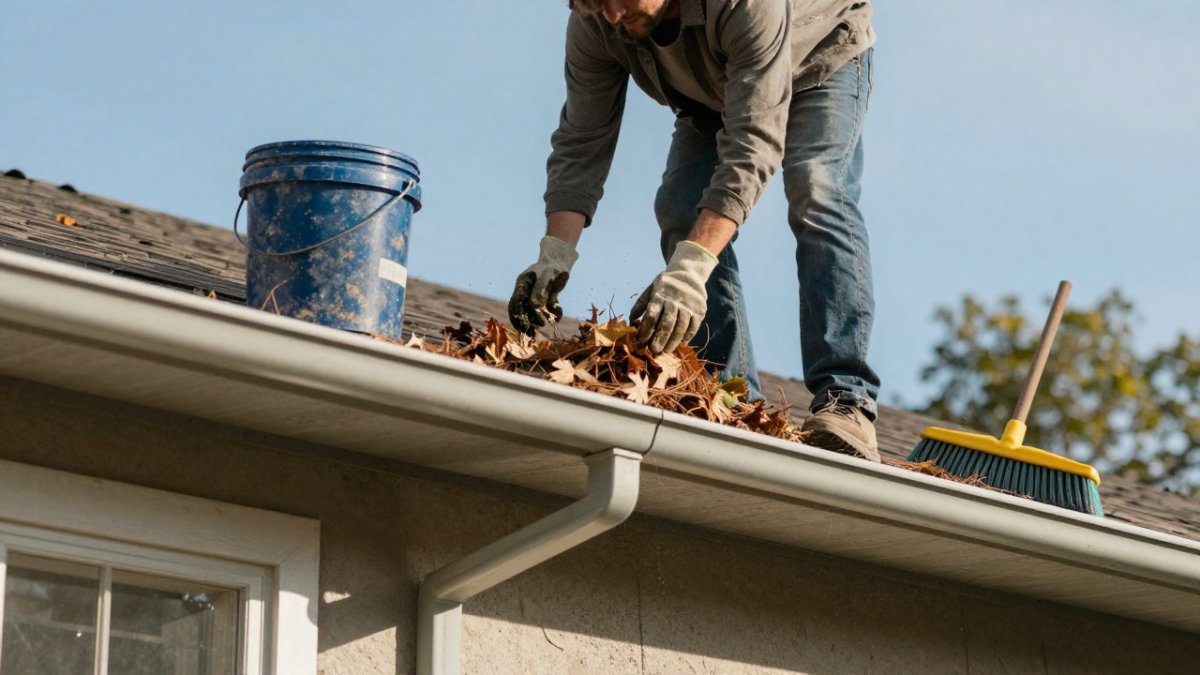
Clear leaves, pine needles, and debris by hand or with a soft broom. Then flush the gutters with a hose and confirm water runs freely to the downspouts.
Watch out: never use a pressure washer on a treated roof or on aging shingles. The spray strips granules and forces water where it should not go.
Canales, Scuppers, and Flat-Roof Drains
Many Albuquerque homes have canales, the open spouts that throw water off flat roofs. These clog with debris and nest material, and a blocked canale sends water back across the roof.
Check each one before storm season:
- Clear the channel with a gloved hand or a small scoop
- Confirm water exits well away from the walls
- Clear scuppers and roof drains on commercial or flat roofs
Flashing, Sealant, and Roof Coatings: The Small Fixes That Stop Big Leaks
Flashing and sealant repairs stop most leaks before they start. Flashing is the metal or membrane that seals roof edges, valleys, chimneys, and vent pipes.
Walk the roof and check every penetration. Reseal cracked sealant with a suitable roof sealant, and press lifted flashing back down before it tears free in high winds.
Roof coatings play a different role. For a deeper look at options, see our guide to flat roof coating solutions for business.
How to Stop a Roof Leak During Heavy Rain
How to stop a roof leak during heavy rain comes down to one rule: contain the water now, fix the roof later. Do not climb onto a wet roof in a storm.
Do this instead:
- Move furniture and electronics away from the drip.
- Place a bucket under the leak.
- Poke a small drain hole in a bulging ceiling with a nail to release trapped water into the bucket.
- Take photos of the damage for your records.
- Call a professional once the storm passes.
If you are unsure whether the damage means the roof needs professional maintenance, our list of roof maintenance warning signs helps you confirm what you are seeing.
Emergency Roof Leak Steps for the First Storm
Emergency roof leak steps during the first storm are about safety and documentation, not repair. Get the water contained, protect your belongings, and stay off the roof.
Work through it in this order:
- Kill the power to affected rooms if water is near wiring, outlets, or a light fixture. Do not stand in standing water to flip a breaker. If the panel is wet or you cannot reach it safely, leave it and call an electrician.
- Contain the water. Move furniture, electronics, and rugs out of the drip zone. Place a bucket or tub under the leak and lay towels or a tarp on the floor.
- Relieve trapped water in a bulging ceiling. A sagging, water-filled ceiling can collapse. Poke a small hole at the low point with a nail or screwdriver and let it drain into the bucket. Do not stand directly under the bulge while you do it.
- Document everything before you clean up. Photograph the stain, the drip, the bucket, and any damaged belongings. Note the date and time. Insurers want the before, not just the after.
- Stay off the roof. A wet roof is slick, and monsoon cells bring lightning. Do not climb up during the storm.
Once the storm clears, do a quick exterior check from the ground. Look for missing shingles, lifted flashing, and debris against the walls.
Watch out: never use a pressure washer or hose to clear debris during or right after a storm, the spray strips granules, forces water where it should not go, and on a wet roof it is a slip hazard.
When to Evacuate and Call for Help
Some leaks are an emergency, not a maintenance item. Leave the house and call 911 if you see any of these:
- Water pooling near an electrical panel, outlet, or appliance
- A burning smell, smoke, or sparking near the leak
- A ceiling that is sagging heavily or has already begun to collapse
If the leak is contained and the power is safe, you can wait for the storm to pass and call a roofer the next morning.
Is It a Roof Leak or Something Else?
Not every ceiling stain is a roof leak. Condensation from attic moisture, a failed plumbing vent boot, or an AC line can stain a ceiling the same way.
A few clues help you tell the difference:
- Roof leak: stains grow after rain and appear near exterior walls or roof valleys.
- Condensation: dampness shows up in cold weather, not during storms.
- Plumbing: the stain appears regardless of weather and often near a bathroom or kitchen.
When in doubt, track it. Photograph the stain, note the weather, and check again after the next rain.
Work through the first storm in this order, keeping safety and documentation ahead of repair.
| Step | What to do |
|---|---|
| 1 | Kill power to affected rooms if water is near wiring |
| 2 | Contain water with buckets, towels, or a tarp |
| 3 | Poke a small hole in a bulging ceiling to drain |
| 4 | Photograph stains, drip, bucket, and damaged belongings |
| 5 | Stay off the roof during the storm |
When to Call a Professional for Monsoon Roof Maintenance
Call a professional when you cannot safely reach the roof, when a leak returns after patching, or when you see sagging, widespread shingle damage, or standing water that will not drain.
If you suspect a hidden leak, our article on roof leak detection services and what they cost explains what the process involves before you commit.
At FRESH TEC LLC, we use our patented, plant-based GreenSoy™ Technology to restore asphalt shingles. Typical results add 6 to 8 years of roof life.
Book a Free Pre-Monsoon Roof Inspection
The best time to protect your roof is before the first storm, not during it.
We serve homeowners, realtors, and property managers across Albuquerque and Rio Rancho.
Want ongoing protection after treatment? Our roof maintenance plan keeps your treated roof in shape with twice-yearly inspections and tune-ups.
Get started with FRESH TEC LLC and head into monsoon season with a roof you can trust.
Your roof will face another monsoon season whether it is ready or not.
Frequently Asked Questions
How do you stop a leaking roof during heavy rain?
Move people and valuables away from the drip, then place a bucket under it and lay towels to protect flooring. If the ceiling bulges, puncture the bubble with a small hole and a bucket beneath to release trapped water safely. Do not climb onto a wet roof during a storm. Once the rain stops, apply emergency roof leak steps such as a tarp or sealant over the damaged area and call a professional to find the source. Quick action limits interior water damage and ceiling stains.
Does homeowners insurance cover roof leaks due to rain?
Most policies cover sudden damage from a storm, such as wind-lifted shingles or hail, but not leaks caused by long-term neglect or an aging roof. Document everything: photograph the ceiling stains, the damaged shingles, and any water intrusion. Keep receipts for emergency repairs. Call your insurer before major work begins and ask whether the cause counts as storm damage. A pre-monsoon roof inspection record can also help show the roof was maintained before the storm.
What should I check on my roof before monsoon season?
Walk the perimeter with binoculars and check for loose or lifted shingles, cracked flashing around vents and chimneys, and worn sealant. Clear gutters, canales, scuppers, and roof drains of debris. On flat roofs, look for ponding water and blistered roof coating. Trim overhanging tree limbs and remove windblown debris. Inside, check the attic for daylight, water stains, or damp insulation. A professional roof inspection before monsoon season catches what a ground-level look misses.
How can I tell whether a roof leak needs professional attention?
Call a professional if water is actively coming through the ceiling, if the leak returns after you patch it, if shingles are missing or curling across a wide area, or if you see sagging, mold, or widespread ceiling stains. Small isolated drips from a single lifted flashing piece may be a quick fix, but water travels along rafters, so the visible spot is rarely the source. A professional can inspect the whole roof system before recommending a repair or treatment.