 How-to
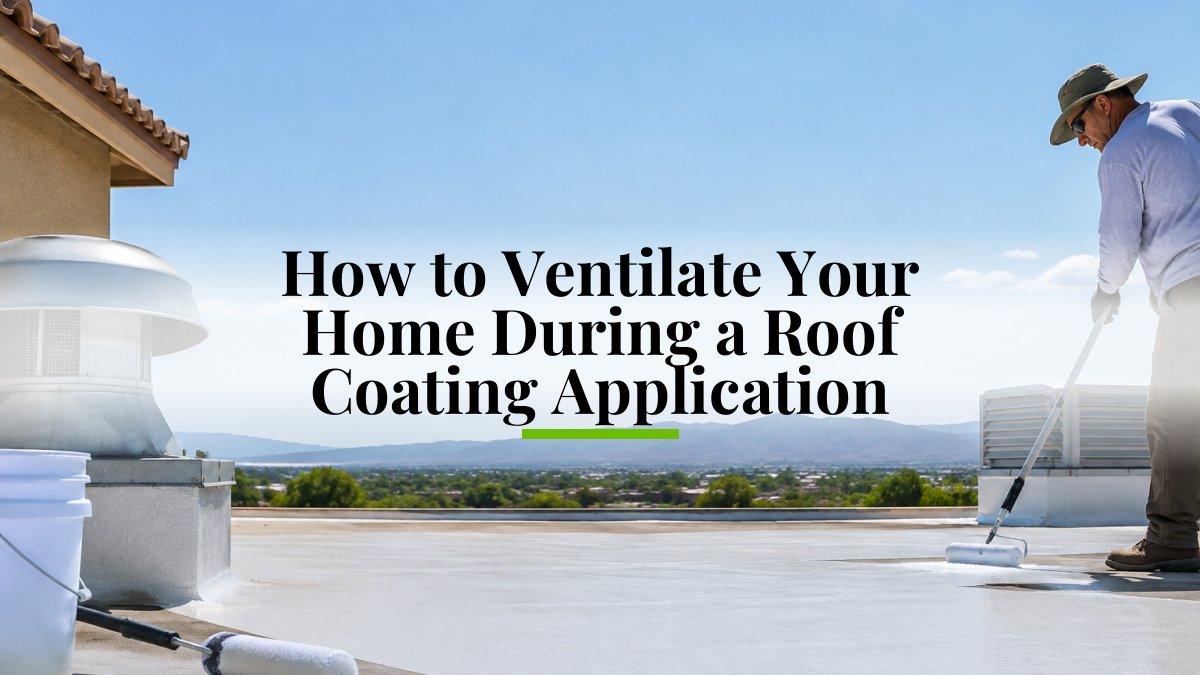
How to Ventilate Your Home During a Roof Coating Application
Last Updated: November 22, 2026
Quick Summary
Plan your roof coating ventilation before application day by sealing the attic hatch, closing windows on the coated side, and setting a box fan to blow outward in a window away from the roof work. Keep the HVAC fresh-air intake off and the fan on auto so fumes are not pulled inside.
- Walk the attic first and clear blocked soffit and ridge vents so fumes do not linger.
- Check the product's safety data sheet sections 2, 7, 8, and 9 for ventilation requirements.
- Point the exhaust fan out, crack one far-side window, and keep interior doors open.
- Keep fans running and coated-side windows closed for the first 24 hours after application.
- Most coatings stop smelling within a day, though some need two; keep ventilating if it lingers.
Table of Contents
- Why Roof Coating Ventilation Matters Before the First Bucket Opens
- Types of Roof Vents and How They Shape Your Indoor Airflow
- Roof Coating Application Safety Precautions for Occupants
- HVAC Settings During Roof Coating: What to Change and When
- Setting Up a Practical Indoor Ventilation Path
- How Long to Air Out a House After Roof Coating
- Weather, Wind, and Application-Day Decisions
- Booking Your Roof Coating With FRESH TEC LLC
- Frequently Asked Questions
Why Roof Coating Ventilation Matters Before the First Bucket Opens
Roof coating ventilation is the plan you make before any product touches your shingles.
Coating products give off vapors as they dry. Those vapors drift. They slip through attic gaps, around vent pipes, and into rooms below.
Here is the part most guides skip. Your roof vents are already working for you or against you. Air moves in through the soffits and out through the ridge.
Before the crew arrives, walk your attic. Our guide on how to prepare asphalt shingles for roof treatment covers the surface side of this, and it pairs well with a quick attic check.
Types of Roof Vents and How They Shape Your Indoor Airflow
Roof vents are openings that let air move between your attic and the outdoors. The type and placement of each vent decides which way the air flows during and after a coating job.
Ridge Vents, Soffit Vents, and Static Roof Vents
Three vent types do most of the work on a typical home. Each one plays a different role in balanced ventilation.
- Soffit vents: intake vents under the eaves. They pull fresh air in.
- Ridge vents: exhaust vents along the peak. They push warm, stale air out.
- Static roof vents: box or dome vents on the roof face. They add extra exhaust on roofs without a ridge vent.
A continuous airflow path runs from soffit to ridge. When that path is open, attic air turns over on its own.
A common mistake is adding exhaust vents without checking the intake side.
If your home has a sloped ceiling with insulation packed tight against the roof deck, that air channel matters even more.
Roof Coating Application Safety Precautions for Occupants
Roof coating application safety precautions start with the product label. Reading the container and the safety data sheet (SDS) for the exact coating going on your roof is a useful step before application day, since those documents describe the product's ventilation requirements and manufacturer guidance.
Read the Label and the Safety Data Sheet First
Every coating container carries a signal word, typically CAUTION, WARNING, or DANGER, and that word tracks with how much ventilation and personal protection the product needs. Ask the crew for the product name and manufacturer, then look up the SDS, which is publicly posted by law under the OSHA Hazard Communication Standard (29 CFR 1910.1200). On the SDS, the sections that matter most to a homeowner are:
- Section 2 (Hazard Identification): signal word, hazard statements, and whether the product is an eye, skin, or respiratory irritant.
- Section 7 (Handling and Storage): the manufacturer's own ventilation requirements.
- Section 8 (Exposure Controls): any exposure limits and what respiratory protection is specified.
- Section 9 (Physical Properties): odor threshold and vapor pressure, a high vapor pressure product off-gasses faster and needs more air movement.
If the label carries a stronger signal word such as WARNING or DANGER, plan for higher ventilation and for occupants to be out longer.
Water-Based Versus Solvent-Based Coatings
The two families behave differently in a house, and the difference should change your setup:
Protecting Occupants Room by Room
Once you know the product, set up the house around it:
-
Close windows and doors on the coated side of the house, and keep them closed until the coating has stopped off-gassing.
-
Seal the attic hatch and any pull-down stair with a towel or plastic sheet so attic air does not spill into the living space.
-
Move pets to a room on the far side of the home, or to a neighbor's house for the day.
-
Keep the work zone itself off-limits; only the crew should be on the roof or in the attic while product is being applied.
If you have animals, our article on whether roof coatings are safe for pets answers the questions pet owners ask us most. For households focused on indoor air quality, this guide to safe, non-toxic roof treatments explains what plant-based formulations mean in practice.
HVAC Settings During Roof Coating: What to Change and When
HVAC settings during roof coating should be adjusted before the crew starts, not after you notice a smell.
Here is what to consider:
- Turn off the fresh-air intake if your system has one. It can draw fumes straight into the ductwork.
- Switch the fan to "auto" so it runs only when heating or cooling calls for it.
- Close dampers on any room that sits directly under the coated roof.
- Change the filter after the job, once the coating has cured.
If your thermostat has a "fan on" setting, turn it off. A running fan circulates whatever is in the air, including vapors.
Watch out: leaving the system on "fan on" with an open fresh-air intake is the single most common way fumes get into a home during a coating job.
Setting Up a Practical Indoor Ventilation Path
A simple indoor ventilation setup moves air through the house in one direction and out the other side. You want a clear path, not a swirl of air in one room.
The man is American.
Step 1: Protect the HVAC Before You Move Any Air
Do this first, because a running air handler can undo every window you open:
- Turn off the fresh-air intake if your system has one. An outdoor-air intake near the work area can pull fumes straight into the ductwork and distribute them through every room.
- Switch the fan to "auto" so the blower runs only when heating or cooling calls for it. A thermostat set to "fan on" circulates whatever is in the air, including vapors, all day.
- Close dampers on any zone that sits directly under the coated roof.
- Change the filter after the job, once the coating has cured, not before, since it will just load up again during application.
Watch out: leaving the system on "fan on" with an open fresh-air intake is the single most common way fumes get into a home during a coating job. It takes thirty seconds to check.
Step 2: Pick Your Exhaust Point and Your Intake Point
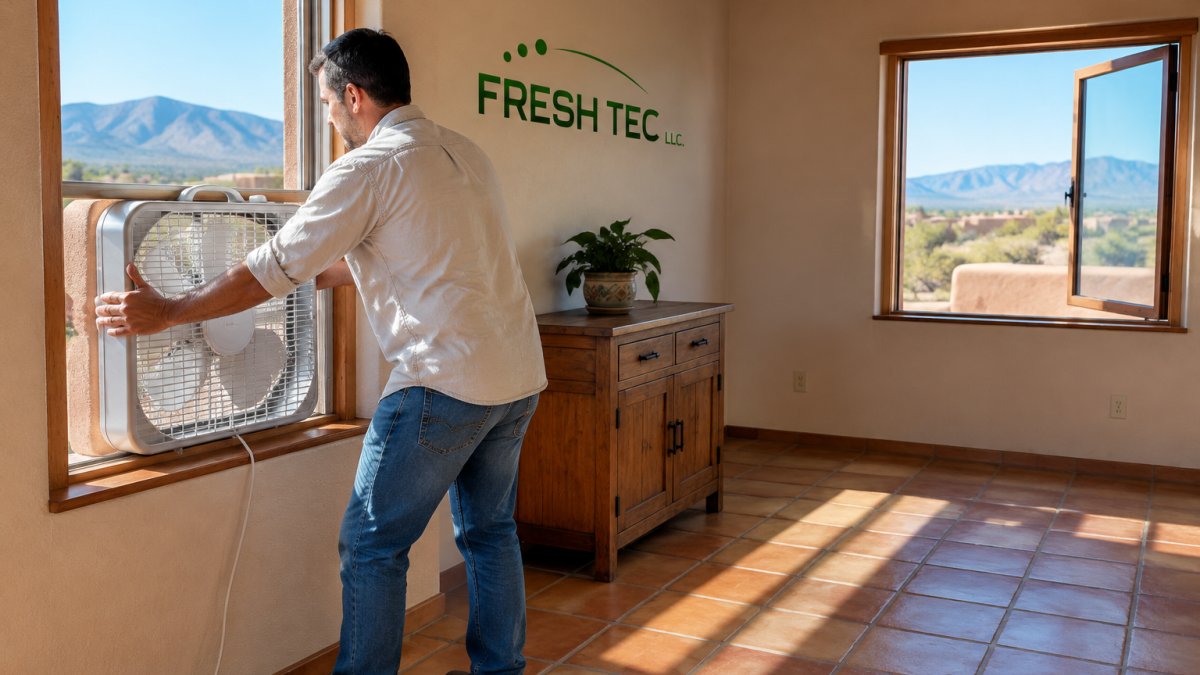
Choose one window on the shaded side of the house, away from the roof work, and set a box fan there blowing outward. Then open a window on the opposite side of the home a few inches.
A window fan set to exhaust works the same way. So does a bathroom exhaust fan if it vents outdoors, run it on the side of the house away from the roof work.
Keep these points in mind:
- Point the fan out, not in. You are pushing air out, not pulling fumes deeper.
- Open one window on the far side. A cracked window is enough to supply replacement air.
- Run the fans during application and for several hours after.
- Do not block the fan with furniture or curtains.
Step 3: Sequence the Day
A workable order for application day:
- Morning, before the crew arrives: HVAC intake off, fan on "auto," coated-side windows closed, attic hatch sealed.
- As application starts: exhaust fan running, far-side window cracked, interior doors open along the path.
- Through the cure window: keep the exhaust running and the coated-side windows closed until the smell has faded.
- After cure: change the HVAC filter, reopen the house, and return the thermostat to its normal settings.
An outdoor-air intake on your HVAC should stay closed for the whole job. That is the one system you want quiet.
How Long to Air Out a House After Roof Coating
How long to air out a house after roof coating depends on the product, the weather, and how much air you move.
Plan on this timeline:
- During application: fans running, windows on the far side cracked.
- First 24 hours: keep fans on, keep the coated-side windows closed.
- 24 to 48 hours: the smell should fade to almost nothing. If it lingers, keep ventilating.
- After that: normal use.
Cool, damp, still days slow curing. Warm, breezy days speed it up.
Once the coating has cured, a roof maintenance plan keeps the treated surface in shape without another big job.
Here is the air-out timeline we walk homeowners through after a coating job.
| Stage | What to do |
|---|---|
| During application | Fans running, far-side windows cracked |
| First 24 hours | Keep fans on, keep coated-side windows closed |
| 24 to 48 hours | Smell should fade to almost nothing |
| After that | Normal use |
| If smell lingers past two days | Keep fans running and call us |
Weather, Wind, and Application-Day Decisions
Wind is your friend or your problem, depending on direction. A steady breeze carries vapors away from the house. A dead-calm day lets them settle.
Check three things the morning of the job:
- Wind direction. If it blows toward open windows, close them.
- Wind speed. High wind makes spray application uneven and carries product where it shouldn't go.
- Rain in the forecast. Wet shingles won't take coating. We reschedule rather than rush.
Booking Your Roof Coating With FRESH TEC LLC
FRESH TEC LLC is a local, veteran-owned business serving homeowners, realtors, and property managers in Albuquerque and Rio Rancho. Our FRESH ROOF TREATMENT uses patented, plant-based GreenSoy™ Technology developed at Iowa State University. It is 96% USDA certified biobased and 100% American-made.
The treatment restores asphalt shingles at a molecular level rather than sitting on top as a surface coat. Every job is backed by a 6-year warranty covering workmanship and product performance, and you can read the full terms on our warranty page before you book.
Realtors and property managers rely on FRESH TEC LLC to get exteriors show-ready.
Frequently Asked Questions
Should I close my windows while roof coating is being applied?
Close windows on the side of the house where the coating is going down, and keep them closed until the product has cured enough that fumes drop off. Open windows on the opposite side to create a cross-flow that pushes indoor air out rather than pulling solvent odor in. The exact timing depends on the product's safety data sheet and the weather, so ask your applicator which hours are the smelliest and plan around them.
Can roof coating fumes enter the house through the attic?
Yes. Fumes move through roof sheathing gaps, attic hatches, recessed light fixtures, and any air leakage between the attic and living space. Soffit and ridge vents that normally exhaust attic air can also pull coating vapor into the attic cavity on a windy day. Sealing the attic hatch with weatherstripping and keeping interior doors closed during application reduces how much gets in, and running a bathroom or kitchen exhaust fan helps push it back out.
What should I do if I smell roof coating indoors?
Open windows on the upwind side, run exhaust fans in the kitchen and bathrooms, and move people and pets to the far end of the house or outside for a few hours. Check the HVAC filter and consider switching the system to fan-only so it circulates air without pulling in outside air through the intake. If the odor is strong, persistent, or anyone feels dizzy or nauseated, leave the home and call the applicator before re-entering.
Does roof coating application affect attic ventilation?
It can temporarily. Coating sprayed or rolled over vent openings can block airflow, and some products require covering ridge or soffit vents during application to keep coating off the screens. Ask your applicator to confirm vents are clear and unobstructed once the job is done. A balanced intake and exhaust path should be restored before the coating cures, or the attic will trap heat and moisture long after the smell is gone.