 How-to
How Do You Prepare Asphalt Shingles for Roof Treatment?
Last Updated: November 6, 2026
Quick Summary
To prepare asphalt shingles for roof treatment, first confirm the roof qualifies, then repair loose or missing shingles, clean off debris, moss, and algae, and let the roof dry for at least 24 to 48 hours. Check that shingles are dry to the touch and sound before applying any product.
- The Asphalt Roofing Manufacturers Association advises against field-applying coatings or rejuvenators over installed asphalt shingles.
- Re-seat loose shingles with roofing cement and replace missing or torn shingles before cleaning.
- Pressure washing can strip granules and void a shingle warranty, so use gentle methods instead.
- Confirm no rain is forecast for at least 48 hours after application and that surface temperature is inside the label range.
- Cover plants, move outdoor furniture, and clear gutters so runoff and debris do not back up under shingles.
Table of Contents
- Start With a Decision: Is Your Roof a Candidate for Treatment?
- Asphalt Shingle Roof Inspection Before Treatment
- Fix Loose, Curled, and Missing Shingles First
- Asphalt Shingle Roof Cleaning: Debris, Moss, and Algae
- How Long Should a Roof Dry Before Treatment?
- Spray On Roof Coating for Asphalt Shingles: Matching Product to Prep
- Protect Landscaping, Gutters, and Runoff Before You Start
- Book a Free Inspection With FRESH TEC LLC
- Frequently Asked Questions
Start With a Decision: Is Your Roof a Candidate for Treatment?
Before you buy a single product, answer one question: should this roof be treated at all? Roof treatment works on shingles that still have life left in them. It cannot rescue a roof that is already failing.
The Asphalt Roofing Manufacturers Association strongly advises against field-applying any coating or rejuvenator over installed asphalt shingles, and many manufacturers say the same in their own guidance (ARMA guidance on coatings and rejuvenators after installation). That warning matters.
Use this decision tree before anything else:
- Shingles still flexible, granules mostly intact, no leaks: a candidate for treatment.
- Widespread curling, cracking, or bare spots: likely past treatment. Plan for replacement.
- Active leaks or soft spots underfoot: stop. Call a roofer before any product goes on the roof.
- Moss or algae covering large areas: clean and inspect first, then decide.
A roof that fails this check should get an honest answer, not a sales pitch.
Asphalt Shingle Roof Inspection Before Treatment
An asphalt shingle roof inspection before treatment is a close look at the shingle surface, the fasteners, the flashing, and the deck below. It tells you whether the roof can take a treatment and what needs fixing first. Do this in daylight, from the ground with binoculars first, then up close only if you can do it safely.
What to Check on the Deck, Fasteners, and Flashing
Work through this list and write down what you find:
- Roof deck and wood sheathing: look for sagging, soft spots, or spongy areas. A soft deck means moisture has already gotten in.
- Underlayment: check exposed edges at valleys and eaves for tears or rot.
- Roof fasteners: look for nails backing out or rusted heads. Loose fasteners let wind lift shingles.
- Flashing: check metal flashing at chimneys, vents, and wall junctions for gaps or lifted edges.
- Damaged shingles: note cracked, torn, or granule-bare shingles by location.
If you want to know exactly what a professional inspection covers, our guide on what a roof inspection checks walks through the full checklist and how those findings decide between treatment, maintenance, and replacement.
Fix Loose, Curled, and Missing Shingles First
Repairs come before cleaning and before any product. Loose or missing shingles will trap water, and a treatment applied over them seals in the problem.
Here is the order we follow:
- Re-seat loose shingles. Lift the tab, apply roofing cement, and press it flat.
- Replace missing or torn shingles. Match the profile and color as closely as you can.
- Re-nail backed-out fasteners. Drive a new nail beside the old one, never through it.
- Seal flashing gaps with roofing cement rated for the material.
Curling shingles deserve their own decision. Some can be flattened and sealed. Others signal the end of the roof's life. Our guide on curling asphalt shingles and repair versus replacement helps you sort one from the other before you spend money on treatment.
Asphalt Shingle Roof Cleaning: Debris, Moss, and Algae
Asphalt shingle roof cleaning means removing debris, dirt, moss, and algae before any product touches the surface. Cleaning guides from Lowe's roof cleaning guidance recommend clearing debris and growth first, and they warn against working in the hottest part of the day.
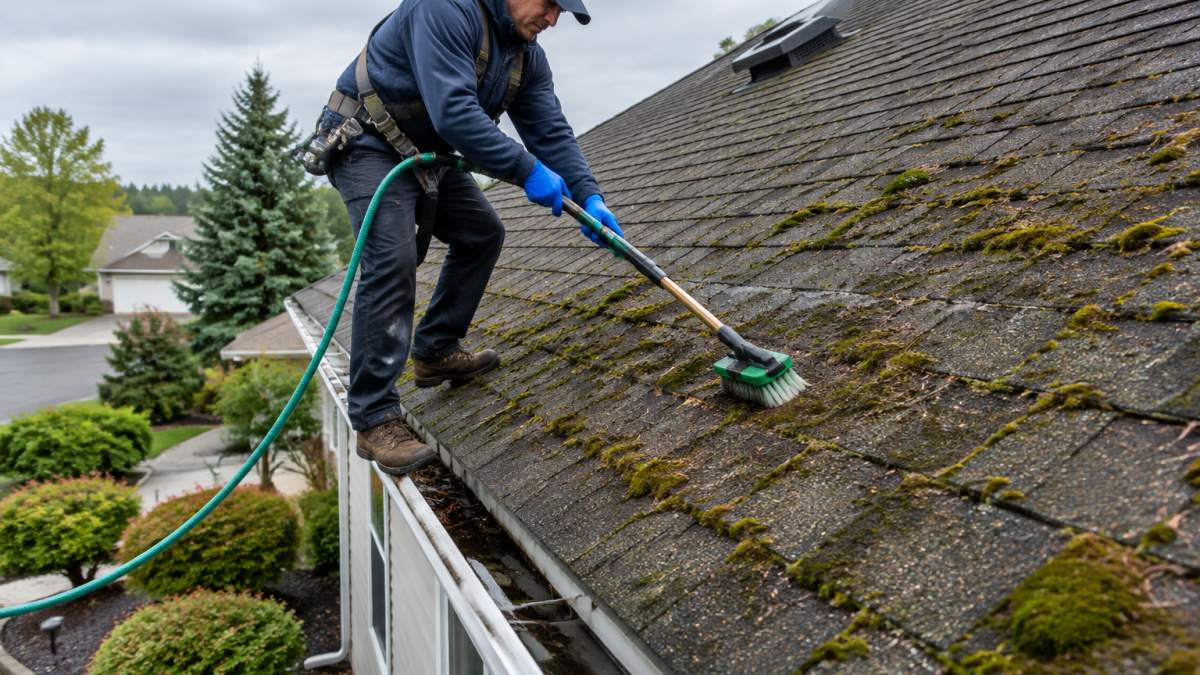
Work from the top down and keep it gentle:
- Clear leaves and branches from valleys, gutters, and roof edges.
- Sweep off dirt and grit with a soft-bristle brush. Never use a stiff wire brush on shingles.
- Treat moss and algae with a shingle-safe cleaning solution, then rinse.
- Let the surface dry before you look at it again.
For a deeper guide to killing moss and keeping it gone, read our article on stopping moss and algae on asphalt shingles.
Soft Washing vs. Pressure Washing
Pressure washing can strip granules and void a shingle warranty. If you hire out the job, ask which method the crew uses. If they say pressure washing at full force, say no.
How Long Should a Roof Dry Before Treatment?
A roof should dry for at least 24 to 48 hours of dry weather before treatment, but the clock is not the real test. The real test is whether the shingles are actually dry, sound, and within the product's stated application window.
How long a roof dries before treatment depends on sun, wind, humidity, roof pitch, and how wet the shingles got during cleaning. A shaded north-facing slope after a soft wash can hold moisture far longer than a sun-hit south slope.
The Readiness Check Before You Spray
Run this checklist on the day of application, not the day after cleaning:
- Surface is dry to the touch across the whole roof, including valleys, behind chimneys, and under shaded eaves.
- No standing water in gutters, valleys, or low spots.
- No rain in the forecast for at least 48 hours after application, and no rain during the cure window the label specifies.
- Surface temperature is inside the label range. Most asphalt-shingle products list a minimum and maximum application temperature; a roof in direct summer sun can run far hotter than the air temperature.
- Shingles are sound. Re-check for loose tabs, exposed fasteners, and granule-bare spots you may have missed during cleaning.
- Debris and rinse water are gone. Residual cleaning solution can interfere with adhesion.
Watch out: a roof that feels dry at 9 a.m. can still be weeping moisture from the deck after an overnight cool-down, so check the same slope you plan to spray first and confirm it is dry before the crew commits.
Why the Label Beats the Rule of Thumb
Product-specific preparation requirements vary more than most homeowners expect. A plant-based penetrant, a surface sealer, and a flat-roof coating each carry their own moisture limits, temperature range, coverage rate, and application restrictions printed on the label.
A 2026 NIST publication on long-term durability of asphalt shingle roof covers shows how UV exposure and weather conditions break shingles down over time. Drying and curing conditions are part of that same picture: a product applied outside its window will not perform the way the same product does under the right conditions.
Spray On Roof Coating for Asphalt Shingles: Matching Product to Prep
Spray on roof coating for asphalt shingles only works when the product matches the prep you did. A plant-based penetrant needs clean, dry, bare shingle surface. A surface sealer needs the same.
Here is how prep changes by product type:
| Product Type | Prep It Needs | What It Does |
|---|---|---|
| Plant-based penetrant | Clean, dry, bare shingle | Soaks in to restore flexibility |
| Surface sealer | Clean, dry, repaired roof | Forms a protective layer on top |
| Flat roof coating | Clean, dry, primed deck | Seals flat and low-slope roofs |
A 2025 Iowa State University study on restoring asphalt shingle integrity with soybean oil-based treatment looked at plant-oil emulsions on aged shingles.
Watch out: applying a coating over a damp or dirty roof traps moisture and wastes the product. Read the manufacturer's instructions for coverage, drying time, and curing before you spray.
Protect Landscaping, Gutters, and Runoff Before You Start
Prep work makes a mess, and the mess is the easy part. The harder part is making sure nobody gets hurt and nothing downstream gets damaged. Set up protection and safety controls before the first spray, not after something goes wrong.
Fall Protection and Roof Access
Roof work is the leading source of serious injuries on residential exteriors, and most of those injuries happen during access and setup rather than during the work itself. Before anyone goes up:
- Set the ladder on firm, level ground and secure it at the top. A ladder that shifts under load is the most common cause of a fall.
- Keep three points of contact on the ladder and never carry tools or product up by hand; hoist them or have them handed up.
- Use fall protection on any roof steep enough or high enough that a slip would mean a fall. Harnesses and anchors are not optional on steep pitches.
- Stay off wet, mossy, or granule-slick shingles. Cleaning makes the surface more slippery, not less.
Watch out: a roof that looks walkable from the ground can be far steeper and slicker up close, so make the go/no-go call from the roof edge before committing to a full walk.
Electrical and Overhead Hazards
- Identify the service drop and any overhead lines before raising a ladder or extending a pole.
- Keep metal ladders and tools well clear of power lines; use a fiberglass ladder near service equipment.
- Watch for conduit, mast, and meter hardware on the roof edge that can catch a ladder or a hose.
Chemical and Runoff Controls
Cleaning solutions and treatment products both move downhill, and whatever leaves the roof ends up in gutters, soil, and storm drains. Control the runoff before it starts:
- Cover plants and shrubs below the roofline with drop cloths or plastic sheeting, and water them before and after the job to dilute any overspray.
- Move or cover outdoor furniture, grills, and anything that can stain.
- Bag and clear gutters so runoff and debris do not clog the roof edge or back up under the shingles.
- Direct runoff away from fascia and foundation, and keep it out of storm drains where local rules restrict discharge.
- Capture rinse water where practical and dispose of it according to the product label and local requirements.
If your gutters are packed, book gutter cleaning in Albuquerque and Rio Rancho before treatment day so runoff has somewhere to go.
Protect the Roof Itself
Protection runs both ways. Cover or tape off skylights, vents, and anything that should not receive product, and keep the spray pattern inside the area you intend to treat. A little masking before the job saves a lot of cleanup after it.
Book a Free Inspection With FRESH TEC LLC
Treatment is only as good as the prep behind it, and prep starts with an honest inspection. FRESH TEC LLC is a local, veteran-owned team serving homeowners, realtors, and property managers in Albuquerque and Rio Rancho.
Realtors and property managers trust us to get exteriors show-ready. We also handle flat roof coatings, gutter cleaning, and solar panel maintenance.
Get started with FRESH TEC LLC and book a free inspection on our roof rejuvenation service page.
Frequently Asked Questions
Can you apply roof treatment to wet shingles?
No. A spray on roof coating for asphalt shingles needs a dry surface to bond properly, and trapped moisture under a coating can lead to blistering or poor adhesion. Wait until the shingles have dried completely after cleaning, which usually means a full day or more of dry weather depending on humidity and shade. Check for damp spots in shaded valleys and behind chimneys before any product goes down.
Should asphalt shingles be cleaned before treatment?
Yes. Dirt, moss, algae, and debris block the product from reaching the shingle surface, so asphalt shingle roof cleaning comes before any coating or rejuvenator. Cleaning should remove debris, dirt, moss, and algae first. Skipping this step means the treatment sits on top of contamination instead of the shingle itself.
Can roof treatment be applied over moss or algae?
It should not be. Moss and algae hold moisture against the shingle and will keep growing under a coating, which defeats the purpose of the treatment. Remove the growth, let the roof dry, and confirm the shingles are sound before applying anything. If moss has lifted shingle edges or worked under the tabs, that damage needs repair first, not a coating over the top.
When should you call a roofing professional before treating shingles?
Call a professional when you find loose shingles, missing tabs, exposed fasteners, soft spots in the deck, or granule loss that leaves the mat visible. Confirm compatibility with the product maker before you buy, since many manufacturers do not recommend field treatments over installed shingles. A professional inspection sorts repairable roofs from ones that need replacement.