 how-to
Stop Moss and Algae on Asphalt Shingles for Good
Last Updated: November 3, 2026
Quick Summary
Preventing moss and algae growth on asphalt shingles means removing what feeds it: shade, organic debris, and poor runoff. Kill growth first, let it dry, brush it off gently, and install zinc or copper strips at the ridge so rain washes metal ions down the slope.
- North-facing slopes dry slowest, so they grow the most moss.
- Never pressure wash shingles; it strips the granules that block UV.
- For algae streaks, GAF recommends 4 gallons of water mixed with 1 gallon of bleach.
- Late spring through early fall is the best time to remove moss.
- Most manufacturers offer a 10-year guarantee against algae staining on specific product lines.
Table of Contents
- Why Moss and Algae Take Hold on Asphalt Shingles
- The Difference Between Moss and Algae on a Roof
- How to Remove Moss From a Roof Without Damaging Shingles
- The Best Moss Killer for Asphalt Shingles
- The Best Time of Year to Remove Moss From a Roof
- Prevention That Lasts: Zinc Strips, Copper Flashing, and Shingle Integrity
- Warranty, Runoff, and the Long-Term Math
- Book a Free Inspection With FRESH TEC LLC
- Frequently Asked Questions
Why Moss and Algae Take Hold on Asphalt Shingles
Moss and algae grow on asphalt shingles because the roof stays wet long enough for spores to root. Shade, organic debris, and poor drainage all buy that moisture time. The same pattern shows up on shaded north-facing slopes across Albuquerque and Rio Rancho.
The mechanism matters more than most homeowners realize. According to roofing community analysis of moisture retention, moisture retention and shingle degradation findings found that moisture under dense moss stays above 30% for 5 to 12 days after rain. That is well past the decay threshold for roofing materials.
Moisture, Shade, and Organic Debris
Three things feed a moss problem:
- Shade. North-facing slopes dry out slowest.
- Organic debris. Leaves and twigs trap water against the shingle surface.
- Poor runoff. Clogged valleys and gutters keep the roof damp.
Remove any one of these and growth slows. Remove all three and it stops.
The Difference Between Moss and Algae on a Roof
Algae is a surface stain. Moss is a rooted plant. That is the core difference between moss and algae on a roof, and it decides how you treat each one.
Algae shows up as dark streaks, often called gloeocapsa magma. It feeds on limestone filler in shingles and spreads as airborne spores land. Moss grows thicker, holds water against the shingle, and lifts granules as it spreads. Lichen is a fungi-and-algae combo that clings tightest of all.
Here is how the three compare:
| Growth | What You See | Damage Risk | Removal Difficulty |
|---|---|---|---|
| Algae | Dark streaks | Low to moderate | Easy |
| Moss | Green clumps, lifted edges | High | Moderate |
| Lichen | Crusty gray-green patches | Moderate | Hard |
Algae stains are mostly cosmetic. Moss is the one that shortens roof life.
How to Remove Moss From a Roof Without Damaging Shingles
The safest way to remove moss from a roof without damaging shingles is to kill it first, then let it dry and brush it off gently. Never scrape live moss. Pulling rooted moss tears granules loose with it.
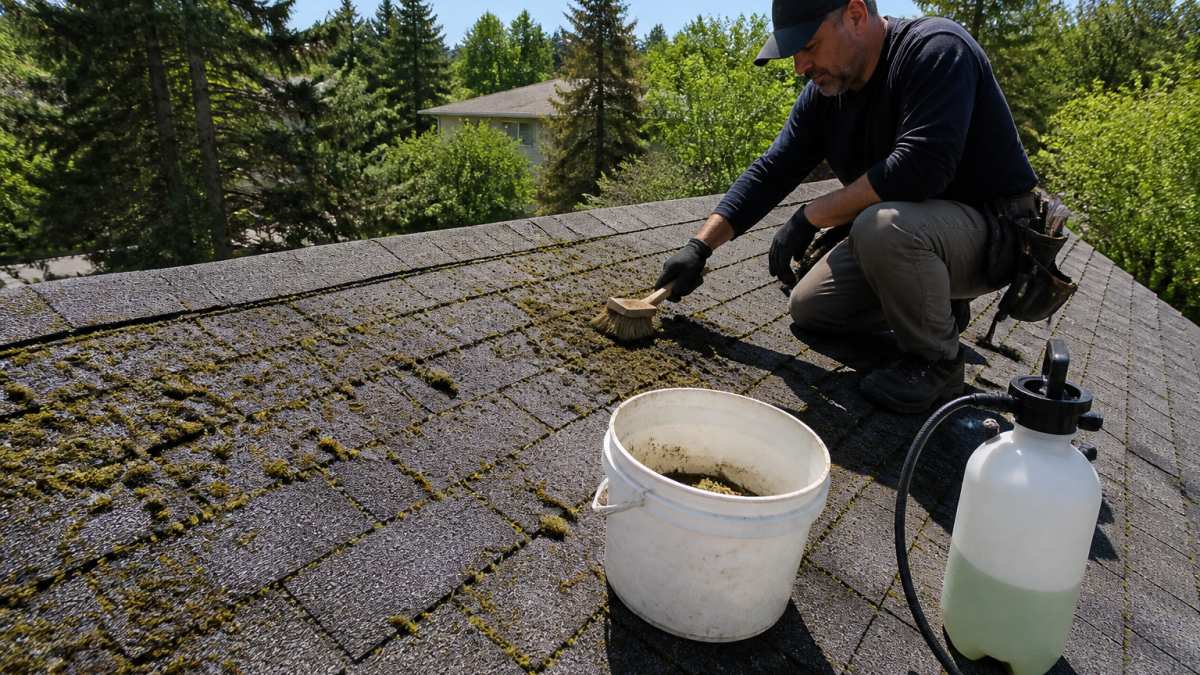
Follow these steps:
- Spray first. Apply a shingle-safe cleaner and let it sit.
- Wait for dry weather. Dead moss releases its grip as it dries.
- Brush gently. Use a soft-bristle brush, never a wire one.
- Bag the debris. Moss carries spores; get it off the property.
- Rinse the gutters. Dead growth clogs downspouts fast.
A common mistake is rushing step two. Wet, live moss fights back and takes granules with it.
Why a Pressure Washer Belongs Nowhere Near Your Shingles
A pressure washer strips granules on contact. Those granules are the shingle's UV shield, and once they are gone, the asphalt underneath bakes and curls. roofing community analysis of moss impact on shingles notes that moss-covered shingles already lose 2 to 3 times more granules than clean ones. Pressure washing adds to that loss. For the safe professional alternative, see power washing in Albuquerque & Rio Rancho.
The Best Moss Killer for Asphalt Shingles
The best moss killer for asphalt shingles depends on what you are killing and what sits below the roof. Algae responds to a different treatment than rooted moss, and the runoff from either one lands in your gutters, gardens, and storm drains.
Matching the Treatment to the Growth
For algae streaks, the standard is a diluted bleach solution. GAF technical bulletin for cleaning algae staining recommends mixing 4 gallons of water with 1 gallon of bleach, applying it low-pressure, and letting it dwell before rinsing. The mechanism matters: gloeocapsa magma feeds on limestone filler in the shingle, and the bleach breaks down the colony's hold on the granule surface without dissolving the asphalt binder underneath.
For moss, bleach alone is often slower because the plant roots into the shingle mat. Killing the moss first and brushing it off after it dries is generally gentler than scraping live growth.
For lichen, expect the hardest fight. Lichen is a fungi-and-algae symbiosis that clings tightest, and it often needs a longer dwell time and a second application. Do not assume one pass will clear it.
The Runoff Problem Most Guides Skip
This is where the environmental angle matters. Bleach and TSP wash into gutters, gardens, and storm drains. They can burn landscaping, stress fish in local waterways, and leave a residue on driveways and walkways below the roofline. A few practical guardrails:
- Pre-wet plants and grass below the roof before application, and rinse them again after.
- Apply on a calm day so spray does not drift onto neighboring property.
- Never let runoff pool in gutters, flush them after the treatment settles.
- Choose a plant-based formula when kids, pets, or a vegetable garden sit below the roof. Our safe non-toxic roof treatments guide covers non-toxic options that are safe around your home and family.
Our own FRESH ROOF TREATMENT uses GreenSoy™ Technology, a patented plant-based formula.
Watch out: undiluted bleach burns shingle surfaces and kills landscaping below. Always dilute to the label ratio, always pre-wet plants, and always rinse runoff before it dries.
Chemical vs. Non-Chemical: The Trade-Off
Chemical treatments act faster and cost less per application, but they carry runoff risk and can dull granule color over repeated use. Non-chemical options, plant-based formulas, manual brushing after a kill, and metal-strip prevention, are slower to act but safer for landscaping and gentler on the shingle surface. The right call depends on growth severity, proximity to gardens and waterways, and whether you are treating a one-time outbreak or building a long-term prevention plan.
The Best Time of Year to Remove Moss From a Roof
Late spring through early fall is the best time of year to remove moss from a roof. Dry, warm weather lets dead moss release cleanly and gives any treatment time to work before winter.
Cool-season growth slows in summer heat, so treated moss dies faster. Fall removal also clears debris before snow and rain season load the roof. Skip removal during freezing temps. Shingles get brittle and crack underfoot.
Prevention That Lasts: Zinc Strips, Copper Flashing, and Shingle Integrity
Metal strips are the most reliable prevention method. Oregon State University moss prevention guidance explains that zinc or copper strips installed at the roof ridge let rain wash metal ions down the slope, stopping moss and algae from colonizing.
Manufacturers now build copper and zinc granules directly into shingles too, per Asphalt Roofing Manufacturers Association guidance. The catch: those ions leach away over time, so protection fades.
Roof Pitch, Sunlight, and Runoff
Steep pitches shed water fast and dry quickly, so they grow less moss. Low-slope roofs and shaded valleys stay wet longest. Trim overhanging branches to let UV rays hit the roof and speed drying.
Warranty, Runoff, and the Long-Term Math
Warranty coverage is where moss gets expensive, and it is the part most guides gloss over. Roofer Chicks on algae warranty coverage notes most manufacturers offer a 10-year guarantee against algae staining on specific product lines. That guarantee usually carries conditions: the shingles must be installed per the manufacturer's specification, and the coverage can be voided by improper cleaning methods, pressure washing, aggressive scraping, or harsh chemicals that strip granules. Let moss spread unchecked, and you may find the manufacturer points to neglect as the cause.
How Cleaning Methods Void Coverage
The mechanism is straightforward. Manufacturers warrant against manufacturing defects, not against damage from how the roof is maintained. A pressure washer that strips granules, a wire brush that gouges the mat, or an undiluted bleach application that burns the surface all give the manufacturer a documented reason to deny a claim. Before you treat or clean, check the shingle manufacturer's published cleaning guidance and keep records of what was applied and when.
The Runoff Ledger
Runoff is the hidden cost of chemical treatment. Bleach and TSP wash into gutters, gardens, and storm drains. The damage shows up later, burned landscaping, stressed plants below the roofline, and residue on driveways and walkways. Plant-based treatments cut that risk and are the safer default when a garden, a pet, or a child plays below the roof.
The Long-Term Math
The long-term math favors prevention. The main cost categories are:
-
Replacement is the largest line item by far, a full tear-off and re-roof dwarfs every other cost in this comparison.
-
DIY prevention, metal strips, annual brushing, gutter cleaning, carries the lowest cash outlay but the highest labor and risk, especially on steep pitches.
-
Warranty value is the wildcard: a voided algae guarantee can erase years of coverage you already paid for in the shingle price.
Our FRESH ROOF TREATMENT extends shingle life by 6-8 years, backed by a 6-year warranty. You can read our warranty to see exactly what is and is not covered.
Watch out: skipping annual gutter and valley clearing is the most common way homeowners unintentionally void the very coverage they are counting on, debris traps moisture, moisture feeds moss, and moss becomes the manufacturer's evidence of neglect.
Book a Free Inspection With FRESH TEC LLC
Moss rarely gets better on its own. It spreads, holds moisture, and shortens the life of every shingle it touches.
FRESH TEC LLC is a local, veteran-owned team serving Albuquerque and Rio Rancho. We use patented GreenSoy™ Technology to restore asphalt shingles, backed by an industry-leading 6-year warranty.
Get started with FRESH TEC LLC and stop moss before it costs you a roof. Before you book, see what a roof inspection checks on an asphalt shingle roof.
Frequently Asked Questions
How do I stop moss from growing on asphalt shingles?
Start by removing the conditions moss needs: shade, trapped moisture, and organic debris. Clear leaves and branches from the roof surface and gutters, trim overhanging limbs to let sunlight reach the shingles, and install zinc or copper strips at the ridge cap so rain carries metal ions down the roof. Manufacturers also build copper or zinc granules into algae-resistant shingle lines. Keep in mind that metal-based prevention wears down as the ions leach away, so plan to recheck the roof each year.
What is the difference between moss and algae on a roof?
Algae shows up as dark streaks, often called gloeocapsa magma, and feeds on limestone fillers in asphalt shingles. Moss is a thicker green growth that holds moisture against the shingle surface. Moss holds moisture against the shingle surface for long periods after rain, which can damage roofing materials over time. Algae is mostly a curb appeal issue; moss threatens shingle integrity.
What can I safely apply to asphalt shingles to control moss?
Follow the shingle manufacturer's cleaning instructions first. If you use a bleach solution, dilute it to the product label ratio, apply it carefully, keep runoff away from plants and gutters, and never combine it with other chemicals. For heavier moss, a soft wash approach with a garden sprayer beats a pressure washer every time.
When is the best time of year to remove moss from a roof?
Target a dry stretch in late spring or early fall when shingles are warm and pliable rather than brittle. Removing moss in cold weather risks cracking composition shingles, and working in peak summer heat stresses both the roof and the crew. In a high-desert climate, seasonal rain can feed moss growth, so schedule removal after the rains taper off and before winter. That timing also lets you apply prevention before the next wet cycle.