 how-to
Are Roof Coatings Safe for Pets? A Pet Owner's Guide
Table of Contents
- Are Roof Coatings Safe for Pets? The Short Answer
- Understanding Roof Coating Types and Their Pet Safety Profile
- Chemical Residues, Off-Gassing, and Indoor Air Quality for Pets
- Eco-Friendly Roof Rejuvenation as a Pet-Safe Alternative
- How to Protect Pets During Roof Work and Coating Application
- Safety Standards and What Homeowners Should Know
- Frequently Asked Questions
Last Updated: September 19, 2026
Are Roof Coatings Safe for Pets? The Short Answer
Are roof coatings safe for pets? The answer depends on the coating type, how long you allow it to cure, and how well you protect your pets during application. Many water-based and low-VOC roof coatings pose minimal risk once fully cured, but wet coatings and certain petroleum-based products can be harmful if pets make direct contact or inhale fumes during application.
At FRESH TEC LLC., we prioritize pet safety alongside property protection. Our plant-based GreenSoy™ Technology offers an eco-friendly alternative that aligns with pet-safe practices. The key is understanding which coatings work best for homes with animals and implementing proper containment during the application process.
This guide walks you through roof coating safety for your furry family members, explains the differences between coating types, and shows you exactly how to protect pets during roof work.
Understanding Roof Coating Types and Their Pet Safety Profile
Roof coatings fall into two main categories, each with different safety implications for pets. Knowing the difference helps you make informed choices about your home and your animals.
Water-Based vs. Petroleum-Based Coatings
Water-based coatings use water as the primary solvent and typically contain fewer harmful chemicals than petroleum-based alternatives. These coatings emit lower levels of volatile organic compounds (VOCs) during application and cure faster, reducing the window of exposure risk. Once dry, water-based coatings generally pose minimal toxicity concerns for pets.
Petroleum-based coatings contain solvent chemicals that can be more irritating to pets during application. They take longer to cure completely and may off-gas harmful fumes for extended periods. If a pet ingests wet petroleum-based coating or inhales concentrated fumes, the risk of toxicity increases significantly.
For homes with pets, water-based options are the safer choice. They cure in 24-48 hours in most conditions, allowing pets to return to normal activity sooner.
Low VOC Roof Coatings and What That Means
VOCs (volatile organic compounds) are chemicals that evaporate into the air during and after application. Lower VOC products release fewer harmful fumes, making them better for indoor air quality and pet health.
A "low VOC" coating typically contains less than 250 grams per liter of VOCs. This matters because:
- Pets breathe in the same air as humans during application
- Some VOCs can irritate respiratory systems in animals
- Prolonged exposure may cause coughing, wheezing, or lethargy
Low VOC coatings don't eliminate risk entirely, but they significantly reduce it. Eco-friendly, plant-based formulations like FRESH TEC LLC.'s GreenSoy™ Technology take this further by using natural ingredients instead of harsh chemicals, creating a safer environment for pets and people alike.
Chemical Residues, Off-Gassing, and Indoor Air Quality for Pets
After application, roof coatings release residual chemicals into the air, a process called off-gassing. This continues for days or weeks depending on the product and weather conditions.
Off-gassing timelines vary:
- Water-based coatings: typically 3-7 days
- Low VOC coatings: 5-10 days
- Standard petroleum-based coatings: 2-4 weeks
Pets are more sensitive to air quality changes than humans. Poor ventilation combined with off-gassing can cause respiratory irritation, especially in senior pets, puppies, or animals with asthma or allergies.
To protect indoor air quality during off-gassing:
- Open windows and doors to increase airflow
- Run fans to circulate air throughout the house
- Keep pets in well-ventilated areas away from the work zone
- Consider moving pets to a friend's house during the first 48 hours
- Use HEPA air filters to capture airborne particles
Chemical residues also settle on surfaces. If your pet walks on a freshly coated roof or touches wet coating, the chemicals can stick to their fur and be ingested during grooming. This is why containment during application is critical.
Eco-Friendly Roof Rejuvenation as a Pet-Safe Alternative
If you're concerned about coating toxicity, roof rejuvenation offers a gentler alternative. Unlike coatings that add a chemical layer, rejuvenation restores worn asphalt shingles using plant-based treatments.
FRESH TEC LLC.'s GreenSoy™ Technology represents this approach. The treatment penetrates existing shingles to restore their flexibility and waterproofing properties without harsh chemicals. Because the product is plant-based, it poses virtually no toxicity risk to pets.
Rejuvenation benefits for pet owners:
- Minimal off-gassing compared to traditional coatings
- No wet surface that pets can touch or ingest
- Extends roof life by 6-8 years at a fraction of replacement cost
- Eco-friendly formula safe for the entire household
- Work typically completes in one day with minimal disruption
Rejuvenation doesn't work for severely damaged roofs, but for homes with aging shingles and pets, it's a smart option worth exploring. A free inspection from FRESH TEC LLC. can determine if your roof qualifies.
How to Protect Pets During Roof Work and Coating Application
The application phase presents the highest risk. Proper containment and timing make the difference between a safe process and a dangerous one.
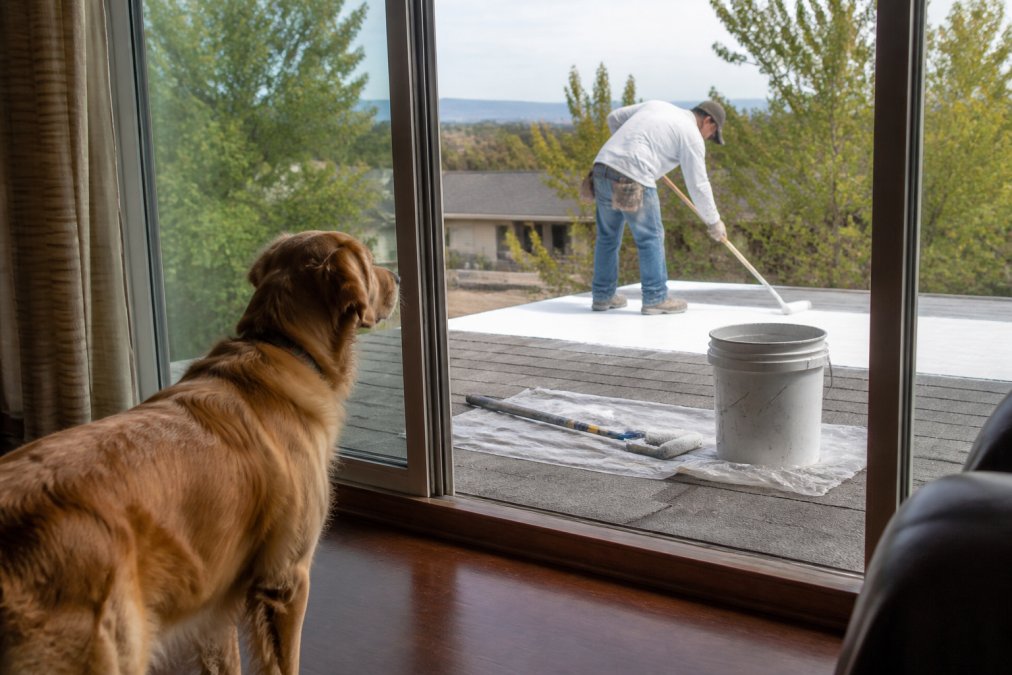
Pre-Application Pet Containment Strategies
Start planning at least one week before work begins. Don't wait until the contractor arrives.
Create a pet-safe zone inside your home:
- Choose a room away from exterior walls where work is happening
- Stock it with water, food, litter box, and toys
- Close all doors and windows in the room
- Use baby gates to prevent pets from wandering into work areas
- Inform the contractor about pet locations so they avoid disturbing them
For pets that get anxious during noise or activity, consider boarding them for the day. Many facilities offer short-term stays, and your pet avoids stress while contractors work safely.
Keep pets away from the roof perimeter. If your roof is accessible from a patio or deck, block access during and for 48 hours after application. Use temporary fencing or close doors to prevent curious pets from approaching the work zone.
Curing Timeline and When It's Safe for Pets to Return
Curing time determines when your pet can safely return to normal activity. This varies by product:
- Water-based, low VOC coatings: 24-48 hours
- Standard petroleum-based coatings: 5-7 days
- Plant-based rejuvenation treatments: typically same-day or next-day
During the curing period:
- Keep pets indoors and away from coated areas
- Avoid walking pets on the roof or near the work zone
- Don't allow pets to lick or chew any tools or materials left behind
- Ventilate your home continuously to clear off-gassing fumes
Most contractors provide a curing timeline at the start of work. Ask specifically about pet safety before they leave. If you're unsure, wait an extra day, it's better to be cautious.
What to Do If Your Pet Touches Wet Coating
Accidents happen. If your pet comes into contact with wet coating, act quickly but calmly.
Immediate steps:
- Remove the pet from the coated area
- Rinse the affected area with lukewarm water
- Gently wipe away coating residue with a soft cloth
- Do not use harsh soaps or solvents, they can drive chemicals deeper into fur
Watch for symptoms over the next 24 hours:
- Excessive drooling or difficulty swallowing
- Vomiting or diarrhea
- Lethargy or unusual behavior
- Coughing or labored breathing
- Skin irritation or redness
If symptoms appear, contact your veterinarian immediately. Bring the coating product label or safety data sheet (MSDS) so your vet knows exactly what your pet was exposed to. Have the contractor's contact information available as well.
For minor skin contact with water-based, low VOC coatings, symptoms are usually mild. Petroleum-based coatings pose greater risk and warrant faster veterinary attention.
Safety Standards and What Homeowners Should Know
Understanding industry standards helps you evaluate coating safety claims. Several organizations set guidelines for roofing products.
The EPA (Environmental Protection Agency) regulates VOC content in coatings. Products labeled as low VOC meet federal standards, but standards vary by region. Check your local air quality regulations before purchasing.
OSHA (Occupational Safety and Health Administration) requires contractors to follow safety protocols during application, including proper ventilation and protective equipment.
Industry best practices recommend:
- Using low VOC or water-based products in residential areas
- Maintaining proper ventilation during and after application
- Allowing full curing time before exposing pets to coated surfaces
- Keeping pets contained during the application phase
Frequently Asked Questions
How long should pets stay away after roof coating application?
Most roof coatings require 24-48 hours of curing time before it's safe for pets to be near the roof or to spend extended time indoors if windows are open. Water-based coatings typically cure faster than petroleum-based ones. During curing, off-gassing can occur, so ventilation is critical. Keep pets in a separate area of the home away from the roof, and avoid letting them outside near the treated area until the coating has fully hardened. Always follow your contractor's specific curing timeline.
Are there non-toxic, plant-based roof rejuvenation options available?
Yes. Eco-friendly roof rejuvenation products use plant-based formulations, such as those made with GreenSoy technology, which restore asphalt shingles without harsh chemicals or high VOC levels. These options extend roof life by 6-8 years and are safer for pets, children, and the environment than traditional petroleum-based sealants. Plant-based coatings still provide protection and durability but with significantly lower chemical residue and off-gassing risks. Ask your roofing contractor about low VOC or plant-based alternatives.
What should I do if my pet comes into contact with wet roof coating?
If your pet touches wet coating, rinse the affected area immediately with lukewarm water for several minutes to remove as much coating as possible. Do not use harsh solvents or scrub aggressively, as this can irritate skin. Monitor your pet for signs of irritation such as redness, swelling, or excessive licking. If ingestion occurred or your pet shows signs of distress, contact your veterinarian right away and have the coating's material safety data sheet (MSDS) available. Most modern roof coatings are formulated to minimize toxicity, but professional medical guidance is important.
Do roof coatings release harmful VOCs that affect indoor air quality for pets?
Traditional petroleum-based roof coatings release volatile organic compounds (VOCs) during application and curing, which can affect indoor air quality and respiratory health for pets. Water-based and low VOC coatings emit significantly fewer harmful fumes. Proper ventilation during and after application is essential to minimize exposure. Eco-friendly, plant-based coatings produce even lower VOC levels. If you're concerned about air quality, request a low VOC or plant-based option and ensure your home is well-ventilated during the curing period.