 how-to
Roof Maintenance for Curb Appeal: A 2026 Homeowner Guide
Table of Contents
- Why Roof Maintenance for Curb Appeal Protects Property Value
- Signs of Asphalt Shingle Aging Every Homeowner Should Recognize
- How Often to Clean Residential Gutters to Prevent Staining and Rot
- Roof Rejuvenation vs Replacement: Which One Fits Your Situation
- Seasonal Maintenance Checklists for Roof Longevity
- DIY vs Professional Safety Protocols for Roof Work
- Roof Color, Materials, and Architectural Style: Aesthetic Upgrades That Sell
- Conclusion
- Frequently Asked Questions
Last Updated: September 13, 2026
Why Roof Maintenance for Curb Appeal Protects Property Value
Roof maintenance for curb appeal means keeping a roof clean, intact, and visually consistent so it supports both appearance and resale value. The roof covers the largest surface a buyer sees from the street, and its condition shapes how people judge the rest of the exterior.
For homeowners and realtors across Albuquerque and Rio Rancho, that judgment happens fast. A streaked, mossy, or curling roof reads as deferred maintenance, and buyers price that in before they step inside. FRESH TEC sees the same pattern weekly: a cared-for roof makes the whole exterior feel maintained, while a neglected one drags down an updated facade.
Most of what protects property value is routine. Seasonal upkeep, gutter cleaning, and knowing when to rejuvenate instead of replace can extend roof longevity by years. Below: how to read the signs, what to do each season, and where professional help pays off.
Signs of Asphalt Shingle Aging Every Homeowner Should Recognize
Asphalt shingle aging shows up first as cosmetic change, then structural weakness. Catching it early is the difference between low-cost roof rejuvenation and full replacement.
What Granule Loss and Curling Look Like Up Close
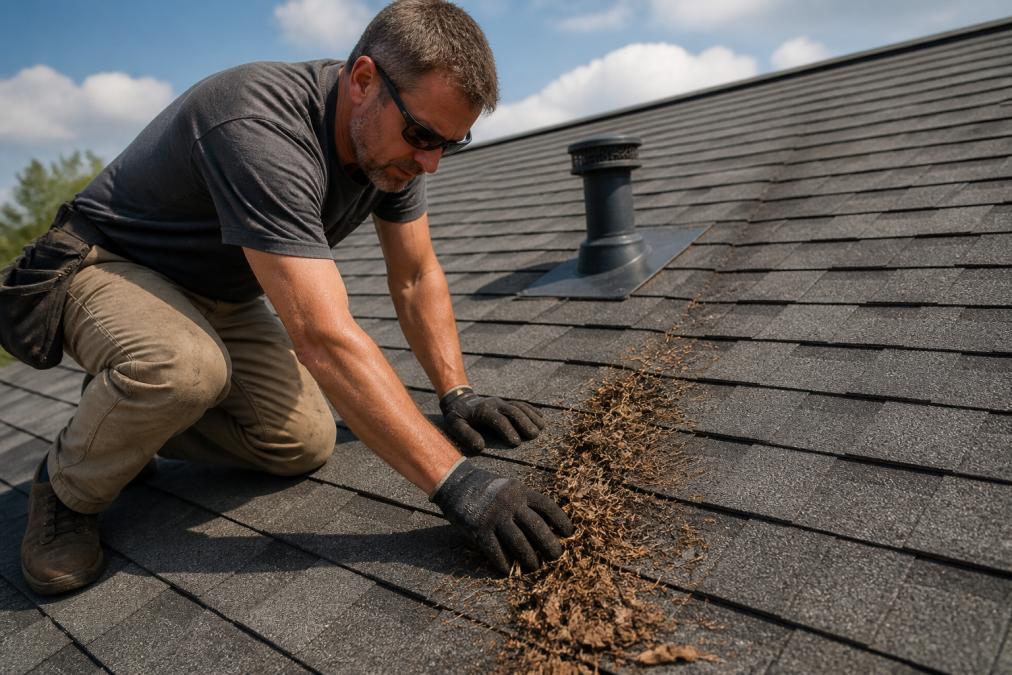
Granule loss appears as dark patches on the shingle surface or a buildup of grit in gutters and at downspout outlets. Curling shows up as shingles lifting at the edges or cupping in the middle, which breaks the flat plane that sheds water.
Both signal the protective top layer is wearing thin. Once granules are gone, sunlight and weather reach the asphalt directly and the shingle dries out faster. Moss tends to follow in shaded or north-facing sections, holding moisture and accelerating the decline.
When Weather Damage Crosses From Cosmetic to Structural
Weather damage becomes structural when water reaches the decking instead of running off. Look for cracked, missing, or displaced shingles after high winds, and check flashing around chimneys and vents for gaps.
The test is simple: surface-only damage can often be restored with rejuvenation. Missing shingles in patches, a soft deck, or interior staining means you're past cosmetics and into leak repair or replacement.
How Often to Clean Residential Gutters to Prevent Staining and Rot
Cleaning residential gutters twice a year, in spring and fall, prevents the staining and rot that quietly undermine curb appeal (extension.psu.edu). Homes with heavy tree cover may need a third pass after storm season.
Clogged gutters are the most underrated threat to a roof's appearance. Backed-up water wets the fascia and soffit, streaks the siding, and pools at the roof edge, feeding moss and rotting the wood trim that frames the exterior.
- Clear debris from the gutter channel and flush the downspouts
- Check that downspouts direct water away from the foundation
- Inspect fascia boards for soft spots or peeling paint
- Re-secure any loose hangers before the next storm
A quick inspection during each cleaning catches small problems before they're visible from the street.
Roof Rejuvenation vs Replacement: Which One Fits Your Situation
Roof rejuvenation restores flexibility to aging asphalt shingles, while replacement removes and rebuilds the roof. Rejuvenation suits roofs that are structurally sound but showing surface aging; replacement is the answer when the roof has failed.
The distinction is condition, not age alone. A roof with intact shingles and no leaks can often be treated, and FRESH TEC's plant-based GreenSoy™ Technology extends roof life by 6-8 years at a fraction of replacement cost. Missing shingles, soft decking, or active leaks mean replacement, regardless of how good a coating sounds.
The honest trade-off: rejuvenation is a maintenance decision that buys time and improves appearance, not a permanent fix. Near the end of its service life, replacement is the only option that truly resolves the problem.
The 25% Rule and Other Signals That Replacement Is Unavoidable
A common rule of thumb is that when roughly a quarter of the roof surface shows damage, replacement is the more sensible path than repeated repairs. Other signals point the same direction:
- Shingles are missing across multiple sections, not isolated spots
- You've repaired leaks in the same area more than once
- The roof is past its expected service life for its material
- Decking feels soft or spongy underfoot
When several of these stack up, patching becomes a losing game.
Seasonal Maintenance Checklists for Roof Longevity
Seasonal maintenance keeps a roof ahead of weather damage instead of reacting to it. The checklist changes, but the goal stays the same: remove what doesn't belong and inspect what holds the roof together.
Spring
- Clear winter debris from valleys and behind chimneys
- Inspect flashing and seals after freeze-thaw cycles
- Clean gutters and confirm downspouts flow freely
Summer
- Check attic ventilation so heat doesn't cook the shingles from below
- Look for granule loss after intense sun exposure
- Trim tree branches that shade or scrape the roof
Fall
- Remove leaves before they clog gutters and trap moisture
- Address any moss growth before winter rains
- Schedule a professional roof inspection before the season turns
Winter
- Watch for ice dams at the eaves
- Clear heavy snow from vulnerable areas with a roof rake
- Check interior ceilings for new staining after storms
DIY vs Professional Safety Protocols for Roof Work
Roof work carries genuinely serious injury risk, so matching the task to your comfort and equipment matters. Most guides say what to clean but skip the safety protocols that decide whether a job is a weekend chore or a call to a professional. Here's that line, task by task.
The Real Risk: Falls, Not Roofs
Falls are the leading cause of serious injury in residential exterior work, and roof height is unforgiving (the CDC). The gap between a homeowner and a professional crew is fall protection: harnesses anchored properly, stable ladder placement at the correct angle, and footwear that grips shingles. A homeowner balancing on a ladder to clear a downspout has none of that margin.
Task-by-Task: What's Reasonable to DIY
Use this as a decision guide, not a dare. If a task requires stepping onto the roof surface, it belongs to a professional.
Reasonable for most homeowners (ground level):
- Clearing leaves and debris from gutters while standing on a stable ladder placed on level ground
- Flushing downspouts from the ground with a hose
- Trimming tree branches that overhang the roof, using a pole saw from the ground
- Visual inspection with binoculars from the yard
Best left to professionals (roof surface or height):
- Walking the roof to inspect shingles, flashing, or decking
- Removing moss or applying treatments on the roof surface
- Repairing or replacing shingles
- Clearing snow or ice from the roof
- Any work on steep, wet, or fragile roofing materials
Ladder and Ground-Level Safety Basics
If you do the ground-level work, these are the non-negotiables:
- Place the ladder on level, firm ground and use the 4-to-1 rule: for every 4 feet of height, move the base 1 foot out from the wall (osha.gov).
- Keep three points of contact (two hands and a foot, or two feet and a hand) whenever climbing.
- Never reach sideways off a ladder, climb down and move it.
- Wear shoes with slip-resistant soles and keep the area below clear of tools and debris.
- Have a second person present when working at height, even on a ladder.
When to Call a Professional (and Why It's Often Cheaper)
Beyond ground-level cleaning, a roofing contractor with proper equipment is safer and often cheaper once you factor in the risk. A professional inspection also catches what a homeowner can't see from the ground, soft decking, failing flashing, early granule loss, before it's visible from the street.
Roof Color, Materials, and Architectural Style: Aesthetic Upgrades That Sell
Roof color and material should complement the home's architectural style, and the right match can meaningfully lift curb appeal at resale. A roof that clashes with the facade or surrounding palette reads as an afterthought, even in good condition. Most guides skip the specific pairing, which texture and color belong on which style of house, so that's what this section covers.
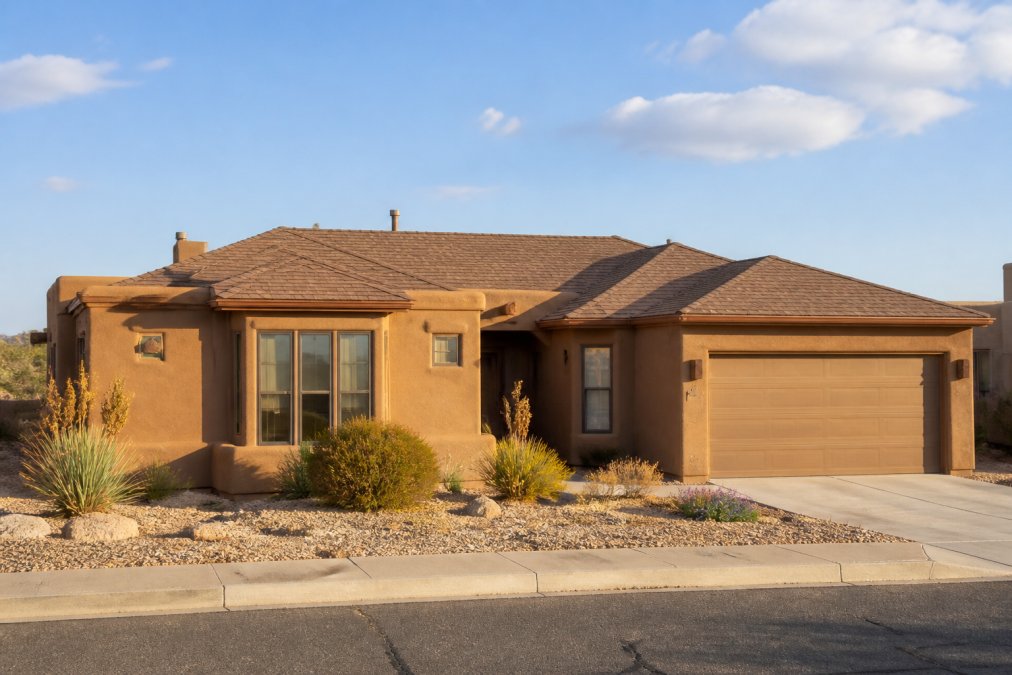
Matching Roof Texture and Color to Architectural Style
Architectural style sets the rules for roof texture, profile, and color. Get the pairing right and the roof looks original; get it wrong and even a new roof looks like a patch.
- Craftsman and Bungalow: These homes were designed around low, broad rooflines with deep eaves. A dimensional (architectural) asphalt shingle with a heavy shadow line suits them best. Colors that work are muted, weathered wood, charcoal, deep brown, and dark green, because the style favors natural, earthy tones over bright contrast.
- Victorian and Queen Anne: Steep, complex rooflines with multiple gables are the defining feature. High-contrast colors, deep slate gray, black, or a rich red, emphasize the silhouette. Standing-seam metal or slate-look shingles read as more authentic than a flat, uniform shingle.
- Modern and Contemporary: Clean, low-slope planes call for flat or low-profile materials. Standing-seam metal, modified bitumen, or smooth-faced shingles in charcoal, black, or cool gray keep the lines uninterrupted. Avoid busy textures that fight the minimalist geometry.
- Colonial and Traditional: Symmetrical facades pair well with mid-tone grays, browns, and slate blues. A uniform, medium-weight shingle keeps the roofline orderly, which is the point of the style.
- Southwestern and Pueblo: Warm earth tones and terracotta-inspired shades sit naturally against stucco. Clay or concrete tile, or a tile-look shingle, reinforces the look; cool grays and blacks tend to fight it.
A useful rule: match the roof to the home's most permanent features, brick, stone, or stucco, not paint you might change later. That keeps the exterior looking intentional for years.
How Roof Material Changes the Impression (and the Cost)
Material choice does more than color: it changes the home's character and maintenance profile.
- Asphalt shingles remain the most common choice for cost and range of colors, and they suit most traditional and Craftsman homes.
- Metal (standing seam or metal shingle) reads as modern or rural depending on profile, lasts a long time, and reflects heat, a real benefit in hot climates.
- Clay and concrete tile define Southwestern and Mediterranean styles, are heavy, and require a structure that can carry the load.
- Slate and synthetic slate suit Victorian and high-end traditional homes but carry the highest cost and weight.
When preparing a property for sale, an aesthetic upgrade matching the architectural style does more for buyer interest than a mismatched premium material. A correctly paired mid-range roof beats a wrong-style luxury roof every time.
Aesthetic Upgrades That Actually Move the Needle at Resale
Not every upgrade pays back. The ones that help are visible from the street and read as "done":
- Replacing cracked or missing shingles so the roof plane looks continuous
- Cleaning streaking and moss so the color reads as intended
- Coordinating roof color with trim, shutters, and front door
- Repairing flashing and fascia so edges look finished
Conclusion
Roof maintenance for curb appeal comes down to a simple discipline: catch aging early, keep gutters and downspouts clear, and know the difference between a roof that needs rejuvenation and one that needs replacing. Most homeowners put it off until damage is visible from the street, exactly when it costs the most.
FRESH TEC helps homeowners, realtors, and property managers in Albuquerque and Rio Rancho protect that investment with plant-based, eco-friendly exterior care. Our patented GreenSoy™ Technology restores asphalt shingles to extend roof life by 6-8 years at a fraction of replacement cost, backed by a 6-year warranty, and we handle gutter cleaning and solar panel maintenance as convenient same-day add-ons. If your roof is showing its age, book a free inspection with FRESH TEC and get your exterior show-ready.
Frequently Asked Questions
What maintenance should be done on a roof to improve appearance?
Start with debris removal and gutter cleaning to eliminate staining and water streaks. Then address moss growth and inspect flashing for rust or gaps. If shingles look faded but remain structurally sound, a plant-based roof rejuvenation treatment can restore color and flexibility. Professional roof inspections catch small issues before they become visible eyesores. Regular preventative maintenance keeps the home exterior looking sharp and supports property value.
Does roof rejuvenation improve home value?
Roof rejuvenation improves curb appeal and can support resale value by making the home exterior look well-maintained. It extends roof longevity by several years, which matters during a home appraisal. Realtors often use rejuvenation before listing because it costs far less than replacement and gets exteriors show-ready quickly. The exact impact on resale value depends on your local market, roof condition, and how the treatment fits the home's architectural style.
How often should you clean your roof to maintain curb appeal?
Most homes benefit from a roof cleaning once a year, ideally in spring after winter weather damage and debris accumulation. Homes surrounded by trees may need cleaning twice a year. Gutter cleaning should follow the same schedule to prevent water backup that stains siding and fascia. If you notice moss growth or dark streaks between cleanings, address them promptly rather than waiting for the annual visit.
Can eco-friendly roof treatments restore shingle color?
Plant-based treatments can restore shingle color when the fading comes from surface oxidation, algae staining, or granule loss rather than physical shingle failure. These formulas penetrate the asphalt and revive flexibility, which slows further deterioration. If shingles are curling, missing, or down to the mat, restoration will not help and replacement becomes necessary. A professional inspection determines whether your roof qualifies for rejuvenation.