 How-to
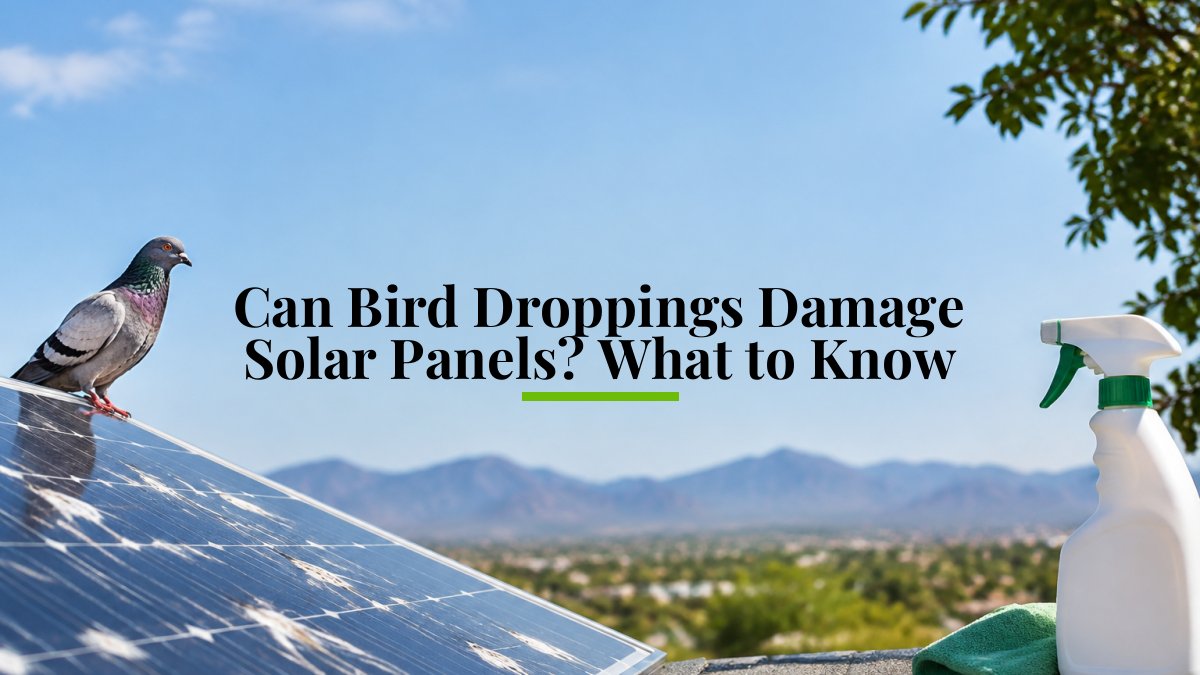
Can Bird Droppings Damage Solar Panels? What to Know
Table of Contents
- How Bird Droppings Damage Solar Panels
- The Real Impact on Energy Yield and Panel Degradation
- How Long Can Bird Droppings Damage Solar Panels?
- How to Clean Bird Poop Off Solar Panels Safely
- How to Clean Solar Panels: A Simple Maintenance Schedule
- Bird Proofing Solar Panels: Barriers, Mesh, and Deterrents
- Warranty, Cost, and When to Call a Professional
- Book a Free Solar Panel Inspection with FRESH TEC LLC
- Frequently Asked Questions
Last Updated: November 4, 2026
How Bird Droppings Damage Solar Panels
Yes, bird droppings can damage solar panels, and the harm goes well beyond a dirty surface. A 2025 study in Nature's Scientific Reports found that droppings cut panel output power by up to 23.8%. At FRESH TEC LLC, we see the results on rooftops across Albuquerque and Rio Rancho: panels that look "just a little spotted" are quietly losing a quarter of their production.
Bird droppings damage solar panels in two main ways: the acid eats into the glass, and the shade blocks sunlight. Both get worse the longer you wait. Below, we'll show you exactly how each one works, how to clean safely, and how to keep birds off for good.
Acidic Corrosion and Surface Etching
Bird manure carries uric acid, and that acid is corrosive. It attacks the glass coating and the protective layers on a panel. Leave it long enough and it etches the surface, leaving a permanent mark that no cloth will remove.
Bird Control Group's 2026 analysis names this acidic corrosion as a leading cause of permanent etch damage to solar glass. Once the coating is etched, dirt clings faster and output stays lower for the rest of the panel's life.
Shading Loss, Hot Spots, and Output Reduction
A single dropping casts a shadow, and a shadow on one cell drags down the whole string. That is shading loss. The covered cell also heats up, creating a hot spot that can crack the glass or damage the panel's wiring over time.
ClearWave's 2026 performance analysis reports output drops of 15% to 25% or more from droppings. The loss compounds as more spots appear.
The Real Impact on Energy Yield and Panel Degradation
Droppings hit your energy yield in two stages. First comes the immediate soiling loss, the power you lose while the mess sits there. Then comes the slow damage: surface etching, hot spots, and micro-cracks that speed up panel degradation.
The numbers are not small. That 23.8% output reduction from Nature's 2025 study on bird-dropping accumulation means a system that should make 1,000 kWh is making about 762. Over a sunny month, that adds up fast on your bill.
Nesting debris makes it worse. Twigs and straw under the array trap moisture and attract pests. Bird B Gone's 2026 guidance notes that nesting under panels can lead to wire damage, which is a repair bill, not just a cleaning job.
If you are worried about how far this can go, our guide on whether dirty solar panels can cause system failure covers the worst-case outcomes.
How Long Can Bird Droppings Damage Solar Panels?
Damage can start within days, not months. Fresh droppings are acidic from the moment they land. In hot weather, the acid bakes onto the glass and gets harder to remove with every passing week.
Here is a simple way to think about the timeline:
| Time on the panel | What happens | Risk level |
|---|---|---|
| 1-3 days | Acid sits on glass, easy to rinse | Low |
| 1-4 weeks | Stains set in, shade cuts output | Medium |
| 1-6 months | Etching begins, hot spots form | High |
| 6+ months | Permanent glass damage, wiring risk | Severe |
So how long can bird droppings damage solar panels before it is too late? The honest answer: the sooner you act, the better. A rinse this week beats a polish next year.
How to Clean Bird Poop Off Solar Panels Safely
Cleaning is delicate work, and doing it wrong can scratch the glass or put you at risk on the roof. The steps matter, but so does what you put on the glass, since some products can dull the anti-reflective coating permanently.
Here is a safe process for cleaning panels:
- Turn the system off at the inverter before you start.
- Work early morning or evening, when panels are cool. A hot panel plus cold water can stress the glass.
- Rinse the panel with a garden hose to loosen the mess and float away grit.
- Wipe gently with a soft cloth or sponge and plain water.
- Use deionized water for the final rinse to avoid mineral spots.
- Never scrub dry droppings, which grinds grit into the glass.
- Stay off the panels and keep both feet on stable footing.
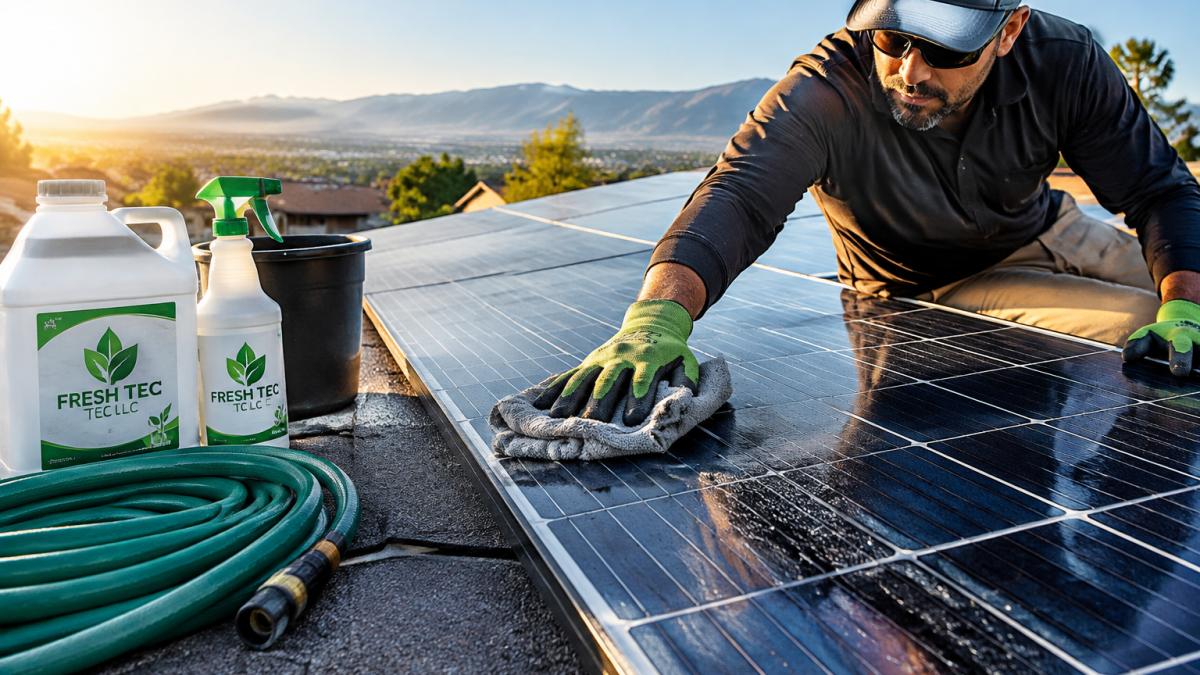
If heights or roof access make you uneasy, that is a good reason to call a pro. Our solar panel cleaning service in Albuquerque and Rio Rancho handles the roof work so you don't have to.
What to Use and What to Avoid
This is where most damage happens. The glass on a solar panel carries an anti-reflective coating, and the frame carries an anodized finish. Both are softer than the glass itself, and both react badly to the wrong chemistry.
Safe for panel coatings:
- Plain water and a soft microfiber cloth or sponge.
- Deionized or distilled water for the final rinse.
- A mild, pH-neutral dish soap diluted heavily in water, only when a spot resists plain water.
- A soft-bristle brush with a long handle, used with plenty of water, never dry.
Unsafe and likely to damage the coating or glass:
- Abrasive powders, scouring pads, and steel wool, which scratch the coating and leave a haze that never buffs out.
- Acidic cleaners, including vinegar, citrus-based degreasers, and descalers. The acid that etches the glass is the same acid in the bottle.
- Alkaline heavy-duty cleaners, including oven and concrete degreasers, which can stain the frame and attack sealants.
- Solvent-based products, including acetone, paint thinner, and adhesive removers.
- Pressure washers held close to the surface, which can force water past the frame seals and crack cells.
Watch out: scrubbing a dry dropping with a rough pad can scratch the surface and void your panel's finish. A scratch is permanent, and no cleaning schedule brings the coating back. For a deeper look at the right equipment, see our guide to the best tools for solar panel maintenance.
One more rule that saves panels: rinse first, always. Water lifts the grit that a cloth would otherwise drag across the glass. Never chip at a baked-on dropping with a scraper or fingernail.
How to Clean Solar Panels: A Simple Maintenance Schedule
A steady schedule beats a big cleanup once a year. Here is the routine we recommend for most homes:
- Weekly: glance at the array from the ground for new droppings.
- Monthly: rinse off any spots you spot.
- Seasonally: do a full clean, especially after nesting season.
- After storms: check for debris and droppings.
In our area, birds tend to gather near certain rooflines and trees, so some homes need more frequent checks. If you want a frequency guide, our article on how often to clean solar panels breaks it down by season and setup.
Bird Proofing Solar Panels: Barriers, Mesh, and Deterrents
Stopping birds beats cleaning up after them. Bird proofing means blocking access and making the array an unattractive place to land.
Common options include:
- Mesh barriers around the array's edges to block nesting.
- Bird deterrents like spikes or wire on nearby ledges.
- Physical screening under the panels to keep pests out.
One solar owner on a 2025 r/SolarUK thread reported that removing an aerial that attracted birds cut droppings on the panels by at least 95%. That is the power of prevention: fix the attractant, not just the mess.
Warranty, Cost, and When to Call a Professional
Cleaning and prevention can help protect your warranty. Most panel manufacturers publish a power warranty and a separate product warranty, and both typically require that the array be maintained in line with the installation manual. That manual almost always says the glass should be kept free of debris. Neglect is not usually a covered event, and a claim for etched glass or hot-spot damage can be denied when the panel shows a pattern of long-term soiling.
Improper cleaning methods, such as abrasive pads, acidic cleaners, and pressure washers, can leave scratches or water intrusion that a manufacturer may treat as owner-caused damage. Keeping a dated maintenance record can help if a warranty question comes up.
Is Cleaning Worth the Spend?
Run the math before you book anything. The logic is simple: compare the value of the power you are losing to the cost of the cleaning.
- Find your system's rated output in kilowatts from the inverter or the proposal.
- Estimate the soiling loss. A light spotting might cost a few percent; heavy, streaked droppings can cost far more, and the Nature's 2025 study on bird-dropping accumulation figure of 23.8% is the worst case, not the average.
- Multiply the lost kilowatt-hours by your electric rate to get the monthly dollar loss.
- Compare that figure to a cleaning quote.
If the monthly loss is small and the mess is light, a rinse on your own schedule is enough. If droppings are heavy, the array is large, or the roof is steep, the loss usually outruns the cost of a professional visit within a season or two. The calculation is not exact, but it turns a vague worry into a number you can act on.
When to Call a Pro
- Your roof is steep or high.
- Droppings have been there for months and have started to stain.
- You see cracks, discoloration, or wiring issues.
- You want the job done safely and correctly, with a record for your warranty file.
For a sense of what professional cleaning involves, our solar panel cleaning pricing guide walks through what to expect before you book.
Book a Free Solar Panel Inspection with FRESH TEC LLC
Bird droppings are a small problem that turns into an expensive one. The fix is simple: clean early, prevent nesting, and let a pro handle the roof.
FRESH TEC LLC is a local, veteran-owned business serving homeowners, realtors, and property managers. Our solar panel maintenance comes with a 6-year warranty, and we use eco-friendly methods. We also handle roof rejuvenation, gutter cleaning, and flat roof coatings, so your whole exterior stays protected.
Get started with FRESH TEC LLC to keep your exterior protected. Book a free inspection today.
Frequently Asked Questions
Is bird poop bad for solar panels?
Yes. Bird droppings are acidic and corrosive, and they block sunlight from reaching the photovoltaic cells underneath. Research published in Nature (Scientific Reports) in 2025 found droppings can cut output power by up to 23.8%. Left in place, the uric acid etches glass and protective coatings, causing permanent damage that cleaning cannot reverse.
How long can bird droppings affect solar panel performance?
A single dropping can reduce output on that spot immediately, and the effect grows as waste accumulates. The bigger concern is time on the surface: acidic residue starts etching glass and coatings within days, and repeated exposure over weeks or months leads to permanent surface damage. Clean droppings off within a few days and schedule regular cleaning so residue never has time to bond to the glass.
What is the safest way to clean bird droppings off solar panels?
Soak the spot with plain water first to soften the waste, then wipe gently with a soft cloth or sponge. Use deionized water for the final rinse to avoid mineral spots. Never use abrasive cleaners, scouring pads, or harsh chemicals, which scratch the glass coating and void many warranties. Stay off the roof if you are not confident about rooftop safety; a professional solar panel maintenance visit handles it safely.
Can bird droppings cause a solar panel to overheat?
Yes. Droppings create shading loss on part of the panel, and shaded cells can develop hot spots as the rest of the module pushes current through them. Over time, hot spots stress the panel and can shorten its service life, which is why prompt cleaning matters.