 how-to
Can Dirty Solar Panels Cause System Failure?
Last Updated: October 29, 2026
Quick Summary
Dirty solar panels reduce power output but rarely cause system failure on their own. Soiling blocks sunlight before it reaches the cells, which cuts production while the equipment itself keeps working. Field module failure reports track thermal stress, delamination, wiring faults, and cell degradation, not soiling.
- A drop in output is a performance problem, while a failed system is an equipment problem.
- Most homes need cleaning two to four times a year, depending on dust, pollen, and nearby trees.
- Check the inverter display for error codes first when output suddenly drops.
- Use soft brushes, plain water, and gentle detergent, and never use a pressure washer on solar glass.
- Clean early morning or evening, never on hot glass.
Table of Contents
- What Dirty Solar Panels Actually Do to Your System
- Can Dirty Solar Panels Cause System Failure?
- Signs Solar Panels Need Cleaning
- Solar Panel Output Suddenly Dropped: What to Check First
- How Often Should Solar Panels Be Cleaned?
- Solar Panel Cleaning Methods That Protect Your Equipment
- Book a Free Solar Panel Inspection
- Frequently Asked Questions
What Dirty Solar Panels Actually Do to Your System
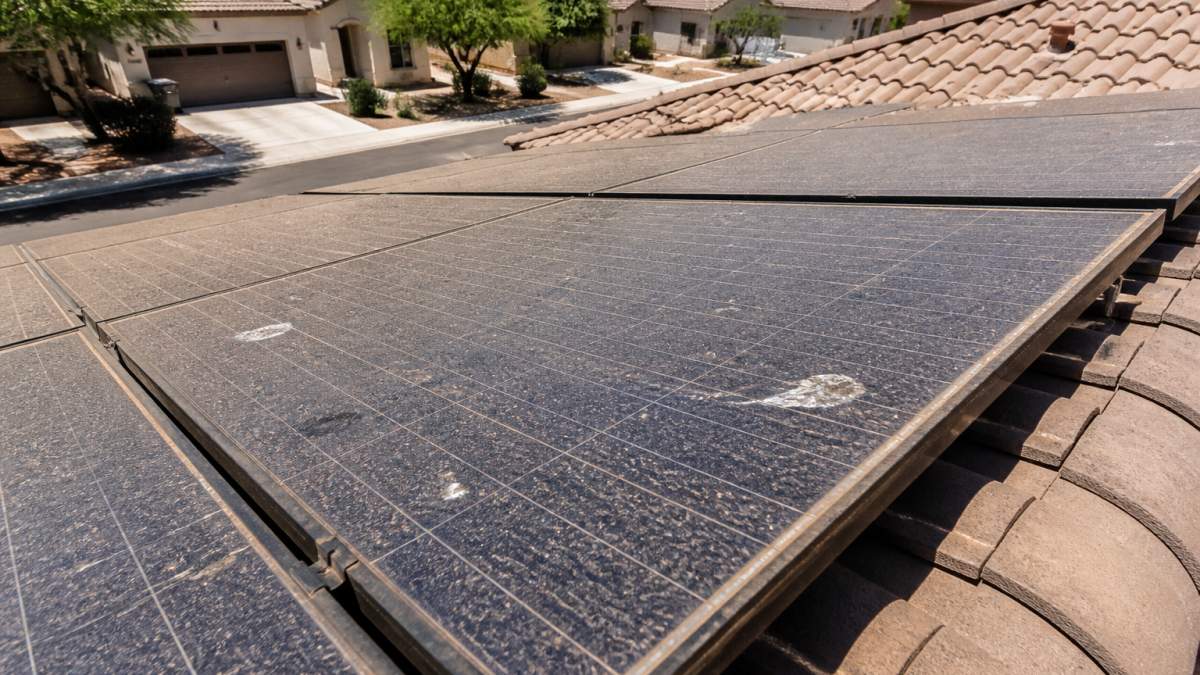
Dirty solar panels reduce power output, but they rarely cause system failure on their own. Soiling blocks sunlight before it reaches the cells, which cuts production while the equipment itself keeps working.
That distinction matters. A drop in output is a performance problem. A failed system is an equipment problem. Confusing the two leads homeowners to replace hardware when they only needed a cleaning.
Accumulated dust, pollen, bird droppings, and debris act like a shade layer across the glass. Enphase's solar panel cleaning guide notes that this buildup can block sunlight and lower energy production. The panels still convert light. They just convert less of it.
Desert dust settles fast, and monsoon season adds more.
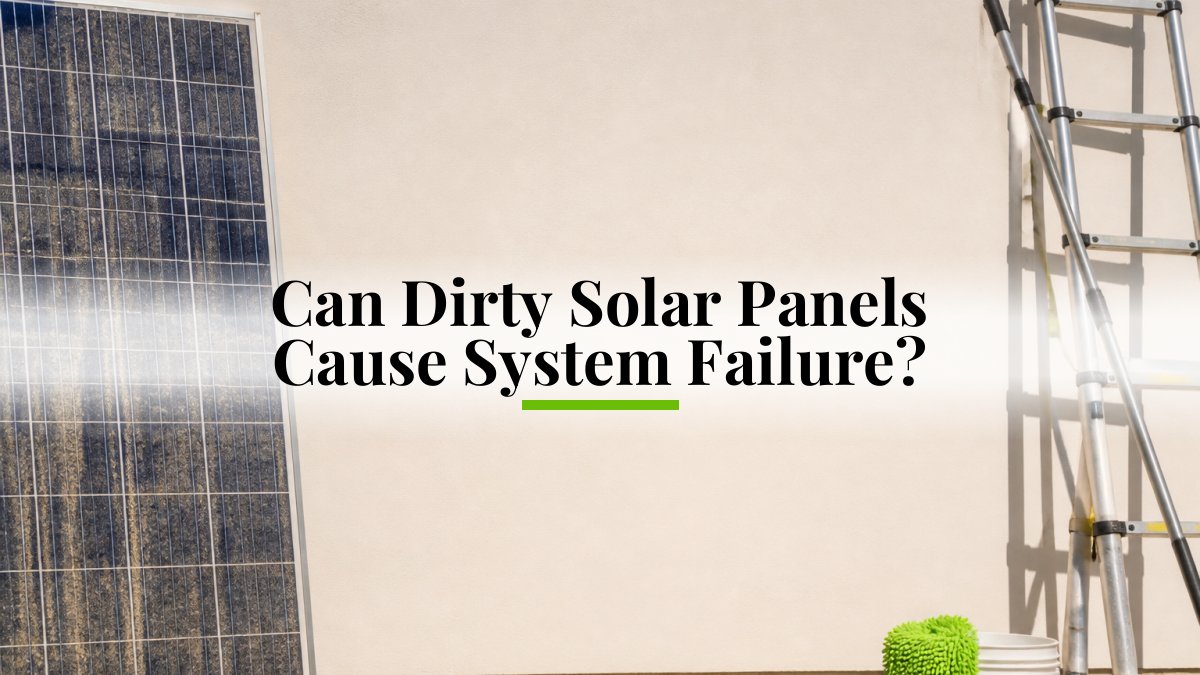
Can Dirty Solar Panels Cause System Failure?
Dirty solar panels can reduce output.
The IEA Photovoltaic Power Systems Programme report on field module failures tracks real failure causes: thermal stress, delamination, wiring faults, and cell degradation. Soiling is not on that list as a failure mechanism.
Watch out: assuming a production drop means equipment failure. It usually does not.
Signs Solar Panels Need Cleaning
Look for visible dust film, bird droppings, pollen streaks, and leaf debris on the glass. Any of these means it is time to clean.
Other signals show up in the numbers:
- Output drops on clear, sunny days
- Production falls short of the same month last year
- One panel underperforms its neighbors
- Water spots or streaking after rain
ElectriCare's analysis of declining solar production points out that lower output than the previous year does not necessarily mean a failed system. Check the simple causes first.
Solar Panel Output Suddenly Dropped: What to Check First
Start with the cheapest checks: shade, debris, and dirt. A sudden drop usually traces back to one of them.
Work through this order:
- Check the inverter display for error codes
- Look for new shade from trees or new construction
- Inspect the glass for dust, droppings, or debris
- Compare panel-level readings if your system reports them
- Review recent weather events like dust storms
If the inverter shows a fault, call an electrician. If the glass is coated and the inverter is clean, schedule a cleaning.
| Symptom | Likely Cause | First Step |
|---|---|---|
| Gradual output decline | Dust and soiling | Clean the panels |
| Sudden drop, no errors | Debris or new shade | Inspect the array |
| Inverter error code | Equipment fault | Call an electrician |
| One panel lagging | Local soiling or damage | Inspect that panel |
How Often Should Solar Panels Be Cleaned?
Most homes need cleaning two to four times a year, depending on dust, pollen, and nearby trees. Desert properties often land on the higher end.
Albuquerque's dust and spring pollen push schedules up. Homes near arroyos, construction, or open lots collect grit faster. Homes with heavy tree cover deal with sap and leaf litter.
A practical schedule:
- Quarterly: standard for dusty desert areas
- Twice a year: milder conditions with few trees
- Monthly: after dust storms or nearby construction
- As needed: after any visible soiling
For a deeper breakdown, see our guide on how often to clean solar panels. If you are weighing professional service, our solar panel cleaning pricing breakdown covers what to expect.
Solar Panel Cleaning Methods That Protect Your Equipment
Use soft brushes, plain water, and gentle detergent. Skip abrasive pads, hard water, and high-pressure spray.
The safe approach:
- Clean early morning or evening, never on hot glass
- Rinse loose dust first
- Scrub with a soft brush and mild soap
- Rinse thoroughly to avoid spotting
- Stay off the panels themselves
Watch out: pressure washers force water past seals and void warranties. Never use one on solar glass.
Preventive habits matter too. Trim overhanging branches, clear gutters so runoff stays clean, and inspect after storms. Our efficiency loss prevention steps walk through the full routine.
Book a Free Solar Panel Inspection
At FRESH TEC LLC, we handle solar panel maintenance alongside roof rejuvenation, flat roof coatings, and gutter cleaning. Our plant-based GreenSoy™ Technology and an industry-leading 6-year warranty back our services. Realtors and property managers trust us to get exteriors show-ready.
Get started with FRESH ROOF TREATMENT. Book a free inspection.
Frequently Asked Questions
Can dirty solar panels stop working completely?
Dirt alone rarely shuts a system down. What soiling does is block sunlight and lower output: industry data points to losses of 5-25% in normal conditions and up to 40-60% right after a dust storm. A system that has stopped producing entirely points to an equipment or wiring fault, not dirt. If output is zero rather than just low, call a technician to check inverters, connections, and breakers before assuming cleaning will fix it.
How much can dirty solar panels reduce energy production?
The range is wide because it depends on local dust, pollen, and bird activity. Reported soiling losses run from about 5% to 25% of output, and a Los Angeles analysis measured a 5.8% drop after 146 days of the dry season. Immediately after a dust storm, losses can spike to 40-60%. In a dusty climate like ours, that lost production adds up month after month, which is why regular cleaning pays for itself.
Can rain clean solar panels effectively?
Light rain does little. It can turn dust into a muddy film that dries in place and actually dulls the glass further. A heavy, sustained downpour will rinse some loose dust away, but it will not remove baked-on residue, pollen, or bird droppings. Treat rain as a partial rinse at best and keep a cleaning schedule based on your local conditions rather than waiting for the weather to do the work.
When should I call a solar technician instead of cleaning the panels myself?
Call a technician if output drops suddenly and cleaning does not restore it, if you see cracked glass, loose wiring, or panels that look out of alignment, or if your monitoring app shows one panel underperforming the rest. Roof access is the other factor: panels on a steep or high roof are safer left to a professional with the right equipment. A routine inspection also catches micro-cracks and loose connections before they become expensive.