 how-to
Prevent Solar Panel Efficiency Loss: 7 Steps That Work
Last Updated: October 23, 2026
Quick Summary
To prevent solar panel efficiency loss, clean the glass every six to twelve months, keep shade off the array, and maintain airflow behind the panels to limit heat. Monitor output against a clear-day baseline so you can catch soiling, damage, or inverter faults early.
- Most homes need solar panel cleaning every six to twelve months, and dustier or tree-heavy properties more often.
- Never use a pressure washer on panels, since it can crack glass and force water past seals.
- Clean early in the morning when the glass is cool, using a soft brush and plain water.
- Compare the same month year over year and clear days to clear days so weather swings do not fool you.
- If output stays low after cleaning and a clear-weather comparison, have a qualified technician inspect the array.
Table of Contents
- What Causes Solar Panel Efficiency Loss
- How Often Should Solar Panels Be Cleaned?
- How to Clean Solar Panels Safely
- How to Monitor Solar Panel Performance
- Solar Panel Maintenance Checklist
- Prevent Efficiency Loss by Climate and Installation
- When to Repair or Replace Panels
- Frequently Asked Questions
What Causes Solar Panel Efficiency Loss
Solar panel efficiency loss is the drop in power output that happens when panels face heat, shade, dirt, damage, or normal aging. At FRESH TEC LLC, we see the same pattern across Albuquerque and Rio Rancho rooftops: most lost output comes from a handful of fixable causes, not from bad panels.
Dust and soiling are a real drag. A review of soiling loss in solar systems found that soiling lowers efficiency, raises maintenance costs, and can shorten a system's lifespan.
Here is the short version. Efficiency loss is the gap between what your panels could produce and what they actually produce.
Heat, Shade, and Soiling
Heat is the quiet thief. Panels lose output as cell temperature climbs, which is why airflow behind the array matters.
Shade hits harder than most owners expect. A shadow on one panel can drag down a whole string.
Soiling stacks on top:
- Dust and pollen film on the glass
- Bird droppings that block a cell
- Leaves and debris trapped at the frame
Damage and Degradation
Physical damage is the easiest loss to spot and the easiest to ignore. Look for cracks, chipped glass, and loose wiring.
Panel degradation is the slow, normal decline every system sees. It cannot be stopped, but it can be slowed.
RatedPower's look at panel longevity and efficiency notes that newer technologies are being developed to slow degradation.
How Often Should Solar Panels Be Cleaned?
Most homes need a cleaning every six to twelve months, with dustier or tree-heavy properties cleaned more often. Frequency depends on your local dust, pollen, and bird traffic, not a fixed calendar.
In our area, spring pollen and summer dust push many roofs toward the twice-a-year end. For a deeper schedule, see our guide on how often to clean solar panels.
Cleaning frequency depends on local dust, pollen, and bird traffic rather than a fixed calendar.
| Situation | Cleaning frequency | Note |
|---|---|---|
| Most homes | Every six to twelve months | Depends on local dust, pollen, bird traffic |
| Dustier or tree-heavy properties | More often | Push toward twice-a-year end |
| Spring pollen and summer dust | Twice a year | Typical for our area |
How to Clean Solar Panels Safely
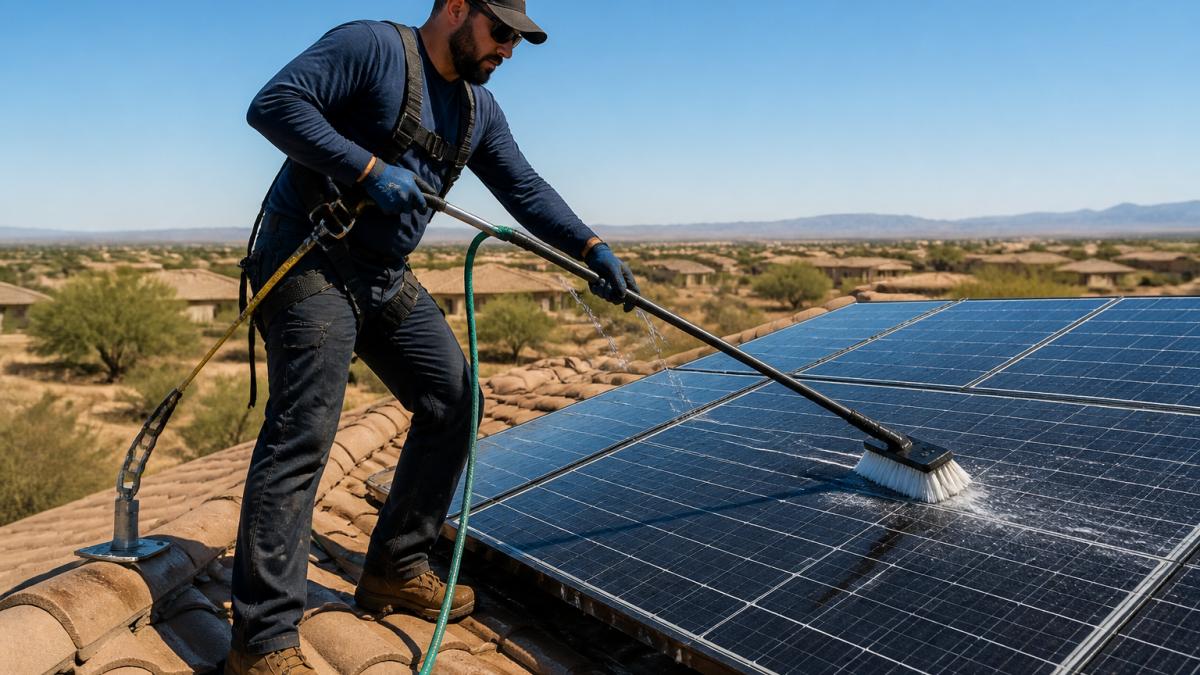
Safety comes first: never walk on panels, and never clean them when they are hot or when you are on a wet roof. Clean early in the morning when the glass is cool.
Follow these steps:
- Shut down the system if your inverter manual says to.
- Rinse the glass with a garden hose to float off loose dust.
- Use a soft brush and plain water, working top to bottom.
- Skip abrasive pads and harsh soaps.
- Rinse again and let the panels air dry.
If roof work is not for you, book a professional solar panel cleaning instead.
How to Monitor Solar Panel Performance
Monitoring is how you catch efficiency loss while it is still cheap to fix. The goal is not to stare at numbers every day, it is to build a baseline, compare against it fairly, and know when a dip means "clean the panels" versus "call a technician."
Step 1: Build a baseline
Pick a stretch of clear, sunny days in a mild month and record daily production from your inverter app or monitoring portal. Note the date, the weather, and the daily kilowatt-hour total. That number is your reference point. Most monitoring portals also keep a lifetime and monthly production history, so you can pull past months without starting from scratch.
Step 2: Compare like with like
Weather swings will fool you week to week. Compare the same month year over year, and compare clear days to clear days. If your portal shows per-panel or per-string data, compare strings against each other, a single underperforming string is a strong clue.
Step 3: Run a symptom-to-cause check
When output drops, work through this flow before assuming the panels are at fault:
- Whole system down or near zero: check the inverter for a fault code, a tripped breaker, or a grid outage first. Panel problems rarely take the entire array to zero at once.
- One string or one panel low: suspect shade, soiling, a cracked panel, or a loose connector on that string.
- Gradual slide over months: suspect soiling, seasonal shade growth, or normal degradation.
- Sudden sharp drop after a storm: suspect physical damage, debris, or a tripped protective device.
- Output fine but bills up: the panels may be fine, check for a change in consumption or a billing or net-metering issue.
Step 4: Know when a drop warrants a professional look
A small seasonal dip is normal. A persistent drop that survives a cleaning and a clear-weather comparison is not. If output stays low after you have ruled out weather, soiling, and inverter faults, have a qualified technician inspect the array, wiring, and connections.
Solar Panel Maintenance Checklist
A simple routine protects output and catches problems before they grow. Run this list each season.
- Rinse dust and pollen off the glass
- Check for cracks, chips, and hot spots
- Look for shade growth from trees
- Inspect wiring and connections for wear
- Review inverter readings for faults
- Confirm mounting hardware is tight
- Clear debris from the frame edges
For a fuller schedule, read our solar panel maintenance frequency guide.
Prevent Efficiency Loss by Climate and Installation
Climate should shape your prevention plan, not just your cleaning frequency. The same panel that thrives in a mild, rainy climate can lose output fast in heat, dust, salt air, snow, or wildfire ash. Match the tactic to the condition.
Climate-specific prevention
- Hot, dry, dusty areas: rinse more often and keep airflow behind the array clear. Heat and dust compound each other, so a clean, well-ventilated array matters most here.
- Snowy areas: clear snow with a soft roof rake or brush, never a sharp tool, and never from on top of the panels. Let the array's tilt do as much of the work as it can.
- Coastal salt air: salt film and corrosion are the risks. Rinse the glass and inspect mounting hardware and connectors for corrosion more often than inland owners would.
- Wildfire ash: ash is abrasive and can hold heat. Rinse gently rather than scrubbing, and check for ash trapped at frame edges and behind the array.
- High-pollen seasons: pollen film is easy to miss because it looks like haze. A spring rinse before peak sun pays off.
Installation context matters
Tilt, mounting, and airflow change how fast debris and heat build up. Panels mounted flat collect more debris and shed snow poorly; steeper tilt sheds dust and snow better. Good airflow behind the array helps with heat, so avoid packing storage or vegetation against the back of a roof-mounted system. Trim trees before they shade the roof rather than after output drops.
Do it yourself or hire it out
Some prevention is safe for most homeowners: rinsing from the ground with a garden hose, trimming reachable vegetation, and reviewing monitoring data. Other tasks belong with a qualified technician: roof work at height, anything involving wiring or connectors, and any inspection after storm damage. Improper cleaning or repairs can crack glass, void warranty coverage, or create a safety hazard, so when in doubt, hire it out.
research on how dust affects photovoltaic efficiency shows the environment drives real output differences.
When to Repair or Replace Panels
Repair first when the problem is isolated: a cracked panel, a loose connection, a tripped inverter. Replace when damage is widespread or output stays low after cleaning and inspection.
Watch for these signs:
- Visible cracks across multiple panels
- Persistent output drop after cleaning
- Inverter faults that return
- Age plus failing performance
If you are unsure, book a free inspection with our team and get a clear answer.
Frequently Asked Questions
How do solar panels degrade over time?
Solar panels degrade gradually as silicon cells and electrical connections age. Most manufacturers publish a degradation rate, often around 0.5% per year, though heat, humidity, and physical damage can speed it up. Keeping panels clean, shaded from extreme heat where possible, and free of cracks helps slow efficiency loss. Monitoring output against your baseline is the best way to catch degradation early and decide when repair or replacement makes sense.
Can dirt and debris reduce solar panel output?
Yes. Dust, pollen, bird droppings, and debris block sunlight from reaching the cells, which lowers power output. A 2024 review led by M. L. Adekanbi found that soiling reduces solar efficiency, raises maintenance costs, and can shorten system lifespan. In dusty areas, rinsing panels every few months and scheduling professional solar panel maintenance when debris builds up keeps energy production closer to the system's rated capacity.
How can I tell whether my solar panels are underperforming?
Compare current production to your baseline from the first sunny months after installation. Check your inverter or monitoring app for daily and monthly output, then look for a drop of more than 10% with no weather explanation. If output falls, inspect for shade, dirt, or damage, and confirm the inverter and wiring are working. A professional solar panel maintenance visit can separate panel efficiency loss from inverter or grid problems.
Can shade cause solar panels to lose efficiency?
Shade from trees, buildings, or chimneys can cut output sharply because a shaded cell limits the whole string's current. Trim tree branches that cast shadows during peak sun hours, and note seasonal changes in sun exposure. If shade is unavoidable, ask an installer about microinverters or optimizers that reduce the impact. Regular monitoring helps you spot new shading before it quietly erodes energy production.
Efficiency loss rarely comes from one big failure. It builds from dust, heat, shade, and small damage that nobody checks. FRESH TEC LLC handles solar panel maintenance, roof rejuvenation with our plant-based GreenSoy™ Technology, and gutter cleaning, all backed by a 6-year warranty. Get started with FRESH TEC LLC and protect your system's output with eco-friendly exterior care.