 how-to
5 Signs It's the Best Time of Year to Clean Solar Panels
Last Updated: October 24, 2026
Quick Summary
The best time of year to clean solar panels is late spring and early fall in most climates, timed around pollen season and summer dust rather than the middle of summer. Spring clears the pollen film before peak sun arrives, and early fall clears summer dust before the lower-angle winter sun makes every speck count.
- Match the cleaning window to your local conditions, since timing depends on what is actually dirtying your panels.
- Most homes need cleaning one to four times per year, with dusty areas at the high end.
- Schedule washing for a cool, overcast morning or late evening to avoid thermal shock and water spots.
- Compare current production against the same week last year before scheduling a wash.
- Rain helps but does not clean panels on its own, since light rain forms a muddy film.
Table of Contents
- Why Timing Matters for Solar Panel Cleaning
- The Best Time of Year to Clean Solar Panels
- How Often Should Solar Panels Be Cleaned?
- Best Time of Day to Clean Solar Panels
- How to Clean Solar Panels Safely
- Does Rain Clean Solar Panels?
- Book a Professional Solar Panel Cleaning Inspection
- Frequently Asked Questions
Why Timing Matters for Solar Panel Cleaning
The best time of year to clean solar panels is late spring and early fall in most climates, timed around pollen season and summer dust, not the middle of summer.
Panels lose output when dust, pollen, and bird droppings block light, but cleaning in blazing heat can bake water spots onto hot glass and put you on a roof when it is slick with sweat.
How Dirt and Debris Affect Power Output
Dirt blocks sunlight before it reaches the cells. Less light means less power. That part is simple.
What most guides miss is how small the payoff can be for a spotless array. Research from the UC San Diego study on solar panel cleaning found that washing a typical 5-kilowatt residential system halfway through summer would translate into only a $20 gain.
The usual suspects:
- Dust and sand after dry, windy stretches
- Pollen in spring, which coats glass in a sticky film
- Bird droppings, which are stubborn and acidic
If output is dropping and you want to stop the slide, our guide on preventing solar panel efficiency loss walks through the steps that work.
The Best Time of Year to Clean Solar Panels
Late spring and early fall win for most homes. Spring clears the pollen film before peak sun arrives. Early fall clears summer dust before the lower-angle winter sun makes every speck count.
But there is no single best season that fits every roof. The Energy Saving Trust guidance on panel cleaning makes the point plainly: timing depends on what is actually dirtying your panels, not the calendar.
A Climate-Based Seasonal Calendar
Match the season to your local conditions rather than a universal answer.
| Climate or Condition | Best Window | Why It Works |
|---|---|---|
| Heavy spring pollen (Northeast, Midwest, Southeast) | Late spring, after pollen drops | Clears sticky film before peak sun; pollen binds to glass and resists light rain |
| Dusty, dry, windy areas (Southwest, High Plains) | Early fall and after dust storms | Removes grit before winter sun angle drops; dust storms deposit a fresh layer in hours |
| Snow and ice regions (Mountain West, Upper Midwest, Northeast) | Late winter or early spring | Clears winter grime once snow melts; road salt and soot film build up over months |
| Rainy climates (Pacific Northwest, Gulf Coast) | Dry stretch in spring or fall | Rain leaves mineral film; wash when it is dry so glass does not spot |
| Wildfire smoke corridors (West Coast, Rockies) | After the smoke season ends, early fall | Ash and soot settle as a fine film that rain smears rather than rinses |
| Tree-heavy lots (any region) | After leaf drop, late fall | Removes sap, tannin stains, and debris before winter storms |
| Agricultural belts (Central Valley, Corn Belt) | After harvest, early fall | Crop dust and chaff settle heavily during harvest; clean once fields are cut |
For desert and dusty areas, plan on more frequent cleaning. ConsumerAffairs notes that panels generally should be cleaned one to four times per year, and dusty spots land at the high end. In practice, that can mean a pass every three to four months.
Use Your Monitoring Data to Pick the Window
The calendar tells you when dirt is likely. Your inverter or monitoring app tells you whether it is actually costing you. Compare current production against the same week last year, adjusted for weather, before you schedule a wash.
A practical decision framework:
- Pull your production curve for the last 30 days and compare it to the same period a year earlier.
- Note any drop of more than a few percent that is not explained by clouds, heat, or shade.
- Check the roof visually from the ground, streaking, bird droppings, or a dull film confirm soiling.
That last point matters. The UC San Diego study on solar panel cleaning found that washing a typical 5-kilowatt residential system halfway through summer would translate into only a $20 gain.
Why Cool, Overcast Mornings Beat Hot Afternoons
Hot glass plus cold water creates thermal shock, which can stress the panel laminate and frame seals over time, and water evaporates before you can squeegee it, leaving mineral spots that cut output. A cool, overcast morning or late evening solves both problems: the glass stays below the temperature where rapid evaporation and thermal stress occur, and you are not working on a hot, slick roof.
What Each Season Actually Does to Your Panels
- Spring: Pollen coats glass in a sticky film that light rain cannot remove. Clean after the pollen peak, not during it.
- Summer: Dust and bird droppings accumulate, but heat makes washing risky. Target early mornings and avoid the hottest weeks.
- Fall: Summer dust, wildfire ash, and leaf debris pile up. Clean after leaf drop and after smoke season ends.
If output is dropping and you want to stop the slide, our guide on preventing solar panel efficiency loss walks through the steps that work.
How Often Should Solar Panels Be Cleaned?
Most homes need cleaning one to four times per year, according to ConsumerAffairs solar panel cleaning guidance. Dusty areas, farms, and homes near heavy pollen sit at the top of that range. Clean roofs with steady rain sit at the bottom.
The honest answer is that frequency should follow conditions, not a rigid schedule. If you want the deeper breakdown, our guide on how often to clean solar panels covers the full picture.
A simple decision framework:
- Check output monthly against your baseline
- Clean when output drops noticeably and the roof looks soiled
- Add a pass after any dust storm, wildfire smoke event, or heavy pollen week
That last point matters. Frequent scheduled cleaning is not automatically worth it, and the UC San Diego numbers back that up.
Best Time of Day to Clean Solar Panels
Early morning or late evening is the best time of day to clean solar panels. Cool glass and low sunlight are the two reasons.
Hot glass plus water equals streaks and spots. ConsumerAffairs recommends dawn or dusk, and Aurora Solar cleaning guidance points to early morning or late evening when temperatures are cooler.
A cloudy day works too. The goal is simple: avoid direct sunlight and cool temperatures on the glass.
How to Clean Solar Panels Safely
Safety comes before shine. Most injuries on this job come from roof access and slippery surfaces, not the cleaning itself. But the bigger risks to your system are quieter: scratched glass, voided warranties, and water where it does not belong.
Check Your Warranty Before You Touch Anything
Most panel manufacturers publish cleaning guidance in their warranty documents. Before you pick up a brush, find the warranty terms for your panels and inverter and confirm:
- Whether the manufacturer requires a certain water quality or prohibits high-pressure washing.
- Whether abrasive pads, harsh detergents, or solvents are excluded.
- Whether the warranty requires professional service for certain conditions.
A common pattern is that manufacturers allow soft brushes, gentle rinsing, and mild soap, and void coverage for scratches from abrasive tools or damage from pressure washers. Keep a copy of the terms with your system records.
Follow a Safe Cleaning Sequence
- Shut down the system if your manual calls for it before you touch the panels.
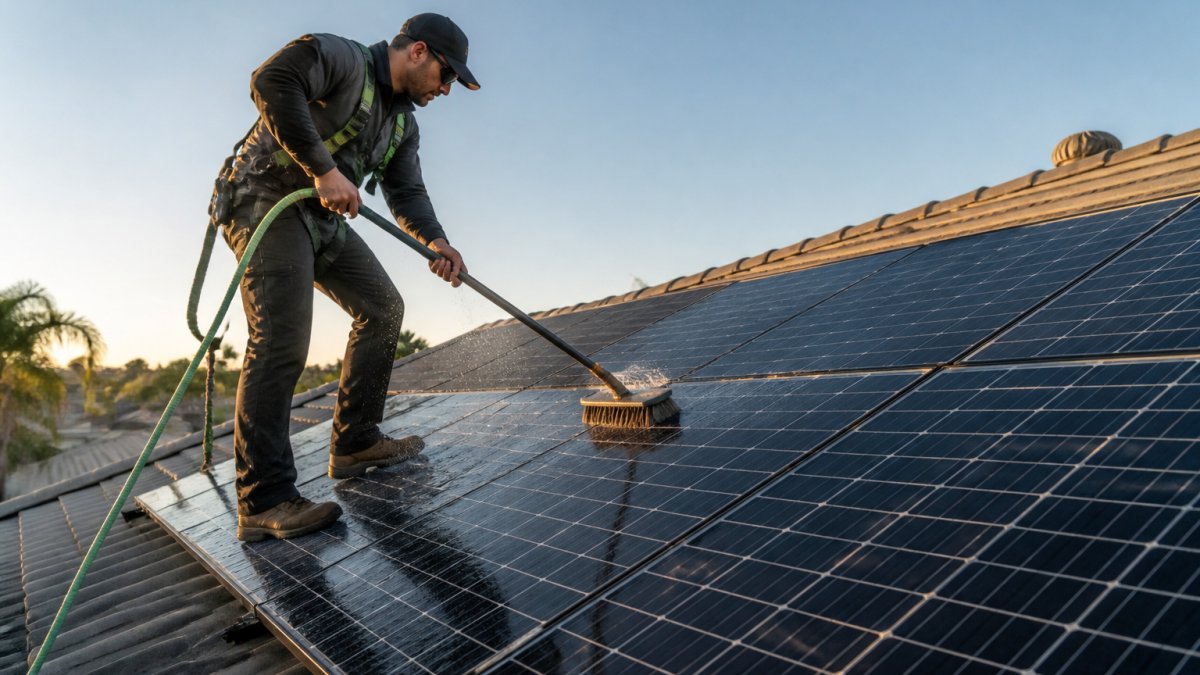
- Work from the ground with a long-handled soft brush and garden hose when you can reach safely.
- Rinse first to float off grit, then wash with a soft brush and mild soap, then rinse again.
- Never use abrasive pads, steel wool, or pressure washers, they scratch the anti-reflective coating, and those scratches are permanent.
- Stay off the roof in wind, rain, or when shingles are wet.
- Wear a harness and non-slip shoes if you must go up, and never work alone.
Water Quality and Hard-Water Residue
Hard-water residue is a real problem in dry climates. Tap water high in calcium and magnesium leaves mineral spots as it dries, and those spots scatter light the same way dust does.
Options that work:
- Use a final rinse with filtered or deionized water if your tap water is hard.
- Dry the glass with a soft squeegee before it air-dries.
- Clean in the early morning or evening when evaporation is slow.
Water use matters too. A garden hose with a shutoff nozzle uses far less than a running hose, and rinsing top-down lets gravity do most of the work.
Thermal Shock and Temperature
Repeated thermal shock from cold water on hot glass can stress the panel laminate and frame seals. Clean when the glass is cool, early morning, late evening, or an overcast day, and keep the hose moving so water never sits on hot glass.
What to Check Beyond the Glass
While you are on the ground, look for signs that need a professional:
- Cracked or chipped glass
- Loose wiring or junction boxes
- Blocked roof drainage or debris dams
Do not climb onto a roof to investigate these yourself. Note what you see and call a professional.
If you are weighing whether a wash is worth it, our article on whether solar panel cleaning improves efficiency lays out the evidence.
Does Rain Clean Solar Panels?
Rain helps, but it does not clean solar panels on its own. Light rain actually makes things worse, mixing with dust and pollen to form a muddy film that dries in place. A heavy, sustained downpour rinses away loose dirt but rarely removes bird droppings or baked-on film.
If you are weighing whether a wash is worth it, our article on whether solar panel cleaning improves efficiency lays out the evidence.
Book a Professional Solar Panel Cleaning Inspection
A pro inspection does two jobs at once. Before you commit, see what professional solar panel cleaning typically costs. It cleans the glass and checks the mounts, wiring, and roof for problems you cannot see from the ground.
Realtors and property managers trust us to get exteriors show-ready, and solar maintenance fits that same routine. Here is how to book with FRESH TEC LLC:
- Call or request a free inspection online.
- We assess soiling, roof condition, and access.
- We schedule cleaning for a cool morning or evening.
- We wash with soft brushes and gentle rinsing, then check the array.
- You get a clear report on panel and roof condition.
Frequently Asked Questions
What time of year is best to clean solar panels?
There is no single best season for every installation. Energy Saving Trust says timing depends on what is dirtying the panels. In dusty areas, late summer or early fall cleaning before winter storms is practical. In regions with heavy spring pollen, a spring rinse helps. ConsumerAffairs suggests cleaning one to four times per year, so align the schedule with local debris patterns rather than a fixed month.
Should solar panels be cleaned in spring or fall?
Both seasons have a case. Spring cleaning removes pollen and winter debris, while fall cleaning clears leaves before snow and ice arrive. Window Hero describes late summer as one of the best times and recommends adding cleaning to a fall maintenance checklist. Check your panels after each season and clean when you see a visible film, bird droppings, or a drop in power output.
Does rain clean solar panels?
Rain helps rinse loose dust but does not remove baked-on bird droppings, pollen film, or hard-water residue. In dry, dusty climates, rain can even leave spots. Treat rainfall as partial maintenance, not a replacement for seasonal cleaning. If output stays low after rain, inspect the panels for stubborn debris and clean them during a cool morning or evening.
Can you clean solar panels in hot weather?
Avoid cleaning in direct heat or full sun. ConsumerAffairs recommends dawn or dusk, and Aurora Solar suggests early morning or late evening when temperatures are cooler. Hot glass can dry water quickly and leave streaks, and rapid temperature changes stress panels. Clean on a cool, cloudy day or early morning, and use gentle rinsing with a soft brush.
Your panels are only as good as the roof beneath them, and dirty glass is the easy fix. The harder question is whether your roof and array are holding up. FRESH TEC LLC brings veteran-owned, local service to every job, with plant-based GreenSoy™ Technology, a 6-year warranty, and a full suite that includes roof rejuvenation, gutter cleaning, and solar panel maintenance. Get started with FRESH TEC LLC and book your free inspection today.