 How-to
7 Plant-Based Roof Treatment Safety Facts for Pets
Last Updated: November 13, 2026
Quick Summary
A plant-based roof treatment is not automatically pet-safe, because plant-based only describes where the ingredients come from, not how toxic the wet product is. Read the label's re-entry statement, keep pets off the roof and runoff until every surface is fully dry, and call your vet if exposure signs appear.
- Plant-based products can still carry a Caution, Warning, or Danger signal word depending on concentration.
- Ask for the safety data sheet, which lists every ingredient and its hazard rating.
- Watch for drooling, vomiting, pawing at the mouth, lethargy, or unusual scratching after exposure.
- Never shelter pets in the garage during application, because fumes can build up there.
- Check shaded slopes and gutter lines for dryness, not just one sunny corner of the roof.
Table of Contents
- Plant-Based Roof Treatment Safety for Pets: What the Label Actually Tells You
- Why Plant-Based Does Not Automatically Mean Pet-Safe
- The Ingredients That Matter Most to Pet Owners
- Roof Treatment Safety for Dogs: Exposure Routes, Symptoms, and What to Watch
- Protecting Pets During Roof Treatment: A Room-by-Room Plan
- Roof Treatment Drying Time for Pets: Re-Entry Rules That Actually Work
- Lawns, Gardens, and Landscaping: What Runoff Means for the Rest of Your Yard
- Plant-Based vs. Bleach and Petroleum Treatments: A Side-by-Side Safety Comparison
- Questions to Ask a Roof Treatment Provider Before You Book
- 1. What is the product name and registration status?
- 2. Can I see the safety data sheet before the job?
- 3. What does the label say about re-entry and pets?
- 4. How do you control overspray and runoff?
- 5. What happens if it rains right after application?
- 6. What is the drying window, and how will you confirm it?
- 7. Are you licensed and insured, and what does the warranty cover?
- Book a Free Inspection with FRESH TEC LLC and Get Pet-Safe Answers First
- Frequently Asked Questions
Plant-Based Roof Treatment Safety for Pets: What the Label Actually Tells You
A plant-based roof treatment sounds gentle, but plant-based does not mean pet-safe. It only means the active ingredients come from plants instead of petroleum.
Dogs and cats explore with their noses, paws, and mouths, so a wet roof coating can reach them through runoff, overspray, or a curious paw on the driveway.
Why Plant-Based Does Not Automatically Mean Pet-Safe
Plant-based roof treatment products use ingredients like soy oil, citric acid, and other plant-derived compounds.
Chocolate comes from a plant. So does poison ivy. "Natural" and "safe for pets" are two different claims.
What most guides miss is the difference between the product and the application.
For a deeper look at what pet-safe really means, read our full guide on whether roof coatings are safe for pets.
The Ingredients That Matter Most to Pet Owners
Pet owners should focus on three things in any roof treatment: the active ingredients, the carrier liquid, and the added chemicals.
- Active ingredients: soy oil, plant oils, or oxygen-based cleaners. These are the working part of the product.
- Carrier liquid: usually water. Water-based products tend to dry faster and smell less.
- Added chemicals: preservatives, surfactants, and fragrance. These are where problems can hide.
A common mistake is assuming a plant-based label means no additives. Ask for the safety data sheet.
For a full breakdown of ingredient safety, see our guide on safe non-toxic roof treatments.
Roof Treatment Safety for Dogs: Exposure Routes, Symptoms, and What to Watch
Roof treatment safety for dogs comes down to four exposure routes: paw contact, skin contact, ingestion, and inhalation.
- Paw contact: your dog steps in runoff or overspray, then licks its paws.
- Skin contact: a pet brushes against a treated surface or a wet hose.
- Ingestion: a pet drinks from a puddle or chews on a wet shingle.
Watch for these signs after any exposure: drooling, vomiting, pawing at the mouth, lethargy, or unusual scratching.
The ASPCA Animal Poison Control Center is a good resource for pet owners who need fast, expert guidance.
Protecting Pets During Roof Treatment: A Room-by-Room Plan
Protecting pets during roof treatment starts before the crew arrives. Move your pet to a safe room, close the windows, and keep them there until the product is dry.
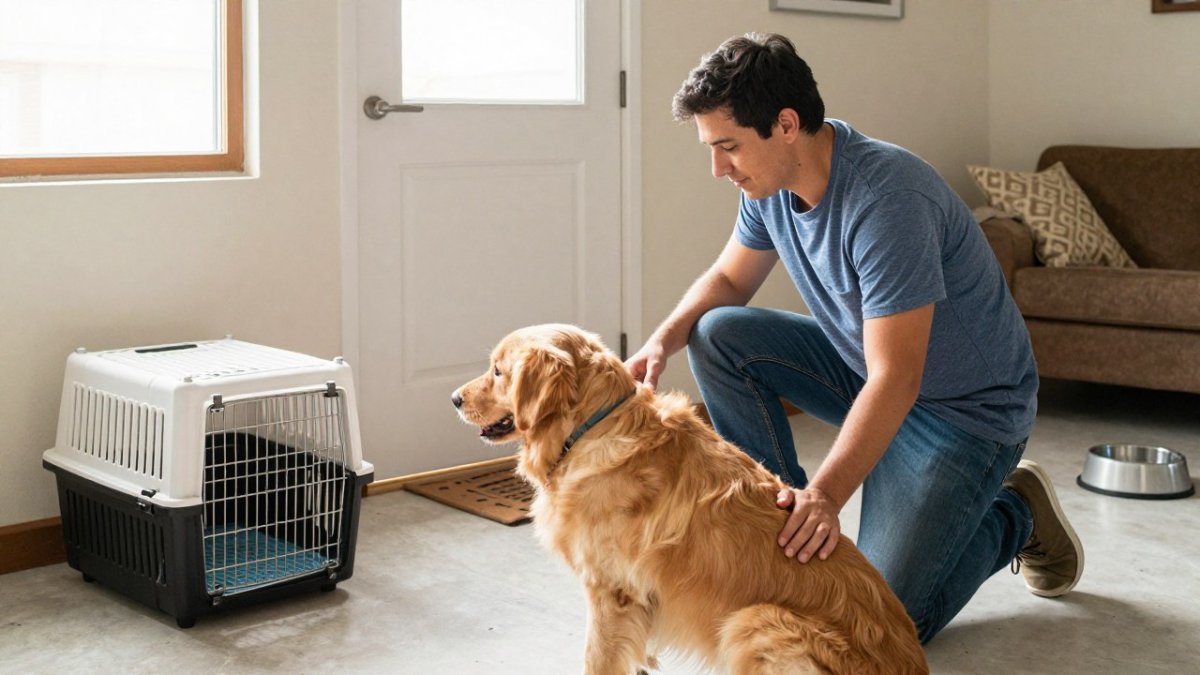
Here is a simple plan that works:
- Living room: set up a crate, water bowl, and favorite toy. Close the door.
- Bedroom: keep cats inside with the door shut and a litter box.
- Backyard: bring pets indoors before the crew starts. Do not let them out during work.
Tell your provider you have pets before work begins.
Overspray, Drift, and Runoff: The Three Ways Product Reaches Your Pet
Overspray is product that misses the roof. Drift is fine mist carried by wind.
All three can reach a pet without anyone noticing. Windy days make drift worse. Rain too soon after application makes runoff worse.
The fix is simple: schedule on a calm, dry day, and keep pets away from the downspouts and driveway for the full drying window.
Roof Treatment Drying Time for Pets: Re-Entry Rules That Actually Work
Roof treatment drying time for pets is not one number. It is a decision you make from four inputs: the product label, the surface, the weather, and what your pet will actually touch. Here is the framework we use.
Step 1: Read the re-entry statement, not the marketing copy
Registered pesticide products sold in the United States carry a label that controls how the product may be used. Look for three things:
- The signal word. "Caution" is the lowest hazard category, "Warning" is more serious, and "Danger" is the highest. A plant-based product can still carry a Warning or Danger signal word depending on concentration.
- The re-entry statement. This tells you when people and animals may return to a treated area. Some labels state a specific interval; others say "until dry."
- The environmental hazards section. This is where you find language about runoff, aquatic life, and pets or domestic animals.
If the label says "until dry," then dryness is the trigger, and you need to verify it yourself rather than guess.
Step 2: Judge dryness by surface, not by clock
Different roof surfaces hold moisture differently, and the same product can behave very differently across them.
- Asphalt shingles: porous and slow to release moisture in shaded areas. A shingle in full afternoon sun can feel dry while the same shingle on a north-facing slope is still tacky.
- Flat and low-slope roofs: standing water and ponding are common, and ponded product takes far longer to cure than a thin film.
- Metal roofing: sheds water fast and often dries quickly, but seams and fasteners trap product.
A touch test on one sunny corner of the roof does not tell you the whole roof is dry. Check the shaded side and the areas near gutters and valleys.
Step 3: Factor in the weather during and after application
Drying is driven by temperature, humidity, wind, and sun. A few practical rules:
- Cool, humid, still mornings slow curing dramatically compared with a warm, breezy afternoon.
- Rain before the product has cured can wash active ingredient off the roof and concentrate it in runoff, exactly where a pet is most likely to encounter it.
- Wind increases drift during application and can carry fine mist onto driveways, patios, and pet bowls left outside.
A product that looks dry on top can still be curing underneath, and a pet that walks across it can pick up residue on its paws and then groom it off. When in doubt, add time rather than subtract it.
Step 4: Set your own buffer and write it down
Once you know the label requirement, add a buffer that reflects your yard, extra hours for shaded areas and any surface that still feels cool or tacky. Write the return time on a note and put it on the door your pet uses. That single step prevents the most common mistake: letting a dog out "just for a minute" because the sun came out.
Step 5: Re-check before you release the pet
Before your pet goes back outside, confirm four things:
- The label interval has passed.
- All treated surfaces, including shaded slopes and gutter lines, are dry to the touch.
- No puddles remain at downspouts or in low spots.
- Any outdoor water bowls, toys, or food dishes were brought inside before application and are still clean.
If any of those fail, wait. There is no benefit to rushing a re-entry, and the cost of being wrong lands on your pet.
The product label requirements from the EPA explain why the re-entry statement exists and how to read it. Treat it as the floor, not the ceiling, for your own household.
Lawns, Gardens, and Landscaping: What Runoff Means for the Rest of Your Yard
Runoff does not stop at the roof edge. It flows into gutters, downspouts, and onto lawns, gardens, and landscaping.
Most plant-based treatments are low in toxicity to plants when diluted by rain and soil.
A few practical steps help:
- Direct downspouts away from vegetable gardens.
- Water the lawn lightly after the product is fully dry to dilute any residue.
- Keep pets off treated grass until it is dry.
If you have a vegetable garden, cover it during application. A tarp is cheap insurance.
Plant-Based vs. Bleach and Petroleum Treatments: A Side-by-Side Safety Comparison
Plant-based treatments are not the only option. Bleach-based and petroleum-based products are common too.
| Treatment Type | Main Ingredients | Pet Concerns | Odor Level |
|---|---|---|---|
| Plant-based | Soy oil, plant oils, water | Low toxicity, but wet product still a risk | Low |
| Oxygen-based | Hydrogen peroxide blends | Can irritate skin and eyes | Low to moderate |
| Bleach-based | Sodium hypochlorite | Strong fumes, paw and skin irritation | High |
| Petroleum-based | Petroleum distillates | Fumes, residue, longer drying | High |
But "less risky" is not "no risk." A wet plant-based coating can still upset a pet's stomach if swallowed.
To understand why homeowners pick plant-based options, read our guide on the benefits of plant based roof coatings.
Questions to Ask a Roof Treatment Provider Before You Book
Before you book any roof treatment, ask these questions. The point is not to collect answers. It is to see whether the provider can show you documents and explain them. A provider who takes pet safety seriously will have the paperwork ready.
1. What is the product name and registration status?
Ask for the exact product name, not a generic description, then whether it is a registered pesticide product with an EPA registration number on the label. If the provider cannot give you a product name or a registration number, that is a serious gap.
2. Can I see the safety data sheet before the job?
A safety data sheet, or SDS, is a standardized document describing a product's hazards, first-aid measures, handling, and storage. A professional applicator should be able to produce a safety data sheet on request. Read the sections on first aid, accidental release, and toxicological information, they tell you more about real-world risk than any brochure.
3. What does the label say about re-entry and pets?
Ask the provider to read you the re-entry statement and the environmental hazards section verbatim. A confident provider will do it without hesitation. A vague answer like "it's all natural, so it's fine" is a warning sign, because natural origin and low hazard are not the same claim.
4. How do you control overspray and runoff?
Ask specifically about wind limits, masking or covering of plants and outdoor pet areas, and where the runoff will go. Good answers mention downspout direction, protecting storm drains, and avoiding application when rain is forecast. Vague answers about "being careful" are not a plan.
5. What happens if it rains right after application?
Ask whether the provider monitors the forecast, what their rain policy is, and whether they will return if the product washes off before curing. Get the answer in writing. This is the single most common source of callbacks and the most common way product ends up where a pet can reach it.
6. What is the drying window, and how will you confirm it?
Ask the provider to state the expected drying window for your roof type and the day's weather, and to tell you how they will confirm the surface is dry before they leave. A provider who gives you a specific window and a check method is easier to hold to account than one who says "a few hours."
7. Are you licensed and insured, and what does the warranty cover?
Ask for proof of licensing and insurance, and ask for the warranty terms in writing. You can review our warranty to see what coverage looks like for FRESH ROOF shingle treatment and flat roof coatings.
Watch out: a provider who dodges the SDS request, cannot name the product, or will not put the rain policy in writing is telling you something. Treat those answers as the real quote.
A good provider will hand you the answers before you ask.
Book a Free Inspection with FRESH TEC LLC and Get Pet-Safe Answers First
Pet safety around roof treatments is not about trusting a label.
At FRESH TEC LLC, we built our FRESH ROOF TREATMENT around a patented plant-based GreenSoy™ Technology.
If you are ready for clear answers, book a free roof inspection in Rio Rancho and get pet-safe guidance first.
Your pet's safety depends on the details: the label, the weather, and the drying time.
Frequently Asked Questions
Is plant-based roof treatment safe for dogs and cats?
Safe is not the same as zero-risk. Safety depends on the specific active ingredients, how the product is applied, whether overspray or runoff reaches your pet, and whether the surface is fully dry before re-entry. Ask for the safety data sheet and the product label, confirm re-entry timing in writing, and keep dogs and cats off treated surfaces and away from downspout discharge until the provider confirms the roof is dry.
How long should pets stay away from a roof treatment?
Follow the product label's re-entry interval first, then add a buffer for weather. Drying time for pets depends on humidity, temperature, cloud cover, and roof pitch, so a treatment applied on a cool, humid morning can stay wet far longer than one applied in dry afternoon heat. Keep pets off the roof, gutters, and the ground beneath downspouts until the provider confirms the surface is dry to the touch. If your pet is sensitive or has skin or respiratory issues, extend the buffer and ask the provider to document the dry time.
Can roof treatment runoff harm pets?
Runoff is the exposure route most homeowners overlook. Rain or irrigation can carry residue from the roof into gutters, downspouts, and the soil where pets sniff, walk, and sometimes drink. Keep pets away from downspout discharge areas and puddles for at least the label's re-entry period, and longer after heavy rain. Divert downspouts away from pet watering bowls and low spots, and rinse any paw contact with plain water. Ask the provider how they contain overspray and runoff, and whether they plan application around weather.
What should I do if my pet contacts a roof treatment?
Move your pet away from the area, rinse the contacted skin or paws with plain lukewarm water, and prevent grooming or licking until the area is rinsed. If the product label lists a poison control number, call it, and contact your veterinarian with the product name, active ingredients, and approximate exposure time. Watch for drooling, vomiting, pawing at the mouth, redness, or unusual lethargy, and bring the safety data sheet to the vet visit. For eye contact, flush with water and seek veterinary care.