 How-to
Preparing Your Roof for Albuquerque Winters: A Step-by-Step Checklist
Last Updated: November 9, 2026
Quick Summary
Roof winter preparation in Albuquerque starts with a fall inspection from the ground: check shingle edges, granule loss, sealant around vents, and flashing. Then clean gutters twice, once in mid-October and again in early December, and check attic insulation, ventilation, and moisture before the first freeze.
- Clean gutters in mid-October and again in early December.
- Look for granules in gutters after a dry summer, a sign the shingle surface is thinning.
- Check attic fans to confirm they vent outdoors, not into the attic.
- Look for frost or damp spots on the underside of the roof deck.
- Clear flat roof drains and scuppers of debris and standing water.
Table of Contents
- Why Albuquerque Roofs Need Winter Preparation
- Step 1: Inspect Your Shingles and Flashing Before Winter
- Step 2: Clean Gutters and Downspouts Before Winter
- Step 3: Check Attic Insulation, Ventilation and Ice Dam Risk
- Flat Roof Winter Preparation for Albuquerque Properties
- Your Winter Roof Maintenance Checklist
- Booking Your Free Roof Inspection with FRESH ROOF TREATMENT
- Frequently Asked Questions
Why Albuquerque Roofs Need Winter Preparation
FRESH TEC LLC, a local, veteran-owned team in Albuquerque, NM, sees the same pattern every fall: roofs that looked fine in summer show problems once the cold arrives. Roof Report found that Verisk U.S. Roof Report, 2026 average U.S. residential roof replacement costs rose by 33 percent, which makes routine upkeep more valuable than ever.
Winter damage is mostly preventable. Cold-season roof damage often comes from skipped fall inspections and clogged drainage rather than a single storm. A roof that is checked in October has a much better chance of making it through January.
Step 1: Inspect Your Shingles and Flashing Before Winter
Start with a walk around the house. Look for curling shingles, cracked edges, and bare patches where the granules have worn away. Check the flashing around chimneys, vents, and skylights too, since loose flashing is a common path for water. To see how shingles are prepared and treated before a roof is restored, read how to prepare asphalt shingles for roof treatment.
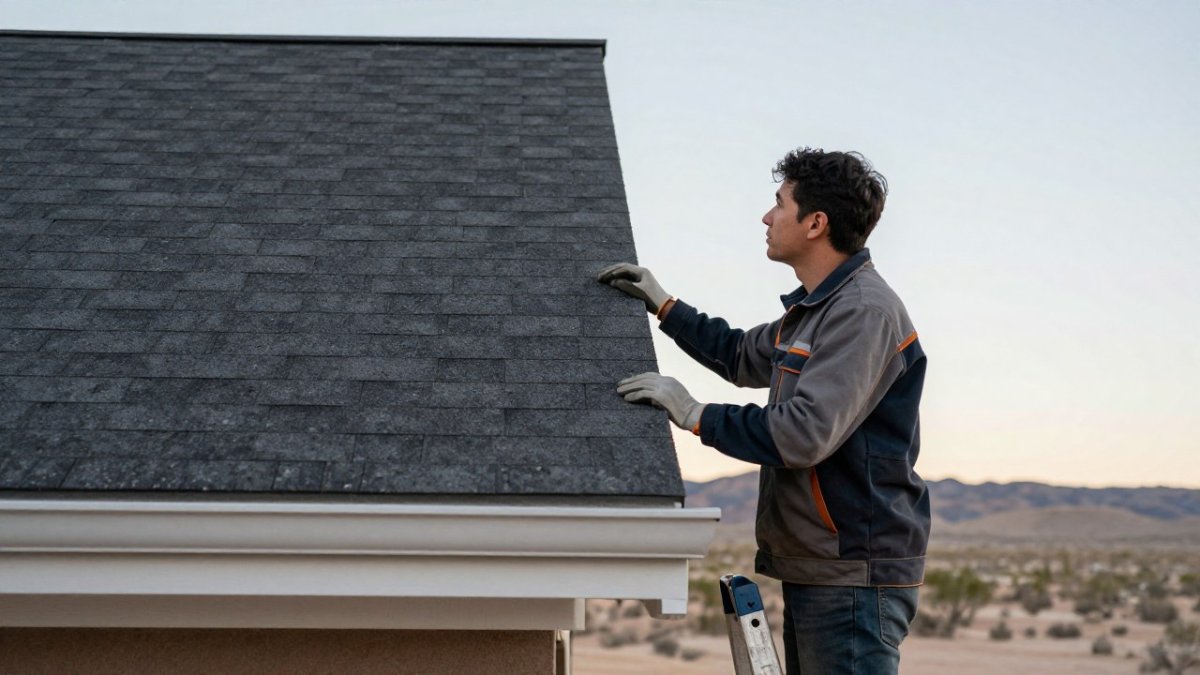
A few things to check from the ground:
- Shingles that lift or curl at the edges
- Dark streaks or missing granules on the surface
- Caulk or sealant around vents that has cracked or pulled away
- Flashing that sits crooked or looks loose
What Makes This Inspection Different From a Generic Fall Checklist
Roof-prep guides written for snow-heavy climates focus on different threats than those facing high-desert roofs, so the fall inspection should be tuned to local failure modes:
- UV degradation before physical damage. Intense year-round sun breaks down the asphalt binder in shingles long before they crack. Granule loss and a gritty, sand-like texture in the gutters are the earliest signal, often a full season before curling starts. If your gutters are full of granules after a dry summer, the shingle surface is thinning.
- Diurnal freeze-thaw cycling. Wide day-to-night temperature swings mean water from morning dew, a light snow, or a monsoon remnant can melt and refreeze inside the same 24 hours. That cycle works sealant and flashing loose far faster than a single deep freeze. Pay particular attention to sealant beads around vents and pipe boots, which crack from repeated expansion and contraction.
- Wind-driven grit and abrasion. Spring and fall wind events can drive sand and grit against roof slopes, so compare exposures rather than judging the roof as a whole.
- Post-monsoon damage carryover. Late-summer storms are the real stress test for a roof in this region. Lifted shingle tabs, displaced flashing, and hairline cracks that opened during monsoon wind and hail are what turn into leaks once winter precipitation arrives. The fall inspection can also serve as a check for storm damage, look for tabs that lifted and resealed crooked, dented or bruised shingle fields from hail, and flashing that shifted at the chimney or skylight.
Match the Inspection to Your Roof Material
A single checklist does not fit every roof, and the two most common residential roof types here need different attention:
- Asphalt shingles. Focus on granule loss, sealant strips that have released, and tabs that lifted during wind events. If shingles are worn but the deck is sound, a restorative treatment can extend service life; if tabs are missing or the mat is exposed, plan for replacement.
- Tile roofs. Tile is common on Southwestern homes, and the underlayment beneath it is the real weather barrier. From the ground, look for slipped, cracked, or chipped tiles and for displaced ridge caps after wind. Dark streaks on tile can be biological growth, and they can trap moisture. Never walk a tile roof, the tiles are brittle and the fall risk is high.
- Flat and low-slope roofs. Covered in the dedicated section below, but the short version is that seams, penetrations, and drainage matter more than surface appearance.
Shingle damage from wind and winter storms is covered in more detail in How to Maintain Roof Shingles in High Winds. For help spotting the warning signs, see How to Tell If Your Roof Needs Maintenance: 8 Warning Signs.
Never climb onto a steep or fragile roof to do this yourself. A ladder and binoculars from the ground are enough for a first look.
Here is a quick reference for the warning signs to check from the ground before the first freeze.
| Check | What to look for | Action |
|---|---|---|
| Shingle edges | Curling or lifting edges | Note for a closer look |
| Surface | Dark streaks or missing granules | Surface thinning; have it assessed |
| Sealant around vents | Cracked or pulled-away caulk | Reseal or repair |
| Flashing | Crooked or loose at chimneys, vents, skylights | Repair before winter |
| Gutter grit | Granules after a dry summer | Shingle surface is thinning |
Step 2: Clean Gutters and Downspouts Before Winter
Clogged gutters are one of the most common causes of winter roof trouble. When leaves block the flow, melting snow backs up under the shingles and can freeze into ice dams.
Eads Roofing gutter cleaning guidance, 2025 recommends cleaning gutters twice in the fall, once in mid-October and again in early December, so the system is clear before the coldest weeks.
Good gutter habits:
- Clear leaves and debris from gutters and downspouts
- Confirm downspouts drain away from the foundation
- Check that the gutters are still attached and sloped correctly
- Repeat the cleaning in early December
Local service is available for this too. See Gutter Cleaning in Albuquerque & Rio Rancho if you would rather have a crew handle it.
Step 3: Check Attic Insulation, Ventilation and Ice Dam Risk
The attic is where many winter roof problems begin. Warm air escaping from the living space can melt snow on the roof, and that water can refreeze at the eaves. Proper insulation and ventilation keep the roof deck cold and even.
Check these items in the attic:
- Insulation that is even and not compressed
- Vents at the soffit and ridge that are open and unblocked
- Damp spots, stains, or frost on the underside of the roof deck
- Bathroom and kitchen fans that vent outdoors, not into the attic
Why the Attic Check Matters More Here Than the Ice Dam Check
Ice dams can occur in winter, but attic moisture from temperature swings is often a more significant concern in the high desert. The same wide day-to-night temperature range that works on flashing and sealant also drives moisture migration through the attic.
That is why the attic walk-through should focus on moisture first and ice dams second:
- Look for condensation, not just leaks. Frost or beads of water on the underside of the roof deck, damp rafters, or a musty smell are the tell. A stain that appears only in cold weather is almost always condensation, not a failed shingle.
- Check that exhaust fans actually vent outdoors. A bathroom or kitchen fan that dumps into the attic is one of the most common causes of winter attic moisture. Trace the duct to a roof or wall cap; if it terminates in the attic space, that is a fix-before-winter item.
- Confirm insulation is even and uncompressed. Gaps, compressed batts, and insulation pulled back from the eaves create cold spots where condensation forms. Insulation works with air sealing, sealing gaps around penetrations and top plates matters as much as the R-value itself.
- Verify soffit and ridge vents are open. Insulation baffles at the eaves are frequently knocked loose or covered, which blocks the intake airflow the whole system depends on. If you can see daylight through the soffit vents from inside the attic, they are open.
- Then check for ice dam conditions. Ice dams form when the eaves stay colder than the roof center, so meltwater has nowhere to go. Good insulation and airflow reduce that risk. U.S. Department of Energy attic insulation guidance explains how air sealing and insulation work together to keep heat where it belongs.
Watch out: a roof that shows condensation on the deck but no visible leak may have an attic moisture issue rather than a shingle failure. Addressing ventilation and air sealing can help, and the roof surface can then be reassessed.
Flat Roof Winter Preparation for Albuquerque Properties
Flat roofs need a different routine. Water does not run off them as quickly, so drainage matters more. Check drains, scuppers, and the low spots where water pools after a storm.
Flat roof prep usually includes:
- Clearing drains and scuppers of debris
- Looking for ponding water or soft spots
- Inspecting seams, edges, and penetrations
- Confirming any coating is intact and not peeling
For flat roofs, a protective coating applied before winter is one option to consider. FRESH ROOF TREATMENT offers flat roof coatings as part of its service suite, and the team can assess whether your roof is a good fit during a free inspection.
Your Winter Roof Maintenance Checklist
Use this list each fall. It takes about an hour from the ground and a few minutes in the attic.
- Walk the perimeter and look for loose or curling shingles
- Check flashing around chimneys, vents, and skylights
- Clear gutters and downspouts of leaves and debris
- Confirm downspouts drain away from the foundation
- Look for granule loss or bare patches
- Check attic insulation for gaps or compression
- Confirm attic vents are open and unblocked
- Look for damp spots or frost on the attic roof deck
- Trim tree limbs that hang over the roof
- Check flat roof drains and scuppers for standing water
- Schedule a second gutter cleaning in early December
Many homeowners also find a professional inspection worthwhile before the first hard freeze. Winter roof maintenance is easier to plan when you know exactly what condition the roof is in.
Booking Your Free Roof Inspection with FRESH ROOF TREATMENT
FRESH TEC LLC, a local, veteran-owned business, serves homeowners, realtors, and property managers across Albuquerque and Rio Rancho.
Ready to see where your roof stands? book a free roof inspection and let the team check your shingles, flashing, and drainage before winter arrives.
FRESH TEC LLC handles roof rejuvenation, flat roof coatings, gutter cleaning, and solar panel maintenance across Albuquerque and Rio Rancho. Call or visit our website to Book Free Inspection and get your roof ready for winter.
Frequently Asked Questions
How should I prepare my roof for winter in Albuquerque?
Start with a fall inspection of shingles, flashing and sealant, then clear gutters and downspouts so melting snow drains properly. Check attic insulation and ventilation to limit heat loss that feeds ice dams. Trim overhanging tree limbs and make a note of any curling shingles or leaks. If you find damage you cannot confirm from the ground, schedule a professional inspection before the first freeze. Albuquerque winters bring freeze-thaw cycles, so small gaps can widen quickly.
What should I inspect on my roof before winter?
Look for curling, cracked or missing shingles, worn or lifted flashing around chimneys and vents, and failing sealant at roof penetrations and skylights. Check the attic for daylight, water staining or damp insulation, which point to leaks. Inspect soffit and ridge vents for blockage. Use binoculars from the ground if you do not want to climb. Note anything unusual and have it assessed before temperatures drop.
When should I schedule a professional roof inspection before winter?
Schedule it in the early fall, before the first hard freeze, so repairs can be completed in mild weather. Cold temperatures can make sealants harder to apply and shingles more brittle to work with. A professional can check areas that are hard to reach safely, such as valleys and roof penetrations. Book early in the season, since demand rises as the weather turns. FRESH ROOF TREATMENT offers a free inspection to help you decide what your roof needs.
Can cold weather affect roof repairs or shingle installation?
Yes. Asphalt shingles are harder to seal in cold conditions, and many sealants need warmer temperatures to bond. Repairs done in cold weather may not hold as well, so schedule work for mild days when possible. Shingles may also crack more easily when cold, so handle them carefully. Ask your contractor how they plan to manage cold-weather installation.