 How-to
Does Your Roof Need Replacing? 7 Warning Signs
Last Updated: November 5, 2026
Quick Summary
You can tell if your roof needs replacement by checking for curling, cracked, or missing shingles, granules in the gutters, water stains inside, sagging, moss, damaged flashing, or daylight in the attic. Three or more signs together usually mean the shingle system is near the end of its life and roof replacement is likely.
- Check most warning signs from the ground with binoculars and stay off the roof.
- Damage spread across several slopes or a second shingle layer points toward replacement.
- A roof with no leaks does not need replacement on that basis alone.
- FRESH ROOF TREATMENT can extend shingle lifespan by 6-8 years and carries a 6-year warranty.
- Book a free inspection with FRESH TEC LLC for a straight answer on repair, restoration, or replacement.
Table of Contents
- Seven Signs Your Roof Needs Replacement
- How to Know When Roof Shingles Need Replacing
- Safe Homeowner Inspection Steps
- Roof Repair vs Replacement: How to Decide
- Should I Replace My Roof If It's Not Leaking?
- Pictures of Roofs That Need to Be Replaced
- Book a Free Roof Inspection with FRESH TEC LLC
- Frequently Asked Questions
Seven Signs Your Roof Needs Replacement
Knowing how to tell if roof needs replacement starts with reading what your shingles are telling you. Local homeowners can use these signs as a starting point before a professional inspection. The short version: one worn spot is normal. Three or more signs together usually means the shingle system is near the end of its life.
Roof replacement is a big decision, so let's look at what actually matters. Below are the seven signs we check first, plus how to inspect safely and how to decide between roof repair vs replacement.
1. Curling, Cracked, or Missing Shingles
Shingles that curl at the edges, crack down the middle, or slide out of place are the most visible sign of an aging roof. Curled and cupped shingles have lost their seal. Once that happens, wind and rain get underneath and lift the next row.
Missing shingles are worse. Each gap exposes the roof decking to moisture. If you spot cracked shingles across one slope, that area is usually ready for replacement, not repair. Our guide on curling asphalt shingles walks through when a repair still makes sense.
2. Granules in the Gutters
Asphalt shingles shed granules as they age, and those granules end up in your gutters and downspouts. A few granules after a new roof is normal. A steady buildup of grit in the gutters, or bald patches on the shingles, means the protective top layer is wearing thin.
Bare asphalt then bakes in the sun and cracks faster. If you are finding granules every time you clean the gutters, read our breakdown of early signs of shingle granule loss to see what it means for the rest of the roof.
3. Leaks and Water Stains Inside
Brown rings on the ceiling, bubbling paint, or a musty smell in the attic point to a roof leak. Water rarely drips straight down from the hole. It runs along the decking and shows up somewhere else, so the stain is often far from the actual breach.
Leaks also rot the roof decking and framing if they go unfound. A professional leak detection visit traces the source before it spreads. Here is what roof leak detection involves and costs.
FEMA guidance on roof damage and moisture after storms
How to Know When Roof Shingles Need Replacing
Shingles need replacing when damage covers a large area, when the roof is past its expected lifespan, or when repairs keep coming back. Age alone is not the trigger. A well-ventilated asphalt roof in a mild climate can outlast its rated years, while a poorly ventilated one fails early.
Use this quick reference to sort what you are seeing:
| What You See | Likely Cause | What It Usually Means |
|---|---|---|
| Curled or cupped shingles | Loss of seal, age | Repair if limited, replace if widespread |
| Granules in gutters | Worn top layer | Watch closely, plan for replacement |
| Water stains inside | Active leak | Inspect now, repair the source |
| Sagging roofline | Decking or structural damage | Call a professional right away |
| Moss or algae growth | Trapped moisture | Clean, then check the shingles |
| Damaged flashing | Failed seals at edges | Repair the flashing |
| Daylight in the attic | Gaps in the deck | Inspect immediately |
Two or three rows in the same place can be patched. Damage spread across several slopes, or a roof that is already on its second layer of shingles, points toward roof replacement.
Safe Homeowner Inspection Steps
You can check most of these signs from the ground. Stay off the roof. A fall from height causes serious injury, and walking on worn shingles can crack them further. The goal of a homeowner inspection is not to diagnose, it is to gather enough evidence to know whether to call someone and what to tell them.

- Walk the perimeter with binoculars. Look for curled, missing, or blistered shingles, rusted or lifted flashing, and dark patches where granules have worn away. Note which slope each problem is on, one slope versus several changes the decision.
- Check the gutters from a ladder on firm ground. Look for granule buildup, shingle pieces, and grit at the bottom of downspouts. A handful of granules after a new roof is normal; a steady layer every cleaning is not.
- Look at the ceiling inside. Note any water stains, sagging, or peeling paint. Trace each stain upward and outward, water runs along decking, so the stain is often far from the actual breach.
- Step into the attic with a flashlight. Look for daylight through the roof boards, dark streaks on the underside of the deck, damp or compressed insulation, and rusted nail tips. Daylight through the deck is a structural warning, not a cosmetic one.
- Photograph everything. Date the photos and keep them together. A dated record is what an insurer and a contractor both need, and it shows whether a problem is stable or spreading.
Watch out: never climb onto a steep or wet roof to "just take a look." One slipped step costs more than any inspection, and worn shingles can fail under a foot that a sound roof would carry.
What to do once you find a warning sign. Triage matters more than diagnosis. If you see an active leak, water staining that is wet, dripping, or spreading, contain it first: place a bucket, move valuables, and if water is near electrical fixtures, shut off power to that area and call a professional. If you see structural symptoms such as a sagging roofline or daylight through the deck, keep people and heavy items out from under that area and arrange an inspection promptly.
Documenting for insurance. If the damage followed hail or high wind, photograph each affected slope, keep any fallen shingles or debris, and note the date of the storm. Review your policy's deductible and damage provisions before you file, and contact your insurer to open a claim. A contractor's dated inspection report supports the claim and gives the adjuster a clear record of condition.
FEMA guidance on roof damage and moisture after storms
Roof Repair vs Replacement: How to Decide
Homeowners often arrive at this question with a single symptom and no way to weigh it.
Input 1: Severity of the symptom. A cracked or missing shingle is a surface problem. A sagging roofline, daylight through the attic deck, or soft spots underfoot are structural problems, and structural problems almost always point to replacement. Sort what you are seeing into surface, moisture, and structural tiers before anything else.
Input 2: Spread. Damage confined to one slope or a single penetration, a chimney, a vent, a skylight, is a repair candidate. Damage appearing on two or more slopes, or in the same spot after two prior repairs, signals that the shingle system as a whole is failing.
Input 3: Roof age against expected service life. Age alone does not decide it, but age relative to the material's realistic service life does. Asphalt shingles rated for 25 to 30 years often deliver less in practice when ventilation is poor or the roof carries a second layer.
Input 4: Repair history and layer count. A roof on its second layer of shingles has less margin, the next failure exposes decking that may already be compromised.
Run the four inputs together. Surface damage, narrow spread, a young roof, and a clean repair history point to repair. Structural symptoms, wide spread, an aging roof, or a second layer point to replacement. The middle cases, curling shingles and granule loss without structural failure, are where a restoration treatment can extend service life instead of forcing an immediate tear-off.
That middle path is where FRESH TEC LLC comes in. Our FRESH ROOF TREATMENT uses patented, plant-based GreenSoy™ Technology to restore asphalt shingles and extend their lifespan by 6-8 years. It is backed by a 6-year warranty.
For the honest breakdown of when each option makes sense, read our guide on roof repair vs. replacement.
Should I Replace My Roof If It's Not Leaking?
No. A roof with no leaks does not need replacement on that basis alone. Leaks are one sign among several, and a dry roof with sound shingles can still have years left.
Replace a non-leaking roof only when other signs pile up: widespread granule loss, shingles that are brittle or balding, sagging, or a roof already past its expected lifespan. If none of those apply, maintenance and restoration are the smarter spend. Realtors and property managers often look to restoration to get a home show-ready without a full replacement.
Pictures of Roofs That Need to Be Replaced
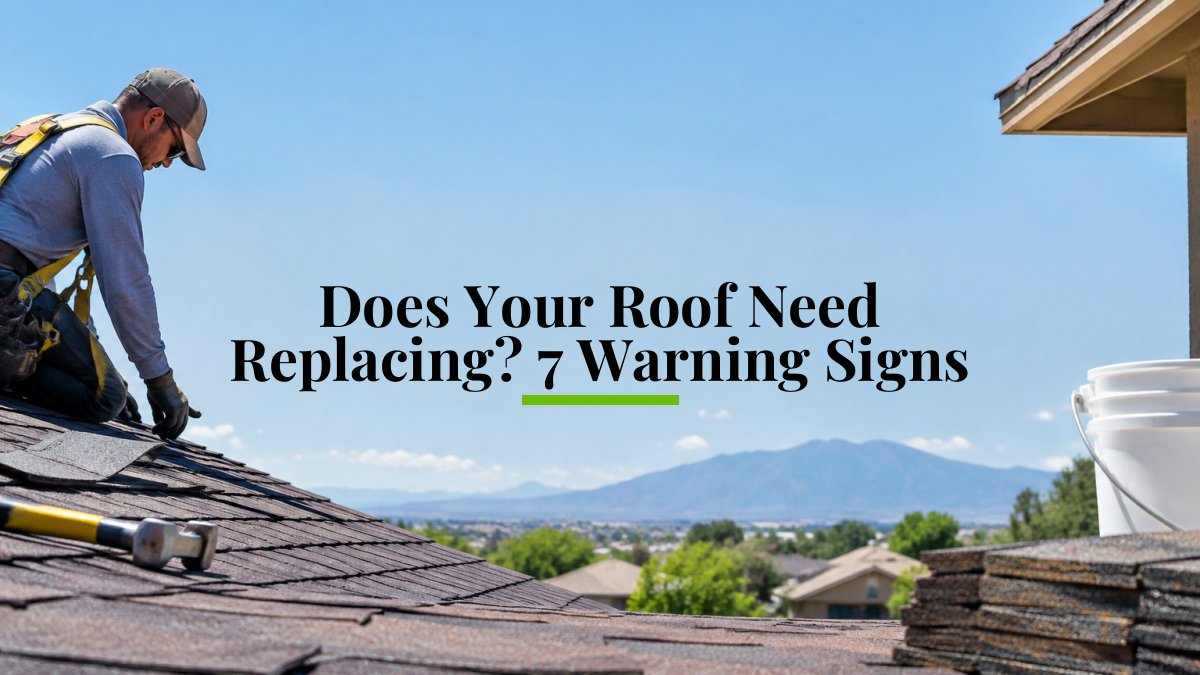
Photos help because the signs are easier to spot than to describe. Look for shingles that curl up at the corners like dried leaves, dark patches where granules have worn away, and rust streaks running down from the flashing.
If your own roof matches those pictures, get it looked at before the next storm season.
Book a Free Roof Inspection with FRESH TEC LLC
The fastest way to know for sure is a professional inspection. Our free inspection checks your shingles, flashing, gutters, and attic for every sign above, then gives you a straight answer on repair, restoration, or replacement. You can see exactly what a roof inspection checks before we arrive.
FRESH TEC LLC is a local, veteran-owned team serving homeowners, realtors, and property managers in Albuquerque and Rio Rancho. Every FRESH ROOF TREATMENT is backed by our 6-year warranty and our plant-based GreenSoy™ Technology.
Get started with FRESH TEC LLC and book your free roof inspection today.
Frequently Asked Questions
What are five signs that my roof needs to be replaced?
The five most reliable signs are curling or missing shingles, granules collecting in the gutters, water stains on ceilings or attic walls, a sagging roofline, and damaged flashing around chimneys and vents. Moss or algae growth and daylight visible through roof boards are also red flags. Any two of these together usually justify a professional inspection before the next storm season.
Should a 20-year-old roof be replaced?
Not automatically. Most asphalt shingle roofs are rated for 20 to 25 years, so age 20 is when you should start inspecting twice a year rather than assuming replacement is due. Shingle condition matters more than the calendar: a 20-year-old roof with intact shingles, clean gutters, and no interior stains can often be maintained or rejuvenated, while a 12-year-old roof with heavy granule loss may already be failing.
How do I know whether my roof needs repair or replacement?
Look at the scope and the age. A single damaged area on a roof under 15 years old with sound shingles elsewhere is usually a repair. Damage spread across multiple slopes, granule loss over large areas, or a roof past its expected lifespan points toward replacement. A professional inspection confirms which applies, and a rejuvenation treatment can extend a shingle roof's life by 6-8 years when the shingles are still structurally sound.
Should I replace my roof if it is not leaking?
A leak is not the only failure signal. Granule loss, curling shingles, and damaged flashing let moisture in long before a stain appears inside, and by then the decking may already be compromised. If you see those signs, get an inspection even without a leak. If the shingles are intact but aging, FRESH TEC LLC's plant-based FRESH ROOF TREATMENT can restore flexibility and add years of service at a fraction of replacement cost.
A roof rarely fails overnight. It gives you signs first, and now you know what to look for. When those signs add up, call FRESH TEC LLC for a free inspection and an honest recommendation on repair, restoration, or replacement.