 listicle
Rio Rancho Roof Repair Cost Estimates: 2026 Guide
Table of Contents
- What Drives Roof Repair Costs in Rio Rancho
- Common Roof Repair Cost Estimates by Repair Type
- Roof Rejuvenation Cost vs Replacement: Which Makes Sense?
- Signs You Need Roof Repair Before It Gets Worse
- Roof Inspection Checklist: What a Pro Should Assess
- How to Extend Roof Lifespan and Reduce Long-Term Costs
- How to Choose a Local Roofing Contractor
- Frequently Asked Questions
Last Updated: September 2, 2026
Roof repair cost is one of the most searched topics among homeowners who suspect damage but aren't sure how serious it is or how much it will cost. This guide from FRESH TEC breaks down the real cost drivers specific to Rio Rancho's climate, what different repair types typically involve, and how to decide whether repair or rejuvenation makes more financial sense. The desert environment here is not kind to roofs, extreme UV exposure, monsoon hail, and wide daily temperature swings accelerate aging in ways that homeowners in milder climates simply don't face.
What Drives Roof Repair Costs in Rio Rancho
Roof repair cost in Rio Rancho is shaped by climate stress, material condition, and project scope. The local environment creates failure modes distinct from national averages, which means generic cost estimates often miss the mark.
Desert Heat, UV Exposure, and Hail Damage
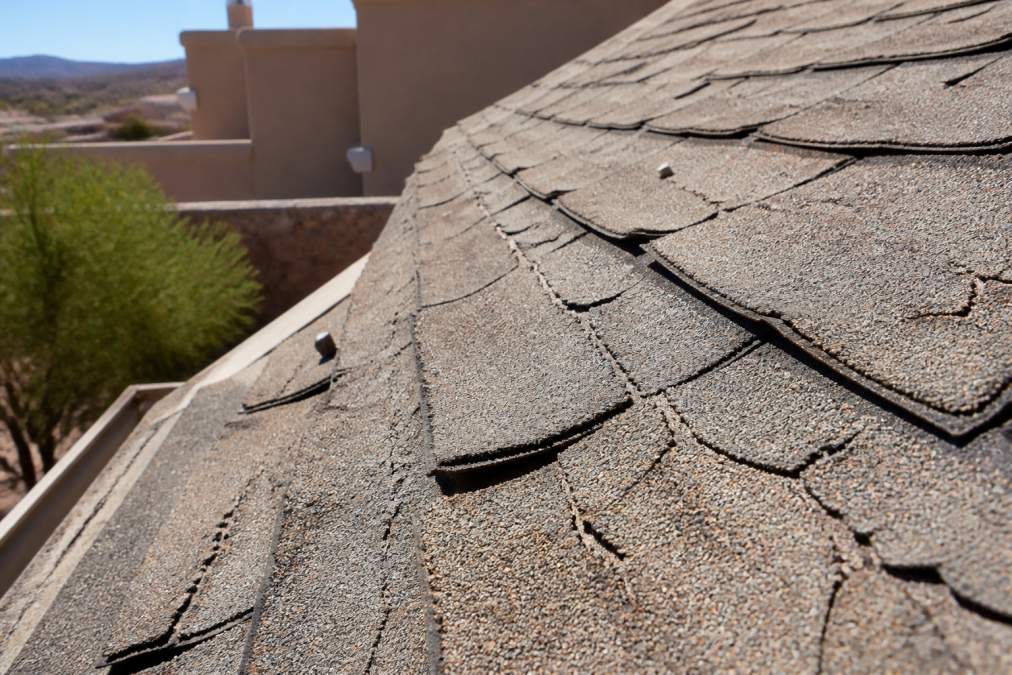
Rio Rancho sits at roughly 5,300 feet in elevation, which means UV radiation intensity is meaningfully higher than at sea level. Asphalt shingles lose their protective granules faster under sustained UV exposure, leaving the underlying substrate brittle and prone to cracking. Hail damage adds a separate layer of complexity. The monsoon season, typically July through September, brings sudden hailstorms that can dent metal flashing, crack brittle shingles, and compromise underlayment integrity in a single afternoon. According to the Insurance Information Institute's guidance on hail and wind damage claims, hail is one of the leading causes of homeowner insurance claims. Repair costs here are often higher than national estimates suggest because the underlying material degradation is more severe and widespread.
Roof Pitch, Square Footage, and Material Type
Three variables drive labor and material cost: roof pitch affects how safely and quickly a crew can work; square footage determines material volume; and roofing material determines both per-square cost and availability of matching stock. Asphalt shingles remain the most common material in the area and generally carry the most accessible repair costs. Flat roofs require different materials entirely, typically TPO, foam, or elastomeric coatings. A common mistake is requesting a repair quote without knowing your roof's square footage. Most contractors price per "roofing square" (100 square feet), so knowing your approximate roof area helps you evaluate whether a quote is reasonable.
Common Roof Repair Cost Estimates by Repair Type
Roof repair costs vary widely depending on what specifically needs fixing. The table below summarizes the main repair categories and their key cost drivers.
| Repair Type | Primary Cost Drivers | Typical Scope | Urgency Level |
|---|---|---|---|
| Shingle replacement | Material type, affected area, pitch | Partial or full section | Moderate |
| Flashing repair | Access difficulty, metal type | Valleys, vents, chimney | Moderate-High |
| Roof leak repair | Source identification, interior damage | Localized or widespread | High |
| Emergency tarping | Speed, tarp size, accessibility | Temporary coverage | Immediate |
| Flat roof coating | Roof size, coating system, condition | Full surface or patch | Preventative |
Shingle Replacement and Flashing Repair
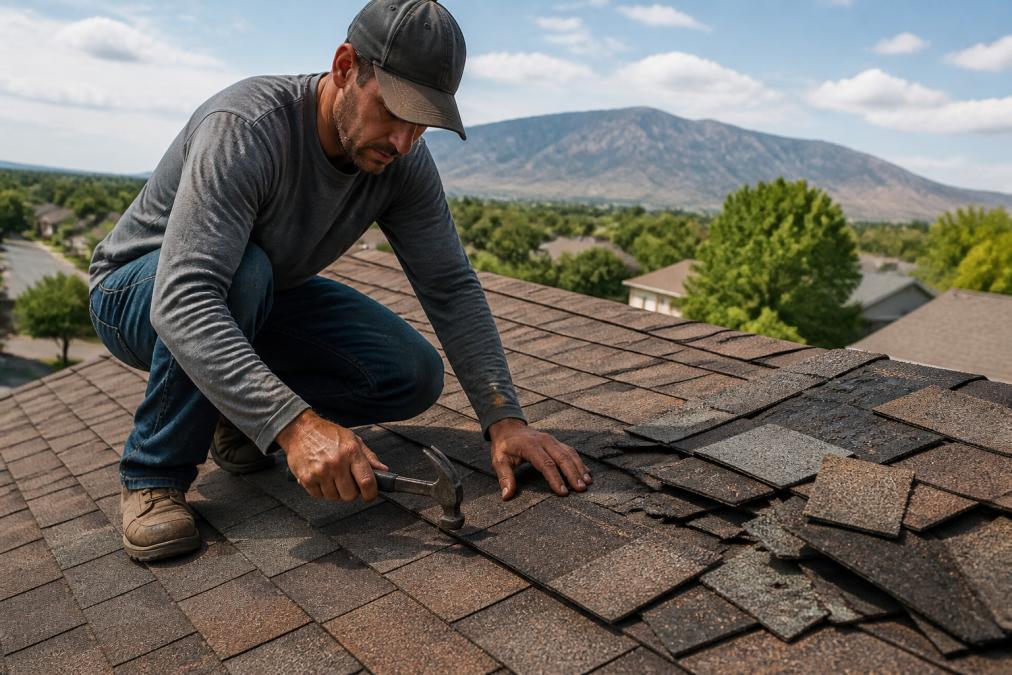
Shingle replacement is the most common repair type and also the one with the widest cost range. A small patch covering a few damaged shingles costs far less than a half-roof replacement, but the labor involved in matching existing shingles, removing damaged material, and inspecting the underlayment adds up quickly. Flashing repair is frequently overlooked but disproportionately responsible for roof leaks. Flashing is the metal barrier installed at roof penetrations, chimneys, vents, skylights, and valleys, and it's the first thing to fail when sealant degrades in extreme heat.
Roof Leak Repair and Emergency Tarping
Roof leak repair costs depend heavily on how long the leak has been active. A fresh leak caught within days typically involves a contained repair. A leak that has been seeping for months may have compromised decking, insulation, and interior framing, expanding the project scope significantly. Emergency tarping is a temporary measure that prevents further water intrusion while a permanent repair is scheduled. The source of a visible ceiling stain is almost never directly above it, water travels along rafters and decking before dripping. A professional leak diagnosis should trace the water path, not just patch the area directly above the stain.
Flat Roof Maintenance and Coatings
Flat roofs are common on Rio Rancho additions, casitas, and commercial properties, and they require a different maintenance approach than pitched roofs. Without adequate slope for drainage, standing water accelerates membrane degradation and creates persistent leak risk. Flat roof coatings, elastomeric, silicone, or foam-based systems, extend the membrane's service life and improve thermal performance. FRESH TEC's flat roof coating service uses a system that reflects 90% of UV rays, which reduces surface temperatures and the thermal cycling that causes membrane cracking. According to the U.S. Department of Energy's guidance on cool roofs, reflective roof coatings can reduce cooling energy consumption in hot climates.
Roof Rejuvenation Cost vs Replacement: Which Makes Sense?
Roof rejuvenation cost versus full replacement is the central financial decision most homeowners face when their roof starts showing age. Full replacement is the right call when structural decking is compromised, when more than 30-40% of shingles are cracked or missing, or when multiple layers of roofing already exist. Rejuvenation makes sense when the roof's structure is sound but the shingles have lost flexibility and granule adhesion due to UV and heat exposure. FRESH TEC's roof rejuvenation service uses patented GreenSoy Technology, a plant-based, non-toxic formula that restores the oils in asphalt shingles, extending their lifespan by 6 to 8 years. The service is backed by a 6-year warranty and costs up to 85% less than a full replacement.
Signs You Need Roof Repair Before It Gets Worse
Most roof failures develop gradually, and the window between "early repair" and "expensive structural remediation" is often just one or two monsoon seasons. Watch for these indicators:
- Granule accumulation in gutters: Granule loss is the earliest visible sign of shingle degradation. If gutters are filling with dark, sand-like material after rain, the shingles are losing their UV protection layer.
- Curling or cupping shingle edges: Shingles that curl upward at the edges or cup downward in the center have lost moisture balance and are vulnerable to wind uplift.
- Visible daylight in the attic: Any light visible through the roof deck during a daytime attic inspection indicates a breach that needs immediate attention.
- Water stains on ceilings or walls: Any interior water stain warrants a professional roof inspection.
- Sagging roof sections: Sagging indicates decking failure or structural compromise, moving beyond repair territory into replacement.
- Flashing gaps or rust: Visible rust, lifting, or gaps around any roof penetration is a reliable predictor of an active or imminent leak.
The common mistake is waiting for an active leak before calling anyone. By that point, the repair scope has almost always expanded.
Roof Inspection Checklist: What a Pro Should Assess
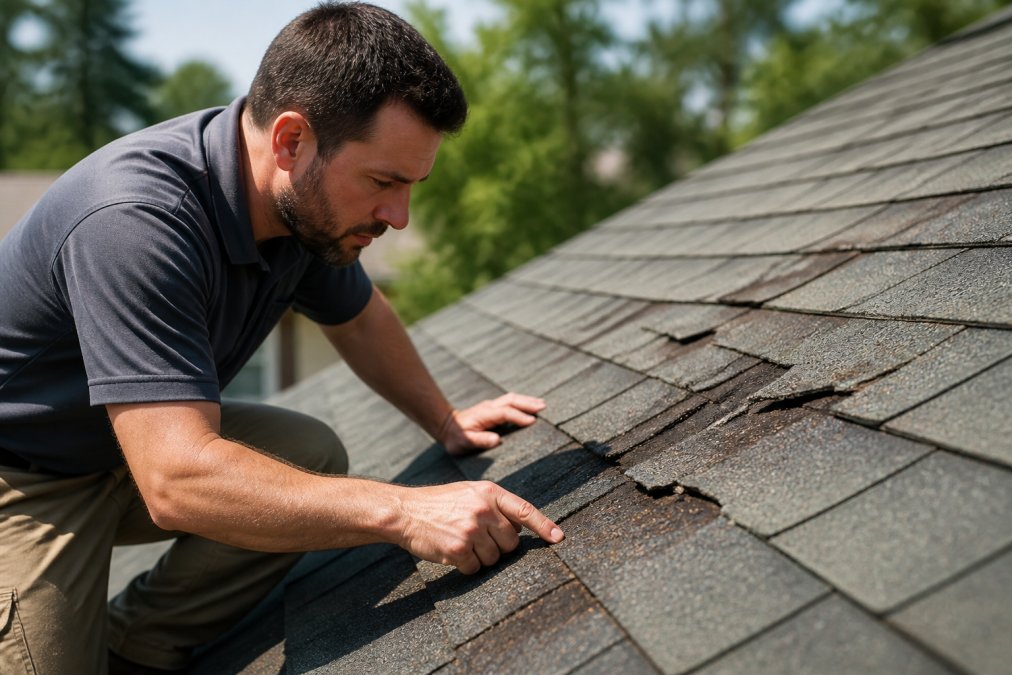
A professional roof inspection is the foundation of any accurate repair estimate. Without it, quotes are guesswork.
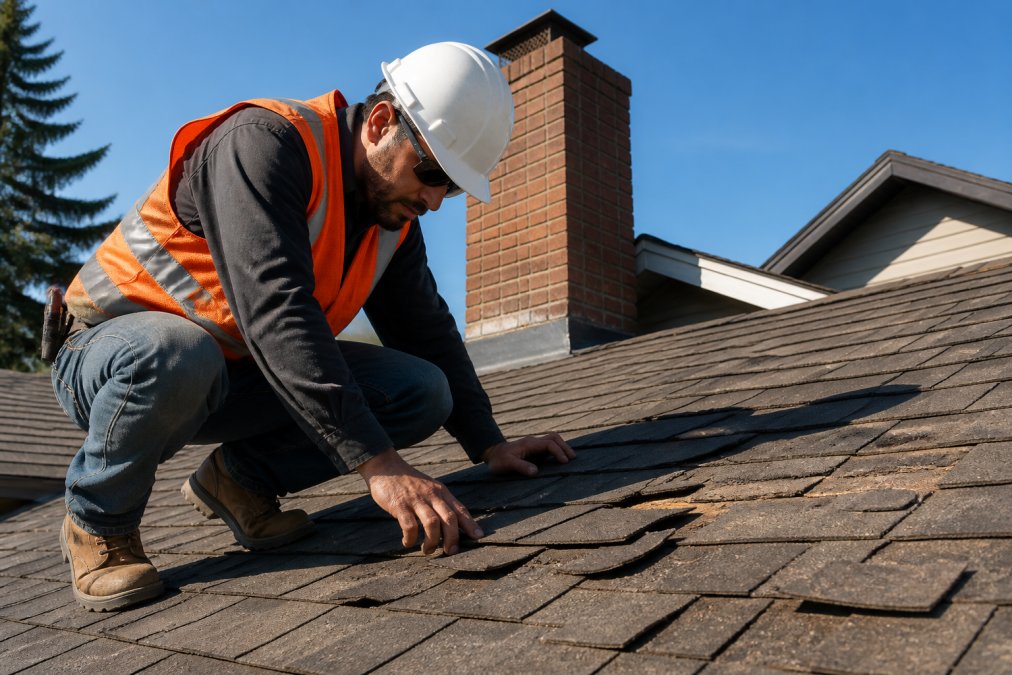
A thorough inspection should cover the following:
- Shingle condition: granule loss, cracking, curling, missing sections
- Underlayment integrity: visible through any lifted or missing shingles
- Flashing condition: all penetrations, valleys, and perimeter edges
- Decking assessment: soft spots, delamination, or visible sagging
- Gutter and drainage: blockages, improper slope, damage at fascia
- Attic ventilation: adequate airflow to prevent heat and moisture buildup
- Ridge and hip condition: these high-stress areas fail earlier than field shingles
- Roof penetrations: vents, pipes, skylights, and chimney bases
- Moss or algae growth: indicates moisture retention and accelerated degradation
A contractor who provides an estimate without accessing the roof surface is not giving you a real number. Insist on a physical inspection before accepting any quote.
How to Extend Roof Lifespan and Reduce Long-Term Costs
The most cost-effective roof strategy is not finding the cheapest repair, it's reducing the frequency and severity of repairs through consistent maintenance.
Preventative Maintenance and Roof Ventilation
Preventative maintenance for asphalt shingles in a high-UV climate centers on two priorities: keeping the surface clean and ensuring the attic is properly ventilated. Debris accumulation, particularly from juniper trees common in the area, holds moisture against shingles and accelerates granule loss. Gutter cleaning should be performed at least twice annually, ideally before and after monsoon season. Roof ventilation is frequently underestimated as a cost driver. Poor attic ventilation allows heat to build up against the underside of the decking, which accelerates shingle degradation from below while the sun attacks from above. According to the National Roofing Contractors Association's guidance on ventilation standards, proper attic ventilation is one of the most effective ways to extend roof lifespan in hot climates.
Insurance Claims and Energy Efficiency ROI
Insurance claim navigation is where many homeowners lose money they're entitled to recover. After a hail event, the window for filing a claim is typically one year from the date of damage, but most policies require you to demonstrate that damage was caused by a specific storm event, not general wear. The practical steps: document the storm date and cross-reference with local weather records; schedule a professional roof inspection within two weeks of the event; request a written inspection report that identifies storm-specific damage versus pre-existing wear; submit the inspection report with your claim rather than relying on the insurer's adjuster alone; and if the claim is disputed, a public adjuster can advocate on your behalf. A flat roof coating that reflects 90% of UV rays reduces the thermal load on your HVAC system during summer months.
How to Choose a Local Roofing Contractor
Choosing the right roofing contractor is as important as choosing the right repair approach. The local market includes contractors with widely varying levels of expertise, licensing, and warranty support. The criteria that matter most:
- State licensing: New Mexico requires roofing contractors to hold a valid contractor's license through the New Mexico Regulation and Licensing Department. Verify before signing anything.
- Insurance coverage: General liability and workers' compensation are non-negotiable. An uninsured crew on your roof is a liability you assume.
- Written warranty terms: Understand what the warranty covers, for how long, and what voids it. A verbal warranty is worth nothing.
- Local references: Ask for references from projects completed within the last 12 months in Rio Rancho specifically.
- Inspection before estimate: Any contractor quoting without a physical inspection is estimating blind.
- Transparent scope of work: The written proposal should specify materials by type and quantity, not just a total price.
The lowest bid is frequently not the best value. A contractor who cuts corners on underlayment or uses mismatched shingles creates problems that appear after the warranty period ends.
| Decision Factor | What to Look For | Red Flag |
|---|---|---|
| Licensing | Valid NM contractor license | No license number provided |
| Insurance | Liability + workers' comp | "We're covered" without documentation |
| Warranty | Written, specific terms | Verbal only or no warranty |
| Estimate process | Physical roof inspection | Quote given over the phone |
| Materials | Named brand, climate-appropriate | Vague material descriptions |
| References | Local, recent, verifiable | Out-of-state or unverifiable |
Roof repair decisions are rarely simple, especially in a climate that stresses materials harder than most. The gap between a minor repair and a full replacement often comes down to how early the problem is identified and whether the right maintenance strategy was in place beforehand. FRESH TEC's roof rejuvenation service, backed by patented GreenSoy Technology and a 6-year warranty, is built specifically for roofs that are aging but structurally sound. Book a free inspection with FRESH TEC to find out whether your roof qualifies and get a clear picture of your options before the next monsoon season arrives.
Frequently Asked Questions
How many estimates should I get for a roof repair?
Get at least three written roofing estimates before committing to any contractor. Multiple quotes let you compare labor rates, material costs, project scope, and warranty terms side by side. They also help you spot outliers, a quote that is dramatically lower than the others often signals cut-rate materials or shortcuts on underlayment and flashing. Request itemized breakdowns so you are comparing the same scope of work, not just a bottom-line number.
What is the 25% rule for roofing?
The 25% rule is a general guideline used by many roofing contractors and insurance adjusters: if repairing damaged sections would cover more than 25% of the total roof area, a full replacement often makes more financial sense than patching. At that threshold, the structural integrity and remaining roof lifespan of the undamaged sections are typically compromised enough that piecemeal repairs become a poor investment. Always confirm this assessment with a licensed roofing contractor after a thorough roof inspection.
Does roof rejuvenation offer a cost-effective alternative to replacement?
For qualifying asphalt shingle roofs that are aging but structurally sound, roof rejuvenation can cost up to 85% less than a full replacement while extending roof lifespan by 6 to 8 years. FRESH TEC's GreenSoy™ Technology replenishes the oils that desert heat and UV exposure strip from shingles, restoring flexibility and slowing granule loss. It is not a fit for every roof, significant structural damage or widespread shingle failure typically requires replacement, but for many homeowners it is a practical, lower-cost option.
What factors influence the cost of roof repairs in this region?
Several variables shape local roof repair cost estimates: roof pitch (steeper slopes require more labor and safety equipment), total square footage, the roofing materials involved (asphalt shingles cost less to repair than tile or metal), the extent of hail damage or storm damage, whether flashing repair or underlayment replacement is needed, and local labor rates. Building permits may also add to the total depending on project scope. Getting an on-site inspection rather than a phone estimate produces the most accurate roofing quote.
How often should solar panels be cleaned to maintain energy output?
In a dry, dusty climate with high UV exposure, solar panels typically need professional cleaning at least once or twice a year to maintain peak energy performance. Dust, pollen, and debris accumulation can noticeably reduce output over time. FRESH TEC offers solar panel maintenance as a convenient same-day add-on service, so homeowners can address both roof condition and panel performance in a single visit. Regular cleaning protects your solar investment and keeps efficiency losses to a minimum.