 listicle
Signs Your Roof Needs Rejuvenation: 7 Warning Signs
Table of Contents
- What Roof Rejuvenation Actually Does for Aging Asphalt Shingles
- 1. Granule Loss in Gutters and Downspouts
- 2. Curling Corners, Cracking, and Brittle Shingles
- 3. Faded or Chalky Shingles and Dark Algae Streaks
- 4. Ceiling Stains and Interior Moisture Signals
- 5. Asphalt Shingle Rejuvenation Cost vs. Full Replacement
- 6. How Long Does Roof Rejuvenation Last?
- 7. Sustainable Flat Roof Coating and Climate Considerations
- Frequently Asked Questions
Last Updated: September 17, 2026
What Roof Rejuvenation Actually Does for Aging Asphalt Shingles
Roof rejuvenation is a spray-applied treatment that restores flexibility to dried-out asphalt shingles, and it is the difference between a roof that fails this decade and one that keeps protecting your home for several more years. At FRESH TEC LLC., we restore asphalt shingles and driveways to extend their lifespan by 6-8 years at a fraction of the cost of replacement. The catch: it only works on roofs that haven't crossed the point of no return. Spotting the signs your roof needs rejuvenation early is what separates a cheap fix from an expensive one.
Asphalt shingles are manufactured with a blend of oils that keep them pliable. Sun and heat drive those oils out over time, and once the material dries out, it becomes brittle and starts shedding the mineral granules that shield it from UV rays. Rejuvenation reintroduces those oils, restoring shingle flexibility before the damage becomes structural.
Here are the seven warning signs worth acting on, and what each one actually tells you about your roof's condition.
1. Granule Loss in Gutters and Downspouts
Granule loss is the earliest and most reliable sign that your shingles are drying out. When you clean your gutters and find a layer of dark, sand-like grit, that material came off your roof, and it isn't coming back.
A small amount of granule shedding is normal on a new roof. A steady accumulation season after season means the asphalt is losing its protective coating, and the shingle underneath is now exposed to direct UV degradation.
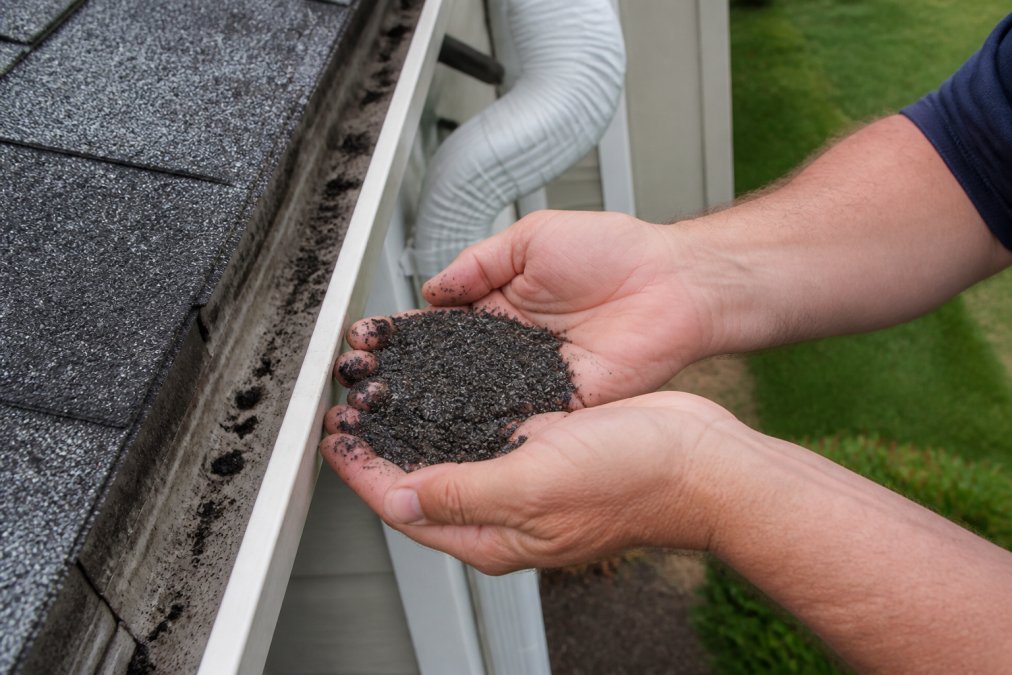
How to Check Your Gutters for Early Shingle Breakdown
- Run your hand along the bottom of the gutter channel and look for dark, sandy grit
- Check the splash zone at the base of each downspout for granule piles
- Compare the amount you find now to what you saw a year ago
- Look at the shingle surface itself for bare, black patches where granules have worn away
If you're finding grit but the shingles still lie flat with intact edges, you're in the window where rejuvenation makes sense. Once the surface is bare across large areas, the roof is too far gone.
2. Curling Corners, Cracking, and Brittle Shingles
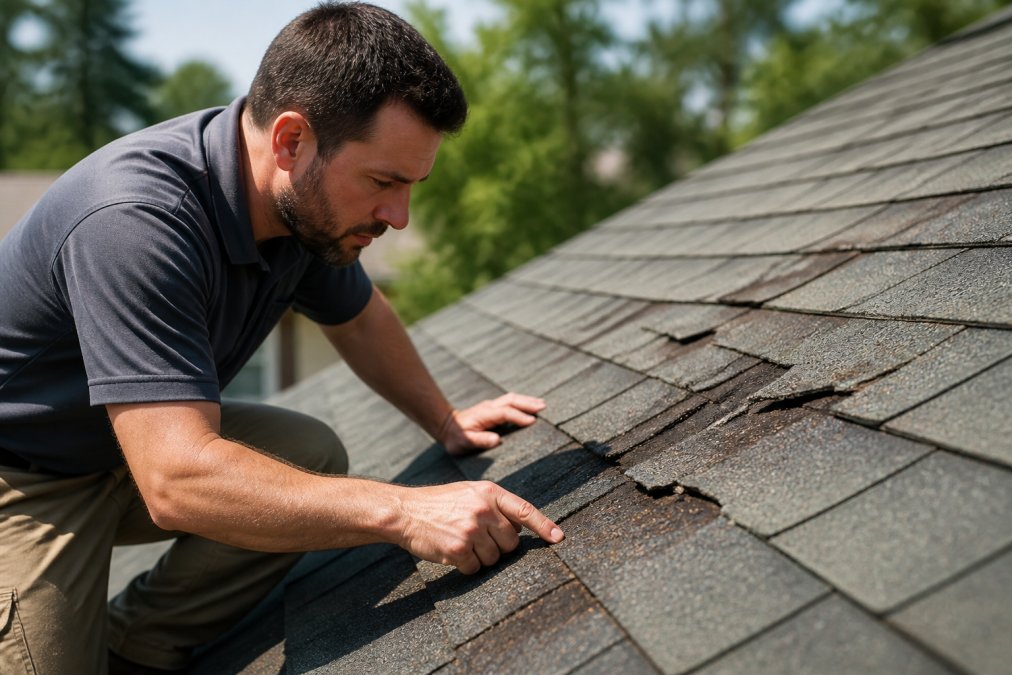
Curling corners and visible cracking mean the shingles have lost their flexibility entirely. This is the point where a rejuvenation treatment still has value, but the clock is running.
Walk your property after a cool morning and look up at the roof edges. Shingles that lift at the corners, cup upward, or show hairline cracks along the surface are telling you the asphalt has hardened. Thermal expansion and contraction cycles make this worse: each hot day and cool night works the brittle material until it splits.
A common mistake is waiting until a shingle blows off in a storm. By then you've got exposed roof deck and a water intrusion risk, not a maintenance problem.
3. Faded or Chalky Shingles and Dark Algae Streaks
A chalky texture on your shingles is oxidized asphalt, and it's a clear signal the surface has degraded. Fading alone is cosmetic, but chalkiness means the top layer is breaking down and no longer shedding water the way it should.
Dark algae streaks are a separate issue, though they often show up on the same aging roofs. The streaks themselves don't cause leaks, but they trap moisture against the shingle surface and accelerate wear. Cleaning and treating the roof restores both its appearance and its ability to shed water, which matters if you're getting a property show-ready.
4. Ceiling Stains and Interior Moisture Signals
Ceiling stains, damp attic sheathing, and a musty smell indoors are late-stage warnings. Water is already getting past the shingle layer, and that changes the decision.
Rejuvenation is a preventative treatment, not a repair. It restores flexibility and slows granule loss, but it cannot seal an active leak or rebuild a rotted roof deck. If you're seeing interior moisture signals, get a professional inspection before you spend a dollar on any coating. In some cases the leak traces back to flashing or a failed seal rather than the shingles themselves, and that's a different fix entirely.
5. Asphalt Shingle Rejuvenation Cost vs. Full Replacement
Roof rejuvenation costs a fraction of full replacement, which is the entire reason the category exists. Pricing depends on roof size, pitch, accessibility, and current shingle condition, so any honest provider will quote your specific roof rather than hand you a flat number. Visit FRESH TEC's service page for current pricing and a free inspection.
To frame the decision, it helps to understand the general shape of the numbers rather than a single figure.
| Factor | Rejuvenation | Full Replacement |
|---|---|---|
| Upfront cost | Fraction of replacement | Highest cost option |
| Time on site | Same-day service | Multiple days |
| Landfill waste | Minimal | Tons of old shingles |
| Adds to roof life | 6-8 years | Full new lifespan |
| Best for | Sound deck, aging shingles | Structural damage, active leaks |
| Warranty impact | May preserve existing coverage if applied per manufacturer guidelines | Resets warranty on new materials |
| Disruption | No tear-off noise or dumpster | Days of noise, debris, and landscaping risk |
The Warranty Question Most Homeowners Never Ask
Most asphalt shingle warranties are prorated and require the roof to be maintained in accordance with the manufacturer's published guidelines. Applying a third-party chemical treatment to a roof that is still under warranty can, in some cases, be read as an alteration that voids coverage for future granule-loss or manufacturing-defect claims.
A Simple Decision Framework
Use these questions in order. If you answer yes to the first two and no to the last two, rejuvenation is usually the better financial call.
- Is the roof deck sound, with no soft spots or active leaks?
- Do the shingles still have granules left across most of the surface?
- Is the roof already past its manufacturer warranty period, or has the manufacturer confirmed compatibility?
- Are you planning to replace the roof within the next two years regardless?
6. How Long Does Roof Rejuvenation Last?
Roof rejuvenation typically extends shingle life by 6-8 years when the roof is treated before structural damage sets in. That figure assumes the roof was a good candidate to begin with: intact deck, no active leaks, and shingles that still have granules left to protect them.
7. Sustainable Flat Roof Coating and Climate Considerations
A sustainable flat roof coating is a reflective, low-waste alternative to tearing off and replacing a flat roof, and it is the same logic that drives shingle rejuvenation: restore what is there instead of sending it to a landfill. Flat roofs and low-slope sections respond well to coating systems that seal seams and reflect heat, and on a steep-slope shingle roof the equivalent move is a rejuvenation treatment that restores flexibility and slows granule loss.
Climate Changes Whether Rejuvenation Is Worth It
This is where most guides stop at generalities, and where the real decision lives. Rejuvenation is not equally effective everywhere, and the dominant aging mechanism in your region determines whether it pays off.
The Takeaway on Climate
There is no single national answer to whether rejuvenation is worth it. The right question is which mechanism is aging your roof fastest, and whether rejuvenation addresses that mechanism. In high-UV markets it usually does. In wet, moss-heavy markets it helps but only after drainage and cleaning are handled. In every market, the treatment works best on a roof that is still structurally sound and still has granules to protect.
Frequently Asked Questions
Is roof rejuvenation a good idea for aging asphalt shingles?
It depends on the shingles' condition. Rejuvenation works well when shingles are drying out, losing granules, or becoming brittle but the roof deck is still sound and there are no active leaks. Petrochemical oils in rejuvenation treatments restore shingle flexibility and slow further breakdown. If shingles are curling severely, missing, or the deck has soft spots, replacement is the safer choice. A professional inspection confirms which path fits your roof.
What are the primary signs that a roof needs rejuvenation?
The clearest signs are granule loss collecting in gutters and downspouts, shingles that feel brittle or crack when bent, faded or chalky surfaces, curling corners, and dark algae streaks. Interior clues like ceiling stains or attic moisture also point to roof distress. If you notice two or more of these, schedule an inspection. Catching them early is what makes roof rejuvenation effective instead of a wasted expense.
How long does roof rejuvenation last, and does it really extend shingle life?
Professional rejuvenation treatments typically extend asphalt shingle life by 6 to 8 years when applied to shingles that still have structural integrity. The exact duration depends on climate, sun exposure, and the roof's condition at application. Treatments restore flexibility and reduce granule loss, which slows UV degradation and thermal expansion damage. Reapplication may be needed sooner in harsh conditions, so ask your provider about warranty terms.
How can I tell the difference between needing a new roof and rejuvenation?
Look at the extent of the damage. Rejuvenation suits roofs with surface-level aging: granule loss, brittleness, fading, and minor curling. Replacement is necessary when shingles are missing, the roof deck feels soft or spongy, there are active leaks, or damage covers a large area.