 listicle
Hiring Local Roof Maintenance Contractors: A 2026 Guide
Table of Contents
- How to Verify Contractor Licenses and Credentials
- Steps to Hire a Roofing Professional: What to Do Before Signing
- Questions to Ask Before Hiring a Roof Maintenance Contractor
- Roof Rejuvenation Cost vs Replacement: When to Choose Each
- Roof Maintenance Checklist for Homeowners: What Professionals Look For
- Understanding Roofing Warranties and Service Agreements
- Signs You Need Professional Roof Maintenance Now
- Comparing Local Roofing Quotes: What to Look For
- Frequently Asked Questions
Last Updated: September 27, 2026
How to Verify Contractor Licenses and Credentials
Verify any local roof maintenance contractors' licenses by checking your state's licensing board website, which maintains searchable databases showing active licenses, disciplinary history, and complaints. A valid license proves the contractor has met state requirements and understands building codes and safety standards.
Ask for the license number directly and verify it yourself. Cross-reference the name on the license with the business name; discrepancies should be clarified.
Check complaint histories on the state licensing board. A few complaints over many years is normal; a pattern of unresolved issues is a warning sign. Ask the contractor directly about complaints and listen to how they explain and resolved them.
Steps to Hire a Roofing Professional: What to Do Before Signing
The hiring process for a roofing professional shouldn't be rushed. Take time to gather information, compare options, and ask the right questions before committing to any contract. A structured approach protects you from costly mistakes and ensures you're working with someone qualified and reliable.
Gather Multiple Service Estimates
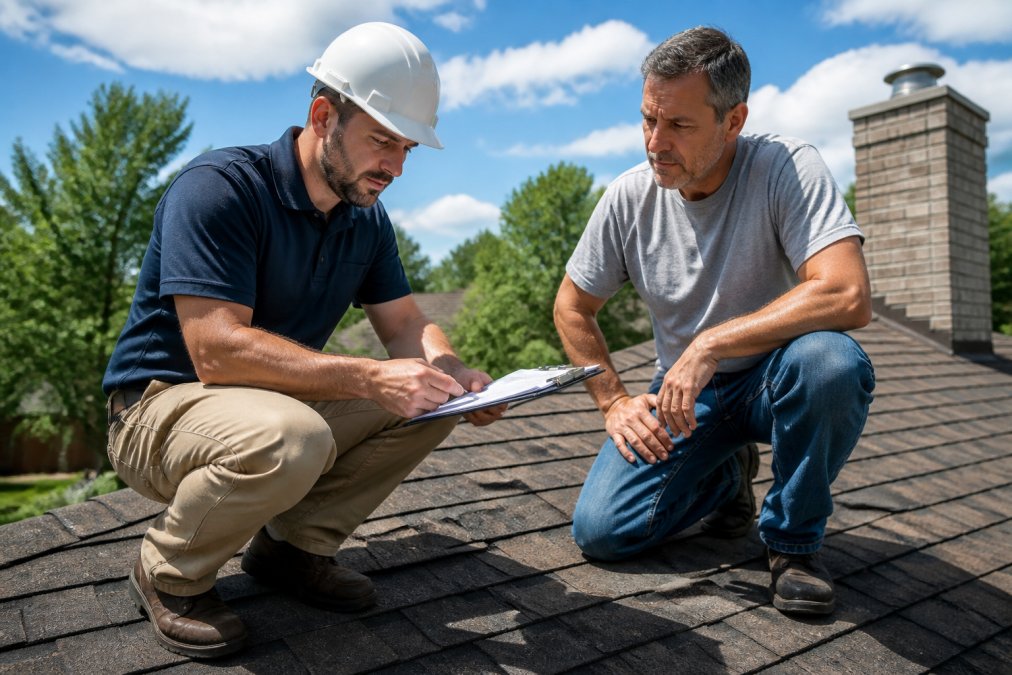
Request detailed estimates from at least three contractors, breaking down labor, materials, equipment, and timeline. This allows you to compare pricing, scope, and materials.
If one estimate is significantly lower, ask why, it may indicate efficiency or corner-cutting. The highest estimate isn't always best; seek fair pricing matched with qualified work.
Check Insurance and Bonding
Before hiring a local roof maintenance contractor, verify they carry liability insurance and workers' compensation coverage. Request a current certificate of insurance; don't accept verbal assurances.
Bonding is equally important. A performance bond guarantees completion; a payment bond ensures suppliers and subcontractors are paid (Surety bonds). If a contractor can't provide proof of bonding, that's a significant concern.
Review Local References and Past Work
Ask for references from recent clients in your area. Call at least two and ask: Was work completed on time? Did the contractor communicate well? Would you hire them again?
Beyond references, ask to see photos of completed projects similar to yours. This gives you a visual sense of their work quality. If possible, drive by a completed project in person. You'll see how the roof looks months after installation, not just in fresh photos.
Questions to Ask Before Hiring a Roof Maintenance Contractor
Ask: "How long have you been in business?" and about their experience with your specific roof type, as asphalt shingles, metal, flat roofs, and tile each have different requirements.
Ask: "What warranty do you offer?" A quality contractor backs their work with a written warranty covering both labor and materials. At FRESH TEC LLC., we stand behind our work with an industry-leading 6-year warranty.
Ask: "Will you pull the necessary permits?" A contractor who avoids permits is cutting corners.
Roof Rejuvenation Cost vs Replacement: When to Choose Each
Rejuvenation extends an existing roof's life through treatments that restore shingles and improve water resistance. Replacement removes the old roof and installs new materials. The decision hinges on current condition, remaining lifespan, and cost-benefit analysis.
Cost Breakdown by Roof Type and Service
Rejuvenation can be a fraction of the cost of replacement. Replacement costs vary significantly based on materials and complexity.
Lifespan and ROI Calculation
If your roof is 8-12 years old with cosmetic wear but no structural damage, rejuvenation can extend its life 6-8 years. Investing in rejuvenation now can help avoid significant replacement costs in the future.
When Rejuvenation Makes Financial Sense
Rejuvenation is the smart choice when:
- The roof is 8-14 years old and structurally sound
- Cosmetic wear is visible (fading, minor granule loss) but no leaks are present
- You plan to stay in the home for at least 5-7 more years (to recoup the investment)
- The cost of rejuvenation is less than 30% of the replacement cost for your roof type
Replacement is necessary when:
- The roof is 18+ years old or showing active leaks
- Structural damage, rot, or mold is present
- Multiple shingles are missing or curled significantly
- The cost of repeated repairs over the next 2-3 years would exceed 50% of replacement cost
- You're selling your home soon and need a roof that will pass inspection and appraisal
Seasonal Timing and Cost Variation
Seasonal demand can influence contractor availability and pricing. Winter may offer savings, but weather delays are common.
Roof Maintenance Checklist for Homeowners: What Professionals Look For
| Maintenance Task | Frequency | What to Look For |
|---|---|---|
| Visual inspection from ground | Quarterly | Missing shingles, visible damage, debris accumulation |
| Gutter cleaning | Twice yearly | Leaves, dirt, standing water, gutter separation |
| Flashing inspection | Annually | Rust, gaps, separation from roof surface |
| Shingle condition check | Annually | Curling, brittleness, granule loss, algae growth |
| Chimney and vent inspection | Annually | Cracks, loose mortar, gaps around penetrations |
| Attic inspection | Semi-annually | Water stains, mold, adequate ventilation |
| Professional inspection | Every 2-3 years | Comprehensive evaluation by qualified contractor |
Look for missing shingles, visible damage, and debris from the ground. Check gutters twice yearly, especially after storms and in fall, to prevent water backup.
Understanding Roofing Warranties and Service Agreements
Most roofing warranties fall into two categories: manufacturer warranties on materials and contractor warranties on labor. Understanding what's covered prevents disputes.
Signs You Need Professional Roof Maintenance Now
Missing shingles, curling edges, or significant granule loss compromise your roof's protective layer. Algae growth or dark streaks indicate moisture retention and degradation.
Comparing Local Roofing Quotes: What to Look For
When comparing quotes from local roof maintenance contractors, look beyond price. Evaluate scope, quality, timeline, and long-term value.
Standardize the Scope Across All Quotes
A quality quote itemizes labor, materials, equipment, and timeline. Ask each contractor to quote the same scope so you're comparing apples to apples.
Material Specifications and Quality Tiers
Compare material specifications. Cheaper materials cost less upfront but fail sooner. Over the roof's lifetime, quality materials often cost less than repeated cheap repairs.
Warranty Comparison Matrix
Compare warranty terms carefully. A 10-year labor warranty provides better protection than 5 years and reflects the contractor's confidence in their work.
| Contractor | Labor Warranty | Material Warranty | Transferable | Exclusions |
|---|---|---|---|---|
| Contractor A | 5 years | Manufacturer (15 years) | No | Storm damage |
| Contractor B | 10 years | Manufacturer (20 years) | Yes | Improper maintenance |
| Contractor C | 7 years | Manufacturer (15 years) | Yes | Neglect, alterations |
Timeline and Availability Considerations
Consider the contractor's timeline and availability. Can they start when needed? Unexpected delays cost money. Realistic timelines demonstrate professionalism.
Red Flags in Quote Comparison
If one quote is 20-30%+ below average, investigate why. It may indicate efficiency, lower-quality materials, corner-cutting, or inexperience.
Create a Scoring System
Create a scoring system weighting factors that matter most: Cost (25%), Warranty (25%), Materials (20%), Timeline (15%), References (15%). Score each contractor 1-10 per factor, multiply by weight, and total. This removes emotion and ensures consistent evaluation.
Frequently Asked Questions
How do I verify a roofing contractor's license in New Mexico?
Contact the Construction Industries Commission (CIC) in New Mexico to verify a contractor's license status. You'll need the contractor's name or license number. Ask the contractor for their license number upfront, then cross-reference it with the CIC database. Licensed and insured contractors are required to display their credentials. Verify that the license is active and matches the service area you need (residential roofing, flat roof coatings, or specialized work like gutter maintenance).
What's the difference between roof rejuvenation and roof replacement?
Roof rejuvenation uses specialized treatments to restore the flexibility and waterproofing of existing shingles, extending their lifespan by several years at a fraction of replacement cost. Replacement removes old materials entirely and installs new roofing. Rejuvenation works best on roofs showing early wear with no structural damage. If shingles are curling severely, leaking, or the underlying structure is compromised, replacement is necessary. Ask your contractor to assess whether your roof's structural integrity supports rejuvenation or requires full replacement.
What should I look for in a roof maintenance checklist?
A professional roof maintenance checklist covers shingle condition, flashing integrity, gutter cleanliness, roof ventilation, moss or algae growth, and water stains inside the attic. Seasonal maintenance includes spring inspections after winter storms, summer checks for UV damage, fall gutter cleaning before leaves accumulate, and winter preparation. Ask your contractor for a written maintenance plan that outlines what they'll inspect, how often, and what preventative steps they recommend. This protects your investment and catches small issues before they become costly repairs.
How often should I hire a professional for roof maintenance?
Most roofing professionals recommend annual inspections, ideally in spring after winter weather and fall before the rainy season. If your roof is older than 10 years, storm-damaged, or in a harsh climate, twice-yearly inspections are wise. After severe weather like hail or high winds, request an emergency inspection immediately. A licensed and insured roofing contractor can create a maintenance schedule tailored to your roof's age, material, and local weather patterns, helping you avoid unexpected failures.