 Comparison
7 Eco Friendly Roof Restoration Options for Homes
Last Updated: November 7, 2026
Quick Summary
Eco friendly roof restoration renews your existing roof instead of tearing it off, using options like asphalt shingle rejuvenation, reflective or plant-based coatings, and recycled materials. Repair or restore when the deck is solid and damage is surface-level, and replace only when the structure or flashing is failing.
- Asphalt shingle rejuvenation uses plant-based GreenSoy Technology and is designed to extend shingle life by 6 to 8 years.
- Match the coating to the roof type first, then to the climate, since reflective coatings perform best on flat roofs.
- Request the manufacturer's product data sheet to verify recycled content percentages before committing to recycled materials.
- A white coating over a sound flat roof can deliver much of the cool roof benefit without a tear-off.
- FRESH TEC LLC offers a free roof inspection to determine whether rejuvenation, a coating, or replacement is right.
Table of Contents
- Eco Friendly Roof Restoration Options for Homes: What Actually Works
- Roof Repair vs. Replacement: The Decision That Comes First
- Asphalt Shingle Roof Rejuvenation: Restoring What You Already Have
- Roof Coatings for Homes: Reflective and Plant-Based Formulas Compared
- Recycled Roofing Materials: Shingles, Tiles, and Rubber for Flat Roofs
- Cool Roofs, Green Roofs, and Solar: When Replacement Makes Sense
- Lifecycle Costs and Environmental Impact: Restoration vs. Tear-Off
- Book a Free Roof Inspection with FRESH TEC LLC
- Frequently Asked Questions
Eco Friendly Roof Restoration Options for Homes: What Actually Works
Most homeowners assume a worn asphalt roof means a five-figure tear-off. It often doesn't. Roof restoration is the practice of renewing an existing roof surface, through rejuvenation treatments, reflective coatings, or targeted repair, instead of stripping it down to the deck and starting over. At FRESH TEC LLC, we have built our entire service around that idea: keep the roof you have when the structure is still sound.
The stakes are real. A 2026 market estimate published by Business Research Insights' roof restoration market outlook values the roof restoration service market at USD 1.36 billion, heading toward USD 2.97 billion by 2035. Homeowners are catching on because restoration skips the landfill haul and the dumpster.
Below, we break down seven eco friendly roof restoration options for homes, from shingle rejuvenation to cool roof coatings, with the trade-offs that actually decide the job.
Roof Repair vs. Replacement: The Decision That Comes First
Repair or restore when the roof deck is solid and the damage is surface-level. Replace when the structure, flashing, or widespread shingle failure says the roof is past saving. That single test settles most of the argument.
Walk outside and look for the warning signs:
- Granules collecting in gutters and at downspouts
- Shingles that curl, crack, or lose their tabs
- Soft or spongy spots underfoot on the deck
- Daylight or water stains showing through the attic sheathing
- Rusted or lifted flashing around chimneys and vents
If you are weighing both paths, our comparison of roof rejuvenation vs roof replacement lays out the decision in plain terms. What most guides miss is that "repair" and "restore" are not the same job. A repair fixes one failure. Restoration treats the whole surface so the next failure waits longer. Watch out: coating over a roof with active leaks or rotten decking traps moisture and makes the eventual replacement more expensive.
Asphalt Shingle Roof Rejuvenation: Restoring What You Already Have
Asphalt shingle roof rejuvenation is a spray-applied treatment that replenishes the oils asphalt shingles lose to sun and weather, restoring flexibility to shingles that are drying out but not yet failing. It is the least disruptive eco friendly option on this list because nothing gets torn off.
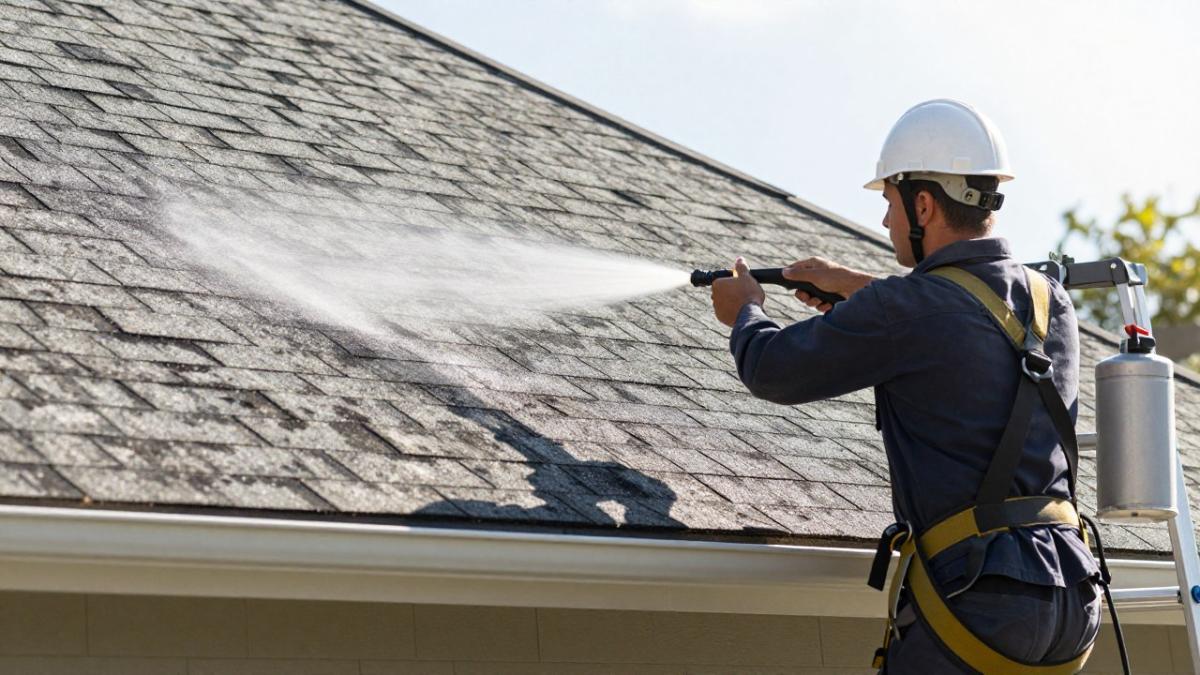
Our FRESH ROOF TREATMENT uses patented, plant-based GreenSoy™ Technology and is designed to extend shingle life by 6 to 8 years. No tear-off means no shingle waste headed to the landfill. The treatment is backed by a 6-year warranty.
Roof Coatings for Homes: Reflective and Plant-Based Formulas Compared
Roof coatings are liquid-applied membranes that seal and protect a roof surface, and the formula you pick changes both the reflectivity and the environmental profile. Two families dominate: reflective white coatings and plant-based restorative formulas.
Here is how they line up:
| Coating Type | What It Does | Best For | Watch For |
|---|---|---|---|
| Reflective white elastomeric | Reflects solar heat, seals seams | Flat and low-slope roofs | Needs a clean, dry surface |
| Silicone white coating | High reflectivity, ponding resistance | Flat roofs with standing water | Higher material cost |
| Plant-based restorative | Replenishes shingle oils | Asphalt shingle roofs | Only works on sound shingles |
| Acrylic reflective | Budget-friendly cooling layer | Mild climates, low traffic | Shorter service life |
For a deeper look at the plant-based side, our guide to the benefits of plant based roof coatings covers composition and performance. The practical takeaway: match the coating to the roof type first, then to the climate. A reflective coating on a steep shingle roof does far less than the same coating on a flat roof baking in the sun.
Recycled Roofing Materials: Shingles, Tiles, and Rubber for Flat Roofs
The category covers recycled-content asphalt shingles, reclaimed clay and concrete tiles, EPDM rubber roofing often made from recycled tires, and recycled metal. The useful question is not whether these materials are greener in the abstract, but whether they belong on your roof at all, and how to verify the recycled content you are paying for.
Here is how the main categories compare on the factors that actually decide a job:
| Material | Typical Recycled Content | Best Application | Service Life Expectation | Verification to Request |
|---|---|---|---|---|
| Recycled-content asphalt shingles | Post-consumer and post-industrial shingle material blended into new product | Full replacement on steep-slope roofs | Comparable to standard asphalt shingles | Manufacturer specification sheet stating recycled content percentage |
| Reclaimed clay and concrete tiles | Salvaged tile from demolition | Replacement or repair on tile roofs | Decades, if tiles are intact | Source documentation and inspection for cracks or freeze damage |
| EPDM rubber | Recycled tire content in many products | Flat and low-slope roofs | Long service life with proper seam care | Product data sheet listing recycled content and warranty terms |
| Recycled metal | High recyclability at end of life; recycled content varies by mill | Standing seam and metal roofs | Very long service life | Mill certification and recycled content disclosure |
- Recycled shingles: manufacturers blend post-consumer shingle material into new products, cutting virgin asphalt demand. Ask for the recycled content percentage in writing, because the range across products is wide and marketing language often outruns the spec sheet.
- Reclaimed clay and concrete tiles: salvaged tiles from demolition keep durable material in service for decades. Availability depends on what is coming out of nearby buildings, so lead times are unpredictable.
- EPDM rubber roofing: durable, weather-resistant, and a common choice for flat roofs, frequently made with recycled tire content. Seam quality and proper adhesive application matter more than the recycled percentage for long-term performance.
- Recycled metal: standing seam metal roofing is highly recyclable at end of life, which matters for lifecycle impact even when the new product contains modest recycled content.
The catch is availability and verification. Reclaimed tile depends on regional demolition supply, and recycled-content shingles are not stocked everywhere. A common pattern is that contractors quote "recycled" without documenting the percentage, so request the manufacturer's product data sheet before you commit.
Watch out: these materials shine on flat roofs and full replacements, not on restoring the shingle roof you already have. If your existing roof is sound, a restoration treatment keeps the material in place and avoids the manufacturing and transport impacts of a new assembly entirely, which is usually the lower-impact path.
Cool Roofs, Green Roofs, and Solar: When Replacement Makes Sense
Replacement makes sense when you are upgrading to a system that only works as new construction: a cool roof membrane, a living roof, or solar. These are not restoration options. They are replacements with a sustainability payoff, and the decision should rest on measurable performance and structural reality rather than on the appeal of the label.
A cool roof uses high solar reflectance and thermal emittance to bounce heat away, which lowers attic heat and cooling demand. The two numbers that matter are solar reflectance (how much sunlight the surface reflects) and thermal emittance (how readily it releases absorbed heat).
A green roof, also called a living roof, puts soil and plants over a waterproof membrane, adding insulation and managing rainwater runoff. The EPA's green roof case study for Kansas City shows how to estimate the environmental and health effects of a green roof using accessible tools, which is a reasonable way to sanity-check the payoff before committing.
Solar roofing turns the roof surface into power generation. The roof must be sound first, because panels outlive many roofs and removing them for a later replacement adds cost. If your roof is near the end of its life, replacing it before going solar is usually the cheaper sequence.
Here is the practical framework for choosing between restoration and these replacement systems:
- Sound flat roof, heat is the problem: a white elastomeric or silicone coating delivers reflectivity without a tear-off. Our flat roof coating service covers these systems.
- Sound roof, you want power generation: solar is viable, but confirm remaining roof life first.
- Roof at end of life, you want a cool roof: a reflective membrane replacement makes sense because you are replacing anyway.
- You want stormwater management and insulation and the structure can carry the load: a green roof is the option, engineered as a full assembly.
Lifecycle Costs and Environmental Impact: Restoration vs. Tear-Off
Tear-off wins when the roof is failing, because you only pay once instead of paying to restore and then replace.
Restoration keeps the existing assembly in place and adds only the treatment or coating. Researchers publishing in Sustainability's roof refurbishment strategy study examined the factors that drive refurbishment decisions, and the recurring theme is that condition assessment should lead the choice, not habit.
One caution on vendor claims: a manufacturer page claims roof rejuvenation keeps 1 to 3 tons of shingle waste out of the landfill per home, but that figure is vendor-published, not independently verified. Treat it as directional. For a full cost breakdown, see our cost of roof restoration vs replacement guide. A common mistake is comparing only the invoice. Add disposal fees, material lifespans, and repeat maintenance to get the real number.
Book a Free Roof Inspection with FRESH TEC LLC
The only way to know which eco friendly option fits your roof is to have someone qualified look at it. FRESH TEC LLC is a local, veteran-owned business serving homeowners, realtors, and property managers in Albuquerque and Rio Rancho.
We offer a free roof inspection so you get a straight answer on whether rejuvenation, a coating, or replacement is the right call. Realtors and property managers trust us to get exteriors show-ready. You can learn more about FRESH TEC LLC.
Our services include roof rejuvenation with GreenSoy™ Technology, flat roof coatings, gutter cleaning, and solar panel maintenance, all backed by a 6-year warranty. If your roof is drying out but still has life in it, restoration is worth a look before you sign a tear-off contract.
Your roof is not getting younger, and the next monsoon season will find every weak spot.
Frequently Asked Questions
Can an existing roof be restored instead of replaced?
Often, yes. If the roof structure is sound and the shingles are aging but not failing, restoration can add years of service. Asphalt shingle roof rejuvenation works by replenishing the oils that weathering strips out, and the supplied brand description says FRESH ROOF TREATMENT extends shingle life by 6-8 years. A free inspection confirms whether your roof qualifies or whether damage has gone too far.
How does roof rejuvenation differ from roof replacement?
Replacement tears off the old shingles and installs a new roof, which sends the old material to a landfill. Rejuvenation treats the existing shingles in place. For asphalt shingle roof rejuvenation, the treatment restores flexibility and extends lifespan, while replacement resets the clock entirely. Restoration costs less and avoids waste, but it only works on roofs that still have a sound structure and shingles that are not curled or missing.
Are roof coatings suitable for every type of roof?
No. Roof coatings for homes are matched to the roof material and condition. Reflective and plant-based coatings suit asphalt shingles and flat roofs, while clay tiles, slate, and metal need different approaches. A coating applied to a failing roof traps problems underneath. An inspection should confirm the substrate is stable, clean, and compatible before any coating goes on.
When is roof repair better than replacement?
Repair wins when damage is isolated, such as a few missing shingles or a small leak, and the rest of the roof is holding up. Replacement makes sense when shingles are curling across large areas, the deck is soft, or leaks keep returning. The roof repair vs. replacement call comes down to how much of the roof is failing and whether restoration can buy meaningful time before a full tear-off.