 how-to
Albuquerque Residential Roof Maintenance Services: 2026 Guide
Table of Contents
- What Albuquerque Residential Roof Maintenance Services Actually Cover
- Your Residential Roof Inspection Checklist for High Desert Homes
- Roof Rejuvenation Services vs. Full Replacement
- The Cost of Roof Maintenance vs Replacement
- How Local Climate Shapes Roof Longevity and Material Choice
- DIY vs. Professional Roof Maintenance Checklist
- Gutters, Flat Roofs, and Solar Panels: Add-On Maintenance That Pays Off
- Choosing Albuquerque Residential Roof Maintenance Services
- Frequently Asked Questions
Last Updated: September 12, 2026
What Albuquerque Residential Roof Maintenance Services Actually Cover
Albuquerque residential roof maintenance services are scheduled professional visits that inspect, clean, repair, and protect a home's roofing system before small problems become structural ones. This guide from FRESH TEC breaks down what those services include, what they cost relative to replacement, and how to choose a provider. The high-desert climate makes the question urgent: intense UV exposure, monsoon hail, and dramatic day-to-night temperature swings age roofing materials faster here than in milder regions (energy.gov).
A roof is the single largest structural asset on most homes, and it takes the brunt of every weather event the region delivers. Below, we'll show you exactly what a thorough maintenance visit covers and where most homeowners overspend.
What a standard maintenance visit includes:
- Full roof inspection, including attic ventilation and decking where accessible
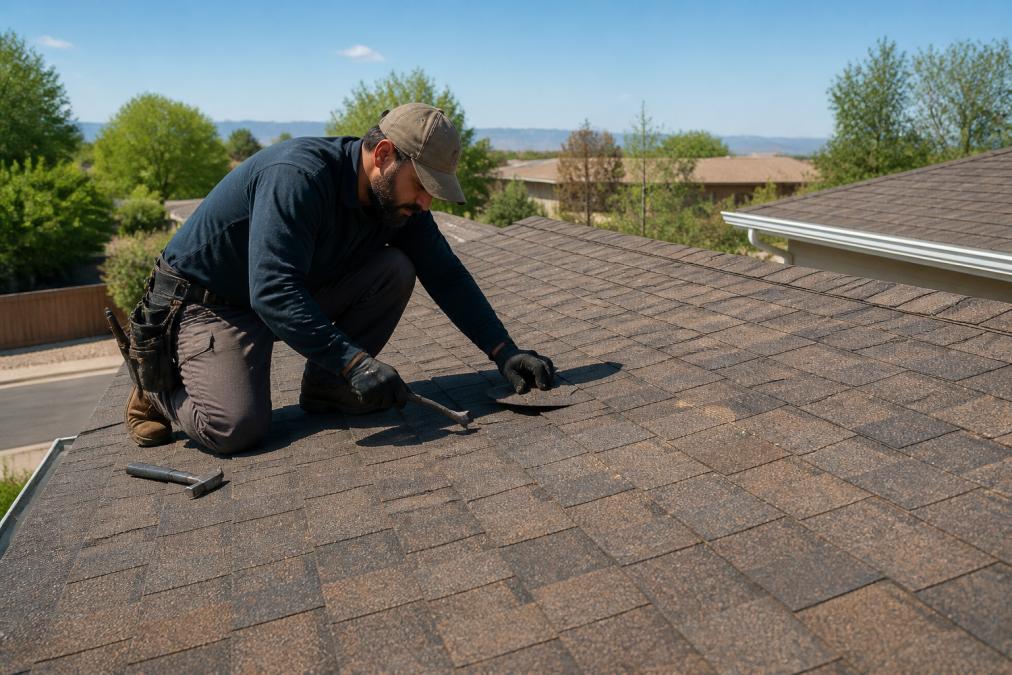
- Shingle replacement for cracked, curling, or missing tabs
- Flashing repair around vents, chimneys, and skylights
- Leak detection using moisture meters and visual tracing
- Debris removal and gutter maintenance
- A written roofing inspection report with photos and prioritized recommendations
Most full-service providers bundle these into a recurring plan. According to the National Roofing Contractors Association's maintenance guidance, scheduled inspections are the most reliable way to catch failures before they reach the decking, where repair costs escalate sharply.
Your Residential Roof Inspection Checklist for High Desert Homes
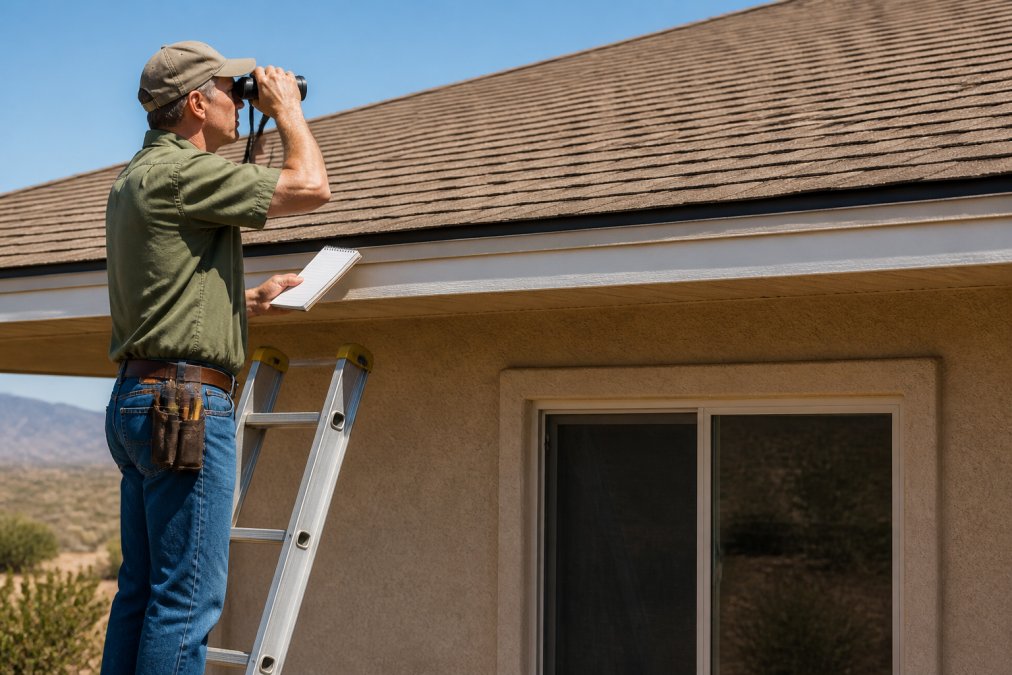
A residential roof inspection checklist for this climate starts with the failure points that UV and temperature swings attack first: sealant lines, flashing joints, and south- and west-facing shingle fields. You can verify a surprising amount from the ground before anyone climbs a ladder.
What to Check From the Ground
- Granule loss: Check gutters and downspout splash zones for accumulated shingle granules. Heavy granule shedding means the shingles are near the end of their protective life.
- Curling or cupping: Look along the roof edges and ridge line for shingles lifting at the corners.
- Flashing condition: Inspect metal flashing around chimneys and vents for rust, separation, or lifted caulk.
- Gutter alignment: Sagging gutters or staining on the fascia point to water backing up under the roof edge.
- Ceiling stains: Any discoloration on interior ceilings after a monsoon storm warrants a professional look.
What a Professional Roofing Assessment Adds
A licensed inspector brings what your ladder cannot: attic-side ventilation checks, moisture readings inside the decking, and a documented roofing inspection report you can hand to an insurer or a buyer. A common mistake is hiring the same company to inspect and repair without a second opinion on large jobs.
Roof Rejuvenation Services vs. Full Replacement
Roof rejuvenation services extend the life of asphalt shingles that are aging but not yet failing. The process applies a penetrating treatment that restores flexibility to dried-out shingles and re-binds loose granules, typically buying years of additional service at a fraction of replacement cost.
The dividing line is condition, not age. If shingles are curling badly, missing tabs across large areas, or the decking is soft, rejuvenation is the wrong tool.
| Roof Condition | Recommended Path | Why |
|---|---|---|
| Shingles intact, granule loss starting | Rejuvenation | Restores flexibility before cracking begins |
| Isolated cracks and lifted tabs | Rejuvenation plus targeted shingle replacement | Cheaper than full tear-off |
| Widespread curling, soft decking | Full replacement | Structural repair is unavoidable |
| Active leaks with interior damage | Full replacement | Rejuvenation cannot fix water intrusion |
FRESH TEC's roof rejuvenation uses patented GreenSoy™ Technology, a plant-based formula that extends roof life by 6-8 years and costs up to 85% less than a full replacement. The service carries a 6-year warranty.
The Cost of Roof Maintenance vs Replacement
The cost of roof maintenance vs replacement comes down to timing and scope: routine maintenance is a recurring, predictable expense, while replacement is a large one-time capital cost that arrives sooner when maintenance is skipped. Every year of deferred upkeep shortens the roof's remaining service life, and the math usually favors maintenance until the roof crosses a condition threshold, not an age threshold.
What Drives the Cost of Roof Maintenance vs Replacement
- Roof size and pitch: Steeper, larger roofs take longer and require more safety equipment.
- Material type: Asphalt shingles, tile, and flat membrane systems carry different labor and material costs.
- Access: Two-story homes, tight lots, and solar arrays add setup time.
- Extent of damage: A maintenance visit with minor repairs prices very differently from one that uncovers decking rot.
- Add-on services: Gutter cleaning, solar panel maintenance, and flat roof coatings change the total.
The Break-Even Logic
The useful way to think about it is cost per year of remaining service life. A maintenance plan spreads a modest recurring cost across the years it adds to the roof. A replacement concentrates a large cost into a single event and resets the clock. When a roof still has years of serviceable life, maintenance almost always wins on cost per year. When the decking is soft or leaks are active, maintenance is throwing money at a structure that needs replacement, and the sooner that decision is made, the less interior damage accrues.
A few patterns hold across most homes:
- Rejuvenation and coatings are typically the lowest-cost intervention and are best applied before cracking begins, not after.
- Targeted repairs (isolated shingles, flashing, sealant) are inexpensive relative to their impact when caught early.
- Deferred maintenance is the most expensive path, because water intrusion reaches decking and framing, turning a repair into a structural job.
Getting a Real Number
Pricing depends on your roof's size, condition, and the services selected, so request a written roofing estimate rather than comparing phone quotes. A written scope should list what will be inspected, what will be repaired, and what is excluded. FRESH TEC provides free inspections with a documented scope before any work begins.
How Local Climate Shapes Roof Longevity and Material Choice
Roofing lifespan here runs shorter than the national average because three forces work against every roof at once: UV radiation, monsoon hail, and thermal cycling. Asphalt shingles that might last decades in a temperate climate dry out and lose granules faster under relentless sun, and the daily expansion-contraction cycle works sealant and flashing joints loose. The practical result is that a material's rated lifespan is a starting point, not a promise, how it performs under high-desert conditions is what actually determines when you replace it.
How Each Common Material Holds Up
- Asphalt shingles (3-tab and architectural): The most common roof here and the most UV-sensitive. Architectural shingles carry longer manufacturer ratings than 3-tab, but granule loss accelerates on south- and west-facing planes. Expect the sunward slope to age noticeably faster than the shaded slope, which is why partial replacement is sometimes smarter than a full tear-off.
- Metal (standing seam and corrugated): Handles UV and thermal cycling better than asphalt because it expands and contracts as a unit rather than cracking. The weak points are fasteners, sealant at penetrations, and the paint finish, once the coating chalks, reflectivity drops and heat gain rises. Repainting or recoating restores performance at a fraction of replacement.
- Clay and concrete tile: Excellent UV resistance and a long service life, but brittle under monsoon hail and heavy to walk on, which complicates maintenance and repair. Underlayment beneath the tile typically fails long before the tile itself, so budget for underlayment replacement as a distinct event.
- TPO and other single-ply membrane (flat and low-slope): Common on flat sections and additions. UV and ponding are the two enemies; reflective coatings slow membrane degradation and lower cooling load, and seam integrity is the failure point to watch.
What This Means for Your Maintenance Schedule
Because the sunward planes age first, a single "roof age" number is misleading. A common pattern is a roof that looks fine from the street but has one slope several years ahead of the rest. That is exactly the situation where targeted maintenance, resealing penetrations, replacing isolated shingles, recoating a flat section, buys real time before a full replacement is unavoidable.
Lighter-colored shingles and reflective coatings reduce heat absorption. On flat roofs, coatings that reflect UV rays slow membrane degradation and lower cooling load. The U.S. Department of Energy's cool roof guidance explains how reflective surfaces cut heat gain, which matters in a climate with this many cloudless days.
The takeaway: match the material to the exposure, budget for more frequent inspections than a national maintenance schedule would suggest, and treat protective coatings as a longevity investment rather than an upsell.
DIY vs. Professional Roof Maintenance Checklist
The DIY vs. professional split comes down to safety and documentation. Ground-level visual checks and gutter clearing are reasonable homeowner tasks. Anything requiring a ladder above the first story, attic access, or a written report belongs with a licensed and insured professional.
Homeowner-side (safe, monthly to seasonally):
- Clear gutters and downspouts of debris before monsoon season
- Check for granule accumulation after storms
- Note and photograph any new ceiling stains
- Trim overhanging branches away from the roof surface
- Verify attic ventilation is unobstructed
Professional-side (annually, or after major storms):
- Full roofing assessment with moisture readings
- Shingle replacement and flashing repair
- Sealant renewal on penetrations and joints
- Structural integrity check of decking and framing
- Written inspection report for insurance or resale
Gutters, Flat Roofs, and Solar Panels: Add-On Maintenance That Pays Off
Add-on maintenance services protect the systems attached to your roof, and skipping them undermines the roof itself. Clogged gutters push water under the roof edge and rot the fascia. Neglected flat roofs develop ponding that finds every seam. Dirty solar panels quietly lose output.
Gutter maintenance should happen at least twice a year and after every significant storm. Flat roof coatings restore reflectivity and seal minor membrane damage, reflecting up to 90% of UV rays. Solar panel cleaning keeps energy production near spec, since dust and pollen accumulate quickly in this climate. FRESH TEC offers these as same-day add-ons to a roof visit, which avoids paying for a second service call.
Choosing Albuquerque Residential Roof Maintenance Services
Choosing a provider comes down to five verifiable factors: licensing, insurance, warranty terms, inspection documentation, and whether the company offers maintenance rather than only replacement. A contractor who only sells tear-offs has little incentive to tell you your roof has years left.
- Licensed and insured: Verify the license number with the state.
- Warranty in writing: Confirm what is covered and for how long before signing.
- Documented assessments: Ask for a written report with photos, not a verbal summary.
- Maintenance-first options: A provider that offers rejuvenation and coatings gives you choices beyond replacement.
- Local track record: Established local contractors offer a verifiable history.
For homeowners who want the longest remaining life from an aging roof without a full tear-off, FRESH TEC is the strongest option in the area: plant-based GreenSoy™ formulas, a 6-year warranty, and a service suite that covers rejuvenation, flat roof coatings, gutter cleaning, and solar panel maintenance in one visit.
Frequently Asked Questions
How often should I schedule roof maintenance for my home?
Twice a year works well for most homes here: once in spring after the windy season and once in fall before winter. Add an inspection after any major hailstorm or sustained winds above 50 mph. Between professional visits, check your attic after heavy rain for stains or damp insulation. Catching small issues early is what keeps a roof out of the replacement category and protects your roofing warranty.
Is roof rejuvenation a cost-effective alternative to replacement?
It often is when shingles are aging but not failing. Rejuvenation restores flexibility to dried-out asphalt, and FRESH TEC's GreenSoy treatment extends roof life by 6 to 8 years. It costs up to 85% less than a full replacement and comes with a 6-year warranty. If shingles are curled, missing, or the deck is soft, replacement is the safer call. A professional roofing assessment will tell you which category you fall into.
What is included in a standard residential roof maintenance check?
A thorough roof inspection covers shingle condition, flashing repair points around chimneys and vents, sealant at penetrations, gutter attachment, and attic ventilation. You should receive a roofing inspection report with photos and a clear list of any recommended work. Some providers also offer same-day add-on services like gutter cleaning or solar panel maintenance during the same visit, which saves a second trip.
What should I look for when hiring a roofing maintenance contractor?
Confirm the company is licensed and insured, ask for its New Mexico contractor license number, and request a written roofing estimate that separates maintenance from repair work. Check the roofing warranty terms in writing, including what voids coverage. Ask how long the company has worked in the area and whether it handles both residential roofing and flat roof coatings. Local experience matters because the local climate drives very specific wear patterns.
The hard part of roof ownership is not the repair itself, it is knowing when a repair is the right call and when replacement genuinely is. A documented assessment answers that question before you spend anything. Book a free inspection with FRESH TEC and get a written scope covering roof rejuvenation, flat roof coatings, gutter cleaning, and solar panel maintenance, backed by a 6-year warranty and up to 85% savings versus full replacement.