 ultimate-guide
Professional Roof Maintenance for Property Managers
Table of Contents
- Why Professional Roof Maintenance Matters for Property Managers
- Creating a Commercial Roof Maintenance Checklist
- Preventative Roof Maintenance Schedule and Inspection Frequency
- Common Commercial Roofing Issues and Early Detection
- Roof Rejuvenation vs. Replacement Cost: Making the Right Financial Decision
- Extending Roof Service Life Through Asset Management
- Roofing Compliance, Liability, and Warranty Protection
- Conclusion
- Frequently Asked Questions
Last Updated: September 18, 2026
Why Professional Roof Maintenance Matters for Property Managers
Your roof is the single largest asset protecting your property portfolio. A roof failure doesn't just cost money, it disrupts operations, invites liability claims, and can tank a property's value faster than almost any other building system failure.
Professional roof maintenance for property managers is fundamentally different from reactive repairs. It's about controlling risk, extending asset life, and making informed financial decisions before problems become emergencies.
The stakes are real. A commercial roof membrane can last 20 years with proper care, or fail in 12 without it. The difference isn't luck, it's preventative strategy, early detection, and knowing when to rejuvenate versus replace.
Creating a Commercial Roof Maintenance Checklist
A commercial roof maintenance checklist transforms vague "inspect the roof occasionally" into a documented, repeatable process that catches problems before they escalate.
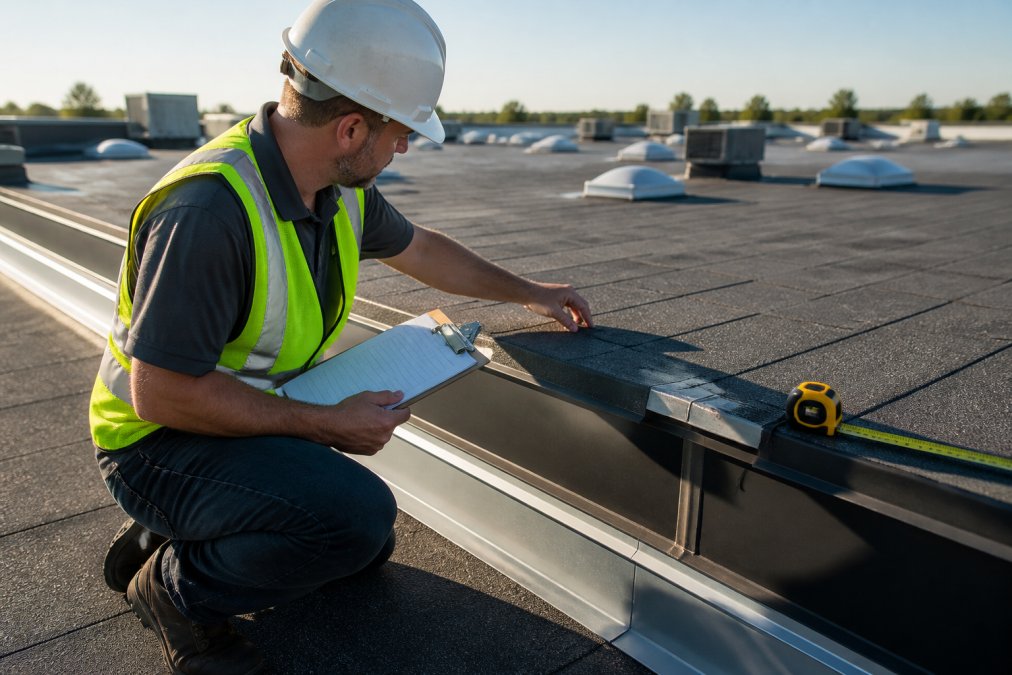
Your checklist should cover these core areas:
- Visual membrane inspection, Check the roof membrane for blistering, cracking, or separation. Look for areas where water might pool.
- Flashing and seals, Examine all penetrations: vents, HVAC units, skylights. Flashing failure is the most common leak source.
- Gutter and drainage system, Clear debris, verify water flows freely. Blocked gutters force water under the membrane.
- Structural integrity, Note any sagging, soft spots, or movement. These signal underlying damage.
- Coating condition, For flat roofs with protective coatings, assess wear and adhesion.
- Vegetation and moss, Remove growth that traps moisture and degrades the membrane.
- Documentation, Photograph conditions, note dates, record findings. This creates your asset history.
A strong checklist becomes your early warning system. Property managers who use one catch 70% of problems before they become expensive.
Preventative Roof Maintenance Schedule and Inspection Frequency
Preventative roof maintenance requires a predictable schedule. The frequency depends on climate, roof age, and material type, but regular observation beats emergency response.
Most commercial roofs benefit from inspections twice yearly, spring and fall. This catches seasonal damage: winter weather impact in spring, and pre-winter vulnerabilities in fall. For newer roofs under warranty, follow the manufacturer's recommended schedule exactly. Warranty claims often require documented maintenance history.
Between inspections, establish a quarterly visual walk-through from ground level for obvious changes: new stains, debris accumulation, or water pooling. These observations take 15 minutes and flag problems before they spread.
For flat roofs in areas with heavy rainfall or snow, increase to three inspections annually. Moisture is the enemy of flat roof systems. Early detection of ponding water or membrane damage prevents expensive structural repairs.
After major weather events, severe storms, hail, high winds, conduct an immediate inspection. Don't wait for the next scheduled cycle. Storm damage accelerates deterioration if left unaddressed.
Common Commercial Roofing Issues and Early Detection
Membrane damage and deterioration appear as cracks, blisters, or separation at seams. Use thermal imaging to detect moisture trapped under the membrane before visible damage appears. Early detection costs a fraction of addressing it after water penetrates the substrate.
Flashing failures happen at penetrations and edges. Sealant dries out and cracks, allowing water underneath. Check for gaps, hardened caulk, or missing sealant. This is the most common leak source and the easiest to fix early.
Ponding water on flat roofs indicates drainage failure. Water sitting for more than 48 hours after rain is a red flag. It accelerates membrane degradation and adds structural load. Address drainage problems immediately.
Gutter blockages force water over the edge or backward under the membrane. Clean gutters before and after seasons with heavy leaf drop.
Coating breakdown on protective roof coatings shows as chalking, peeling, or loss of adhesion. Early recoating extends roof life by years. Waiting until the coating fails completely means the underlying membrane has already experienced unnecessary UV exposure.
Roof Rejuvenation vs. Replacement Cost: Making the Right Financial Decision
This decision defines capital expenditure planning. Understanding both immediate costs and long-term asset value is essential.
Roof rejuvenation extends existing roof life by 6-8 years at a fraction of replacement cost. It works best on roofs 8-15 years old that are structurally sound but showing UV and weathering damage.
Cost comparison framework:
Rejuvenation extends life 6-8 years.
Full roof replacement provides 15-20 years of service life.
Rejuvenation appears cheaper per year, but only if the underlying roof is truly sound. Structural damage makes rejuvenation a temporary patch that wastes money on a failing substrate.
Decision framework:
Rejuvenation is the right choice when:
- Roof is 8-15 years old
- No structural damage to decking or substrate
- Membrane is intact (no active leaks or multiple failures)
- Budget constraints require spreading capital expenditure across multiple years
Replacement is necessary when:
- Roof is 18+ years old and approaching end of service life
- Structural damage is present (rotted decking, sagging, soft spots)
- Multiple membrane failures exist or active leaks are ongoing
- Underlying substrate is compromised by moisture or deterioration
- Repair costs exceed 50% of replacement cost in a single year
- Warranty has expired and future claims are unlikely
Building your CapEx model:
Track repair costs for each roof annually. If annual repairs exceed 15-20% of replacement cost, rejuvenation or replacement planning should begin immediately. Group roofs by age cohort to smooth capital expenditure across years. Document the decision rationale for any deferrals to protect yourself if the roof fails sooner than expected.
Extending Roof Service Life Through Asset Management
Professional roof maintenance for property managers is asset management: tracking condition, predicting failure, and optimizing replacement timing. Without a system to capture and organize this data, you're making decisions on memory and intuition rather than evidence.
Building your roof asset registry:
Create a centralized record for each property that includes:
- Roof age and installation date, Critical for warranty claims and service-life planning
- Material type and specifications, Membrane type, manufacturer, warranty terms
- Square footage and configuration, Flat, pitched, mixed; affects maintenance frequency and cost
- Last inspection date and findings, Condition assessment, identified issues, recommended actions
- Repair history, All repairs completed, costs, dates, and what triggered them
- Warranty status, Expiration date, coverage terms, maintenance requirements for validity
- Known issues and deferrals, Problems identified but not yet addressed, with documented reasoning
- Next scheduled inspection, Prevents inspections from being forgotten
This registry becomes your decision-making tool. Spreadsheets work for small portfolios, but property management software with built-in asset tracking scales better.
Digital documentation and photo management:
Capture photos during every inspection. Use a consistent naming convention: Property_Date_Area (e.g., "Downtown_Plaza_2026-03-15_Flashing"). Store photos in cloud-based folders organized by property and year. This creates a visual history that reveals deterioration patterns over time. When a roof fails, you have photographic evidence of its condition at each inspection point.
Inspection reports should be digitized and stored with the asset record. PDF reports with date stamps, inspector credentials, and specific findings create the documentation trail that protects you in liability disputes and warranty claims. If a roof fails and you're asked why it wasn't repaired, you need to show that the problem was identified, assessed, and either addressed or deferred with documented reasoning.
Cohort analysis and predictive planning:
Group roofs by age and material type to identify patterns: which roof types fail earliest, which age ranges require the most repairs, and which properties are outliers. Use this data to forecast capital needs and build reserves in advance.
Tracking repair costs as a leading indicator:
Monitor annual repair spending per roof. When annual repairs exceed 15-20% of replacement cost, flag it for condition reassessment. This prevents the slow creep of deferred maintenance where small problems compound into expensive failures.
Weather event tracking and regional risk assessment:
Document storm damage and weather events. Regional patterns inform maintenance strategy: heavy snow loads may require three inspections annually, high-wind zones may need additional flashing reinforcement, and humid climates prone to moss growth need more frequent cleaning.
Compliance and warranty documentation:
Your digital asset system should flag warranty expiration dates and maintenance requirements. Most commercial roof warranties require documented professional maintenance at specified intervals. Missing a required inspection voids coverage. Track local code requirements and ensure compliance is documented. Property managers who manage roof assets systematically see failures coming 12-18 months in advance and make decisions based on data, not crisis.
Roofing Compliance, Liability, and Warranty Protection
Building codes and fire codes often specify maintenance requirements. Verify your jurisdiction's requirements for annual inspection documentation or proof of professional maintenance.
Insurance carriers increasingly require documented maintenance history. Properties with documented preventative maintenance programs face fewer claim disputes and sometimes qualify for premium discounts.
Warranty protection depends on adherence to manufacturer specifications. Most commercial roof warranties require professional installation and documented maintenance at specified intervals.
Conclusion
Professional roof maintenance for property managers is the difference between controlled capital expenditure and financial crisis. Protecting your properties' underlying asset value requires systematic inspection, early problem detection, and strategic decision-making about rejuvenation versus replacement.
Frequently Asked Questions
How often should property managers schedule roof inspections?
Most property managers should schedule professional roof inspections at least twice per year, spring and fall, to catch seasonal damage before it worsens. After severe weather events, additional inspections are essential. For older roofs or those in harsh climates, quarterly inspections may be warranted. Regular inspections identify small issues like flashing deterioration, membrane damage, and gutter blockages before they become costly structural problems.
What does a professional roof maintenance program include?
A comprehensive professional roof maintenance program covers roof inspections, gutter cleaning, flashing repairs, drainage system checks, debris removal, and documentation of the roof's condition. It may also include thermal imaging to detect moisture issues and assessments of the roof membrane, coating, and structural integrity. Many programs provide maintenance checklists and capital expenditure planning to help property managers budget for future repairs or replacements.
What is the difference between roof rejuvenation and replacement?
Roof rejuvenation restores aging shingles or coatings to extend service life, typically adding 6-8 years at a fraction of replacement cost. Replacement removes the entire roof system and installs new materials. Rejuvenation is ideal for roofs showing early wear but with sound structural integrity. Replacement is necessary when structural damage is severe or the roof has reached end of life. A professional assessment determines which approach protects your investment most effectively.
How does preventative maintenance reduce long-term roofing costs?
Preventative maintenance identifies and addresses small issues, loose flashing, minor leaks, gutter clogs, before they cause expensive structural damage. Regular inspections and timely repairs extend roof service life significantly, delaying costly replacement. Proper drainage maintenance prevents water intrusion that leads to interior damage. Over a property's lifetime, consistent preventative care reduces emergency repairs, extends roof lifespan, and protects the building envelope, lowering total cost of ownership.