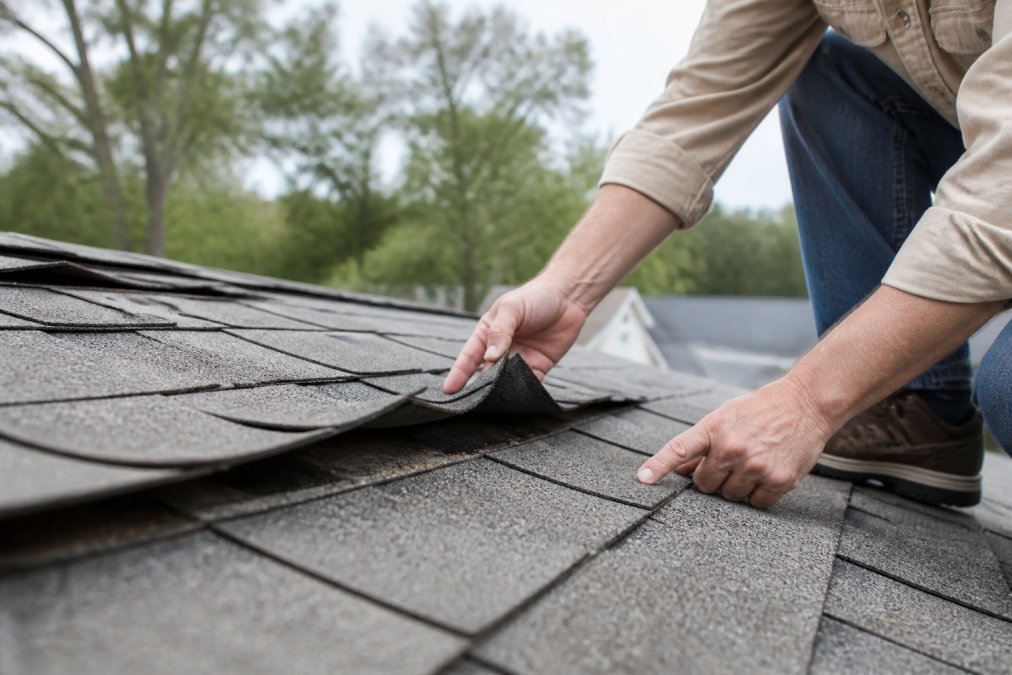
 how-to
How to Fix Curling Shingles: DIY Repair Steps
Table of Contents
- What Causes Shingles to Curl, Claw, and Cup
- Signs of Roof Aging You Should Not Ignore
- Tools and Materials You Will Need for the Repair
- Step-by-Step: How to Fix Curling Shingles
- Roof Repair vs Replacement Cost: Which Makes Sense
- Asphalt Shingle Rejuvenation as an Alternative to Replacement
- Common Mistakes, Warranty Risks, and Safety Protocols
- Frequently Asked Questions
Last Updated: September 10, 2026
What Causes Shingles to Curl, Claw, and Cup
Curling shingles are one of the clearest signs your roof is under stress, and the cause almost always traces back to moisture, heat, or both. This guide from FRESH TEC covers why shingles distort, how to spot damage early, and repairs that hold up.
Three failure patterns show up again and again on aging asphalt roofs:
- Curling: the shingle's bottom edge lifts upward
- Clawing: the corners pull up while the middle stays flat
- Cupping: the edges rise and the center sinks into a concave shape
Each points to a different root cause, so diagnose the pattern before you touch a pry bar.
Moisture Buildup and Poor Attic Ventilation
Trapped moisture is the most common driver. When attic ventilation is inadequate, warm humid air condenses on the roof decking and migrates into the shingle mat. The shingle swells, dries, and swells again; after several seasons, the tabs start to lift.
A common mistake is treating the symptom, sealing a curled tab, without fixing the ventilation that caused it (energy.gov). The U.S. Department of Energy guide to attic ventilation explains how intake and exhaust vents work together to keep the roof deck dry. If your attic runs hot and humid in summer, that imbalance is likely feeding the problem.
Heat, Thermal Expansion, and Weather Damage
Asphalt shingles expand in heat and contract as they cool. Wide day-to-night temperature swings weaken the bond between shingle layers and stress the nails holding each tab. Over years, the material turns brittle and loses flexibility.
Granule loss is the visible warning sign. When granules shed, the asphalt underneath is exposed to UV and degrades faster, accelerating curling and cracking. Once shingles reach that brittle stage, sealant alone will not bring them back.
Signs of Roof Aging You Should Not Ignore
Recognizing the signs of roof aging early separates a cheap repair from a full replacement. Most homeowners miss the first signals because they never look at the roof from above.
Watch for these indicators:
- Shingle tabs lifting at the edges or corners
- Granules collecting in gutters or at downspout outlets
- Cracked, warped, or missing shingles
- Exposed roofing nails backing out of the deck
- Dark streaks or soft spots that suggest moisture buildup
- Sagging along the roofline or around flashing
Any single item deserves a professional inspection. Two or more together usually mean the roof is in its final years, and the question shifts from repair to replacement.
Tools and Materials You Will Need for the Repair
A safe, lasting repair needs the right kit. Gather these before you climb up:
- Roofing cement (also called flashing cement or roofing adhesive)
- Roofing nails with wide heads, sized for shingle work
- A caulking gun for controlled sealant application
- A flat pry bar to lift tabs without tearing them
- A putty knife for spreading adhesive
- A heat gun (low setting only) to make brittle tabs pliable
- Replacement shingles matched to your existing color and profile
- Safety gear: non-slip shoes, gloves, and eye protection
Step-by-Step: How to Fix Curling Shingles
Knowing how to fix curling shingles comes down to matching the repair to the damage and the shingle material. A pliable lifted tab gets re-sealed; a brittle or cracked shingle gets replaced. A roof curling because of a wet, unvented deck gets neither, fix ventilation first, or the curl returns within a season or two.
Step 1: Inspect, Document, and Identify the Shingle Type
Walk the roof only if it is dry and safe. Photograph every problem area, note whether shingles are curled, clawed, or cupped, count affected tabs, and check the attic for moisture, daylight, or matted insulation. That record tells you whether you face a spot repair or a roof near the end of its service life.
Before you buy anything, identify the material, the repair technique changes with it:
- Fiberglass-reinforced asphalt shingles (the dominant type on U.S. roofs since the 1980s) have a fiberglass mat core. They resist moisture absorption well, so curling on these is usually heat, UV, or nail-pop driven rather than a wet mat. They stay flexible longer and tolerate re-sealing better.
- Organic-mat asphalt shingles (older roofs, roughly pre-1980) use a felt or paper core. That core absorbs moisture, swells, and delaminates, which is why organic shingles cup and claw so aggressively. Once the mat is saturated, re-sealing is a losing battle, replacement is the durable move.
- Composite and synthetic shingles (rubber, plastic, or polymer blends) behave differently again. They expand and contract more with temperature and often require the manufacturer's specified adhesive rather than standard roofing cement, or the bond will fail.
If you cannot tell what you have, check a shingle's exposed edge or look for a bundle wrapper in the attic or garage. The manufacturer and product line reveal the mat type and often the warranty terms.
Step 2: Fix the Root Cause Before You Touch a Tab
This is the step most DIY guides skip. If the attic runs hot and humid or you found moisture on the decking, sealing tabs is cosmetic. Address the cause first:
- Confirm intake and exhaust vents are both present and unobstructed. A roof with exhaust vents but blocked soffit intake cannot move air, and the deck stays wet.
- Check that bathroom and kitchen exhaust fans vent to the exterior, not into the attic. A fan dumping humid air into the attic is a common and fixable driver of shingle curl.
- Look for signs of a roof leak versus condensation. Staining concentrated around penetrations (vents, chimneys, skylights) points to a leak; uniform dampness across the deck points to condensation.
A common pattern: a roof that curls on the sunny slope first points to heat and UV, not moisture, while curling on the shaded, north-facing slope is more often moisture-driven.
Step 3: Re-Seal Lifted Shingle Tabs
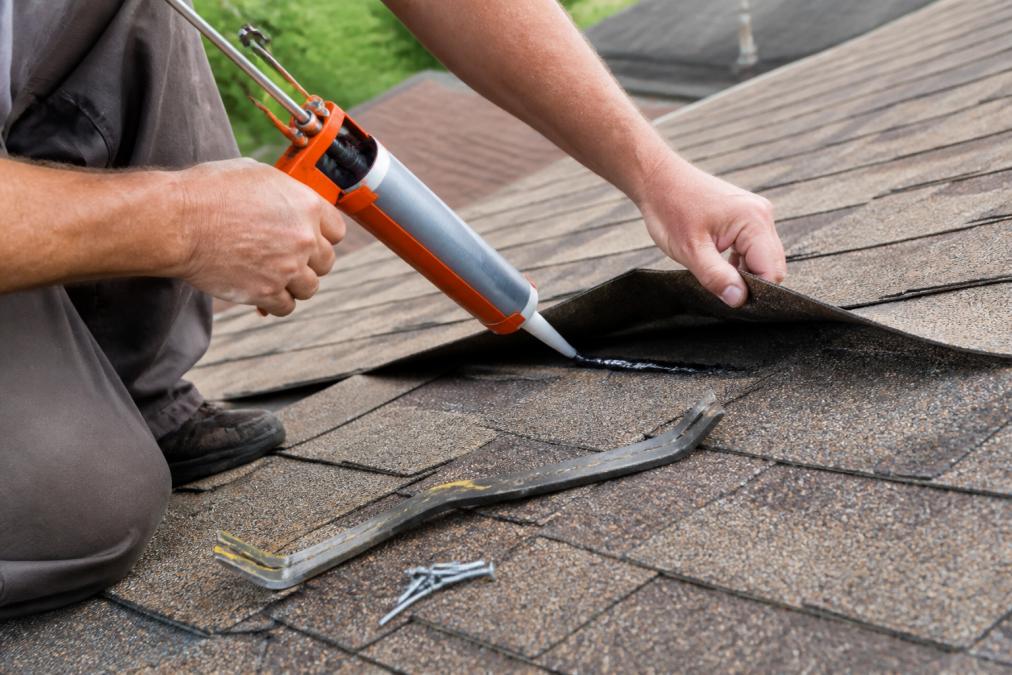
For tabs that are still flexible, lift the edge with a flat pry bar, apply a bead of roofing cement underneath, and press the tab down firmly. On a warm day it may seal on its own; on a cool day, weight it until the adhesive grabs. Nail any tab that has pulled free above the seal line, then cover the nail heads with adhesive. This is temporary, inspect again after the next storm season.
Step 4: Replace Brittle or Cracked Shingles
When a shingle is warped or cracked, replacement is the only durable option. Slide the pry bar under the damaged shingle, break the seal, and pull the nails. Slide the new shingle into place, align it with the course above, and fasten it with roofing nails. Seal the edges and nail heads with roofing cement, and match the new shingle closely to avoid a patchwork look.
On organic-mat roofs, expect the shingles around the damaged one to be just as brittle. Replacing one tab often cracks its neighbors, which is why spot repairs on older organic roofs frequently turn into a larger repair.
Step 5: Verify the Deck and Re-Check After a Storm
Before closing up any repair, press on the decking around the damaged area. A soft, spongy, or flexing deck means the sheathing has absorbed moisture and may need replacement, a shingle fix over a soft deck will not last. After the next significant rain or wind, confirm the repair held. Curling that returns in the same spot almost always means the root cause was never addressed.
Roof Repair vs Replacement Cost: Which Makes Sense
The roof repair vs replacement cost decision hinges on how widespread the damage is. A handful of curled tabs on an otherwise sound roof is a repair; curling across multiple slopes with granule loss and a roof past its lifespan points to replacement.
| Situation | Best Move | Why |
|---|---|---|
| 1-5 curled tabs, roof under 10 years | DIY repair | Isolated damage, material still flexible |
| Scattered curling, no granule loss | Professional inspection | Cause may be ventilation, not wear |
| Widespread curling, heavy granule loss | Plan for replacement | Structure is failing, repairs won't hold |
| Curling plus attic moisture | Fix ventilation first | Repair without ventilation fix will recur |
A full replacement is a major expense, and a band-aid on a failing roof just delays it. That gap is where asphalt shingle rejuvenation fits: for roofs aging but not yet failing, it restores flexibility to the shingle mat and can add years of service at a fraction of replacement cost.
Asphalt Shingle Rejuvenation as an Alternative to Replacement
Asphalt shingle rejuvenation penetrates the shingle and replenishes oils lost to UV exposure and heat, restoring flexibility and slowing further curling. It is not a surface coating, it works into the mat.
This is the category FRESH TEC operates in. Using patented, plant-based GreenSoy™ Technology, FRESH TEC restores asphalt shingles to extend roof life by 6 to 8 years, backed by a 6-year warranty. For homeowners and property managers weighing a repair that will not last against a replacement they are not ready for, rejuvenation is the middle path.
Rejuvenation works best on roofs that are aging but structurally sound, not on roofs with active leaks or missing shingles. Get an inspection first so you know which category your roof falls into.
Common Mistakes, Warranty Risks, and Safety Protocols
Three mistakes sink most DIY shingle repairs:
- Sealing over a moisture problem. If attic ventilation is the cause, the curl returns. Fix the ventilation, not just the tab.
- Using the wrong adhesive. Standard caulk fails under UV and heat. Use roofing cement rated for exterior shingle work, and on composite or synthetic shingles, use the manufacturer's specified adhesive instead.
- Over-nailing. Too many nails crack the shingle and void any material warranty. Nail above the seal line, not through the exposed face.
The Warranty Trap Most Guides Ignore
This is the part of DIY roof repair that costs homeowners the most, and almost no guide explains it. Most asphalt shingle manufacturers condition material warranties on proper installation and repair. Patching tabs with the wrong adhesive, or nailing through the seal line, can give the manufacturer a reason to deny a claim on the entire roof, not just the patched area.
A few mechanics worth knowing:
- Material warranties and labor warranties are separate. The manufacturer covers the shingle; the installer covers the workmanship. A DIY repair has no labor warranty at all, so if the patch fails, you own the cost.
- Warranties are often transferable but conditional. Many manufacturers allow the warranty to transfer to a new owner, but only if the roof was installed by a qualified contractor and the transfer is registered within a set window. A DIY repair can break that chain.
- Documentation matters. Keep receipts, product names, and photos of any repair. If you ever file a claim, the manufacturer will ask what was done and by whom.
Before any repair, find your roof's warranty paperwork or look up the manufacturer by the bundle wrapper. If the roof is still under a material warranty, weigh the cost of a professional repair against the risk of voiding coverage on the rest of the roof.
Safety Protocols for Working on a Roof
Roof work is one of the most dangerous home maintenance tasks a homeowner can take on, and most guides stop at "be careful (the CDC)." Here is what actually matters:
- Fall protection. On any roof with a pitch steeper than a gentle slope, use a roof harness anchored to a solid point, or a properly set up roof jack system. A harness is only as good as its anchor, never tie off to a vent pipe, chimney, or anything not rated for a fall load.
- Ladder setup. Place the ladder on level, firm ground, extend it at least three feet above the roof edge, and secure it at the top. The base should sit one foot out for every four feet of height. Never lean a ladder against a gutter.
- Weather and surface conditions. Work only when the roof is dry. Asphalt shingles are slick when wet, and morning dew is enough to cause a slip. Avoid working in high wind, and never work alone.
- Heat gun safety. Keep the nozzle moving, work in short passes, and never leave a heat gun unattended on a roof. Asphalt shingles can ignite, and the fire can smolder inside the mat before it shows.
- Electrical and overhead hazards. Watch for overhead power lines, and never let a ladder, tool, or your body contact them. Stay clear of any electrical service drop.
- Physical limits. If you are uncomfortable with heights, working on a steep pitch, or unsure about the roof's condition, hire a professional. No repair is worth a fall.
Before any repair, check whether your roof is still under a manufacturer warranty. A DIY fix that voids it can cost far more than the professional repair would have, and no repair is worth a fall.
Frequently Asked Questions
Can curled shingles be repaired, or do they always need replacing?
Many curled shingles can be repaired if the shingle is still flexible and the granule loss is minimal. Lifted shingle tabs can be re-sealed with roofing cement, and individual damaged shingles can be swapped out. However, if shingles are brittle, warped across large sections, or the roof decking shows moisture damage, replacement is the more reliable option. A roof inspection will tell you which path makes sense.
Are curling shingles a sign of a bad roof?
Not always. Curling can point to poor attic ventilation, moisture buildup, or thermal expansion rather than a failing roof. If the curling is limited to a few shingles and the rest of the roof looks solid, a targeted repair may extend its lifespan. Widespread curling, granule loss, and soft spots suggest the roof is nearing the end of its service life.
Does homeowners insurance cover curling shingles?
Most policies cover sudden damage from storms, hail, or wind, but not gradual wear like aging or poor ventilation. Curling caused by weather damage may qualify for a claim if you file promptly and document the damage. Curling from age or moisture buildup is usually considered maintenance and falls outside coverage. Check your policy and take photos before any repair work.
How does asphalt shingle rejuvenation compare to a full replacement?
Asphalt shingle rejuvenation uses a plant-based formula to restore flexibility to aging shingles, which can extend roof lifespan by several years at a fraction of replacement cost. It works best on roofs with mild to moderate aging and no structural damage. Full replacement is the better choice when shingles are brittle, missing, or the roof decking is compromised. A professional inspection will confirm which option fits your roof.