 comparison
Cost of Roof Rejuvenation in 2026: Real Prices & ROI
Table of Contents
- Roof Rejuvenation Cost in 2026: What Homeowners Actually Pay
- Roof Rejuvenation vs Replacement Cost: The Real Gap
- How Long Does Roof Rejuvenation Last?
- Sustainable Flat Roof Coating: Pricing and Payback
- The Long-Term ROI of Roof Rejuvenation
- Insurance, DIY Risk, and Environmental Trade-Offs
- Conclusion: Is Roof Rejuvenation Worth the Cost in 2026?
- Frequently Asked Questions
Last Updated: September 11, 2026
Roof Rejuvenation Cost in 2026: What Homeowners Actually Pay
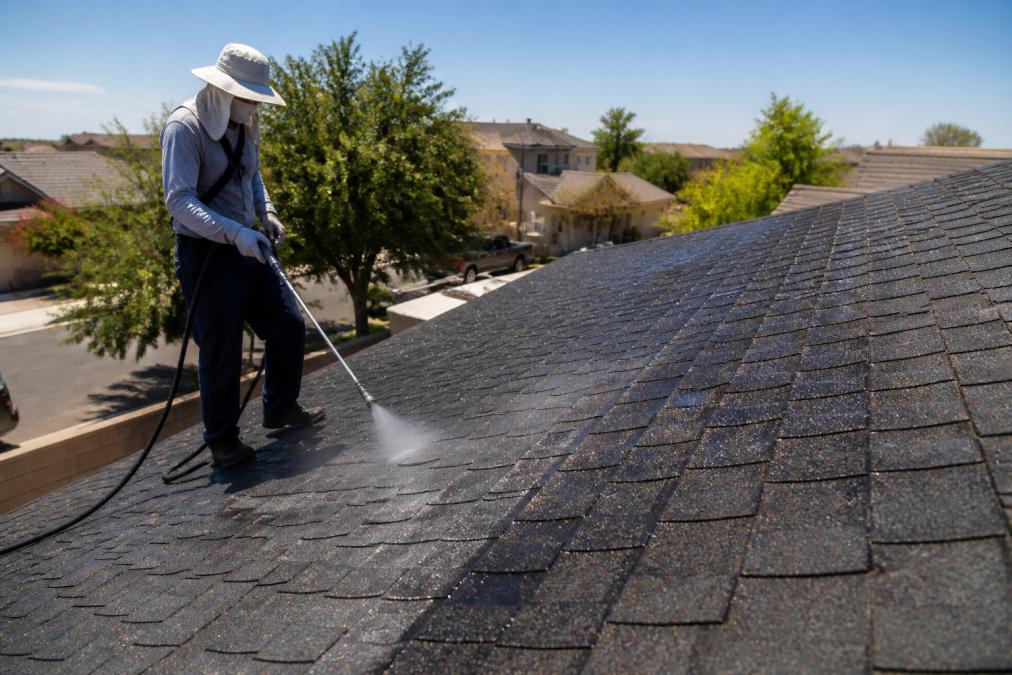
The cost of roof rejuvenation in 2026 typically runs a fraction of what a full replacement demands, and for many homeowners that gap is the entire point. Most quotes land well below replacement pricing because you are paying for a treatment, not a teardown.
What the Per-Square-Foot Numbers Look Like
Roofing work is priced by the roofing square, a 100-square-foot section. Rejuvenation products on the market today commonly quote somewhere in the range of less than a dollar to about two dollars per square foot, depending on the treatment and roof condition. Pricing for FRESH TEC's services depends on square footage, roof condition, and prep, so the reliable move is to request a quote rather than guess. Replacement, by contrast, is priced per square in the hundreds. That spread is why the cost-benefit analysis usually favors treatment on a roof that still has structural integrity.
What Pushes Your Quote Up or Down
Several variables move the number:
- Roof surface condition - heavy curling shingles, granule loss, or widespread brittleness raises labor and may disqualify the roof
- Roof pitch - steeper roofs take longer and require more safety setup
- Square footage - larger roofs lower the per-square rate
- Prep work - cleaning, minor flashing repair, and inspection add cost
- Access - multi-story or obstructed roofs slow the crew
A common mistake is assuming every roof qualifies. Rejuvenation works on asphalt shingles that still have enough shingle granules and a sound underlayment; a roof already leaking needs a different conversation.
Roof Rejuvenation vs Replacement Cost: The Real Gap
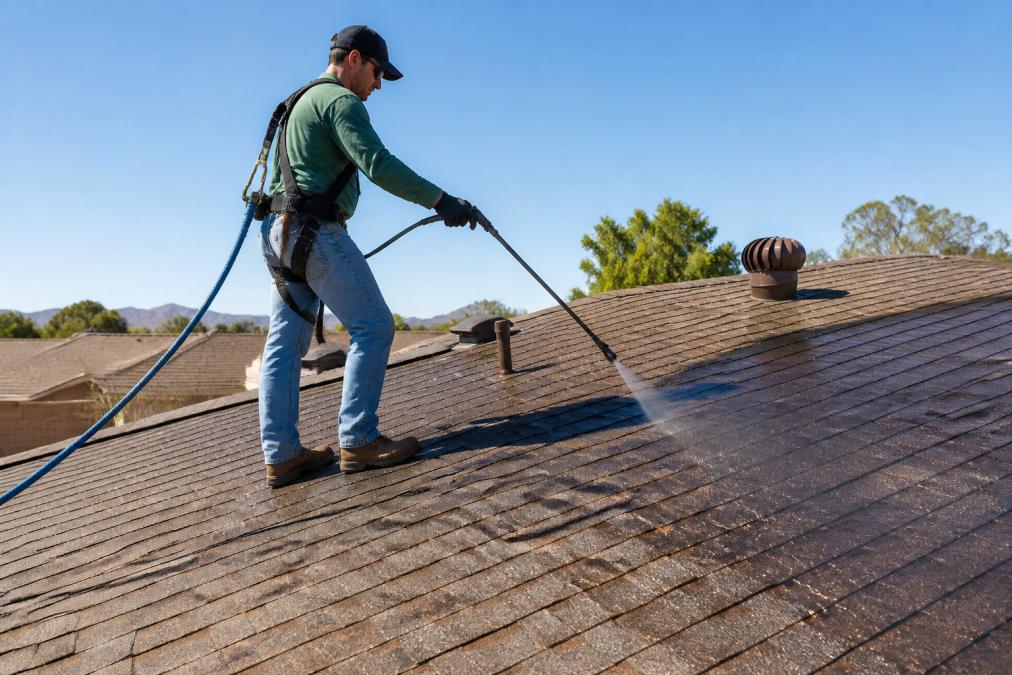
The gap between these two options is the single biggest reason homeowners ask about rejuvenation at all. Replacement means new roofing materials, full installation labor, disposal of old shingles, and often new underlayment and flashing. Rejuvenation means a protective coating or oil-based treatment applied to what is already there. FRESH TEC's GreenSoy™ approach, for example, is up to 85% cheaper than full replacement.
| Factor | Rejuvenation | Full Replacement |
|---|---|---|
| Materials | Treatment coating only | New shingles, underlayment, flashing |
| Labor | Single application crew | Tear-off plus install crew |
| Disposal | None | Old shingle haul-away |
| Timeline | Often same day | Multiple days |
| Lifespan added | Several years | Full new service life |
The trade-off is honest: replacement resets the clock entirely. Rejuvenation buys time. For a roof that is aging but not failing, buying time at a fraction of the price is the smarter cost-benefit analysis.
How Long Does Roof Rejuvenation Last?
Lifespan is the number that decides whether rejuvenation pencils out, so it deserves more than a single figure. In practice, most asphalt shingle rejuvenation treatments add somewhere in the range of 5 to 8 years of service life per application, with the spread driven by three variables: how much life the shingles had left when treated, the climate the roof sits in, and the product chemistry used.
What Actually Determines the Lifespan Gain
- Starting condition of the shingles. A roof treated at year 12 of a 20-year shingle performs very differently from one treated at year 18. The treatment restores flexibility to the asphalt binder; it does not rebuild granule loss or reverse curling that has already happened.
- Climate exposure. Roofs in high-UV, high-heat regions (think Phoenix, Dallas, or inland California) oxidize faster, so the re-application interval shortens (nist.gov). Roofs in milder, wetter climates may see a longer window but face more moss and algae pressure.
- Product chemistry. Soy-based and plant-derived treatments work by re-plasticizing the asphalt binder and are typically reapplied on a multi-year cycle. Solvent-based sealants behave differently and often carry different warranty terms.
- Application quality. Coverage rate, dwell time, and prep all affect how deeply the product penetrates. A rushed spray on a dirty roof underperforms a properly prepped one by a wide margin.
Warranty Terms You Should Compare
Warranty is where lifespan claims get tested. When you compare quotes, ask four questions:
- Length of coverage. FRESH TEC backs its service with a 6-year warranty and extends roof life by 6-8 years. Other providers may advertise different terms.
- Transferability. If you sell the home, does the remaining warranty transfer to the buyer? A transferable warranty is a real line item in a listing conversation; a non-transferable one is not.
- What is excluded. Most warranties cover product performance, not pre-existing damage, storm damage, or leaks unrelated to the treatment. Read the exclusions before you sign.
- Re-application requirements. Some warranties require a follow-up treatment at a set interval to stay valid. Miss it and coverage lapses.
The Re-Application Reality
Rejuvenation is preventative maintenance, not a one-time fix. UV radiation and thermal cycling keep working on the shingles after the crew leaves, so a second treatment is usually part of the plan if you want to stretch the roof toward a full replacement window. Budget for it the same way you budget for HVAC service or exterior paint, as a recurring line item, not a one-off.
How to Verify a Lifespan Claim Before You Buy
Ask the provider for the product's technical data sheet, the warranty document itself (not a summary), and two or three local references on roofs of similar age and pitch. A provider who cannot produce those is asking you to take the lifespan number on faith.
Sustainable Flat Roof Coating: Pricing and Payback
Flat roofs follow a different logic. A sustainable flat roof coating is a reflective, plant-based or soy-derived product that seals the surface and reflects sunlight. FRESH TEC's flat roof coatings reflect up to 90% of UV rays, which cuts heat absorption and eases the load on cooling systems. Pricing depends on square footage, roof condition, and prep, so the reliable move is to request a quote rather than guess. Payback comes from two directions: avoided replacement cost now, and lower cooling demand over the coating's life.
The Long-Term ROI of Roof Rejuvenation
Most guides stop at "rejuvenation is cheaper than replacement." That is true but incomplete. The real question is what your roof costs you over a 10-year window under each path. Below is a framework you can fill in with your own local quotes, the structure is what matters.
The 10-Year Cost-of-Ownership Framework
| Line Item | Rejuvenation Path | Replacement Path |
|---|---|---|
| Year 0 outlay | Treatment cost (fraction of replacement) | Full tear-off and install |
| Year 5-7 outlay | Second treatment (if you extend further) | $0 (still under new-roof warranty) |
| Year 8-10 outlay | Possible third treatment or partial repair | $0 to minor repair |
| Disposal / landfill cost | None | Included in replacement quote |
| Cooling load impact | Lower on reflective flat-roof coatings | Depends on new roof reflectivity |
| Warranty coverage | 5-6 year cycles, re-applied | Full new-roof warranty |
| Residual value at sale | Maintained roof, documented | New roof, full reset |
How to Run the Math on Your Own Roof
- Get a replacement quote first. You need the real number you are deferring, not a national average. Replacement pricing varies widely by region, pitch, and material.
- Get a rejuvenation quote on the same roof. Compare like-for-like: same square footage, same prep scope.
- Estimate the deferral window. If a treatment adds 5-8 years and you re-apply once, you may push replacement out by roughly a decade. That is the core of the ROI case.
- Discount for risk. Rejuvenation only works on qualifying roofs. If your shingles are already failing, the deferral window shrinks and the math collapses.
Where the ROI Is Strongest
- Roofs at 60-75% of service life. Enough remaining life to make the treatment stick, enough age that replacement is on the horizon.
- Multi-unit properties. Property managers treating several qualifying roofs at once spread the deferral benefit across a portfolio and smooth capital budgets.
- Homes you plan to sell within 5 years. A documented, maintained roof reads better in a listing than a roof with visible aging, and the treatment records support the disclosure conversation.
Where the ROI Is Weakest
- Roofs under 5 years old. You are paying for life the shingles already have.
- Roofs past 90% of service life. The deferral window is too short to justify the spend.
- Roofs with active leaks or soft decking. No treatment fixes structural failure.
The Non-Dollar Returns
Two benefits do not show up in the table but matter to many homeowners. First, home valuation and curb appeal, a roof that looks maintained rather than neglected supports the listing price and shortens time on market. Second, environmental impact, extending a roof's life keeps tons of shingle waste out of landfills and avoids the embodied carbon of manufacturing and hauling new materials (the EPA). For eco-conscious buyers, that is a real part of the ROI calculation.
Insurance, DIY Risk, and Environmental Trade-Offs
Three angles most guides skip deserve a direct look. First, insurance: many policies distinguish between neglect and maintained roofs, so document your roof inspection and treatment records. Second, DIY: climbing a roof with a sprayer is genuinely dangerous, and misapplication wastes product and voids any warranty coverage (osha.gov). Third, environmental impact: plant-based, non-toxic formulas avoid the solvent load of conventional sealants, and extending a roof's life keeps tons of shingle waste out of landfills. That last point matters to eco-conscious homeowners who want weatherproofing without the chemical footprint.
Conclusion: Is Roof Rejuvenation Worth the Cost in 2026?
For a roof that still has sound shingles and no active leaks, rejuvenation is usually worth it. The cost of roof rejuvenation in 2026 stays far below replacement, and the lifespan extension often justifies the spend on its own. FRESH TEC restores asphalt shingles with patented GreenSoy™ Technology, extends roof life by 6-8 years, and backs the work with a 6-year warranty. Book a free inspection to find out whether your roof qualifies before you commit to a replacement you may not need.
Frequently Asked Questions
How much does roof rejuvenation cost per square foot?
Per-square-foot pricing for roof rejuvenation varies by provider and roof condition. Some services publish ranges like $0.80 to $2.00 per square foot, but that figure depends on your roof's size, pitch, and current shingle condition. Because every roof is different, the most reliable way to get an accurate number is a free inspection. FRESH TEC offers a free inspection so you can see the actual cost of roof rejuvenation for your specific roof before committing.
Is roof rejuvenation worth the cost in 2026?
It depends on your roof's condition. If your asphalt shingles still have enough granule coverage and are not curling or missing, rejuvenation can extend roof life by 6 to 8 years at a fraction of replacement cost. That makes the cost of roof rejuvenation in 2026 a strong value for roofs that are aging but not failing. If your roof already has widespread damage or leaks, replacement may be the better call. A professional inspection is the only way to know which category you fall into.
How long does roof rejuvenation last?
Most rejuvenation treatments extend roof life by several years, with some providers reporting up to 5 years per treatment and others, like FRESH TEC, citing 6 to 8 years of added life. How long does roof rejuvenation last for your roof specifically depends on shingle condition, sun exposure, and weather. Reapplication may be needed after the initial extension period ends, so factor that into your long-term cost planning.
Does roof rejuvenation save money compared to a full roof replacement?
In many cases, yes. Roof rejuvenation vs replacement cost is not close when your shingles are still structurally sound. Rejuvenation can cost up to 85% less than a full replacement, according to FRESH TEC. If your roof is a candidate, that savings can be redirected to other home improvements or held as reserve for future maintenance. The key is confirming your roof qualifies before assuming replacement is your only option.
What factors influence the price of roof rejuvenation services?
Several factors affect the cost of roof rejuvenation in 2026: total roof square footage, roof pitch and accessibility, current shingle condition including granule loss and brittleness, number of stories, and whether the service includes extras like gutter cleaning or solar panel maintenance. Flat roofs with a sustainable flat roof coating may price differently than pitched asphalt shingle roofs. Labor rates in your area also play a role. A free inspection is the fastest way to get a number that reflects your actual roof.
Most homeowners facing a quote for a new roof assume replacement is the only path. It usually is not. FRESH TEC offers plant-based roof rejuvenation, flat roof coatings that reflect 90% of UV rays, and same-day add-on services like gutter cleaning. Get started with FRESH TEC and protect your roof for years to come.