 How-to
How to Choose Durable Roofing Materials for Resale
Last Updated: November 16, 2026
Quick Summary
To choose durable roofing materials for resale, assess your existing roof first, then compare materials by lifespan, maintenance, and cost per year of ownership rather than the install quote alone. Buyers rarely pay extra for a new roof, but they do discount for a bad one, so your goal is to remove that discount.
- Pull the installation date from closing documents, permit records, or a contractor invoice to establish roof age.
- Architectural shingles cost more than basic three-tab but generally last longer.
- Metal, especially standing seam with hidden fasteners, resists wind and hail well and can last decades.
- Divide total lifecycle cost by ownership years to get a rough annual cost of ownership.
- Confirm transfer terms and registration before counting a manufacturer warranty as an asset.
Table of Contents
- Start With What Buyers Actually Inspect
- Compare the Types of Roofing Materials Side by Side
- What the Asphalt Shingle Roof Lifespan Means for Your Sale
- Roofing Materials for Flat Roofs: What Holds Up
- How Roof Color Resale Value Works in Buyer Decisions
- Assess Your Existing Roof Before You List
- Weigh Lifecycle Cost, Not Just the Install Quote
- Book a Free Inspection Before Your Listing Goes Live
- Frequently Asked Questions
Start With What Buyers Actually Inspect
When a buyer's inspector walks the roof, they are not grading style. They are looking for remaining service life, and that is where durable roofing materials for resale earn their keep. The roof is often the first big-ticket item flagged and the first one negotiated.
Durability is the ability of a roofing system to resist sun, hail, wind, and thermal cycling without losing function. For a seller, durability translates into fewer buyer objections and fewer repair credits at the closing table.
Here is the honest starting point most guides skip: buyers rarely pay extra for a roof. They discount for a bad one. Your job is to remove the discount, not chase a premium.
Compare the Types of Roofing Materials Side by Side
Each material below trades cost, weight, lifespan, and maintenance differently. The right pick depends on your roof pitch, structure, budget, and how soon you plan to sell.
| Material | Relative Cost | Typical Lifespan | Weight | Best For |
|---|---|---|---|---|
| Asphalt shingles | Lowest | Moderate | Light | Tight budgets, fast sales |
| Architectural shingles | Low to mid | Longer than 3-tab | Light | Most resale homes |
| Metal (standing seam) | High | Long | Light to mid | Long ownership, hail-prone areas |
| Clay or concrete tile | High | Long | Heavy | Spanish-style homes, structure rated for it |
| Slate | Highest | Longest | Heaviest | Historic or high-end homes |
| Wood shakes | Mid to high | Moderate | Mid | Rustic styles, where allowed |
Asphalt and Architectural Shingles
Asphalt shingles are widely used on American roofs, largely because they are affordable and easy to repair. Architectural shingles cost more than basic three-tab but generally last longer.
Metal, Tile, Slate, and Wood
Metal roofing, especially standing seam with hidden fasteners, resists wind and hail well and can last decades. Tile and slate last a long time but demand a structure built to carry the weight. Wood shakes look great but need more upkeep. A common mistake is choosing a material the roof structure cannot support.
What the Asphalt Shingle Roof Lifespan Means for Your Sale
The asphalt shingle roof lifespan is the number buyers care about most, because it tells them how soon they will pay for a replacement. A shingle roof that is near the end of its life becomes a negotiation chip, even if it is not leaking yet.
Granule loss, curling edges, and exposed mat are the visible signs inspectors note. Sun exposure speeds all three up. If you want to understand how local conditions affect shingle age, read our guide on how long shingles last under New Mexico's sun.
The takeaway for sellers: if your shingles still have usable life left, protect that remaining life rather than paying for a full tear-off before you list.
Roofing Materials for Flat Roofs: What Holds Up
Flat roofs fail differently. Water pools, seams split, and UV breaks down the surface membrane faster than on a pitched roof. Roofing materials for flat roofs need reflectivity and seam strength more than curb appeal.
Reflective elastomeric and silicone coatings are a practical option for flat roofs here. They reflect sunlight, lower surface temperature, and can extend service life. For the details on how these coatings perform under intense sun, see our article on flat roof coating benefits in New Mexico.
Watch out: coating over a wet or blistered membrane traps moisture and makes the problem worse. The surface has to be sound first.
How Roof Color Resale Value Works in Buyer Decisions
Roof color resale value is real but modest. Buyers react to a roof that looks clean, uniform, and intentional. A faded, streaked roof reads as neglected, and that impression colors the whole walkthrough.
Darker colors absorb heat; lighter colors reflect it and can ease cooling loads. Neutral tones in keeping with the neighborhood tend to appeal to the widest pool of buyers. The bigger driver is condition, not shade. A well-maintained mid-tone roof beats a tired designer color every time.
Assess Your Existing Roof Before You List
You cannot choose a material until you know what you already have.
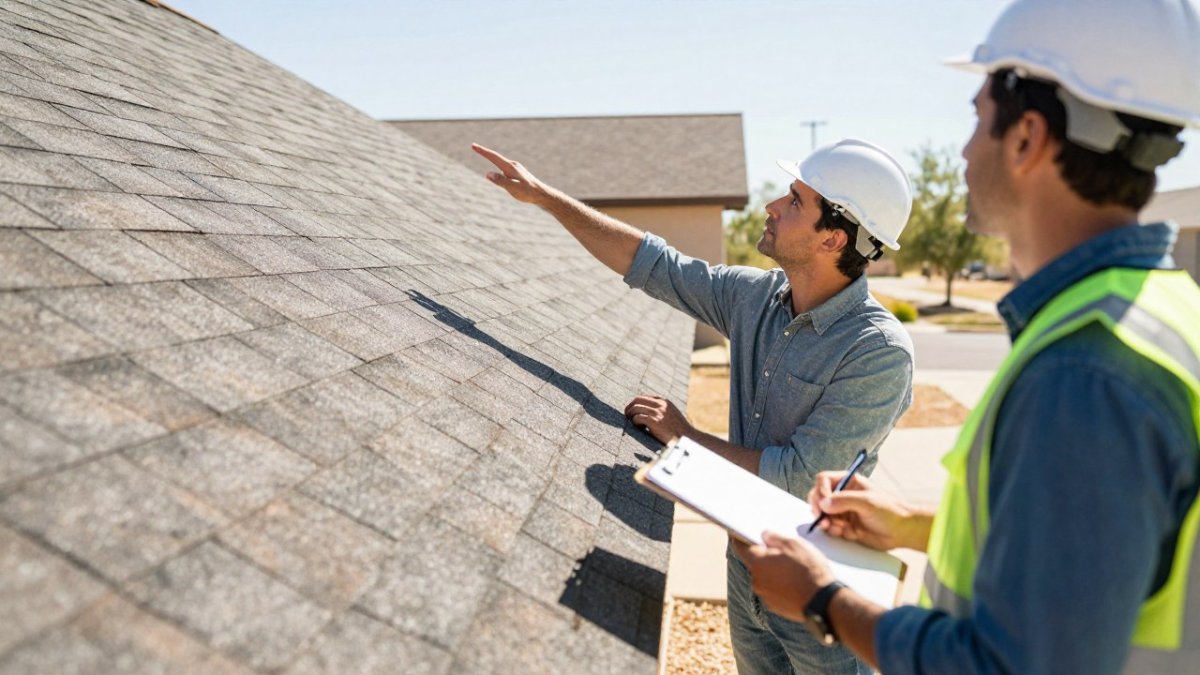
Work through the roof in layers, from the ground up, and write down what you find. An inspector will do the same, and a buyer's inspector will repeat it.
1. Roof age and remaining service life. Pull the installation date from your closing documents, permit records, or a contractor invoice.
**2.
3. Decking and structure. Soft spots underfoot, sagging between rafters, and visible deflection at the ridge point to decking problems that no surface material will fix.
4. Attic and ventilation. From inside the attic, look for daylight through the roof deck, water staining on rafters and sheathing, rusted nails, crushed or disconnected exhaust ducts, and blocked soffit or ridge vents.
5. Flashing and penetrations. Check chimneys, skylights, valleys, step flashing at walls, and pipe boots. These are the highest-leak-risk points on any roof and the cheapest to fix before a listing goes live.
6. Drainage. Confirm gutters are attached, clear, and pitched toward downspouts, and that downspouts discharge away from the foundation.
7. Documentation. Gather the installation invoice, manufacturer warranty, any transfer paperwork, permits and final inspection sign-offs, and maintenance or repair receipts.
Watch out: a fresh cosmetic repair over an active leak or a wet deck traps moisture and turns a small flashing fix into a decking replacement, diagnose before you patch.
Once the assessment is done, sort the findings into three buckets: repair now, monitor, and replace. Only the replace bucket should drive a material decision. Our guide on preparing a house to list walks through what buyers' inspectors flag, and our roof inspection checklist explains exactly what a thorough inspection covers.
If shingles are curling but the roof is otherwise sound, FRESH TEC LLC offers a plant-based rejuvenation treatment for asphalt shingles, backed by a 6-year warranty.
Weigh Lifecycle Cost, Not Just the Install Quote
The cheapest install quote is not always the lowest-cost roof over time. Lifecycle cost adds up what you spend over the years: installation, maintenance, repairs, and eventual replacement. A low-cost roof that needs replacing in a decade can cost more than a durable one that lasts far longer, and for a seller, the relevant question is not the total over 50 years, but the cost per year of ownership you are actually asking a buyer to inherit.
Build the comparison around a defined ownership period. Pick the number of years you expect to hold the property, or the years a typical buyer in your price band expects to stay, and compare materials over that window rather than over their full rated lifespan.
For each candidate material, estimate four lines:
- Upfront cost. Material plus labor plus tear-off and disposal of the old roof, plus any decking repair the tear-off reveals.
- Routine maintenance. Annual or biannual expectations, debris removal, sealant touch-ups, flashing checks, and for wood or tile, replacement of individual damaged pieces.
- Repair exposure. How often the material fails, how it fails, and whether a repair is a patch or a section replacement. Metal and tile tend to fail at fasteners and flashing; asphalt fails across the field as granules wear away.
- Replacement timing. When the next full replacement falls inside your ownership window, and whether deferring it with repair or rejuvenation is realistic.
Divide the total by the ownership years to get a rough annual cost of ownership. That single number is what a buyer's agent is implicitly calculating when they see a roof near the end of its life.
Two lines that sellers routinely forget belong in the model:
Insurance and financing. Some insurers price or decline coverage based on roof age and material, and some lenders flag a roof with limited remaining life during appraisal. A roof that is insurable and financeable at closing is worth more to a buyer than one that is not, even at the same purchase price.
Transferable warranty value. A manufacturer warranty that transfers to the next owner is a documented asset. Confirm the transfer terms, any required registration, and whether the warranty is prorated before you count it in the comparison.
Use this seller's checklist to keep the comparison honest:
- Estimated years of remaining service life
- Annual maintenance and repair expectations
- Whether a transferable warranty adds buyer confidence
- Impact on insurance and buyer financing
- Whether repair or rejuvenation can defer replacement
Documentation matters. Gather your warranty paperwork, maintenance records, and inspection reports. Transferable warranties and a clean paper trail reassure buyers and can reduce negotiation friction. As noted in roofing durability selection research, material durability is a central factor in long-term performance decisions, and sellers should weigh lifespan, not just purchase price.
Watch out: a lifecycle comparison built on the contractor's verbal estimate rather than written line items will not survive a buyer's counteroffer, get the tear-off, decking, and disposal costs in writing before you commit to a material.
Book a Free Inspection Before Your Listing Goes Live
The roof decision is easier once you know the facts. Instead of guessing whether to repair, rejuvenate, or replace, get a professional assessment first and let the findings guide the choice.
FRESH TEC LLC is a local, veteran-owned business serving Albuquerque and Rio Rancho. Our FRESH ROOF TREATMENT uses plant-based GreenSoy™ Technology to restore asphalt shingles and driveways, extending lifespan by 6-8 years. We also handle flat roof coatings, gutter cleaning, and solar panel maintenance. Realtors and property managers trust us to get exteriors show-ready.
Get started with FRESH TEC LLC and put a documented, durable roof behind your listing. Book Free Inspection.
A roof that is sound and documented removes one of the biggest objections a buyer will raise. If you are listing soon, the smartest move is a free inspection that tells you exactly where your roof stands. FRESH TEC LLC brings veteran-owned, local service, plant-based GreenSoy™ rejuvenation, and a 6-year warranty to every job. Get started with FRESH TEC LLC and list with confidence.
Frequently Asked Questions
What is the most durable and long-lasting roofing material?
Slate and copper last the longest, often 50 to 100 years, but both carry high material and installation costs and need structural support. Metal roofing, especially standing seam with hidden fasteners, runs 40 to 70 years and handles hail and wind well. For most resale situations, architectural asphalt shingles offer the best balance of durability, cost, and buyer familiarity. The right pick depends on your roof pitch, structure, and local rules.
Should I repair or replace a roof before listing a home?
It depends on remaining lifespan and what buyers will see. If the asphalt shingle roof lifespan is nearly used up, buyers and their inspectors will flag it, and a replacement often becomes a negotiation point. If the shingles are intact but dried out, a restorative treatment can extend service life by 6 to 8 years, which is far cheaper than replacement. Get an inspection first, then decide based on condition, not guesswork.
What color roof has the best resale value?
Neutral tones win most often: gray, charcoal, and brown shingles blend with common siding colors and read as well maintained. Roof color resale value is really about buyer perception, since an unusual color can narrow your buyer pool. In hot climates, lighter tones also reflect heat and support energy efficiency claims. Match the roof to the house's exterior rather than chasing a trend.
How does roof condition affect resale value?
A roof in good condition reassures buyers and can reduce repair requests during negotiation. Curling shingles, granule loss, and active leaks signal deferred maintenance, which invites lower offers. Documented maintenance, a transferable warranty, and a recent inspection report all help. FRESH TEC LLC provides free inspections and a 6-year warranty on roof rejuvenation, giving sellers paperwork buyers can actually review.