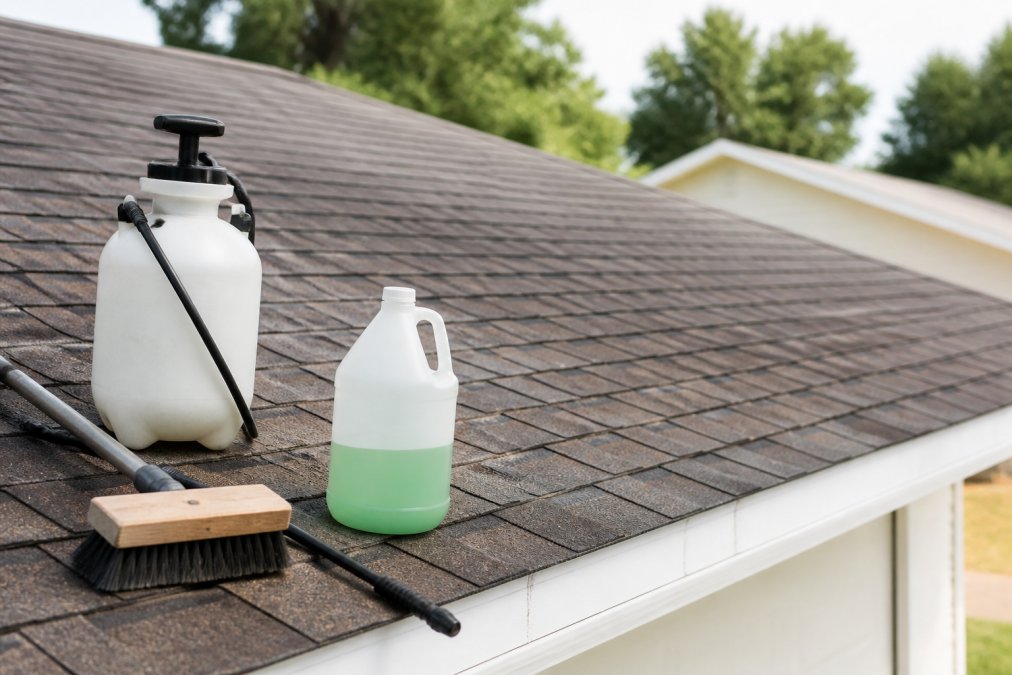
 comparison
Best FreshRoof Alternatives for Asphalt Shingle Roofs
Table of Contents
- Why Look Beyond FreshRoof for Roof Rejuvenation?
- Top FreshRoof Alternatives Compared
- Roof Maxx: The Soy-Based Pioneer
- Shingle Hero: Deep-Penetrating Formula
- Liqua Roof: Natural Look and Durability
- UglyRoof: Multiple Treatment Chemistries
- Roof Rejuvenation vs Replacement: Which Makes Sense?
- Asphalt Shingle Rejuvenation Cost Breakdown
- Frequently Asked Questions
Last Updated: September 8, 2026
Asphalt shingle roofs naturally lose protective oils, causing granule loss, curling, and brittleness within 15 to 20 years (asphaltroofing.org). Homeowners searching for the best FreshRoof alternatives want to delay a costly replacement without sacrificing quality. At FRESH TEC, we apply patented, plant-based GreenSoy™ Technology to restore shingles and extend roof lifespan by 6 to 8 years. Below, we break down how each option works, what it costs, and which roofs qualify.
Why Look Beyond FreshRoof for Roof Rejuvenation?
Roof rejuvenation restores flexibility to aging asphalt shingles by replacing oils lost to UV oxidation and thermal cycling. Property owners seek FreshRoof alternatives for a local provider with a verifiable warranty or a chemistry matching their shingle condition. The core value is the same: it buys years of service life at a fraction of replacement cost.
A common mistake is waiting until shingles are severely curled or brittle before calling for treatment. Rejuvenation works best on roofs that are structurally sound but showing early signs of aging, such as minor granule loss or stiffness. If your roof already has widespread cracking or missing tabs, no chemical treatment will restore its structural integrity, and replacement becomes the only sound option.
Top FreshRoof Alternatives Compared
The table below summarizes the leading professional roof rejuvenation services available for asphalt shingle roofs. Each uses a different chemistry, and the right choice depends on your roof's age, material, and current condition.
| Service | Treatment Chemistry | Best For | Key Limitation |
|---|---|---|---|
| FRESH TEC | Plant-based GreenSoy™ Technology | Eco-conscious homeowners wanting a local pro with a 6-year warranty | Service area limited to Albuquerque and Rio Rancho |
| Roof Maxx | Soy-based oil | Structurally sound roofs with early aging signs | Not for severe curling or structural damage |
| Shingle Hero | Deep-penetrating proprietary formula | Delaying replacement by several years | Effectiveness depends on shingle age |
| Liqua Roof | Protective treatment | Keeping natural shingle appearance | Requires professional assessment first |
| UglyRoof | Soy, corn, acrylic, silica options | Matching chemistry to specific roof material | Needs expert consultation to choose correctly |
Roof Maxx: The Soy-Based Pioneer
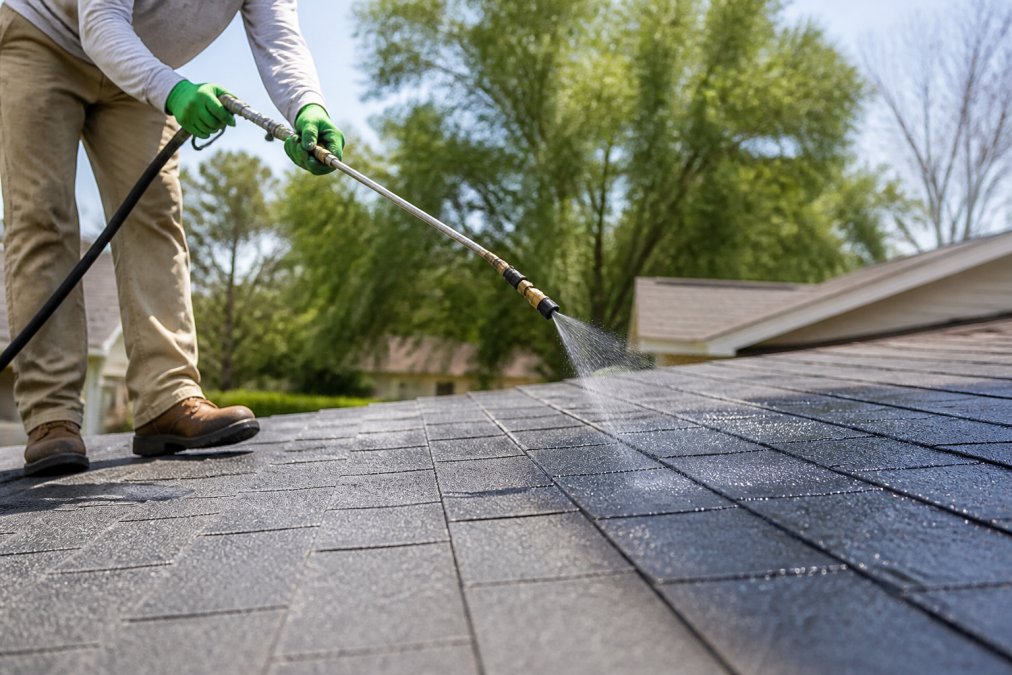
Roof Maxx is a plant-based, soy-oil treatment that penetrates shingles to replace lost oils, improving pliability and reducing granule loss. Certified dealers apply it at a cost far below full replacement.
The main drawback is that Roof Maxx is not suitable for roofs with severe structural damage or excessive curling. If shingles have already lost their physical integrity, adding oil back will not repair the damage. For a roof that is simply dried out and stiff, however, this remains one of the most established soy-based options on the market.
Shingle Hero: Deep-Penetrating Formula
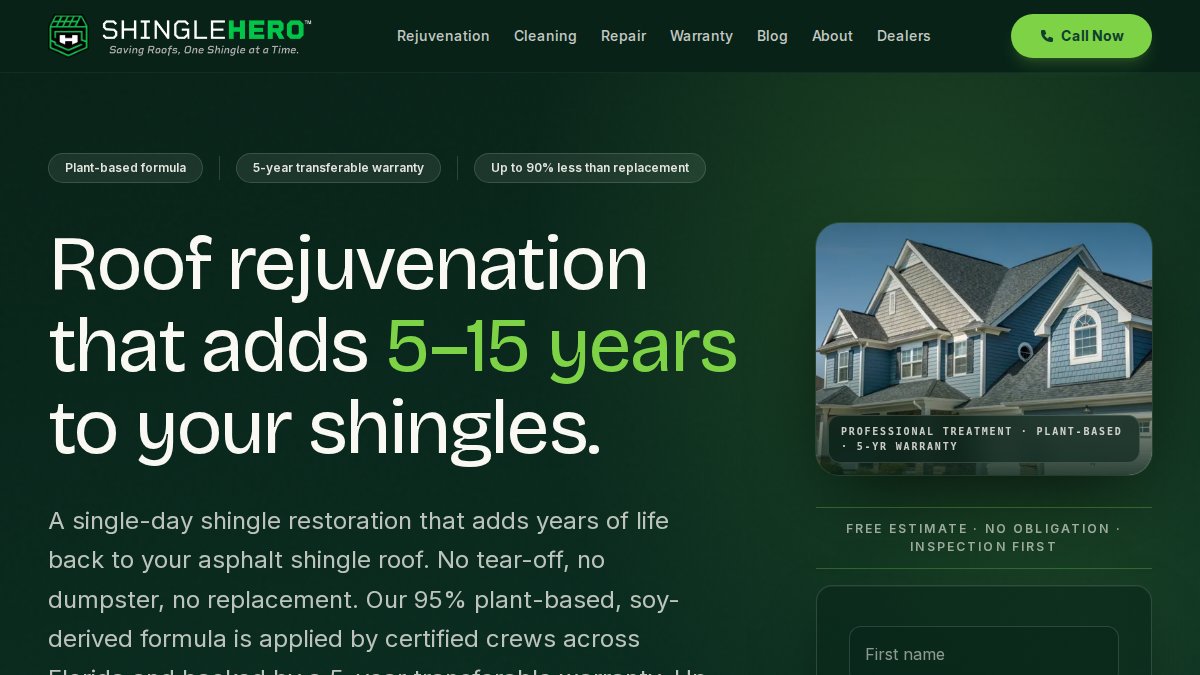
Shingle Hero uses a deep-penetrating formula to re-saturate dried-out shingles from within. The service includes a professional inspection and increases flexibility to prevent cracking while maintaining appearance.
Its effectiveness depends heavily on the current condition and age of the shingles. A roof that is already too far gone will not respond well, which is why the included inspection is essential. If the shingles are moderately aged but intact, Shingle Hero can help you avoid the mess and disruption of a complete replacement.
Liqua Roof: Natural Look and Durability
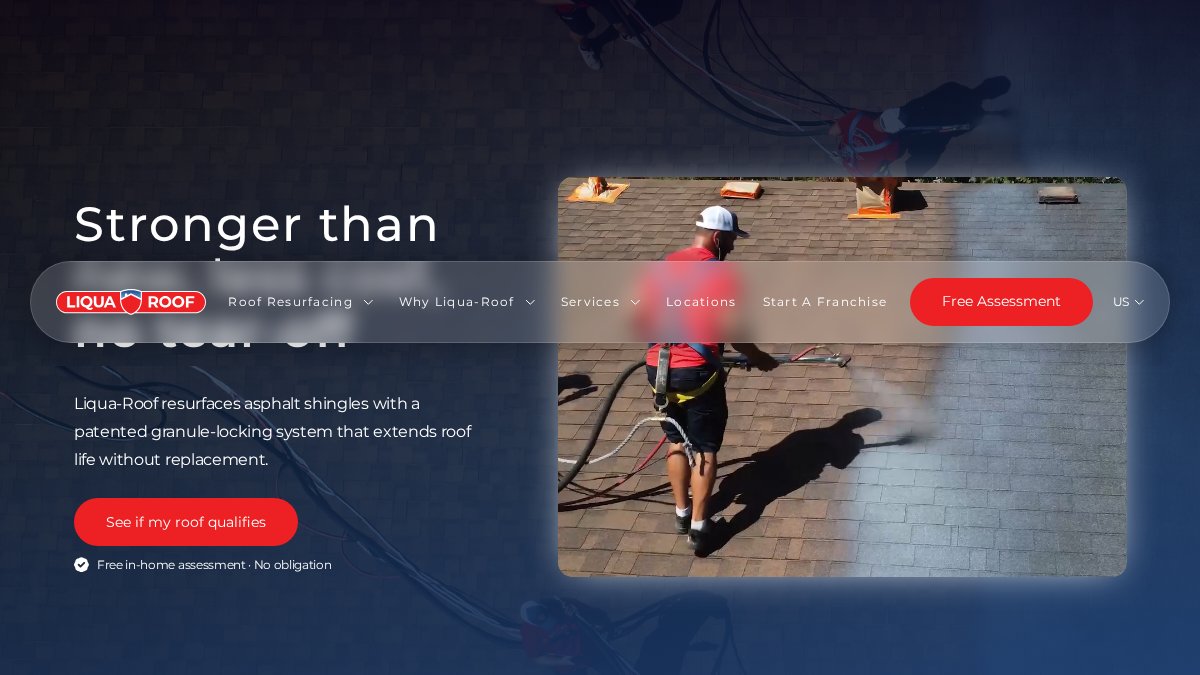
Liqua Roof uses protective treatments to improve durability against environmental stressors while maintaining the roof's natural look without heavy coatings.
The trade-off is that Liqua Roof requires a professional assessment to determine whether your roof is a candidate for treatment. Not every aging roof will benefit, and the company does not publish a one-size-fits-all price. Property owners seeking a balance between cost and performance will find it a reasonable middle-ground option.
UglyRoof: Multiple Treatment Chemistries
UglyRoof offers multiple treatment types, soy, corn, acrylic, and silica, to match chemistry to your specific roof material and condition.
The downside is that selecting the wrong treatment type can waste money or even damage shingles, so expert consultation is mandatory. For a standard asphalt shingle roof with typical aging, the simpler soy-based treatments may be all you need.
Roof Rejuvenation vs Replacement: Which Makes Sense?
Deciding between rejuvenation and replacement requires understanding the financial math and the contractual fine print that most marketing content ignores. This section covers the independent decision framework we use, including the cost crossover point and the insurance and warranty implications.
The Cost Crossover Point
The 50% rule answers when rejuvenation stops being smart: if repair or treatment costs exceed 50% of full replacement, replacement is the better investment (nahb.org).
For a typical roof, replacement runs significantly more than rejuvenation. You could theoretically treat multiple times before hitting replacement cost, but only if each treatment extends roof life.
The Diminishing Returns Problem
Manufacturers claim one treatment extends roof life by 5 to 7 years, but a second treatment delivers less benefit (roofmaxx.com). By then, shingles have suffered UV degradation, thermal cycling, and granule loss no oil can reverse.
A roof treated at year 12 extends to year 18 or 19; a second treatment at year 18 might reach year 21 or 22, but the benefit is roughly half at the same cost. Rejuvenation is a one-cycle strategy: plan for one treatment, then budget for replacement.
Insurance and Warranty Implications
Applying a rejuvenation product can have real consequences for your homeowner's insurance policy and your shingle manufacturer's warranty.
Manufacturer warranties: Major shingle manufacturers, GAF, Owens Corning, CertainTeed, require installation and maintenance per published specs; aftermarket chemical treatments are not included. While none publicly state rejuvenation voids warranties, most grant broad discretion to deny claims for modifications that "alter the performance characteristics" of the shingle.
Homeowner's insurance: An HO-3 policy covers sudden damage, wind, hail, fire, not gradual deterioration, which rejuvenation treats. Hail damage after treatment is covered, but age-related failure is not. If your insurer learns your roof is over 20 and chemically treated, they may non-renew or reduce the actual cash value payout.
The Structural Integrity Test
The physical decision comes down to a simple test: press a flathead screwdriver tip against a shingle tab. If it flexes and returns, it retains enough pliability for rejuvenation. If it cracks, crumbles, or feels brittle, no treatment will restore it.
Walk your roof and check the following:
- Curling: Lift the corner of a tab. If it stays lifted or cracks when bent back, the shingle has lost its flexibility.
- Granule loss: Check your gutters and downspouts. If you see significant granule accumulation, the shingle's protective surface is failing.
- Exposed fiberglass mat: If you can see the mat through the asphalt coating, the shingle is beyond treatment.
- Nail pops: If nails are working their way up through the shingle surface, the deck is moving and treatment will not fix it.
If more than 20% fail these tests, replacement is the only option. If fewer than 20% fail, spot-replace and treat the rest, or replace fully if the roof is over 18 years old. The 20% threshold is where spot repairs become cost-prohibitive.
The Regional Climate Factor
Regional climate matters: in high-UV desert Southwest, shingles lose oils 30% faster than in temperate climates, a 7-year extension in Ohio might deliver only 4 to 5 years in Arizona. In high-humidity Gulf Coast areas, algae and moisture dominate, and rejuvenation does little for those.
A local provider who understands your climate and honestly advises whether rejuvenation suits your roof is worth more than any national brand. Get an independent inspection before committing.
Asphalt Shingle Rejuvenation Cost Breakdown
Cost drives most searches for FreshRoof alternatives, yet most articles dodge real numbers. This section covers actual pricing, hidden costs, and DIY versus professional application.
What You Will Actually Pay
Roof rejuvenation pricing in the United States is typically quoted per square (100 square feet of roof surface), not per project. Based on published pricing from national providers and regional averages, here is what you should expect:
| Service | Typical Price per Square | Typical Price for 17-Square Roof | What's Included |
|---|---|---|---|
| Professional soy-based treatment (e.g., Roof Maxx) | $25-$40 | $425-$680 | Inspection, cleaning, single application |
| Professional proprietary treatment (e.g., Shingle Hero) | $30-$50 | $510-$850 | Inspection, cleaning, single application |
| DIY rejuvenation kit | $15-$25 | $255-$425 | Product only; no inspection or cleaning |
| Full roof replacement (comparison) | $450-$900 | $7,650-$15,300 | Tear-off, new shingles, disposal, labor |
These figures reflect current market averages. Your actual quote will vary based on roof pitch, number of penetrations (chimneys, vents, skylines), and the condition of your gutters and flashing.
The Hidden Costs Nobody Mentions
Roof cleaning is not optional. Most products require a clean surface to penetrate. Soft washing can add to the cost of a typical roof. Some providers bundle this; many do not.
Spot repairs add up. If 5%-10% of shingles need replacement before treatment, each adds to the cost plus labor. These costs are often omitted from initial quotes.
Repeat treatments are needed for full benefit. Manufacturers recommend reapplication every 4 to 6 years. Staying 10 more years means budgeting for two treatments, changing the math from $600 to $1,200.
DIY vs. Professional Application: The Real Risks
The DIY route is tempting because the product cost is roughly half of professional application. But the risks are substantial and rarely discussed.
Chemical runoff and environmental damage. Oil-based products applied too heavily, on hot days, or before rain run off into gutters and landscaping. Soy products are biodegradable, but concentrated runoff can kill grass and enter storm drains. Professionals carry liability insurance; DIY homeowners do not.
Fire rating concerns. Asphalt shingles carry a Class A rating required in wildfire-prone areas. Some products contain oils that may temporarily affect burn characteristics; independent testing is limited. In a wildfire zone, an unapproved treatment could give your insurer grounds to deny a fire claim.
Voiding your roof's warranty. Applying an aftermarket treatment can give your shingle manufacturer grounds to deny warranty claims. Professional applicators often provide their own workmanship warranty (typically 5 to 7 years), which partially offsets this risk. A DIY application has no such backstop.
Application mistakes waste money. Products must be applied between 50°F and 85°F, at correct dilution and spray pattern. Too thin means no penetration; too thick causes runoff or glossy residue. Most DIY failures come from applying on days too hot or too cold for proper absorption.
How to Get an Accurate Quote
Get at least three professional estimates for the same roof, since pricing varies by region and provider. Ask each provider these four questions:
- Does your quote include roof cleaning, or is that an add-on?
- What is your warranty, and does it cover the treatment or the roof?
- Do you carry liability insurance that covers chemical runoff damage?
- How many treatments do you recommend over the remaining life of this roof, and what is the total cost?
A provider who cannot answer all four questions clearly is not the right choice. The cheapest quote is rarely the best value if it does not include cleaning, warranty, and insurance coverage.
The Bottom Line on Cost
For a sound roof under 18 years old, rejuvenation costs a fraction of replacement cost. That case holds only with correct application, warranty awareness, and budgeting for repeat treatment in 4 to 6 years. Treat rejuvenation as a delaying tactic, not a permanent fix.
Frequently Asked Questions
What is the best product for rejuvenating a roof?
The best product depends on your roof's condition and your priorities. Soy-based treatments like Roof Maxx and FRESH TEC's GreenSoy™ Technology are popular for restoring flexibility and are eco-friendly. Acrylic coatings create a protective barrier but may alter the roof's appearance. For a professional assessment and a plant-based solution, consider scheduling an inspection with a certified local provider like FRESH TEC.
How do professional roof rejuvenation services compare to full roof replacement?
Roof rejuvenation is a preventative maintenance treatment that can extend the life of an aging asphalt shingle roof by 6 to 8 years. It costs a fraction of a full replacement and is far less disruptive. Replacement is necessary when shingles are severely curled, brittle, or missing granules. A professional inspection helps determine if your roof is a candidate for rejuvenation or if replacement is the more cost-effective long-term choice.
How long does roof rejuvenation last?
A professional roof rejuvenation treatment from FRESH TEC is designed to extend the overall lifespan of your roof by 6 to 8 years. The longevity depends on factors like your local climate, the current condition of the shingles, and the specific product used. Most providers recommend an annual inspection to monitor the roof's condition.
Are there eco-friendly alternatives to traditional asphalt shingle rejuvenation?
Yes, several eco-friendly alternatives exist. Soy-based and corn-based treatments are plant-derived and non-toxic, making them safe for homes with kids and pets. These bio-based formulas replenish the natural oils in the shingle, restoring flexibility without harsh chemicals. When comparing providers, ask about the VOC content and the specific plant-based ingredients in their treatment formulas to confirm they meet your environmental standards.