
 ultimate-guide
Best Exterior Property Maintenance Tips: 2026 Guide
Table of Contents
- Why Exterior Property Maintenance Matters
- How Often to Clean Residential Gutters
- Asphalt Shingle Rejuvenation Benefits and When to Act
- Seasonal Exterior Home Maintenance Checklist
- DIY vs. Professional Service Thresholds
- Roof Inspection and Structural Integrity
- Siding, Windows, and Exterior Sealing
- Foundation and Drainage System Care
- Conclusion
- Frequently Asked Questions
Last Updated: September 19, 2026
Why Exterior Property Maintenance Matters
Your home's exterior is its first line of defense against weather, pests, and deterioration. Without consistent care, small problems compound into expensive repairs that threaten both structural integrity and curb appeal. The difference between a well-maintained property and a neglected one isn't just aesthetic, it's financial. A home with visible exterior damage loses value, attracts fewer buyers, and costs more to insure.
Preventative exterior property maintenance extends the life of roofs, siding, and driveways by years at a fraction of replacement cost. This guide covers essential tips to protect your investment.

How Often to Clean Residential Gutters
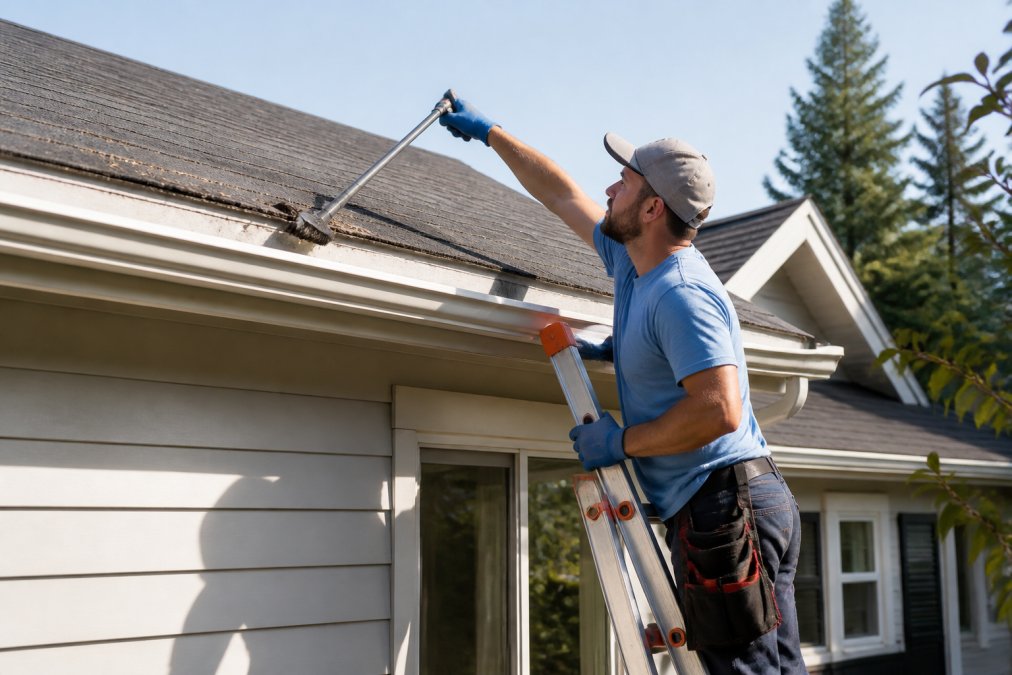
Clean gutters at least twice yearly, spring and fall, or 3-4 times if surrounded by trees. Debris accumulation blocks water flow and causes foundation and siding moisture intrusion.
Spring and Fall Cleaning Schedule
Spring cleaning removes winter debris and pollen; fall cleaning clears leaves before winter snow adds weight. Don't wait for visible overflow, damage occurs before water appears.
Signs Your Gutters Need Immediate Attention
Signs of gutter problems include overflow, sagging, visible plant growth, water stains on walls, ground erosion beneath downspouts, and pest activity like wasp nests.
If water pools around your foundation or basement moisture appears, check gutters first. Downspouts must direct water 4-6 feet from the foundation to prevent cracks and flooding.
Asphalt Shingle Rejuvenation Benefits and When to Act
Asphalt shingles lose protective oils over time, becoming brittle and curling. Rejuvenation restores oils, extending roof lifespan at a fraction of replacement cost.
Recognizing Shingle Damage and Curling
Curling shingles, granule loss, and moss or algae growth indicate advanced aging and moisture retention.
If your roof has structural integrity but shows cosmetic aging and early curling, rejuvenation works. Cracked, missing, or severely damaged shingles require replacement. FRESH TEC LLC. uses plant-based GreenSoy™ Technology to extend shingle lifespan by 6-8 years.
Cost Comparison: Rejuvenation vs. Replacement
Roof replacement is a major expense; rejuvenation addresses oil depletion at a fraction of the cost, restoring flexibility and water resistance.
Seasonal Exterior Home Maintenance Checklist
A seasonal exterior property maintenance checklist matches tasks to seasons when conditions are optimal and damage risk is highest: spring for rain damage, summer for sun exposure, fall for debris, winter for weatherproofing.
Spring Maintenance Tasks
Roof and gutter inspection: Check shingles for curling or missing pieces, ice dam damage, and flashing around chimneys and vents. Clean gutters thoroughly and flush with a hose to verify water flows. Sagging gutters or those pulling from fascia require professional repair.
Siding and caulking: Inspect siding for cracks, gaps, and failed caulking. Test caulking around windows and doors; replace if cracked or loose. Spring (50-85°F) is ideal for caulking due to moderate temperatures and lower humidity.
Foundation inspection: Check for new cracks and water seepage. Hairline cracks (less than 1/8 inch) are cosmetic; cracks wider than 1/4 inch or those with water intrusion need professional evaluation. Efflorescence (white deposits) indicates water movement.
Pressure washing: Use 1,500-2,000 PSI for concrete, 1,200-1,500 PSI for wood decks.
Summer and Fall Priorities
Summer tasks: Check exterior vents and openings for intact screens and pest entry. Inspect siding for peeling paint or oxidation. Seal gaps where utilities enter. Keep landscaping and mulch 6 inches from siding. Check faucets for leaks, a dripping faucet wastes 3,000 gallons yearly.
Winter Preparation
Gutter and drainage: Ensure gutters are clear for proper snowmelt drainage. Downspouts must direct water 4-6 feet from foundation. Gutter guards ($10-$25 per linear foot, $500-$1,500 installed) reduce fall cleaning frequency in heavy-snow areas.
| Maintenance Task | Best Season | Frequency | DIY or Professional | Estimated Cost (DIY) | Estimated Cost (Professional) |
|---|---|---|---|---|---|
| Gutter cleaning | Spring & Fall | 2-4 times yearly | DIY (single-story) | $0-$50 (tools) | $150-$300 per cleaning |
| Roof inspection | Spring | 1-2 times yearly | DIY (binoculars) or Pro | $0 | $150-$300 |
| Siding inspection & cleaning | Spring & Fall | 2 times yearly | DIY | $20-$50 (cleaner) | $200-$400 |
| Pressure washing | Spring & Summer | 1-2 times yearly | DIY | $100-$300 (equipment rental) | $200-$500 |
| Caulking inspection & repair | Spring | Annually | DIY (small areas) | $20-$100 | $500-$2,000 (whole house) |
| Foundation inspection | Spring | Annually | DIY (visual) or Pro | $0 | $150-$300 |
| Tree trimming | Fall | As needed | DIY (small branches) | $0-$50 | $300-$1,500 (large trees) |
| Weatherstripping replacement | Fall | Every 3-5 years | DIY | $50-$150 | $200-$500 |
| Gutter guard installation | Fall | One-time | Professional | N/A | $500-$1,500 |
DIY vs. Professional Service Thresholds
DIY tasks include gutter cleaning (single-story), pressure washing, and basic caulking. Hire professionals for roof work, multi-story gutters, foundation assessment, large-scale sealing, and work affecting structural integrity. FRESH TEC LLC. handles roof rejuvenation, flat roof coatings, and solar panel maintenance.
Roof Inspection and Structural Integrity
Inspect roofs for missing shingles, sagging, flashing damage, and attic water stains. Use binoculars from the ground or hire professionals with drones. Check flashing around chimneys and vents, common leak points. Proper drainage and weather protection prevent water penetration that damages insulation, framing, and interiors. Early detection prevents cascading damage.
Siding, Windows, and Exterior Sealing
Siding protects structural frames and provides weather resistance. Inspect annually for cracks, gaps, peeling paint, and failed caulking. Wood siding rots if moisture penetrates; vinyl cracks under impact or UV; fiber cement requires periodic painting.
Cleaning and Preparation
Clean surfaces before caulking. For vinyl, use vinegar solution or commercial cleaner, avoid pressure washers. For wood, use 1,500 PSI or lower. Fiber cement tolerates up to 2,500 PSI. Allow 24 hours drying before caulking to prevent mold and failure.
Caulk Selection and Application
Not all caulks are equal. Acrylic latex caulk is inexpensive and paintable but has a 5-10 year lifespan and poor flexibility in freeze-thaw cycles. Silicone caulk lasts 20+ years, remains flexible in temperature swings, and resists mold, but is difficult to paint and costs 2-3 times more.
Windows, Doors, and Weatherstripping
Windows and doors are primary points where moisture intrusion and air leakage occur. Check caulking around window frames and door jambs annually. Weatherstripping should be intact and flexible, not cracked or hardened. Gaps allow air infiltration, reducing energy efficiency and allowing pest entry.
DIY Caulking vs. Professional Sealing
Small caulking jobs, a few window frames or a single door, are manageable for homeowners with basic tools (caulk gun, utility knife, wet cloth). Large-scale sealing of multiple windows, siding gaps, or complex trim details benefits from professional application. Professionals work faster, achieve cleaner lines, and use commercial-grade materials and primers that extend caulk life by 3-5 years.
Seasonal Caulking and Sealing Schedule
Inspect caulking and weatherstripping in spring and fall. Spring inspection reveals winter damage; fall inspection ensures seals are intact before cold weather and rain arrive. In freeze-thaw climates, caulk and weatherstripping experience the most stress during winter, so fall preparation is critical. In mild climates, spring inspection after winter rains is the priority.
Foundation and Drainage System Care
Foundation cracks demand attention, but not all cracks are equal. Hairline cracks less than 1/8 inch wide are often cosmetic and result from normal settling. Wider cracks, especially those that grow over time or show signs of water seepage, indicate structural issues requiring professional evaluation.
Conclusion
Exterior property maintenance isn't optional, it's the difference between a home that appreciates and one that deteriorates. Regular inspection, seasonal cleaning, and timely repairs protect structural integrity, maintain curb appeal, and preserve your investment's value. The cost of preventative maintenance is negligible compared to the expense of replacing roofs, siding, or foundations.
Frequently Asked Questions
How often should I clean my residential gutters?
Most homes benefit from gutter cleaning twice yearly: once in late spring after trees finish shedding, and again in fall after leaves drop. If you have large trees overhead or live in an area with heavy debris, quarterly cleaning may be necessary. Clogged gutters trap moisture, leading to wood rot, foundation damage, and structural integrity issues that become expensive to repair.
What are the asphalt shingle rejuvenation benefits compared to roof replacement?
Asphalt shingle rejuvenation restores flexibility and waterproofing to aging shingles, extending roof life by 6-8 years at a fraction of replacement cost. Rejuvenation addresses curling, brittleness, and oxidation without the disruption and expense of full replacement. It's most effective on roofs showing early wear signs; severely damaged roofs may require replacement instead.
What maintenance tasks should I prioritize each season?
Spring: inspect roof for winter damage, clean gutters, check caulking around windows and doors. Summer: pressure wash siding, trim overhanging branches, inspect foundation. Fall: clean gutters again, seal cracks, check weather stripping. Winter: monitor for ice dams, inspect after storms. A seasonal exterior home maintenance checklist ensures you catch problems early and prevent costly structural damage.
When should I hire a professional instead of doing exterior maintenance myself?
Hire professionals for roof work, foundation inspections, pressure washing two-story exteriors, and any work requiring special equipment or climbing. DIY tasks include gutter cleaning (single story), landscaping, caulking, and visual inspections. Professional assessment costs less than emergency repairs from missed problems, and many contractors offer free inspections to identify issues early.
How can I improve curb appeal while maintaining my home's exterior?
Combine maintenance with aesthetic improvements: pressure wash siding and driveways to remove mildew and oxidation, trim overgrown landscaping, refresh exterior caulking and paint, and ensure gutters are clean and functional. These preventative maintenance tasks also protect structural integrity while making your property more attractive to potential buyers or renters.
What's the actual cost difference between roof rejuvenation and replacement?
Pricing depends on roof size, material condition, and local labor rates. Rejuvenation typically costs significantly less than full replacement and delivers 6-8 additional years of protection. Contact FRESH TEC for a free inspection and quote to compare options for your specific property and determine which approach provides the best value.