 how-to
Flat Roof Maintenance Tips 2026: A Step-by-Step Guide
Table of Contents
- Why Flat Roof Maintenance Matters
- What You'll Need Before Starting
- Step 1: Conduct a Visual Inspection Using a Flat Roof Inspection Checklist
- Step 2: Clear Debris and Maintain Drainage Systems
- Step 3: Address Sealant and Caulking Issues
- Understanding Flat Roof Coating Benefits for Long-Term Protection
- Professional Roof Maintenance Frequency and Seasonal Schedules
- DIY vs. Professional Maintenance: When to Call an Expert
- Frequently Asked Questions
Last Updated: September 20, 2026
Why Flat Roof Maintenance Matters
A flat roof maintenance strategy extends your roof's lifespan and prevents costly emergency repairs. Flat roofs face unique challenges: water pooling, membrane degradation, and direct UV exposure that compound quickly without regular care.
Ignoring maintenance is costly: small leaks become structural damage, ponding water eats through membranes, and seams separate. By the time problems are visible, replacement rather than repair is often necessary.
Property owners who inspect and maintain their roofs catch problems early, avoiding the high cost of full replacement by investing in seasonal maintenance and targeted repairs.
This guide covers what to inspect, how to clear drainage systems, when to seal seams, and when to call a professional.
What You'll Need Before Starting
Gather the right tools and safety equipment before climbing. Proper preparation keeps you safe and efficient.
Essential tools:
- Sturdy ladder with stabilizer bars
- Non-slip shoes or boots with good grip
- Work gloves (nitrile or leather)
- Binoculars for ground-level inspection
- Flashlight or headlamp
- Measuring tape
- Clipboard and pen for notes
- Camera or phone for photos
Safety gear:
- Hard hat
- Safety harness and anchor point (for steep roofs)
- Eye protection
- Knee pads if you'll be kneeling
Inspection supplies:
- Flat roof inspection checklist (print or digital)
- Notebook for documenting findings
- Probe tool or flathead screwdriver to test membrane firmness
Start with a ground-level inspection using binoculars to spot issues without climbing. Only go up if comfortable with heights and properly equipped; otherwise, call a professional.
Step 1: Conduct a Visual Inspection Using a Flat Roof Inspection Checklist
A visual inspection is your first line of defense. Look for signs of damage, drainage problems, and membrane degradation using a systematic approach.
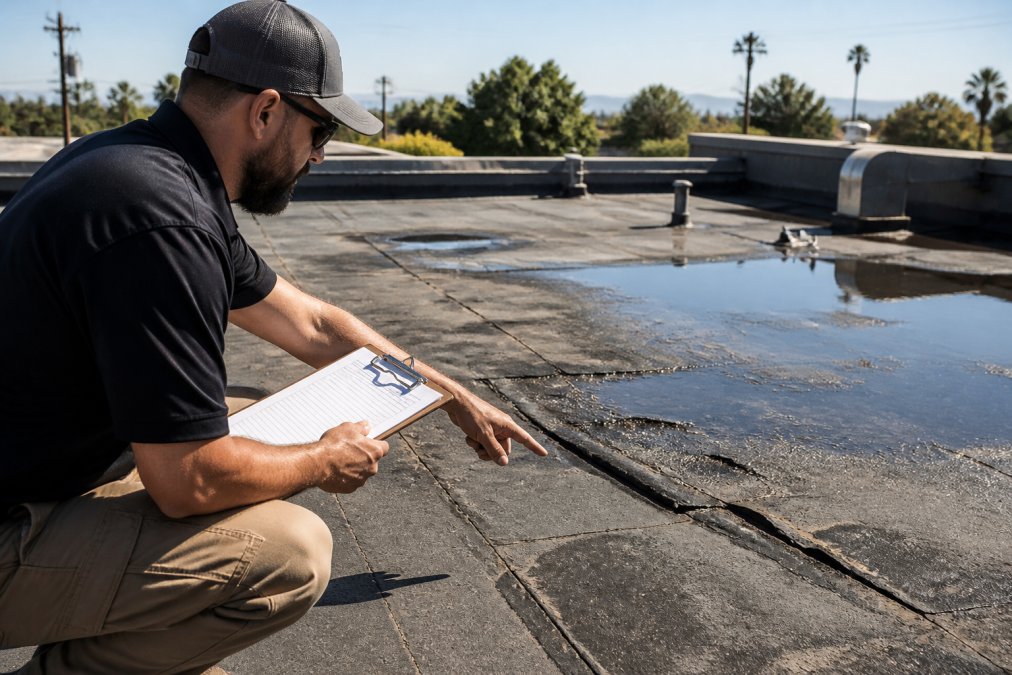
Start at one corner and work across in rows. Document everything with photos and notes. A flat roof inspection checklist ensures you check all critical areas.
Check for membrane damage and blistering
Blistering occurs when moisture gets trapped between membrane layers and sun heats the trapped air, creating bubbles that weaken the roof.
Look for raised areas and press gently; a soft, spongy feel indicates water underneath. Small blisters can be sealed; large areas or multiple blisters require membrane replacement.
Check for cracks, tears, or punctures; even tiny openings let water in. Look for rough spots, exposed materials, or discoloration indicating moisture infiltration.
Identify ponding water and drainage issues
Ponding water, standing water lasting more than 48 hours after rain, is a major threat. Water weight stresses the structure and accelerates membrane breakdown.
Look for low spots where water collects or stains marking pooled water. Check that scuppers and downspouts are clear and water flows freely.
Debris clogs drainage, forcing water to sit in low areas. Clear all debris from gutters, scuppers, and downspouts. If water still doesn't drain, the pitch may be inadequate or the drainage system needs repair.
Look for seam separation and flashing problems
Seams are where two membrane sheets meet and are sealed with adhesive or heat-welded. Thermal shock and UV exposure cause separation over time.
Inspect seams for gaps, peeling, or separation. Any opening is a potential leak path. Seam separation is fixable if caught early.
Flashing is the metal trim around roof penetrations: vents, HVAC units, skylights, and edges.
Step 2: Clear Debris and Maintain Drainage Systems
Debris removal is critical: leaves, dirt, and sediment trap moisture, clog drainage, and accelerate membrane degradation.
Steps for debris removal:
- Use a soft-bristled broom or leaf blower
- Work from high areas toward drainage points
- Don't use pressure washers (they damage membranes)
- Dispose of debris properly
- Check gutters and downspouts while you're up there
Step 3: Address Sealant and Caulking Issues
Sealants fill gaps and seal seams to prevent water infiltration. Sun exposure, temperature swings, and age cause degradation. Sealant lifespan varies: 3-5 years in freeze-thaw climates, 5-7 years in warmer regions.
Material-specific sealant requirements
Always match sealant to your roof material to prevent adhesion failure or membrane damage.
When to re-seal vs. when to apply a full coating
Re-seal individual gaps if: Damage is limited to 1-3 seams, the membrane is otherwise sound, your roof is under 10 years old, and sealing costs under $500.
Cost-benefit of preventative sealing
A small seam separation can be addressed when caught early. The same seam, left unaddressed for 2-3 years, can cause significant water damage, insulation replacement, and structural repair. Annual sealant inspection and maintenance is one of the highest-ROI maintenance tasks a property owner can perform.
Understanding Flat Roof Coating Benefits for Long-Term Protection
A flat roof coating is a liquid applied over your existing membrane that fills cracks, seals seams, and protects against UV and water infiltration.
Professional Roof Maintenance Frequency and Seasonal Schedules
Professional inspections catch early-stage damage and protect your warranty.
Schedule professional inspections twice yearly (spring and fall) and after major storms.
Spring and fall inspection priorities
Spring inspection: Check for winter damage, inspect flashing, clear debris, test drainage, and look for new cracks.
Material-specific maintenance for EPDM, TPO, and bitumen roofs
EPDM (rubber) roofs: Sensitive to oil and grease; use EPDM-compatible sealants only; avoid pressure washing. Lifespan: 15-20 years with proper maintenance.
DIY vs. Professional Maintenance: When to Call an Expert
Some maintenance tasks are safe for homeowners; others carry serious injury risk and require professional equipment and training. Know the difference to stay safe.
Safety thresholds: When to stay off the roof
Do NOT climb onto your roof if: Your roof is higher than 8 feet, pitch exceeds 6:12, you're over 65 or have balance issues, weather is wet/icy/windy, you're alone, you lack a safety harness, or you have any doubt about your ability.
Ground-level inspection: The safest starting point
DIY-friendly tasks (ground level): Use binoculars to inspect the roof surface, check gutters from a 6-foot ladder, document with photos, monitor for ponding water, and test downspout flow.
Limited roof access: When you can safely climb
If your roof meets these criteria, you may safely perform limited maintenance:
Safe climbing conditions:
- Roof height is 8 feet or less above ground
- Roof pitch is 4:12 or flatter (walkable without special equipment)
- Weather is clear, dry, and calm (no rain, ice, or wind)
- You are wearing non-slip shoes with good grip (not sneakers)
- You have a spotter on the ground who can call for help
- You are in good physical health with no balance issues
DIY tasks on a safe roof:
- Debris removal using a soft-bristled broom (not pressure washing)
- Clearing gutters and downspouts of leaves and sediment
- Applying sealant to small gaps (under 10 linear feet total)
- Taking detailed photos and measurements for documentation
- Inspecting seams and flashing up close
- Testing membrane firmness with a probe tool
Professional work: When expertise is required
Call a professional for:
- Any roof higher than 8 feet or with a pitch steeper than 6:12
- Sealing large areas (more than 10 linear feet of seams)
- Applying roof coatings (requires proper equipment, ventilation, and curing conditions)
- Repairing or replacing flashing
- Addressing ponding water or structural issues
- Working in winter, on wet surfaces, or in windy conditions
- Any task you're uncomfortable performing at height
- Membrane repair or patching (requires material-specific knowledge)
- Inspecting roofs on multi-story buildings
Professional roofers carry liability insurance, workers' compensation, and proper fall protection equipment. They know how to identify problems you might miss. They use materials appropriate to your membrane type. They can warranty their work. For major maintenance or repairs, professional work is not just safer, it's the right choice.
Frequently Asked Questions
How often should flat roofs be inspected?
Flat roofs should be inspected at least twice per year, once in spring and once in fall, to catch seasonal damage before it worsens. Additional inspections are recommended after severe weather, hail, or heavy snow. Regular visual inspection using a flat roof inspection checklist helps identify membrane damage, ponding water, and flashing issues early, extending your roof's lifespan and preventing costly repairs.
What are the main benefits of flat roof coatings?
Flat roof coating benefits include extending roof lifespan by 6-8 years, reducing heat absorption to lower cooling costs, and protecting against UV exposure and thermal shock. Quality coatings create a waterproof barrier that prevents moisture infiltration and seals minor cracks before they become structural problems. Quality coatings maintain structural integrity and protect your investment.
Should water sit on a flat roof?
No. Ponding water, water that sits on your roof for more than 48 hours, accelerates roof degradation and can lead to membrane failure. Proper drainage systems, including scuppers and downspouts, are essential to prevent pooling. If ponding water occurs regularly, it signals a drainage problem that requires professional assessment to avoid structural load issues and moisture infiltration into your building.
When is it too late to use roof coatings instead of replacement?
Roof coatings work best on roofs with minor to moderate damage, curling shingles, small blisters, or early seam separation. If your roof has extensive membrane damage, severe structural issues, or has already reached the end of its warranty period, professional assessment is needed. A qualified inspector can determine whether rejuvenation or coating is viable, or if replacement is the only safe option for structural integrity.
Regular flat roof maintenance prevents expensive emergencies. A clean roof, clear drainage, sealed seams, and periodic professional inspection keep your property protected. Whether you handle routine tasks yourself or hire a professional, consistent attention to your roof's condition pays dividends. Book a free inspection with FRESH TEC LLC. today and learn exactly what your roof needs to stay strong for years to come.