 how-to
Asphalt Driveway Rejuvenation: A 2026 How-To Guide
Table of Contents
- What Asphalt Driveway Rejuvenation Actually Does
- Asphalt Rejuvenation vs. Resurfacing: Which One Your Driveway Needs
- Signs Your Driveway Is a Good Candidate for Rejuvenation
- Asphalt Driveway Crack Repair and Pothole Prep Before Treatment
- Step-by-Step Asphalt Driveway Rejuvenation for Homeowners
- Asphalt Driveway Rejuvenation Lifespan and Coverage Planning
- Asphalt Driveway Maintenance After Rejuvenation
- Frequently Asked Questions
Last Updated: October 9, 2026
What Asphalt Driveway Rejuvenation Actually Does
Asphalt driveway rejuvenation is a surface treatment that soaks into aged asphalt and restores the binder that holds the pavement together. At FRESH TEC LLC, we use a plant-based formula to bring flexibility back to driveways that have dried out but have not yet failed. This guide explains when the treatment works and when it does not.
Here is the key point most guides skip: rejuvenation is not a coating. It does not sit on top of your driveway. It soaks in.
How Aged Asphalt Binder Changes Over Time
Asphalt is a mix of stone, sand, and asphalt binder. The binder is the glue. Over years of sun and weather, that glue oxidizes and hardens.
Once the binder turns brittle, the surface starts to crack. Water gets in. Then the freeze-thaw cycle widens every crack.
Rejuvenators replace the oils the binder has lost. That restores flexibility before the damage becomes structural.
Asphalt Rejuvenation vs. Resurfacing: Which One Your Driveway Needs
Rejuvenation restores the existing asphalt. Resurfacing, also called an asphalt overlay, adds a new layer on top. They solve different problems.
Choose based on the condition of the pavement, not its age:
- Rejuvenation: surface is faded, dry, and lightly cracked, but still solid
- Sealcoating: you want a fresh black look and a protective top coat
- Resurfacing: widespread cracking, potholes, or a failing base
- Replacement: the base is broken or the pavement has sunk
If the driveway still holds its shape and the cracks are thin, rejuvenation is the cheaper path. If sections move underfoot, no surface treatment will fix that.
| Treatment | What It Does | Best For | Typical Timing |
|---|---|---|---|
| Rejuvenation | Soaks in, restores binder | Dry, faded, lightly cracked asphalt | Every 3-5 years |
| Sealcoating | Top coat protection | Sound pavement, cosmetic refresh | Every 2-3 years |
| Resurfacing | New asphalt layer | Widespread cracking | When surface fails |
| Replacement | Full tear-out | Broken base or sinking | Last resort |
Signs Your Driveway Is a Good Candidate for Rejuvenation
The best candidates show surface aging, not structural failure. Walk your driveway and look for these signs.
- Color has faded from black to gray
- Surface feels dry, rough, or sandy
- Fine cracks form a spiderweb pattern
- Edges crumble but the center is solid
- Water soaks in instead of beading
Now the warning signs. Skip rejuvenation if you see potholes, puddling, or cracks wider than a pencil. Those point to base failure, and a surface treatment will not hold.
Asphalt Driveway Crack Repair and Pothole Prep Before Treatment
Crack repair comes first. Rejuvenator is a thin liquid, so it will drain straight through open cracks and leave the edges untreated.
Here is the order that works:
- Sweep the driveway clean
- Pull weeds from cracks
- Fill cracks with asphalt crack filler
- Patch potholes with cold patch
- Let all repairs cure fully
- Then apply the rejuvenator
For pothole repair, pack the patch in layers and tamp each one down. Overfill slightly, then tamp flush.
Asphalt driveway crack repair is the step homeowners rush. Do not. Fresh filler needs time to set before liquid hits it.
Step-by-Step Asphalt Driveway Rejuvenation for Homeowners
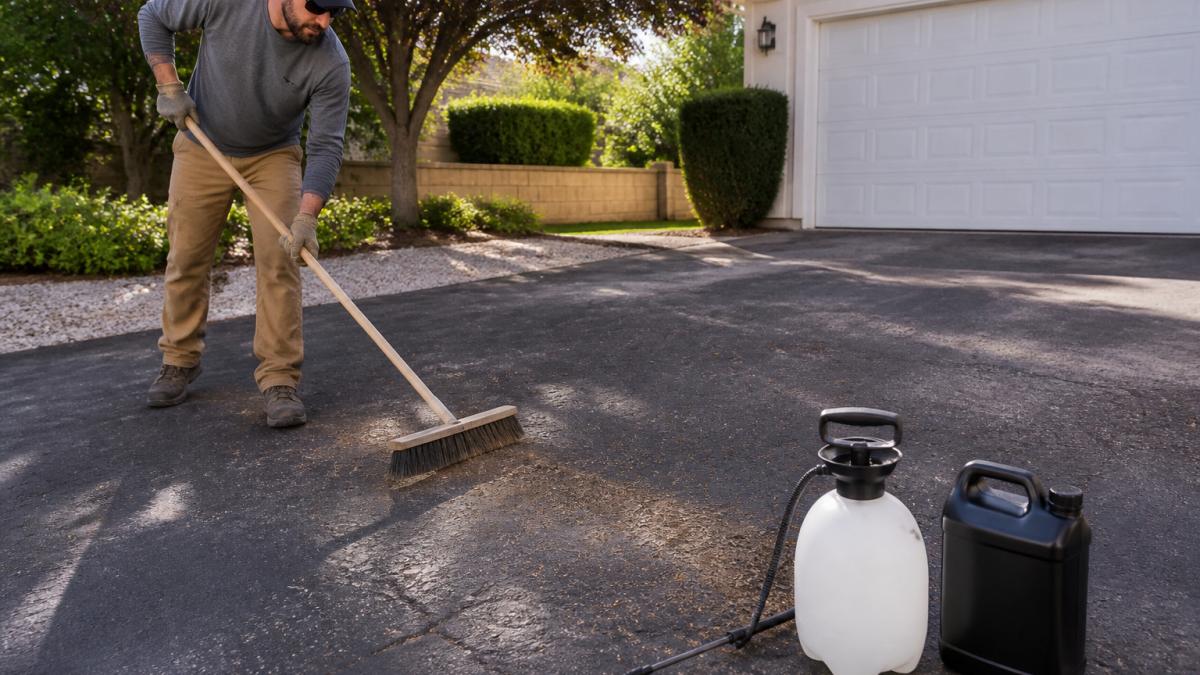
What you'll need:
- Push broom and stiff scrub brush
- Garden sprayer or pump sprayer
- Asphalt rejuvenator
- Crack filler and cold patch
- Safety glasses and gloves
Cleaning and Surface Preparation
Surface preparation decides whether the job works. Rejuvenator cannot soak into a dirty surface.
Start by sweeping off dirt and debris. Then scrub away algae and moss with a stiff brush. Pull weeds from every crack by the root.
If you use a pressure washer, keep the pressure low and let the driveway dry for at least 24 hours. Any standing water will block absorption.
Applying the Rejuvenator and Curing
Apply in thin, even coats.
Work in sections, and keep the coat light. One thin pass beats one heavy pour, because excess product just sits on the surface.
Watch the drying time. Most products need several hours of dry, warm weather. Check the label for temperature limits, and avoid applying if rain is coming within 24 hours.
Let the coat cure fully before parking on it. That is usually a full day, but follow the product directions.
Asphalt Driveway Rejuvenation Lifespan and Coverage Planning
Expect a rejuvenation treatment to protect your driveway for about three to five years. That range is honest, and it moves based on sun exposure, traffic volume, and how well you prepped the surface. A driveway in full afternoon sun with two cars turning in and out daily will sit at the short end. A shaded, low-traffic drive can stretch past five.
Asphalt driveway rejuvenation lifespan also depends on the product. Plant-based and soy-derived formulas, like the ones FRESH TEC LLC uses, penetrate deeper and hold their flexibility longer.
Choosing a Rejuvenator That Matches Your Pavement
Not every product suits every driveway. Match the formula to the surface:
- Plant-based or bio-based: slower soak-in, better on oxidized and porous surfaces, lower odor, and generally a longer interval between treatments
Coverage Math You Can Actually Use
Measure before you order. Length times width gives you square feet. A two-car driveway is commonly in the 600 to 1,000 square foot range, but measure yours rather than guessing.
Then work the numbers:
- Measure length and width in feet, multiply for square feet
- Find the coverage rate on the label, usually listed as square feet per gallon
- Divide your square footage by that rate to get base gallons
- Add 10 percent for uneven, porous, or heavily oxidized surfaces
- Round up to the next full container and keep one spare for touch-ups
A worked example: a 20-foot by 40-foot driveway is 800 square feet. At a label rate of 200 square feet per gallon, that is 4 gallons, plus 10 percent brings it to 4.4, so you buy 5 gallons. Porous, sandy-feeling asphalt can drink noticeably more than the label rate, so plan for the extra rather than running short mid-job.
What Drives the Cost of a Project
The biggest cost factors are driveway size, product type, and whether you do the prep yourself or hire it out. Crack filling and pothole patching add material and labor. A driveway that needs extensive prep before treatment costs more than one that only needs a sweep. For current rates on professional application, check our website or request a quote.
Asphalt Driveway Maintenance After Rejuvenation
Asphalt driveway maintenance after treatment is simple, and it protects your investment. The first rule is patience. Keep cars off the surface until it cures.
Readiness Checks Before You Reopen the Driveway
Do not rely on appearance alone. Use observable checks:
- Touch test: press a clean finger or a paper towel on the surface. If it comes away tacky or picks up color, it is not cured.
- Walk test: walk the full driveway in soft-soled shoes. Any soft or spongy spots mean the product has not finished setting.
- Water test: pour a cup of water on a treated section. It should soak in within a minute, the same as before treatment, which confirms the surface is still open and breathing rather than sealed over.
- Weather check: confirm no rain is forecast for the next 24 hours before you consider the job done.
Most products need several hours of dry, warm weather to cure, and full cure is usually a day. Follow the label over any rule of thumb.
Safety and Runoff Precautions
Rejuvenator is a plant-oil product, and it does not belong in a storm drain or a garden bed. Plan for containment before you open the container:
- Keep pets and children off the surface until it is fully cured.
A Simple Post-Treatment Routine
After the surface cures, a light routine keeps the driveway in shape:
- Sweep debris off every few weeks, especially after storms
- Re-fill small cracks as they appear, before water gets in
- Keep water draining away from the edges and the base
- Reapply rejuvenator as needed
Watch for new cracks after winter. The freeze-thaw cycle opens small ones fast, and sealing them early stops water infiltration from reaching the base.
How to Tell the Treatment Worked
A successful rejuvenation shows up in a few ways within the first season. The surface should look darker and more uniform, with the dry, sandy feel gone. Fine spiderweb cracks should look tighter rather than wider. Water should still soak in rather than bead and run off, which tells you the surface is breathing. If the driveway still feels brittle and cracks keep spreading after a few months, the binder was too far gone and resurfacing is the next step.
Realtors and property managers trust us to get exteriors show-ready, and a maintained driveway is part of that picture.
Never pressure-wash a freshly treated driveway. High pressure strips the rejuvenator before it has fully bonded, and you will lose the treatment you just paid for.
Frequently Asked Questions
What is asphalt driveway rejuvenation?
Asphalt driveway rejuvenation is a surface treatment that restores the flexibility of aged asphalt binder, which dries out and hardens over years of sun and weather exposure. Instead of covering the pavement like a sealer, a rejuvenator soaks into the top layer and reconditions the binder so it can expand and contract with temperature changes again. This helps slow cracking, reduces water infiltration, and extends the life of the driveway. It works best on pavement that is structurally sound, meaning no deep potholes, soft spots, or widespread crumbling.
How long does asphalt driveway rejuvenation last?
Most rejuvenation treatments last about 4 to 6 years before another application is needed, though the exact lifespan depends on traffic, sun exposure, and how well the driveway is maintained. A driveway that gets regular cleaning, prompt crack repair, and good drainage will hold its restored flexibility longer than one that is ignored. Some product makers, including FRESH TEC LLC with its plant-based GreenSoy technology, claim their treatments can extend pavement life by 6 to 8 years. Rejuvenation is a repeating maintenance step, not a one-time fix.
What is the difference between asphalt rejuvenation and resurfacing?
Rejuvenation treats the existing asphalt by restoring the binder in the top layer, so it is a maintenance step for pavement that is still in decent shape. Resurfacing, sometimes called an overlay, adds a new layer of asphalt on top of the old driveway. Resurfacing costs more and is usually reserved for driveways with structural damage, widespread cracking, or sunken areas. If your driveway only shows surface oxidation, dullness, and fine hairline cracks, rejuvenation is the more economical first step. If it has deep potholes or base failure, resurfacing or replacement may be the better choice.
Can asphalt driveway rejuvenation repair cracks and potholes?
No. Rejuvenation restores flexibility to aged binder, but it does not fill or bridge cracks and potholes. Those need to be repaired first with a proper crack filler or patching material, then the rejuvenator goes over the whole surface. Skipping crack repair means water keeps getting into the pavement and freeze-thaw cycles keep widening the damage, which cancels out most of the benefit of the treatment. For a durable result, clean the cracks, fill them, let the filler cure, and then apply the rejuvenator across the full driveway.